Science is amazing. It gave us antibiotics, space telescopes, weather forecasts, vaccines, indoor plumbing, and the ability to microwave leftover pizza at 1:12 a.m. like civilized nocturnal raccoons. But science also has a talent for quietly walking into the room, clearing its throat, and saying, “Actually, the universe is much stranger and scarier than you thought.”
That is exactly why scary science facts are so addictive. They are not campfire stories. They do not need a creaky door, a haunted doll, or a pale figure standing at the end of a hallway. The facts are real, tested, measured, and often hiding in plain sight. From black holes that stretch matter like noodles to microbes that outsmart medicine, the natural world has a horror departmentand it is fully funded.
Below are 40 of the scariest science facts people love sharing, explained in plain English with just enough humor to keep your soul from leaving your body. Consider this your guided tour through space, biology, climate, medicine, and the wonderfully unsettling reality of being alive on a planet that is basically a spinning science experiment.
40 Scariest Science Facts People Know
1. Black holes do not just “swallow” thingsthey can stretch them apart
If you drifted too close to a black hole, gravity would pull harder on one part of your body than another. Scientists call this tidal stretching “spaghettification,” which sounds like dinner and behaves like cosmic body horror.
2. The universe is mostly invisible to us
Ordinary matterthe stuff in stars, people, planets, and suspiciously old leftoversmakes up only a small portion of the universe. Dark matter and dark energy dominate the cosmic budget, and scientists still do not fully know what they are.
3. Some stars die so violently they can briefly outshine galaxies
Supernovae are stellar explosions powerful enough to forge heavy elements and scatter them across space. Beautiful? Yes. Gentle? Absolutely not. We are all made of star stuff, but the manufacturing process was extremely dramatic.
4. A nearby gamma-ray burst could damage Earth’s ozone layer
Gamma-ray bursts are among the most energetic events in the universe. A close enough burst could alter atmospheric chemistry and expose life to more ultraviolet radiation. Thankfully, “close enough” is rarebut the idea is still rude.
5. Asteroids are real planetary hazards
NASA tracks near-Earth objects because rocks from space do not ask permission. Most known large threats are monitored, and many scary headlines eventually calm down after better observations. Still, Earth has been hit before, and science remembers.
6. The Sun can throw tantrums
Coronal mass ejections can send charged particles toward Earth. A severe solar storm could disrupt satellites, navigation, radio communications, and power grids. The Sun looks cheerful, but occasionally it behaves like a giant glowing drama queen.
7. Space is not silent because it is peacefulit is silent because there is no air
Sound needs a medium to travel through. Space is mostly vacuum, so an explosion in space would not roar the way movies suggest. Somehow, silent destruction feels even creepier.
8. Earth has had mass extinctions before
Life on Earth is resilient, but not invincible. Past mass extinctions erased huge percentages of species due to events such as volcanic activity, climate shifts, ocean chemistry changes, and asteroid impacts.
9. Antibiotic resistance is already here
Antimicrobial-resistant infections are a major public health threat. Bacteria evolve, and overusing or misusing antibiotics gives them more chances to become harder to treat. In other words, microbes read the rulebook and started making edits.
10. Some fungi are becoming harder to kill
Candida auris is an emerging fungus that can spread in healthcare settings and resist multiple antifungal drugs. It mainly threatens people who are already very sick, but it is a reminder that fungi are not just pizza toppings and forest décor.
11. Rabies is almost always fatal once symptoms begin
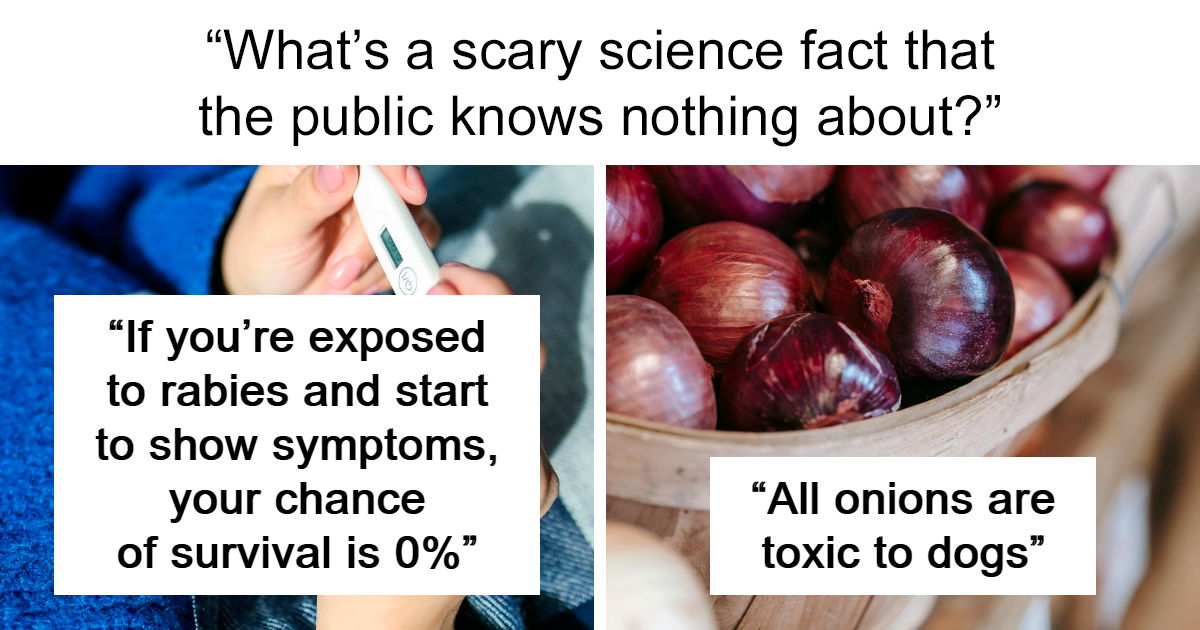
Rabies is rare in the United States, but once symptoms appear, survival is extremely uncommon. The good news is that post-exposure treatment works very well when given in time. The scary part is that bat bites can be tiny and easy to miss.
12. A brain-eating amoeba exists
Naegleria fowleri lives in warm fresh water and can cause a rare but devastating brain infection if contaminated water goes up the nose. It is not caught by drinking water, but it is the reason nasal rinsing instructions sound so serious.
13. Prions are misfolded proteins that can destroy the brain
Prion diseases such as Creutzfeldt-Jakob disease are rare, rapidly progressive, and fatal. The terrifying part is that prions are not bacteria or viruses. They are proteins folded the wrong way, causing other proteins to misfold too.
14. Your body contains more microbial cells than you may want to think about
The human microbiome is essential for digestion, immunity, and overall health. But the idea that your body is an ecosystem full of bacteria, fungi, and other tiny passengers can make your skin suddenly feel very rented.
15. Cancer is not one diseaseit is hundreds
Cancer happens when cells grow out of control, but different cancers behave differently. National cancer statistics show that a significant share of people will be diagnosed with cancer at some point in life, which is why screening and prevention matter.
16. Cells can make copying errors every day
Your DNA is constantly being copied and repaired. Most errors are fixed. Some are harmless. A few can contribute to disease. Your body is basically running a microscopic quality-control department 24/7 with no coffee break.
17. Sleep loss can affect your metabolism and brain
Sleep deficiency is linked with problems involving blood sugar regulation, mood, memory, immune function, and cardiovascular health. Skipping sleep may feel productive until your brain starts operating like a browser with 47 frozen tabs.
18. Ticks can carry multiple diseases
Ticks are tiny, patient, and deeply unpleasant. They can transmit Lyme disease and other infections. As weather patterns shift, tick habitats can expand, increasing human exposure in some regions.
19. Mosquitoes are among the deadliest animals to humans
Mosquitoes spread diseases such as malaria, dengue, West Nile virus, and Zika. They weigh almost nothing, make the world’s most annoying sound, and still manage to be a global health threat. Impressive, in the worst way.
20. Some parasites may influence host behavior
Toxoplasma gondii is famous for studies showing behavior changes in infected rodents, especially reduced fear of cat-related cues. Human effects remain complex and debated, but the idea of parasites nudging behavior is peak nightmare science.
21. Ocean water is becoming more acidic
As oceans absorb carbon dioxide, seawater chemistry changes. Ocean acidification can affect shell-building organisms such as oysters, clams, corals, and tiny plankton that support marine food webs.
22. Sea level rise is already changing coastal risk
Rising seas increase high-tide flooding, storm surge damage, erosion, and saltwater intrusion. For coastal communities, climate change is not a future postcard. It is showing up in streets, basements, roads, and insurance bills.
23. The deep ocean is less explored than people think
Humans have mapped Mars in remarkable detail, yet much of Earth’s deep seafloor remains difficult to observe directly. Somewhere down there, creatures are living under crushing pressure and looking like they were designed by a committee of nightmares.
24. Radon can build up silently inside homes
Radon is a radioactive gas that comes from natural uranium decay in soil and rock. It has no smell or color, and long-term exposure is a leading cause of lung cancer among nonsmokers. Testing is the only way to know.
25. PFAS chemicals can persist in the environment and body
PFAS, often called “forever chemicals,” are linked by research to several potential health concerns, including cholesterol changes, immune effects, and certain cancers. They are persistent, which is a polite scientific way of saying they do not take hints.
26. Microplastics have been detected in human tissues
Research has found microplastics in parts of the human body, and scientists are still studying what that means for long-term health. The unsettling part is not just that plastic is everywhereit is that “everywhere” may include us.
27. Yellowstone is not “overdue,” but supervolcanoes are real
USGS scientists emphasize that Yellowstone is not on a predictable eruption schedule. The probability of a catastrophic eruption is very low, but the volcano’s past reminds us that Earth has a spectacularly aggressive plumbing system.
28. The Pacific Northwest faces megathrust earthquake risk
The Cascadia Subduction Zone can produce very large earthquakes. Geological evidence shows a long history of major events, even though modern written records are limited. Quiet faults can still be dangerous faults.
29. Earthquakes can trigger cascading disasters
A major earthquake is not just shaking. It can cause landslides, tsunamis, fires, bridge failures, damaged hospitals, broken water systems, and power outages. The first disaster often brings friends.
30. Volcanoes can affect global climate
Large eruptions can inject particles into the atmosphere, reflecting sunlight and temporarily cooling parts of the planet. A volcano does not need to chase you with lava to ruin everyone’s calendar.
31. The human brain can hallucinate under stress, illness, or sleep loss
Perception feels solid, but the brain constructs it. Fever, trauma, neurological conditions, drugs, grief, and sleep deprivation can all alter what people see, hear, or believe. Your brain is powerful, but it is not always a reliable narrator.
32. Memory is editable
Human memory is not a perfect recording. It can change with time, suggestion, emotion, and repetition. That means two people can sincerely remember the same event differentlyand both be wrong in interesting ways.
33. Your immune system can attack you
Autoimmune diseases happen when the immune system mistakenly targets the body’s own tissues. The system designed to protect you can, under certain conditions, misidentify you as the problem. Awkward.
34. Some viruses can remain dormant
Certain viruses can stay in the body in a latent state and reactivate later. Chickenpox virus, for example, can return years later as shingles. Biology has a “save for later” folder, and nobody asked for it.
35. The placebo effect shows belief can influence symptoms
The placebo effect does not mean symptoms are fake. It means expectation, context, and brain chemistry can influence real experiences of pain and relief. The mind-body connection is powerfuland a little spooky.
36. We are constantly exposed to radiation
Background radiation comes from space, rocks, soil, buildings, and even food. Most exposure is low and normal, but it is strange to remember that the universe is lightly seasoning us with radiation all day.
37. Time moves differently depending on gravity and speed
Einstein’s relativity is not just theory for chalkboards. GPS satellites must account for time dilation. Time itself is flexible, which is a terrifying fact to learn when you are already late.
38. The vacuum of space would not make you explode instantly
Hollywood exaggerates space exposure, but the real version is still awful. Without pressure and oxygen, a human would lose consciousness quickly and suffer severe injury. Space is not a villain; it simply refuses to be hospitable.
39. Evolution has no plan
Evolution does not aim for perfection. It works with random variation, selection pressure, and whatever is good enough to survive long enough to reproduce. This explains both the beauty of life and the human lower back.
40. The scariest science fact may be how fragile normal life is
Clean water, stable climate, functioning medicine, pollinators, healthy soil, safe buildings, electricity, and disease control all depend on systems we often ignore until they fail. Civilization is impressive, but it is also a group project with many moving parts.
Why Scary Science Facts Are So Fascinating
Scary science facts work because they combine two powerful feelings: curiosity and dread. A ghost story asks you to imagine something frightening. A science fact quietly tells you that something frightening is already true. That difference gives the topic its electric little sting.
There is also comfort in understanding the scary stuff. When you learn that rabies is preventable with fast treatment, radon can be tested, antibiotics must be used carefully, and asteroids are actively monitored, the fear becomes more useful. Knowledge does not erase danger, but it gives danger a name, a pattern, and sometimes a plan.
That is the real magic of science communication. The best scary facts do not just make readers whisper, “Nope.” They help people respect the world more deeply. They remind us to wash our hands, wear sunscreen, test the basement, sleep properly, listen to evacuation warnings, and maybe stop treating the planet like it came with a return label.
Experiences Related to Scary Science Facts
Anyone who has fallen into a late-night rabbit hole of scary science facts knows the experience has a very specific flavor. It usually starts innocently. You click on one harmless article about space, maybe something about black holes. Five minutes later, you are learning that time bends, stars explode, and the universe is expanding into a future so cold and empty it makes your refrigerator look emotionally supportive.
The funny part is that people rarely react to these facts in a calm, scholarly way. They react like humans. Someone reads about brain-eating amoebas and immediately vows never to swim again, even though the infection is extremely rare and mostly tied to specific conditions. Someone else learns about radon and suddenly stares suspiciously at the basement like it owes rent. Another person reads about antibiotic resistance and starts treating unfinished prescriptions like tiny supervillain origin stories.
In daily life, these facts often become conversation grenades. At dinner, someone says, “Did you know memory can be rewritten?” and suddenly everyone at the table is questioning childhood birthday parties, family vacations, and whether Uncle Dave really did fall into that koi pond. At a beach trip, someone mentions ocean acidification, and the mood shifts from “pass the sunscreen” to “are the clams okay?” Science has a way of sneaking into ordinary moments and turning them into existential group projects.
But these experiences are not just about fear. They are also about awe. Learning that your body repairs DNA constantly can make you appreciate being alive. Understanding that microbes shape health can make you respect your immune system. Reading about near-Earth asteroid monitoring can make you grateful that somewhere, teams of scientists are literally watching the sky for civilization-sized problems. That is not just scaryit is oddly beautiful.
Scary science facts also change behavior. A person who learns about ticks may start checking their socks after hiking. Someone who reads about sleep deprivation may finally stop pretending four hours of sleep is a personality trait. A homeowner may test for radon. A parent may take a bat exposure seriously. A reader may become more careful with antibiotics, more aware of climate risks, or more curious about how the natural world works.
The best experience, though, is the moment fear turns into wonder. You realize science is not trying to ruin your day. It is handing you the flashlight. Yes, the room is bigger and stranger than you expected. Yes, there are weird noises in the corners. But now you can see more clearly. And honestly, that is better than standing in the dark pretending everything is fine.
Conclusion
The scariest science facts are not scary because they are exaggerated. They are scary because they are real, measurable, and often surprisingly close to everyday life. Black holes may be far away, but antibiotic resistance, radon, sleep loss, climate risks, ticks, and infectious diseases are practical concerns here on Earth. The goal is not to panic. Panic is noisy and usually bad at paperwork. The goal is to pay attention.
Science gives us the rare ability to be frightened intelligently. It shows us what can go wrong, why it happens, and what we can sometimes do about it. So the next time someone shares a terrifying science fact, do not just hide under a blanket. Read it, question it, learn from it, and then maybe test your home for radon, get a good night’s sleep, and stop touching mysterious wild animals. Your future self will appreciate the survival energy.