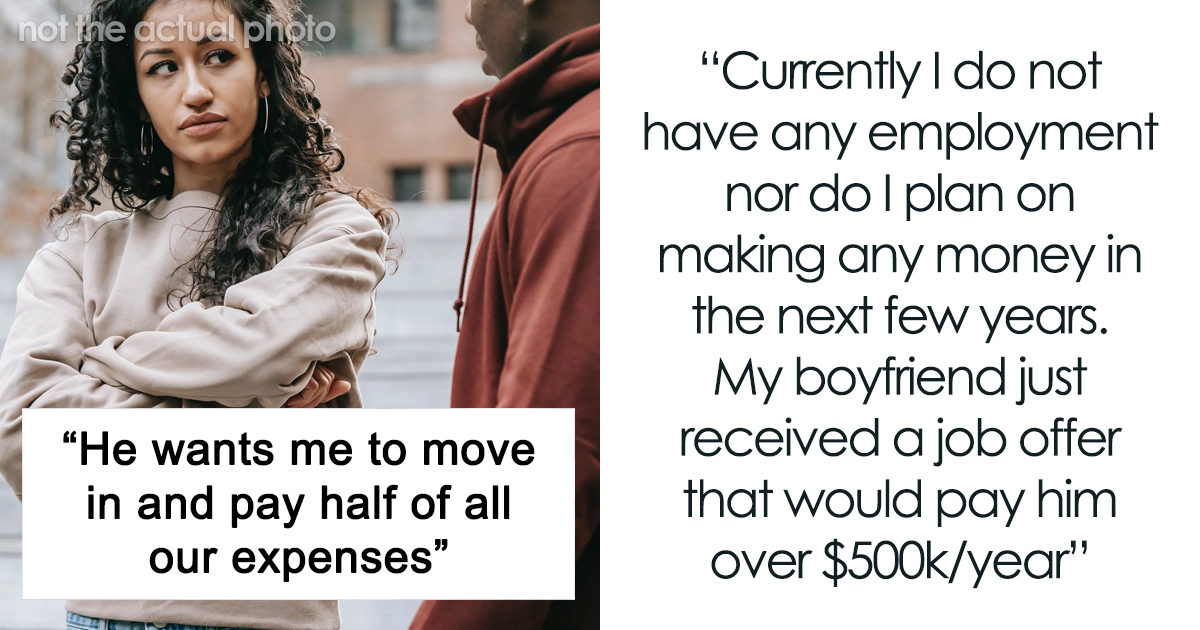
Moving in together sounds romantic until the rent bill walks into the room wearing steel-toed boots. One viral relationship story captured exactly that awkward moment: a well-earning boyfriend reportedly wanted his unemployed girlfriend to move across the country and split rent 50-50. She, understandably confused, asked the internet whether this arrangement was fairor whether everyone involved had accidentally booked a one-way ticket to Planet Absolutely Not.
The online reaction was intense because the issue is bigger than one couple. It taps into one of the messiest questions in modern relationships: should couples split expenses equally, or should they split them based on income, savings, employment status, and real-life circumstances? In a world where rent eats a heroic slice of many budgets, “fair” is not always the same as “half.” Sometimes 50-50 is clean math. Other times, it is emotional accounting with a calculator and a blindfold.
This article breaks down the debate, the financial logic behind rent splitting, the relationship red flags people noticed, and the practical ways couples can build a shared home without turning the lease agreement into a courtroom drama.
Why This Rent-Splitting Debate Hit a Nerve
The story became relatable because it combined several high-pressure ingredients: unequal income, unemployment, a major move, cohabitation, and a partner who appeared to expect equal payment despite unequal financial footing. That is not just a budgeting issue. That is a trust issue, a planning issue, and possibly a “do we understand the same dictionary definition of partnership?” issue.
In many relationships, splitting rent 50-50 works beautifully when both people earn similar incomes, choose the apartment together, and have comparable financial responsibilities. But when one partner is unemployed or earning far less, the same split can become lopsided fast. The higher earner may feel the arrangement is equal because both people pay the same amount. The lower earner may feel squeezed because the rent consumes a much larger share of their limited resources.
That is why internet commenters often distinguish between equality and equity. Equality means both partners pay the same dollar amount. Equity means both partners contribute in a way that reflects their actual ability to pay. In a healthy relationship, the goal is not to “win” the bill. The goal is to create a home where neither person feels trapped, used, or quietly punished for earning less.
The Difference Between Equal and Fair
Equal Splitting: Simple, But Not Always Sensible
A 50-50 rent split is easy to understand. If rent is $2,000, each partner pays $1,000. Nobody needs a spreadsheet with six tabs, a color-coded legend, and a small prayer. For couples with similar incomes, similar debts, and similar savings goals, equal splitting can feel transparent and low-conflict.
However, equal splitting can become unfair when incomes are drastically different. Imagine one partner earns $8,000 a month and the other earns $0 while job hunting. A $1,000 rent share is 12.5% of the higher earner’s monthly income and an impossible percentage of the unemployed partner’s income, because zero income does not magically become rent money when someone says “be fair.” Math is rude like that.
Even if the lower-earning partner has savings, forcing a 50-50 split may drain their emergency fund, limit their job search flexibility, and create dependency. Ironically, the arrangement that claims to protect independence may actually make the lower earner more financially vulnerable.
Proportional Splitting: Less Pretty, More Practical
A proportional split means each partner contributes based on their share of total household income. For example, if one partner earns 75% of the household income and the other earns 25%, they split shared expenses 75-25. It is not always perfect, but it often feels more realistic when incomes differ.
In the viral story, the girlfriend was unemployed, which makes proportional splitting especially important. If one person currently brings in all the income, the couple may need a temporary arrangement: the employed partner covers rent, the unemployed partner contributes through agreed non-financial responsibilities, and both revisit the plan once employment changes. That conversation should be clear, respectful, and time-boundnot vague, resentful, or used as leverage.
Proportional splitting also encourages couples to look at the whole budget, not just rent. Groceries, utilities, moving costs, deposits, transportation, insurance, subscriptions, household supplies, and emergency savings all matter. Rent may be the headline act, but the backup dancers can still empty a wallet.
Why Rent Makes This Conversation So Emotional
Housing is usually the largest expense in a household budget. U.S. consumer spending data consistently shows housing taking the biggest share of average annual expenditures. Meanwhile, many renters spend more than 30% of their income on housing costs, the common benchmark used to identify cost burden. When rent is already heavy, asking a lower-income or unemployed partner to split it evenly can feel less like partnership and more like financial dodgeball.
The 30% guideline is not magic, and it does not fit every city or household. In high-cost areas, many people exceed it simply because the rental market is doing Olympic-level gymnastics. Still, the guideline exists for a reason: once housing takes too much income, there is less left for food, healthcare, transportation, debt payments, savings, and the small joys that keep adults from becoming haunted office plants.
For an unemployed person, the problem is even sharper. Rent is not just a bill; it is a clock. Every month without income chips away at savings and security. A partner who ignores that reality may not be trying to be cruel, but they are definitely skipping a few chapters in the financial empathy handbook.
What the Internet Saw as Red Flags
Red Flag 1: Asking Someone to Move Without Protecting Them
Moving across the country is not like switching cereal brands. It may mean leaving friends, family, familiar job networks, local references, healthcare providers, and backup housing options. If a higher-earning partner asks an unemployed partner to relocate, the risk is not evenly shared. The person moving may lose more if the relationship fails.
That is why many readers reacted strongly. The rent demand did not exist in a vacuum. It was connected to relocation, dependency, and uncertainty. A fair partner would ask: “How do we make this safe for both of us?” not just “Can you Venmo me half by the first?”
Red Flag 2: Confusing Love With a Lease Test
Some people use money as a test of commitment. They may think, “If you really want this relationship, you will sacrifice.” But healthy commitment should not require one partner to damage their financial stability to prove loyalty. A relationship is not a subscription service where love unlocks premium rent obligations.
If one partner insists on a lifestyle the other cannot afford, the fair answer is not to pressure the lower earner. The fair answer is to choose a home based on the lower budget, adjust the contribution formula, or delay moving in until the finances make sense.
Red Flag 3: Avoiding the Bigger Money Conversation
Rent is rarely just rent. It represents values: independence, generosity, security, control, pride, fear, and long-term expectations. Couples who avoid the money conversation may end up arguing through the rent bill instead. The bill becomes the messenger, and the messenger gets yelled at.
Before moving in, couples should discuss income, debts, savings, employment plans, credit concerns, household labor, emergency funds, and what happens if one person loses a job. This may not sound as cute as shopping for throw pillows, but it prevents the throw pillows from becoming emotional support objects during a financial meltdown.
When a 50-50 Split Can Be Fair
To be balanced, 50-50 is not automatically bad. It can be fair when both partners have comparable income, both willingly choose the housing cost, and neither is sacrificing basic financial safety. It can also work when both partners strongly value financial independence and have enough cushion to handle emergencies.
For example, if both people earn around $60,000, have similar debts, and choose a modest apartment, equal splitting may be simple and fair. If one partner earns $200,000 and wants a luxury high-rise while the other earns $45,000 and was perfectly happy with a normal apartment that does not have a lobby scented like imported confidence, 50-50 becomes questionable.
The key is choice. If both partners freely agree and can afford it, fine. If one partner is being dragged into a budget designed for someone else’s income, not fine. “Equal” should never be used as a fancy hat for “you struggle while I stay comfortable.”
Better Ways Couples Can Split Rent
1. Split by Income Percentage
This is one of the most commonly recommended alternatives. Add both incomes together, calculate each person’s share, and divide shared bills accordingly. If Partner A earns 70% of the household income and Partner B earns 30%, they pay shared bills in that ratio. This method is especially useful when incomes are unequal but both people are earning.
2. Base the Apartment on the Lower Earner’s Budget
If one partner insists on 50-50, then the apartment should be affordable for the lower earner. This keeps lifestyle inflation from becoming a relationship problem. The higher earner can always choose to pay more for upgrades if they want a bigger place, better location, or amenities that sound like they were named by a spa consultant.
3. Use a Temporary Support Plan During Unemployment
Unemployment changes the equation. Couples can agree that the employed partner covers rent for a set period while the unemployed partner applies for jobs, handles certain household tasks, or contributes from savings only at a level that does not create danger. The plan should include check-ins and a realistic timeline.
4. Create a Joint Household Account
Some couples keep personal accounts separate but contribute agreed amounts into a shared account for rent, utilities, groceries, and household supplies. This approach supports transparency without forcing full financial merging. It also reduces the tiny daily arguments over who bought paper towels, which somehow become emotionally important when nobody has eaten lunch.
5. Revisit the Agreement Regularly
Income changes. Jobs change. Rent changes. Someone may return to school, start a business, get laid off, receive a promotion, or need to care for family. A fair rent split in January may be outdated by July. Couples should review their arrangement every few months or after major changes.
The Emotional Side: Contribution Is Not Only Cash
Money matters, but it is not the only way people contribute to a shared life. Cooking, cleaning, scheduling repairs, managing groceries, caring for pets, organizing moves, and supporting a partner during stress all have value. The danger comes when non-financial contributions are assumed instead of respected.
If an unemployed partner is temporarily contributing more household labor, both people should agree on what that means. It should not become unpaid servitude, and it should not be used to shame the person without income. Likewise, the employed partner should not be treated like an ATM with hobbies. Balance requires gratitude on both sides.
The healthiest couples tend to treat money as a shared problem to solve, not a weapon. They ask, “What arrangement keeps us both secure?” They do not ask, “How do I make sure I never pay one dollar more than absolutely necessary?” That second question may be financially tidy, but romantically speaking, it has the warmth of a parking meter.
What This Viral Story Teaches About Moving In Together
The biggest lesson is simple: do not move in together until the money plan is clear. Love can be spontaneous. Leases are not. A lease is a legal and financial commitment, and it deserves a conversation that goes beyond “We will figure it out.” Many couples do figure it outbut some figure it out while arguing beside a stack of unopened utility bills.
Before signing anything, partners should know who pays what, whose name is on the lease, how deposits are handled, what happens after a breakup, how moving costs are split, and whether either person has enough savings to leave safely if needed. That last point matters. A healthy living arrangement should never trap someone because they cannot afford to exit.
For the girlfriend in the viral debate, the internet’s concern was not only that she was being asked to pay half. It was that she might be taking on more risk than her boyfriend seemed willing to recognize. If a well-earning partner wants a shared future, generosity is not the only issue. Awareness is. A person can pay half the rent and still feel unsupported if the structure ignores reality.
Practical Example: What Fairness Could Look Like
Suppose a couple is considering a $2,400 apartment. One partner earns $7,000 per month. The other recently lost a job and has no current income, but has $8,000 in savings. A strict 50-50 split would require the unemployed partner to pay $1,200 monthly, plus utilities and groceries. In only a few months, savings could drop dangerously low.
A more thoughtful plan might look like this: the employed partner pays rent for three months while the unemployed partner covers a smaller fixed amount for groceries or utilities, based on savings safety. They schedule monthly check-ins. The unemployed partner actively job searches. Once income returns, they switch to a proportional split. If employment takes longer than expected, they reassess rather than silently resent each other.
This plan is not about freeloading. It is about matching the arrangement to reality. Good relationships do not pretend both partners are standing in the same financial shoes when one person is wearing hiking boots and the other is barefoot on hot pavement.
Related Experiences: What This Looks Like in Real Life
Many couples discover the rent-splitting problem only after moving in. At first, the idea of sharing a place feels exciting. They imagine Sunday pancakes, cozy movie nights, and maybe a plant they will absolutely remember to water. Then the first month of bills arrives, and suddenly romance has a line item called “electricity.”
One common experience involves couples who start with 50-50 because it feels modern and independent. For the first few months, it seems fine. Then one partner realizes they have no money left after rent, groceries, gas, student loans, and basic expenses. Meanwhile, the higher earner is saving, investing, ordering takeout, and casually suggesting a weekend trip. The lower earner may feel embarrassed to say no, so resentment grows quietly. The problem is not that the higher earner enjoys comfort. The problem is that the shared lifestyle is priced for one income level but billed to two people equally.
Another experience happens during unemployment. A person loses a job and initially says, “I can still pay my half.” Pride is powerful. Nobody wants to feel like a burden. But after two or three months, savings shrink, anxiety rises, and every grocery run feels like a financial pop quiz. A supportive partner can make a huge difference by saying, “Let’s adjust this temporarily so you can focus on getting stable.” That sentence does not make the unemployed person helpless. It makes the relationship feel like a team.
There are also couples who handle unequal income very well. They sit down with actual numbers, not vibes. They list rent, utilities, groceries, transportation, debt, savings goals, and personal spending. Then they choose a proportional split or a hybrid system. One pays more rent; the other handles a smaller bill and more household planning. They review the plan every few months. Nobody keeps score over every tomato, paper towel, or suspiciously expensive coffee. The agreement works because both people feel seen.
A useful experience many couples share is the “lower budget wins” rule. If the higher earner wants to split everything equally, the couple chooses housing the lower earner can comfortably afford. If the higher earner wants a nicer place, they pay the difference. This keeps choice and responsibility connected. You want the apartment with the gym, rooftop deck, and lobby that looks like a boutique hotel? Great. You can sponsor the luxury, Captain Amenities.
The deepest lesson from these experiences is that money reveals communication habits. A rent conversation can show whether partners listen, compromise, minimize, pressure, protect, or compete. The best arrangement is not always the one that looks fairest on paper. It is the one that keeps both people financially safe, emotionally respected, and honest about what they can afford.
Conclusion
The viral “split the rent 50-50” debate became popular because it exposed a common relationship myth: that equal payment automatically equals fairness. When both partners earn similar incomes and choose the same lifestyle, 50-50 can work. But when one person is unemployed, relocating, or earning far less, a strict half-and-half split can become unrealistic and even harmful.
A strong relationship does not require perfect finances. It requires honest communication, practical planning, and a willingness to adjust when life changes. Couples who talk openly about income, rent, savings, job uncertainty, and household responsibilities are far more likely to build a home that feels safe instead of stressful.
So, on what planet is it reasonable for a well-earning partner to expect an unemployed partner to split rent evenly? Maybe on a planet where rent is paid in moon rocks and anxiety does not exist. Here on Earth, fairness usually needs more nuance, more empathy, and a much better spreadsheet.
Note: This article is for informational and editorial purposes. Couples facing major financial decisions should discuss their own budgets, legal obligations, and living arrangements carefully before signing a lease or relocating.