Some family drama stays in the group chat. Some of it spills into therapy. And some of it blasts onto the internet wearing steel-toed boots and carrying years of resentment like a gym bag full of bricks. That is exactly why this story hit such a nerve online. On the surface, it sounds like a jaw-dropping line from an angry son to his mother. Underneath it, though, sits a messier and far more human problem: grief, forced bonding, stepfamily pressure, old resentment, and the kind of emotional buildup that does not explode out of nowhere.
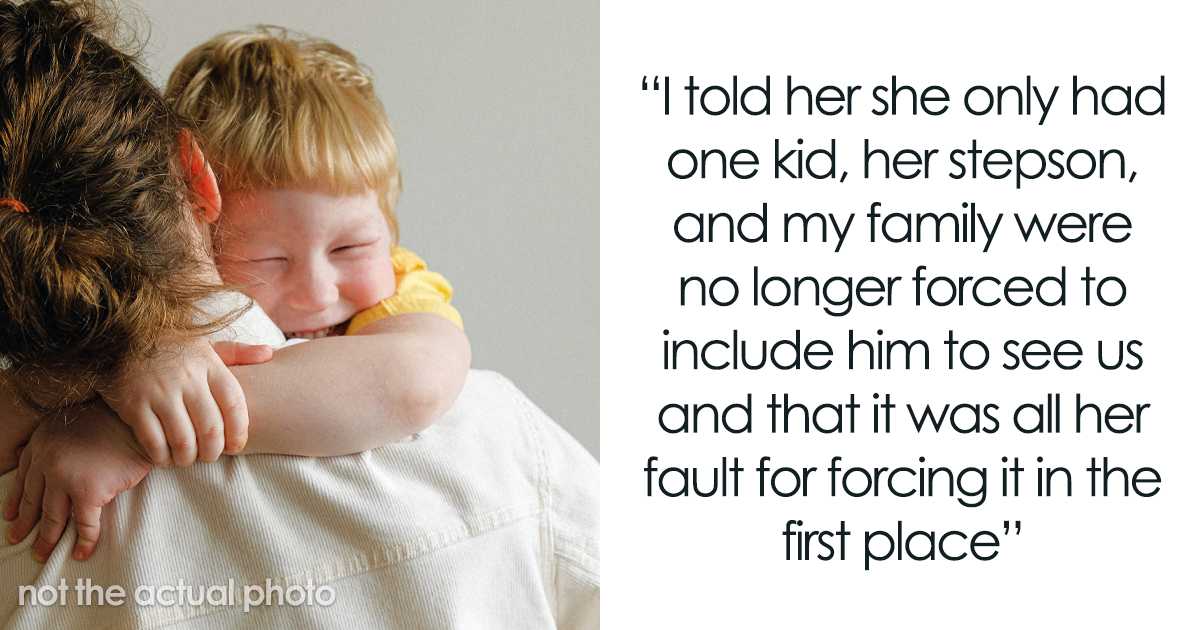
The viral story centers on a young man who finally tells his mother that he and his sister are no longer her children after years of feeling ignored, pushed aside, and emotionally cornered. The sentence was brutal. No sugarcoating that. But the bigger reason the story spread so quickly is that many readers recognized the pattern long before the blowup. When parents try to force closeness instead of building trust, relationships do not magically bloom into a Hallmark movie. More often, they become a pressure cooker with a family calendar.
The Story Behind the Blowup
In the original account, the son explains that his parents divorced when he and his sister were young. Their mother later married a widower with a baby boy, and she quickly embraced that child as fully her own. On paper, that may sound noble. In real life, the trouble started when she insisted that everyone else had to follow her timeline and her version of family, whether they were ready or not.
According to the story, the mother told the children’s paternal grandparents that if they wanted to see the two siblings, they had to include the stepbrother too. There was no room for separate grief, no space for private bonding, and not even an exception for the late father’s birthday. That detail is what makes the story sting. For the son and his sister, that day was about remembering their dad with the people who knew and loved him. For the mother, it became another test of loyalty to her new family setup. That difference matters.
Years passed. The resentment did not magically evaporate into the air like a scented candle labeled “blended family peace.” Instead, it hardened. Once the son became an adult and moved out, he and his sister stopped participating. Their paternal relatives no longer included the stepbrother, and the already strained relationship with their mother got worse. Eventually, she confronted him, accusing him and his sister of allowing one child to be excluded. That is when he snapped and said the line that launched the whole internet debate.
Why This Story Hit So Hard
Grief and replacement are not the same thing
One of the deepest tensions in this story is the difference between adding someone new to a family and trying to replace what was lost. Children who lose a parent, or even lose daily contact with one through divorce, often protect that bond fiercely. They do not want a substitute handed to them with a smile and a family photo. They want their real relationship, their real memories, and their real grief to be respected.
That is where this mother seems to have made a serious emotional mistake. She may have believed she was creating unity. Her children experienced it as erasure. Those are not remotely the same thing. A parent can say, “We are all family here,” but if the children hear, “Your pain is inconvenient, please move along,” the damage is already underway.
Forced family usually backfires
Healthy blended families are rarely built through emotional ultimatums. They usually grow through time, patience, consistency, and respect for the fact that every relationship develops at a different speed. A stepparent can become trusted and loved, but not by barging into the role like a substitute teacher who has decided they now own the classroom furniture.
The same goes for stepsiblings. Some become close. Some stay polite but distant. Some bond later in adulthood when the pressure is off and nobody is assigning seats at Thanksgiving like a corporate team-building retreat. The problem begins when a parent confuses “I hope you love each other” with “you must perform closeness on command.” That turns connection into obligation, and obligation is terrible fertilizer for affection.
Ignored boundaries become bigger fights later
The son’s final statement was harsh, but it also reads like the final chapter of a complaint that was never heard in the first place. Many family estrangements are not caused by one giant event. They are caused by years of smaller violations that pile up until one day the injured person says, “That’s it. I’m done.” To the parent, it can feel sudden. To the adult child, it often feels overdue by about a decade and a half.
That is exactly what makes this story so relatable to readers who grew up in homes where their feelings were constantly “managed” instead of respected. They know the script. First comes the minimization. Then comes the guilt. Then comes the accusation that setting boundaries is cruel. Somewhere near the end, somebody says something nuclear at a parking lot, workplace, or family dinner. Welcome to modern family breakdown, now available in HD.
The Hidden Family Dynamics at Work
Boundary-breaking behavior
At the heart of the conflict is a basic refusal to let two children have a separate relationship with their father’s side of the family. That matters. Boundaries are not punishments. They are the lines that help relationships stay respectful and emotionally safe. When a parent repeatedly violates those lines, especially around grief and identity, children often stop feeling emotionally secure around that parent.
In this case, the mother was not just encouraging kindness toward a stepbrother. She appears to have controlled access to their paternal family unless her rules were followed. That changes the emotional equation. It turns what could have been an opportunity for natural inclusion into a power struggle, and power struggles rarely produce the warm family closeness parents say they want.
Favoritism and perceived unfairness
Another reason the story resonated is the suspicion that the mother cared more about defending the stepbrother’s place than protecting the emotional reality of her biological children. Whether that was her intention or not, perception matters in families. Children do not need a spreadsheet to sense when one person’s needs are always driving the bus.
Parental favoritism, or even the feeling of it, can poison sibling relationships and damage trust with a parent long into adulthood. In a situation like this, the son and his sister may not have believed the stepbrother was the “favorite” in a traditional sense, but they clearly felt he had become the center of the family’s emotional rules. And once a child starts believing that their pain ranks below somebody else’s comfort, the relationship starts cracking.
Guilt-tripping dressed as love
There is also a classic emotional maneuver in this story: using guilt to push compliance. The mother reportedly framed the issue as cruelty toward “one of her kids being left out.” That wording sounds caring on the surface, but it also redirects attention away from her children’s grief and toward their supposed failure to be compassionate enough. It is a neat trick, emotionally speaking. It also tends to backfire.
Guilt can be useful when we have done something wrong. It becomes manipulative when it is used to pressure people into abandoning valid boundaries. Adult children who grow up around this dynamic often become experts at one thing: doubting themselves. The son’s outburst may have been ugly, but it also sounded like a moment when self-doubt finally packed a suitcase and left the building.
Role confusion in the family
Stories like this often involve role confusion too. Children are expected to regulate the feelings of adults, preserve harmony, keep the peace, and absorb disappointment without complaint. That is not healthy. In some families, kids end up becoming emotional caretakers, mediators, or silent managers of everybody else’s needs. When they finally stop doing that, relatives act shocked, as if the unpaid family staff just walked out in the middle of the shift.
That does not mean this son was formally parentified in the strict clinical sense. But the emotional expectation is familiar: protect the family image, swallow your discomfort, and keep participating so Mom does not feel bad. That kind of pressure can lead to resentment that lingers well into adulthood.
Was the Son Wrong for Snapping?
Morally, the answer is complicated. Emotionally, it is easy to understand. Telling a mother she no longer has you as a son is a brutal sentence. It wounds, and it was clearly meant to wound. But it is also important not to analyze the sentence in a vacuum like it floated down from the sky on a weather balloon. Context matters. The son did not wake up one morning, stretch, drink some orange juice, and decide to audition for the role of family villain. He reacted after years of feeling that his grief and boundaries had been bulldozed.
That does not make every word wise. It does make them legible. Sometimes “snapping” is really what happens when a person has tried softer language for years and learned that softness only gets ignored. By the time the hard truth comes out, it is no longer polished. It is blunt, angry, and probably five to ten years overdue.
So no, the son’s wording was not kind. But kindness and honesty do not always arrive holding hands. In broken families, honesty often shows up looking rumpled, exhausted, and just a little mean.
What the Mother Could Have Done Differently
Let relationships grow naturally
She could have encouraged inclusion without making it mandatory. A stepbrother might still have formed real bonds with the family over time if everyone had been allowed to choose that connection freely.
Protect the children’s grief
The late father’s birthday and time with his side of the family should have remained emotionally protected spaces. Not every family ritual needs to be blended. Some deserve to stay specific and sacred.
Listen without defending
If both children repeatedly said the arrangement felt wrong, that should have triggered curiosity, not a lecture. Parents do not have to agree with every feeling, but they do have to take it seriously.
Stop using access as leverage
Once a parent starts controlling who gets to see whom unless certain emotional demands are met, the relationship stops feeling loving and starts feeling transactional. Children notice that faster than adults think.
Can a Family Like This Heal?
Possibly, but not through another guilt trip, and definitely not through a speech about how much sacrifice was made “for everyone.” Reconciliation in situations like this usually starts with one person doing something surprisingly rare: owning harm without immediately explaining it away.
If the mother ever wants a real relationship with her son again, she would likely need to acknowledge the specific wound. Not in broad, fluffy language like, “I’m sorry you feel hurt.” That phrase should honestly be banned from apology school. A meaningful apology would sound more like this: I pushed my vision of family onto you. I did not protect your grief. I treated your boundaries like selfishness. I made access to your father’s family more difficult. I was wrong.
Then comes the hardest part: accepting that forgiveness may not arrive on her preferred schedule. Estranged adult children are often willing to revisit a relationship only when they believe the other person truly understands what went wrong. Not when the parent wants peace. Not when the holidays are coming. Not when the grandchildren are involved. When trust feels possible again.
What Readers Can Learn From the Drama
The internet loves a family showdown, but the real lesson here is not that angry adult children are always right or that parents in blended families are always wrong. The lesson is simpler and more uncomfortable: you cannot force emotional reality to match your preferred family narrative.
If children are grieving, let them grieve. If a stepfamily bond is still fragile, let it stay fragile while it develops. If someone says a relationship feels invasive, do not respond by tightening your grip. The more a family tries to manufacture closeness through pressure, the more likely it is to end up with exactly the opposite result.
People do not usually go low-contact or no-contact because one awkward holiday dinner ruined everything. They do it because a pattern taught them that speaking up changes nothing. By the time the final argument arrives, they are not just reacting to that one moment. They are reacting to the entire archive.
Related Experiences People Often Have in Similar Families
Anyone who has lived through a family like this can probably identify the feeling before they can explain the story. It is that strange mix of guilt, anger, and confusion that shows up when a parent keeps insisting everything is “for the good of the family,” while the family itself feels increasingly miserable. You start wondering whether you are selfish, dramatic, or ungrateful, because the people around you keep acting like your discomfort is the real problem. Meanwhile, the actual issue is that nobody is allowed to have a separate emotional truth.
Some people grow up in homes where a new partner arrives and the rules change overnight. Suddenly they are expected to treat a stepparent as Mom or Dad 2.0, pose for the happy photos, share traditions immediately, and stop mentioning the missing parent too much because it makes things “awkward.” That pressure can create a quiet kind of loneliness. Outwardly, the child is participating. Inwardly, they feel like an extra in someone else’s reboot.
Others describe becoming the peacekeeper. They are the child who knows exactly when to stay quiet, when to nod, when to make the younger sibling cooperate, and when to hide their real reaction so the parent does not spiral. On paper, they look mature. In reality, they are exhausted. As adults, these people often struggle with boundaries because they were trained to believe love means managing other people’s emotions before they even notice their own.
Then there are the adult children who finally leave home and notice something surprising: they can breathe. They stop dreading every phone call. Holidays become less tense. Their stomach does not knot up before every family gathering. And that realization brings a second wave of pain, because now they have to admit that distance feels safer than closeness. It is hard to grieve a parent who is still alive, especially when the grief is not about death but about the relationship you should have had and never really got.
Many people in similar situations also say that the final fight was not planned. They did not rehearse it in the mirror like a courtroom monologue. It happened because one more lecture, one more guilt trip, or one more rewriting of family history pushed them over the edge. Afterward, relatives often focus only on the rude sentence or the disrespectful tone. Very few ask what kind of repeated hurt made that explosion feel necessary. That is part of what makes these family rifts so painful. The final spark gets all the attention, while the long trail of gasoline is treated like a minor detail.
And yet, some people do heal. Not all families reconcile, but many adults eventually build healthier lives by learning what they were never taught in childhood: that boundaries are not betrayal, that grief is not disloyalty, that saying “this hurt me” is not cruelty, and that family love without respect is just emotional theater with better costumes.
Conclusion
“My Sister And I Were No Longer Her Kids” is the kind of headline that makes readers click for the drama. But the real reason it sticks is that it captures a painful truth about family estrangement: the ugliest sentences are often born from years of being unheard. This was never just a story about a rude son. It was a story about a mother who tried to choreograph closeness, a son who felt his grief was overwritten, and a family that confused forced inclusion with love.
In the end, that is the warning here. You can ask people to be kind. You can invite them to build something new. You can encourage connection. But the moment you start demanding emotional loyalty while dismissing emotional reality, the whole thing starts to crack. Family bonds are strong, but they are not indestructible. Even blood ties can fray when respect goes missing for too long.