If kitchen knives had a red carpet event, the Miyabi Birchwood Japanese Knife Collection would not arrive quietly. It would glide in wearing a shimmering Damascus pattern, carrying a birch handle like fine jewelry, and somehow still look ready to chiffonade basil with terrifying confidence. That blend of beauty and performance is exactly why the collection has earned such a strong reputation among home cooks, collectors, and serious kitchen gear enthusiasts.
Known formally in many listings as the Miyabi Birchwood SG2 5000MCD series, this collection sits at the luxury end of Japanese cutlery. It is designed for people who want more than a generic “good knife.” They want sharpness that feels precise, steel that holds an edge impressively well, craftsmanship that feels intentional, and a design that makes guests ask, “Wait, what knife is that?” before they even notice the onions were diced perfectly.
In practical terms, the Miyabi Birchwood collection combines premium SG2 powder steel, a 101-layer Damascus-style blade construction, hand-finished sharpening, and a traditional birch handle that gives the knives their signature look. The result is a lineup that feels equal parts tool and heirloom. It is not merely cutlery. It is cutlery with main-character energy.
What Makes the Miyabi Birchwood Collection Special?
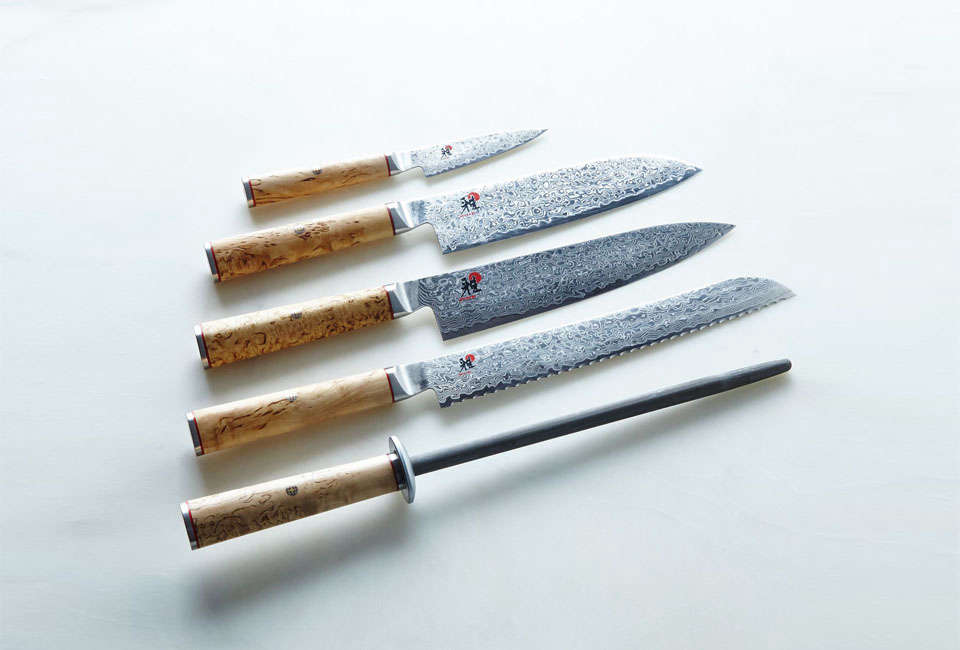
At first glance, the collection’s visual appeal is obvious. The blades have a layered floral Damascus pattern that catches the light beautifully, while the pale birch handles set the series apart from darker wood or black synthetic handles commonly seen in premium kitchen knives. But the reason people keep talking about Birchwood is not just appearance. It is the balance of aesthetics, edge performance, and craftsmanship.
SG2 Powder Steel at the Core
The heart of the collection is SG2 micro-carbide powder steel, sometimes also referred to in Miyabi materials as MC63. This is one of the big reasons Birchwood knives are prized. SG2 is known for combining very fine edge capability with impressive edge retention, which means the blade can get extremely sharp and stay sharp longer than many mainstream kitchen knives.
For cooks, that translates into cleaner slices, less resistance through food, and a more controlled feel on the board. Tomatoes do not get squashed. Herbs are less likely to bruise. Fish, fruit, and delicate vegetables get cleaner cuts. In short, the knife behaves less like a wedge and more like a laser with table manners.
101 Layers and a Damascus Finish
The blade construction is another headline feature. Miyabi Birchwood knives are widely described as having a 101-layer blade: an SG2 core protected by multiple outer steel layers that create the collection’s distinctive Damascus pattern. This layered construction contributes to durability and gives each knife its refined, almost sculptural look.
That pattern is not just decorative fluff for people who alphabetize their olive oils. It is part of what gives the collection its premium identity. Birchwood knives look special because they are made to look special, but they also perform like serious kitchen tools rather than showroom ornaments.
Hand-Honed Honbazuke Edge
One of the most talked-about details in the Miyabi Birchwood line is the hand-finished Honbazuke edge. The knives are commonly described as being honed to a very acute angle, roughly 9.5 to 12 degrees per side. That is much finer than the edge found on many Western-style knives, which helps explain why Birchwood knives feel so keen straight out of the box.
This razor-like geometry is part of the magic, but it also tells you something important: these knives reward precision. They are phenomenal for slicing and controlled prep work, but they are not the blades you use to hack through bones, frozen food, or your own impatience.
CRYODUR Hardening and Rockwell Hardness
The collection is also associated with CRYODUR ice-hardening and a hardness level around 63 on the Rockwell scale. That hardness supports excellent edge retention and gives Birchwood knives the crisp cutting feel that enthusiasts love. It also places the knives firmly in the category of high-performance Japanese blades that deserve proper care.
Harder steel is often wonderful at holding a sharp edge, but it can be less forgiving than softer, heavier Western knives when misused. Translation: treat this knife like a precision instrument, not like a camp axe that found its way into a designer kitchen.
Masur Birch Handle Design
The handle is the collection’s signature visual flourish. Depending on the retailer or description, it may be called Masur birch or Karelian birch, and it is typically shaped in a traditional D-style Japanese handle. The handle gives the knives a lighter, more agile feel than many full-bolster Western chef’s knives, and it adds a warm, organic contrast to the shimmering blade.
Beyond aesthetics, the handle helps deliver one of Birchwood’s most appealing qualities: balance. These knives often feel nimble in the hand, which is part of why users describe them as precise, graceful, and satisfying during detailed prep.
Which Knives Are in the Collection?
The Miyabi Birchwood Japanese Knife Collection is not a one-knife wonder. It includes a broad premium lineup, with many U.S. retailers carrying versions of the following:
- Chef’s Knife / Gyutoh: the all-purpose workhorse for slicing, dicing, chopping, and mincing.
- Santoku: a versatile Japanese favorite for everyday prep, especially vegetables, proteins, and herbs.
- Nakiri: a vegetable specialist with a flatter profile that excels at straight, efficient chopping.
- Kiritsuke or Bunka-style options: for cooks who want added precision at the tip and a distinctly Japanese blade profile.
- Paring and Utility Knives: for smaller tasks like peeling, trimming, segmenting citrus, and fine detail work.
- Bread and Slicing Knives: for crusty loaves, roasts, and proteins that need long, clean strokes.
- Steak Knife Sets and Block Sets: for shoppers who want the Birchwood aesthetic and performance across more of the kitchen.
That range matters because it allows the collection to serve very different buyers. Some people want a single “forever chef’s knife.” Others want a coordinated set that turns an ordinary prep station into something that looks suspiciously like a chef’s private happy place.
How Does Birchwood Compare to Other Premium Knives?
Birchwood sits in a fascinating space in the premium knife market. It competes with respected Japanese brands and with high-end Western offerings, but it does so with a very specific identity. Compared with many German-style knives, Birchwood knives are generally lighter, thinner, sharper-feeling, and more oriented toward precision cutting. Compared with some other Japanese luxury knives, they bring a particularly polished visual style and a strong major-retailer presence in the U.S. market.
That combination makes the collection attractive to buyers who want premium Japanese performance without disappearing down a rabbit hole of boutique imports, steel abbreviations, and late-night forum debates that end with someone declaring a 240mm gyuto “life-changing.” Maybe it is. But Birchwood offers a more accessible route into high-end Japanese cutlery while still feeling genuinely special.
It also helps that the collection is widely recognized for being visually stunning. Plenty of knives cut well. Fewer make you want to clear a spot on the counter just so they can be admired between dinner prep and dessert.
Who Should Buy the Miyabi Birchwood Collection?
This collection makes the most sense for a few specific kinds of buyers.
Home Cooks Ready for an Upgrade
If you have been cooking with entry-level knives and want to understand what people mean by words like “edge geometry,” Birchwood is the kind of upgrade that makes the difference obvious. The first paper-thin onion slice usually answers all remaining questions.
Design-Conscious Shoppers
Some knives are all function. Some are all style. Birchwood is appealing because it genuinely offers both. If your kitchen tools matter to you visually as well as practically, this collection makes a strong case for itself.
Gift Buyers Shopping at the Luxury Tier
For weddings, milestone birthdays, housewarmings, or serious culinary gifts, the Birchwood collection checks many boxes. It is prestigious, useful, memorable, and far less boring than another countertop appliance that will eventually become a breadbox in disguise.
Cooks Who Appreciate Precision
If your cooking involves lots of vegetable prep, fish, fine slicing, and detail work, Birchwood is very compelling. If your habits involve splitting lobster shells, prying open frozen burger patties, or committing other crimes against steel, you may be happier with a sturdier, less delicate blade for those jobs.
Care, Maintenance, and Everyday Use
A premium Japanese knife collection deserves premium treatment. The good news is that Birchwood knives are not difficult to care for. They simply require the kind of attention that sharp, hard steel always asks for.
- Hand-wash only. Skip the dishwasher completely.
- Dry the knife right away. Do not let moisture linger on the blade.
- Use a softer cutting surface. Wood and quality synthetic boards are better than glass, stone, or ceramic.
- Store carefully. A sheath, quality block, or magnetic strip is better than tossing it into a drawer like loose change.
- Sharpen properly. A whetstone is generally the right approach for Japanese-style edges.
This care routine may sound fussy if you are used to treating kitchen knives like indestructible multitools. But that discipline is part of owning a performance blade. A knife this refined is not high-maintenance in the dramatic sense. It is more like a nice pair of leather shoes: take care of it, and it will keep making you look smart.
Final Verdict: Is the Miyabi Birchwood Collection Worth It?
The Miyabi Birchwood Japanese Knife Collection is worth serious consideration for cooks who want top-tier sharpness, elegant Japanese craftsmanship, and standout visual design in one package. It is not the cheapest path to a better kitchen, and it is not the toughest blade family for rough treatment. That is not the point.
The point is precision. The point is beauty with substance. The point is owning a knife that feels intentionally made, not merely manufactured. Birchwood succeeds because it delivers a luxury experience that still makes practical sense: exceptional sharpness, strong edge retention, refined balance, and a collection-wide design language that looks extraordinary without sacrificing utility.
If your idea of a great kitchen tool is something that performs brilliantly, looks unforgettable, and makes everyday prep feel just a little more ceremonial, Birchwood is a collection that earns its reputation. And yes, it may also make your other knives feel underdressed.
Extended Experience: What It Feels Like to Live With the Miyabi Birchwood Collection
Using a knife from the Miyabi Birchwood collection tends to change the rhythm of cooking in small but noticeable ways. The first difference most people notice is not even the cut itself. It is the setup. You reach for the knife more deliberately. You place the board more carefully. You suddenly stop treating prep like a chore and start treating it like the opening scene of a cooking show where the onions are suspiciously well behaved.
Once the blade touches food, the second difference shows up immediately: resistance drops. Instead of pushing through ingredients, you feel the knife glide. A chef’s knife or kiritsuke in this collection can make simple prep feel refined, whether you are slicing scallions into thin ribbons, trimming silver skin from a tenderloin, or cutting an apple so neatly it looks like you finally have your life together. The edge has that “did it already go through?” feeling that premium Japanese knives are known for.
There is also a psychological effect to the Birchwood design. Because the blade is so visually striking and the handle feels so distinctive, the knife never really disappears into the background. That may sound unimportant, but it changes how people use it. Owners often reserve Birchwood for tasks that reward finesse: herbs, fish, fine vegetable work, fruit, boneless proteins, or dinner-party prep when presentation matters. The knife becomes the thing you choose when you want the process to feel good, not just fast.
The lightweight, balanced feel can be especially appealing for longer prep sessions. A large, heavy Western chef’s knife can feel stable and powerful, but it can also become tiring for some users over time. Birchwood typically leans the other way. It feels nimble, quick, and controlled. That can make repetitive tasks less fatiguing and more precise, especially when working with ingredients that benefit from exact slicing instead of brute force.
Of course, living with Birchwood also means learning its personality. This is not the knife you loan to the family member who scrapes the edge across the cutting board, tosses knives into the sink, and believes “dishwasher safe” is a philosophy rather than a feature. Birchwood teaches respect quickly. One good session with a truly sharp SG2 blade usually converts people to better habits: wipe the knife, dry the knife, store the knife properly, and maybe stop using your good cutlery to open random packaging like a pirate with a culinary degree.
There is a longer-term pleasure here too. Premium knives are often judged by the first cut, but the real test is whether they remain satisfying after weeks and months of cooking. That is where Birchwood earns its keep. The collection’s reputation for edge retention means the knives continue to feel capable and rewarding between sharpenings. You are not just paying for a dramatic first impression. You are paying for repeated good experiences over time.
In many kitchens, the Miyabi Birchwood collection becomes more than a set of knives. It becomes a reference point. Friends notice it. Guests ask about it. The owner starts caring a little more about prep work, storage, sharpening, and technique. That may be the most interesting part of the experience: Birchwood does not merely help you cut food. It nudges you into becoming the kind of cook who notices the difference between hacking and slicing, between rushing and working with intent. For a kitchen tool, that is a pretty impressive trick.