Getting lost is every dog parent’s nightmare. One moment, your pup is sniffing a bush with the focus of a detective solving a bacon-related mystery. The next, the leash is loose, the gate is open, or a loud noise has sent your best friend sprinting into the unknown.
But one little dog turned a frightening situation into one of the sweetest pet reunion stories imaginable. Instead of finding his way home, he found something almost as important: his veterinarian.
A Lost Dog Who Remembered Exactly Where To Go
In 2020, a young black puppy in Bang Pu, Thailand became separated from his owner and wandered alone for hours. For a tiny dog in a giant world, that is the canine equivalent of being dropped into an airport with no phone, no wallet, and no clue why every person is rolling a suitcase.
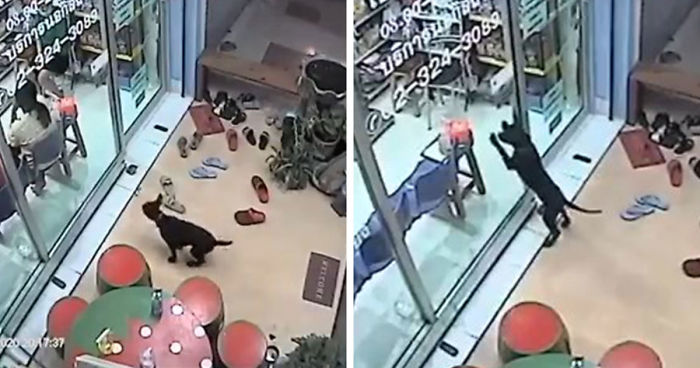
The puppy could not find his way home. But he apparently remembered another place that felt familiar and safe: the Putahracsa Veterinary Clinic, where he had received regular vaccinations since he was very young.
Security footage showed the lost puppy arriving at the clinic and waiting outside the door. He barked, lingered, and made it very clear that this was not a casual stroll past a building. He had business there. Important business. The kind involving a staff member opening the door and helping him solve a problem that his four little paws could not fix.
Fortunately, the veterinary clinic staff recognized him as one of their patients. They contacted his owner, and the dog was reunited with his family after being missing for roughly 15 hours. The reunion was simple, emotional, and proof that sometimes the best emergency plan is having a dog who remembers where the snacks, needles, and kind humans live.
The story quickly melted hearts online because it felt almost too perfect. A dog gets lost, remembers his vet, asks for help, and gets home safely. It sounds like a family movie that would end with everyone crying while a golden retriever wears a tiny bow tie.
But beneath the adorable headline is a serious reminder: familiar places, consistent care, visible identification, and helpful people can make a major difference when a pet goes missing.
Why This Lost Dog Story Feels So Powerful
Dogs Remember More Than We Give Them Credit For
Dogs may not understand street addresses, GPS coordinates, or why humans insist on putting vegetables near perfectly good chicken. However, they are excellent at recognizing routines, familiar scents, landmarks, voices, and locations connected with strong emotional experiences.
A veterinary clinic may not seem like a dog’s favorite destination. It is usually associated with thermometers, nervous tail tucks, and suspiciously cheerful people saying, “This won’t hurt a bit.” Still, a clinic can also be a place of comfort. The dog sees familiar staff members, smells familiar scents, receives food or affection, and often leaves with the people he loves.
For this puppy, the clinic may have represented safety. It was a known location in an unfamiliar situation. That is a powerful example of how dogs rely on memory, repetition, and emotional association.
Familiarity Can Become a Lifeline
Dogs often build mental maps of their regular world. Their home, walking route, neighborhood park, groomer, daycare, and veterinary office can all become meaningful landmarks. A dog that becomes lost may not always be able to retrace a route home, especially if frightened, distracted, or far away from familiar territory.
Still, familiar locations can matter. A dog may head toward a place where he has previously received food, affection, or attention. That does not mean every missing dog will stroll into a vet clinic like a furry customer with an appointment. But it does show why building positive experiences with trusted places can be valuable.
The Human Side of a Pet Reunion
The dog deserves plenty of credit, of course. He was resourceful, persistent, and apparently much better at asking for help than many adults trying to assemble furniture without reading the instructions.
But the story also worked because veterinary staff noticed him, recognized him, and acted quickly. A lost dog’s journey home often depends on a chain of small decisions: a neighbor shares a post, a vet scans a microchip, a shelter checks identification, or a passerby pauses long enough to help.
Pet reunions are rarely the result of one magical moment. More often, they happen because a community works together.
What To Do When Your Dog Is Lost
A missing dog can cause instant panic. Your mind may race through every terrible possibility while your phone battery suddenly drops from 80 percent to “why is technology personally attacking me?” The best response is to act fast, stay organized, and focus first on the area closest to where your dog disappeared.
Start Searching Close to Home
Many lost dogs remain closer to home than owners expect. Check your house first, including closets, garages, sheds, under decks, behind furniture, and any place where a nervous dog could squeeze into hiding. It sounds obvious, but dogs have a surprising talent for becoming invisible when they do not want a bath.
Once you confirm your dog is outside, search the immediate neighborhood. Walk slowly through nearby streets, parks, yards, alleys, and familiar walking routes. Ask neighbors to check garages, crawl spaces, sheds, and fenced yards. Bring treats, a leash, a favorite toy, and a recent photo.
Alert the Right People Quickly
Contact local animal shelters, animal control agencies, rescue groups, and veterinary clinics. File a lost-pet report, provide a clear photo, and include your current phone number. In-person shelter visits can be especially helpful because descriptions of animals are not always accurate.
Post on neighborhood social media groups, local lost-and-found pet pages, and community forums. A clear photo and a short message work better than a dramatic essay written while crying in your driveway. Include the dog’s breed, color, size, last known location, date, and a safe contact method.
Use Flyers That Are Easy To Read
Lost-dog flyers still matter. Make them large, simple, and visible from a passing car. Use a recent photo, big lettering, and a phone number. Avoid stuffing the poster with every charming detail about your dog’s personality, favorite blanket, and secret ability to detect cheese from two rooms away.
If your dog is shy or frightened, add a clear warning such as “DO NOT CHASE.” A scared dog may run farther when strangers call, whistle, or move toward him too quickly.
Do Not Chase a Frightened Dog
This is one of the most important lost dog tips. A normally friendly pet can behave differently when scared. A dog who knows and loves you may still bolt if he is overwhelmed, injured, or trapped in survival mode.
Instead of chasing, try to appear calm and nonthreatening. Sit or crouch at a distance. Turn your body slightly sideways rather than facing the dog directly. Avoid staring. Toss treats nearby and let the dog make the choice to approach.
For a highly fearful dog, work with local animal control, a rescue group, or an experienced lost-pet recovery volunteer. Humane traps and motion-activated cameras can sometimes help locate and recover a dog safely.
Why Microchips and ID Tags Matter So Much
The puppy in this story was recognized because he had visited the veterinary clinic before. That was lucky. Most lost pets are not fortunate enough to wander into a place where someone knows their face.
That is why pet identification matters. A collar tag is often the fastest way for a stranger to contact an owner. Anyone who finds your dog can read a phone number and call immediately. A microchip offers a second layer of protection if the collar slips off, breaks, or disappears during an adventure your dog absolutely did not clear with management.
A microchip is not a GPS tracker. It cannot show your dog’s live location or send a tiny emergency message saying, “I am behind a Taco Bell and I regret nothing.” Instead, it contains an identification number that can be scanned by a veterinarian, shelter, or animal control agency.
The key is keeping the registration information current. A microchip with an old phone number is like putting a disconnected pay phone on your emergency contact list. Ask your veterinarian to scan your dog’s chip during routine wellness visits, and update the registry whenever you move or change phone numbers.
A Smart Lost-Pet Safety Checklist
- Keep your dog’s collar tag updated with your current phone number.
- Microchip your dog and register the chip immediately.
- Ask your veterinarian to scan the chip during annual checkups.
- Keep current full-body and close-up photos of your dog on your phone.
- Save contact information for local shelters, animal control, and emergency veterinary clinics.
- Check fences, gates, harnesses, and leashes regularly.
- Use extra precautions during fireworks, storms, parties, moving days, and home repairs.
What To Do If You Find a Lost Dog
Finding a loose dog can be stressful, especially if the animal looks frightened or injured. Your first goal is safety. Do not put yourself, other people, or the dog in danger by running into traffic or grabbing a fearful animal suddenly.
If the dog is approachable, check for a collar tag. A simple phone call could end the whole ordeal in minutes. If there is no visible ID, contact a veterinarian, shelter, or animal control agency to ask whether the dog can be scanned for a microchip.
When it is safe and practical, keeping a found dog near the location where he was discovered can help reunite him with his family. Many owners begin searching close to home, so moving a dog far away may make reunion harder. Post in local neighborhood groups, contact nearby shelters, and share a clear photo.
Do not assume that a clean, friendly dog without a collar is abandoned. Dogs can slip out during storms, jump fences, break leashes, escape through open doors, or follow an interesting squirrel into a life-changing side quest.
A little patience and a microchip scan can turn a stranger’s frightening day into a family’s best possible ending.
How To Help Your Dog Feel Safe at the Vet
The lost puppy’s story also highlights the value of positive veterinary experiences. No dog will ever write a glowing online review that says, “Five stars. The thermometer was delightful.” But pet parents can make vet visits less stressful and more familiar.
Bring treats your dog loves. Practice short, happy visits to the clinic when possible, such as stopping by to say hello or stepping inside for a treat. Use a calm voice. Avoid turning every car ride into a surprise appointment involving nail clippers.
Ask your veterinarian about fear-free handling techniques, low-stress visits, and ways to prepare for appointments. Dogs who feel safer during routine care may be more likely to trust veterinary staff when they need help most.
Your vet is not just the person who gives vaccines and politely explains why your dog should not eat socks. A veterinary clinic can be part of your dog’s larger safety network.
Experiences and Lessons From Lost Dog Reunions
The puppy who walked into his vet’s office is an unusually charming example of a lost dog finding help. Most missing-pet stories are less cinematic. They often begin with a gate left open, a delivery driver at the door, a startled dog during fireworks, or a leash clip that chose the worst possible moment to retire from service.
Still, the experiences shared by pet owners, shelter workers, veterinarians, and lost-pet volunteers tend to reveal the same patterns. Dogs are found because people act quickly, communicate clearly, and resist the urge to panic. They also show that the path home is often built from familiar places and small acts of kindness.
The Dog Who Stayed Near the Neighborhood
One common experience involves a dog who slips out of a yard and stays surprisingly close to home. Owners may imagine that the dog has traveled miles away, while the pup is actually hiding under a nearby porch, resting behind a shed, or quietly watching the search party from a familiar patch of bushes.
This is why searching close to home matters. A scared dog may not respond when called, even if he hears his owner. Fear can change behavior quickly. The dog may recognize your voice but still feel too nervous to come out. Patient searches, neighbor cooperation, and familiar food can be more effective than loud calls and frantic running.
The Friendly Dog Who Finds a Helper
Some dogs are natural socialites. They see a stranger, wag their tail, and immediately begin negotiations for snacks, belly rubs, and a possible ride in a car. Friendly dogs are often helped by neighbors, joggers, delivery workers, or other pet owners who notice that something seems off.
In these cases, visible ID tags can bring a dog home quickly. A finder may not know where the local shelter is or how to search a microchip registry, but nearly everyone knows how to read a phone number and make a call. That small metal tag can be more useful than the fanciest pet accessory in the world.
The Shy Dog Who Needs Space
Fearful dogs create a different kind of challenge. A dog who is normally affectionate at home may run from everyone after becoming lost. This can be heartbreaking for an owner who spots their pet but cannot get close enough to help.
Experienced lost-pet teams often recommend slowing down. Instead of chasing, people may use food stations, cameras, scent items, flyers, and humane traps. The goal is to create a calm, predictable place where the dog feels safe enough to return. It can take time, but patience may prevent the dog from being pushed farther away.
The Microchip That Reconnects a Family
Microchip reunion stories can feel almost unbelievable. Dogs have been returned after months, years, and long distances because someone at a shelter or veterinary clinic took the time to scan them. The chip itself does not perform magic. It works because a person scans it, the registration information is correct, and someone answers the phone.
That chain of events may sound simple, but it is powerful. It turns a dog with no visible identification into a pet with a connection to home. For families who have spent days or years wondering what happened, that phone call can be life-changing.
The Community That Makes the Difference
Lost dogs often return home because an entire neighborhood becomes involved. Someone posts a photo. Another person checks a security camera. A mail carrier notices a dog near a field. A vet clinic scans a chip. A shelter worker recognizes a matching report. A local rescue volunteer explains why nobody should chase the frightened dog.
These stories are reminders that pet safety is not only about collars, fences, and microchips. It is also about community awareness. The more people know what to do when they see a loose dog, the better the odds that a scared animal will make it home safely.
The puppy who found his veterinarian had a remarkably good instinct: when he needed help, he went to a place where humans had cared for him before. Not every dog will make that same choice. But every dog deserves a world filled with people who are ready to help when they get lost.
Conclusion: A Small Dog With a Very Good Plan
The story of a lost dog going to his vet for help is funny, heartwarming, and surprisingly meaningful. It reminds us that dogs remember familiar people and places. It also reminds us that preparation matters long before a pet goes missing.
Keep your dog’s ID tag current. Register the microchip. Save recent photos. Build a positive relationship with your veterinary clinic. Know your local shelters and animal-control contacts. Most importantly, act quickly and calmly if your dog disappears.
That little puppy may not have known his home address, but he knew where help lived. And thanks to observant veterinary staff, he found his way back to the people who loved him.
Note: This article is based on a documented lost-dog reunion story and general lost-pet safety guidance. Every situation is different, so contact local veterinary, shelter, rescue, or animal-control professionals during an active lost-pet emergency.