Some bodies store fat like careful accountants. Lipedema stores fat more like a rebellious roommate: it settles in, takes up space, ignores your best efforts, and absolutely does not care that you joined a gym in January. But behind the joke is a real medical condition that can affect pain, mobility, confidence, and daily life in ways many people do not expect.
Lipedema is a chronic disorder involving abnormal fat buildup, usually in the legs and sometimes in the arms. It most often affects women and often appears or worsens during times of hormonal change, such as puberty, pregnancy, or menopause. Unlike ordinary weight gain, lipedema tends to be symmetrical, can be painful, bruises easily, and often spares the hands and feet. That detail matters because it is one of the clues that helps clinicians tell lipedema apart from obesity, lymphedema, or simple “stubborn fat.”
For years, many people with lipedema were told they just needed to eat less, move more, or stop “making a fuss” about their legs. That advice was about as useful as bringing a salad to a house fire. Lipedema is not caused by laziness, and it is not simply cosmetic. It is a medical condition that deserves proper recognition, accurate diagnosis, and treatment focused on pain relief, mobility, and quality of life.
What Is Lipedema?
Lipedema is a long-term condition marked by a symmetrical buildup of fat under the skin, most commonly in the hips, buttocks, thighs, calves, and sometimes the upper arms. The feet and hands are usually not affected, which can create a noticeable “cuff” or “ankle cut-off” appearance. In many people, the trunk may look relatively smaller compared with the lower body, creating a disproportionate body shape.
It is often misunderstood because it can look a little like obesity, cellulite, or lymphedema at first glance. But lipedema has its own personality. It usually comes with tenderness, heaviness, easy bruising, and nodular or pebble-like tissue under the skin. It also tends to resist typical weight-loss efforts. A person may lose weight in the face, chest, or waist while the affected legs stubbornly refuse to get the memo.
That disconnect is one reason lipedema can be so frustrating. People may work hard on diet and exercise and still feel like their lower body is playing by a completely different rulebook. Spoiler alert: in many cases, it is.
What Causes Lipedema?
The exact cause of lipedema is still not fully understood, but researchers and clinicians consistently point to a combination of hormonal and genetic influences. Many people report that symptoms began around puberty or worsened with pregnancy, hormonal contraceptive use, or menopause. That timing strongly suggests hormones play a role.
Family patterns also matter. Lipedema often runs in families, which supports the idea of inherited risk. In plain English, if your mother, grandmother, aunt, or sister had unusually painful, heavy, easily bruised legs that never seemed to respond to ordinary weight loss, that family history should not be brushed aside.
What lipedema is not caused by is simple overeating. A person with lipedema can also have obesity, and the two conditions often overlap, but they are not the same thing. Excess body weight may worsen symptoms, add mechanical stress to joints, and make management harder. Still, obesity does not explain the classic pain, symmetry, easy bruising, or foot-sparing pattern seen in lipedema.
Common Lipedema Symptoms
The symptoms of lipedema can range from subtle to severe, and they often become more noticeable over time. The most common signs include:
1. Symmetrical fat buildup
Both legs are usually affected, and sometimes both arms. The pattern is generally even rather than random.
2. Pain and tenderness
This is one of the biggest clues. Lipedema tissue often hurts with pressure and may ache even without being touched. If a pet jumps onto the legs and it feels like a tiny horse landed there, that kind of pain is not typical for ordinary body fat.
3. Easy bruising
Many people bruise with little or no memorable injury. A light bump against a table can leave a mark that seems wildly disproportionate to the event.
4. Heaviness and swelling
People commonly describe their legs as heavy, tight, or “full.” Swelling may get worse later in the day, especially after standing for long periods.
5. Pebbly or nodular tissue
Under the skin, the fat may feel grainy, lumpy, or like small beads or pebbles.
6. Reduced mobility
As lipedema progresses, walking, climbing stairs, or exercising can become harder. The extra tissue can change gait, increase rubbing between the thighs, and strain the knees, hips, and feet.
7. Emotional impact
Lipedema does not only affect the limbs. It can also affect self-esteem, mood, social confidence, and trust in the medical system, especially for people who have spent years being misdiagnosed or dismissed.
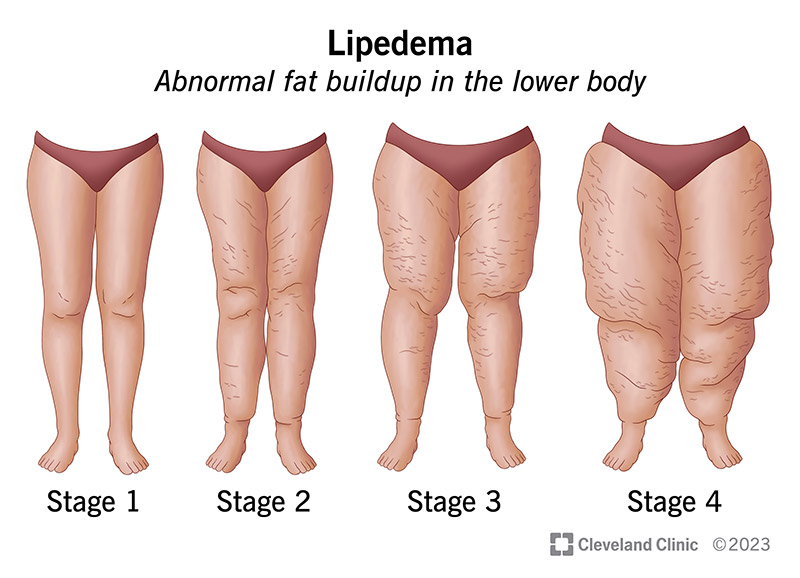
Stages of Lipedema
Lipedema is often described in stages, though symptoms can overlap.
Stage 1
The skin may still look fairly smooth, but the tissue underneath can feel uneven or pebble-like. Pain and bruising may already be present.
Stage 2
The skin surface becomes more uneven, with dimpling or a mattress-like appearance. Fat nodules may feel more obvious.
Stage 3
Larger folds of fat and skin can develop, especially around the thighs and knees. Mobility often becomes more difficult at this stage.
Stage 4
This stage involves lipedema combined with lymphedema, often called lipo-lymphedema. In other words, abnormal fat buildup and lymphatic fluid problems have teamed up, and unfortunately they did not ask permission first.
Lipedema vs. Obesity vs. Lymphedema
This comparison matters because the wrong label can lead to the wrong treatment.
Lipedema vs. obesity: Obesity usually causes more generalized fat gain across the body. Lipedema is more disproportionate, more painful, more likely to bruise easily, and less responsive to ordinary dieting in the affected areas.
Lipedema vs. lymphedema: Lymphedema is primarily a lymphatic fluid disorder. It may affect one limb or both, often includes more obvious fluid-related swelling, and commonly involves the feet or hands. Lipedema is usually symmetrical, often spares the feet and hands, and is more strongly associated with pain and tender fat tissue.
Some people have both conditions. When lipedema progresses and the lymphatic system becomes overloaded, lipo-lymphedema can develop. That is one reason early evaluation matters.
How Lipedema Is Diagnosed
Lipedema is mainly a clinical diagnosis, which means a knowledgeable healthcare professional makes the diagnosis by listening carefully, examining the body, and recognizing the pattern. There is no single gold-standard blood test that waves a flag and says, “Yep, definitely lipedema.” If only medicine came with that kind of customer service.
A proper evaluation usually includes a medical history, questions about when symptoms started, whether there is family history, how the tissue feels, whether bruising is frequent, and whether hormonal changes triggered worsening. On exam, clinicians look for symmetry, tenderness, nodules in the fat, a difference between the size of the legs and the feet, and whether swelling is pitting or non-pitting.
Imaging such as ultrasound, MRI, DEXA, CT, or lymphatic studies may be used in selected cases to rule out other causes or identify overlapping conditions. These tests are helpful tools, but the real star of the show is still a thoughtful clinician who recognizes the condition.
Lipedema Treatment Options
There is currently no known cure for lipedema, but there are effective ways to manage symptoms, improve function, and reduce progression-related problems. Treatment usually works best when it is personalized rather than one-size-fits-all.
Conservative treatment
Compression garments: Compression stockings or wraps may help reduce discomfort, support tissue, and manage swelling, especially when fluid buildup is part of the picture. They may not dramatically shrink lipedema tissue, but many patients find they help with pain and heaviness.
Exercise: Movement matters, even when it feels unfair. Low-impact activities such as walking, swimming, cycling, and water exercise can improve mobility, support circulation, and reduce stress on the joints. Pool exercise is especially helpful because water provides natural compression while being kind to achy limbs.
Manual lymphatic drainage and decongestive therapy: These therapies may help some people, particularly those with swelling or lipo-lymphedema. They are not a cure, but they can reduce discomfort and improve limb management.
Skin care: Moisturizing and protecting the skin may sound boring, but boring is underrated. Healthy skin is less prone to irritation, breakdown, and infection risk, especially when swelling is part of the picture.
Nutrition support: No diet can magically erase lipedema tissue, but healthy eating can still be valuable. A heart-healthy or anti-inflammatory eating pattern may support overall health, weight management, and inflammation control. The goal is not chasing perfection on a plate. The goal is giving the body fewer reasons to struggle.
Weight management support: For people who also live with obesity, medical weight management can reduce stress on joints, improve endurance, and help with overlapping health conditions. It may not remove lipedema tissue specifically, but it can still improve quality of life.
Pain management and mental health support: Chronic pain and body-image distress deserve real attention. Counseling, support groups, and pain-focused care can be as important as compression or exercise, because treatment is not just about the legs. It is about the person attached to them.
Surgical treatment
In carefully selected patients, liposuction designed for lipedema may improve pain, mobility, and daily function. This is not standard cosmetic liposuction done for vanity alone. It is a medical intervention that aims to remove diseased fat while protecting the lymphatic system as much as possible.
Surgery is usually considered after conservative measures have been tried, symptoms remain significant, and evaluation confirms that the person is an appropriate candidate. Results vary, and surgery is not a free pass to ignore long-term care afterward. Think of it as a tool, not a miracle wand.
When to See a Healthcare Professional
It is worth seeking evaluation if you have persistent, symmetrical enlargement of the legs or arms, pain with pressure, frequent bruising, heaviness, or a body shape that seems clearly disproportionate despite healthy efforts. It is especially worth asking questions if the feet are relatively spared while the legs are significantly affected.
An informed diagnosis can prevent years of confusion and help direct you toward the right mix of compression, therapy, lifestyle support, and surgical consultation when appropriate.
Living With Lipedema
Living with lipedema often means playing a long game. Progress may not look dramatic from week to week, and that can be discouraging. But meaningful improvement is still possible. Better pain control, easier walking, less heaviness, fewer bruising surprises, improved stamina, and more confidence in your own body all count as real wins.
It also helps to reframe success. Success is not forcing your body into somebody else’s shape. Success is improving comfort, protecting function, and building a plan that is actually sustainable. A condition that took years to develop is rarely solved by a motivational quote and a salad with heroic ambitions.
Most of all, people with lipedema deserve to be believed. If the tissue hurts, it hurts. If the legs feel heavy, they feel heavy. If years of standard diet advice did not change the affected areas, that is useful medical information, not a moral failure.
Common Experiences People Report With Lipedema
One of the most striking things about lipedema is how often people describe the same life story in different words. The details change, but the theme is familiar. A girl hits puberty and suddenly her lower body changes faster than the rest of her frame. She is told she is just gaining weight. She tries sports, calorie counting, trendy diets, and workout plans that promise to “tone everything.” Her waist changes. Her face changes. Her affected legs do not seem impressed.
Later, she may notice that her legs bruise easily, feel sore when touched, and grow heavier over the course of the day. Shopping becomes frustrating because pants that fit the legs are loose at the waist, and pants that fit the waist surrender immediately at the thighs. Exercise can help fitness and mood, but sometimes it also comes with a side order of pain, friction, and exhaustion. This creates a deeply unfair situation where doing the right thing still feels like losing.
Many adults with lipedema talk about the emotional whiplash of being dismissed. They may hear, “Just lose weight,” even after years of trying. Some are told they are simply inactive, dramatic, or not trying hard enough. That kind of response can be damaging because it teaches people to doubt their own experience. By the time they finally meet a clinician who recognizes lipedema, the diagnosis can feel both upsetting and strangely validating. Upsetting because it is chronic. Validating because, at last, there is a name for what has been happening.
Another common experience is confusion about swelling. People often say, “My legs feel huge and heavy by evening, but my feet still look normal.” That detail may not mean much to friends or family, but it is often meaningful in lipedema. Others describe pain in very ordinary moments: a child climbing into their lap, a seatbelt pressing across the thighs, or a casual bump against a kitchen counter that somehow leaves a spectacular bruise behind.
There is also the social side. Many people with lipedema become experts in strategic dressing, strategic sitting, and strategic avoidance. They may skip beach days, feel awkward in photos, or avoid medical appointments because they are tired of being judged before anyone even asks a useful question. Some develop anxiety around movement, not because they dislike exercise, but because exercise has become tangled up with pain, embarrassment, or years of disappointing results.
But there is another side to these experiences too: relief. Relief when a provider listens. Relief when compression helps a little. Relief when water exercise feels good instead of punishing. Relief when a support group says, “Yes, me too,” and suddenly the whole story feels less lonely. For many people, the biggest turning point is not a perfect cure. It is finally understanding that their body was never “failing” them in the way others claimed. It was dealing with a real condition all along.
Final Thoughts
Lipedema is a real, chronic, and often underrecognized condition involving abnormal fat distribution, pain, tenderness, easy bruising, and mobility challenges. It is not simply obesity, not just cosmetic, and not a sign that someone lacks discipline. The best treatment plan usually combines education, symptom management, movement, compression, skin care, emotional support, and, for some people, surgery.
If there is one takeaway worth remembering, it is this: the earlier lipedema is recognized, the sooner a person can stop fighting the wrong battle and start getting the right help.