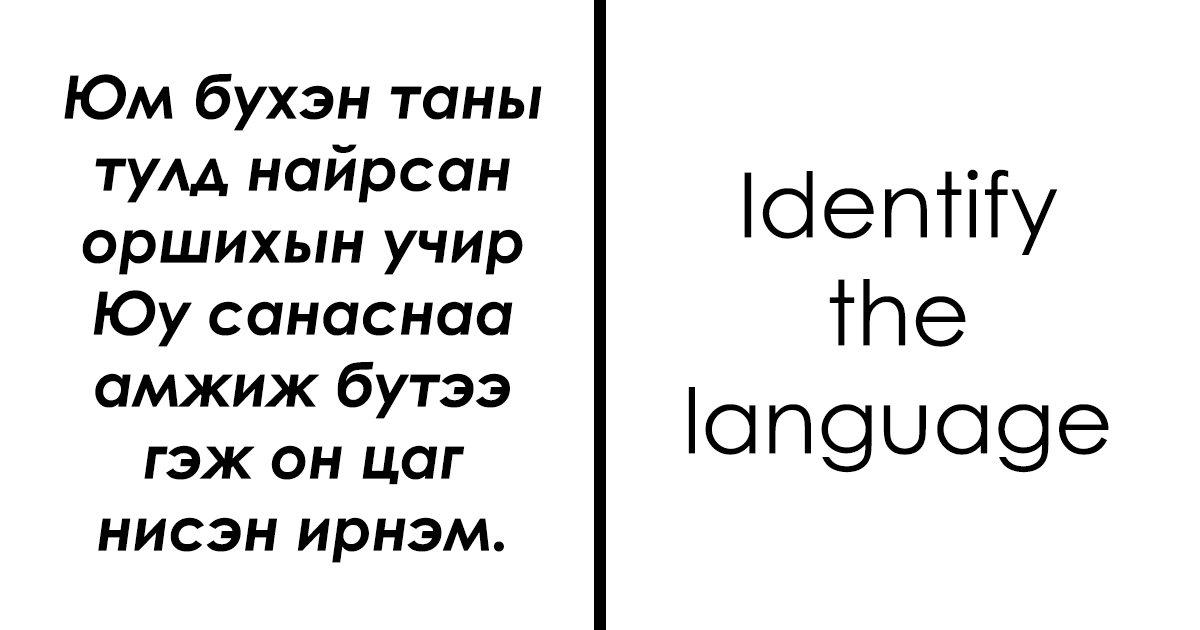
Can you spot Spanish before your coffee gets cold? Can you tell Korean from Japanese without panicking and pretending your Wi-Fi dropped? This language identification quiz is here to test your global reading instincts, your script-recognition skills, and possibly your ability to stay humble in front of the alphabet.
Languages are more than words on a screen. They carry history, migration, culture, humor, food, poetry, family stories, street signs, text messages, pop songs, airport confusion, and that one phrase you learned before vacation and immediately forgot at passport control. In this challenge, you will see 20 short samples from different languages. Your job is simple: read the lines, study the clues, and guess the language before checking the answer.
Why Language Identification Is So Addictive
There is something strangely satisfying about recognizing a language from just a few lines. It feels like solving a tiny mystery. A curved letter here, a familiar accent mark there, a word that looks like something you saw on a restaurant menu oncesuddenly your brain puts on a detective hat.
Some languages are easier to identify because they use a unique script. Korean uses Hangul, which has a clean block-like structure. Thai has elegant looping letters. Arabic and Hebrew are written from right to left. Russian often uses Cyrillic letters such as Ж, Я, and Д. Greek has letters like Ω, θ, and λ that look familiar and ancient at the same time, as if math class and mythology had a baby.
Other languages are trickier because they share the Latin alphabet. Spanish, French, Portuguese, Italian, Dutch, Turkish, Polish, Vietnamese, Indonesian, and Swahili may all use Latin letters, but each has its own flavor. Accent marks, word endings, letter combinations, and sentence rhythm can reveal a lot. For example, Vietnamese often uses tone marks, Polish loves consonant clusters, Turkish includes dotted and dotless forms of “i,” and French has a dramatic relationship with silent letters. Very fashionable, very mysterious.
How to Play This Language Quiz
Read each sample carefully and make your best guess. Do not scroll too quickly to the answer key unless you enjoy robbing yourself of joy. Each example uses everyday lines such as greetings, finding a café, or asking about a train station. That keeps the content fair while still giving you clues from script, spelling, grammar, and vocabulary.
Quick Clues Before You Start
- Look at the script: Is it Latin, Cyrillic, Arabic, Devanagari, Hangul, Chinese characters, or something else?
- Watch accent marks: French, Spanish, Portuguese, Vietnamese, Polish, and Turkish all use distinctive marks.
- Spot familiar words: Words like “café,” “station,” “bonjour,” “hola,” or “merhaba” can give you a quick lead.
- Notice direction: Arabic and Hebrew are written from right to left.
- Do not overthink: Your first guess is often better than your fifth guess, especially after caffeine.
The 20-Language Identification Challenge
1. Which language is this?
Hola, ¿cómo estás? Estoy buscando una cafetería cerca de la estación.
2. Which language is this?
Bonjour, comment ça va ? Je cherche un café près de la gare.
3. Which language is this?
Hallo, wie geht es dir? Ich suche ein Café in der Nähe des Bahnhofs.
4. Which language is this?
Ciao, come stai? Sto cercando un caffè vicino alla stazione.
5. Which language is this?
Olá, como vai? Estou procurando um café perto da estação.
6. Which language is this?
Hallo, hoe gaat het? Ik zoek een café in de buurt van het station.
7. Which language is this?
Merhaba, nasılsın? İstasyonun yakınında bir kafe arıyorum.
8. Which language is this?
Cześć, jak się masz? Szukam kawiarni w pobliżu dworca.
9. Which language is this?
Xin chào, bạn khỏe không? Tôi đang tìm một quán cà phê gần nhà ga.
10. Which language is this?
Halo, apa kabar? Saya mencari kafe di dekat stasiun.
11. Which language is this?
Hujambo, habari gani? Ninatafuta mkahawa karibu na kituo.
12. Which language is this?
مرحبًا، كيف حالك؟ أبحث عن مقهى قريب من المحطة.
13. Which language is this?
שלום, מה שלומך? אני מחפש בית קפה ליד התחנה.
14. Which language is this?
Γεια σου, πώς είσαι; Ψάχνω για ένα καφέ κοντά στον σταθμό.
15. Which language is this?
Привет, как дела? Я ищу кафе рядом со станцией.
16. Which language is this?
नमस्ते, आप कैसे हैं? मैं स्टेशन के पास एक कैफ़े ढूँढ रहा हूँ।
17. Which language is this?
สวัสดี คุณสบายดีไหม ฉันกำลังหาร้านกาแฟใกล้สถานี
18. Which language is this?
안녕하세요, 어떻게 지내세요? 저는 역 근처의 카페를 찾고 있어요.
19. Which language is this?
こんにちは、お元気ですか。駅の近くのカフェを探しています。
20. Which language is this?
你好,你好吗?我在找车站附近的咖啡馆。
Answer Key: How Many Did You Get Right?
- Spanish Look for inverted punctuation like ¿ and words such as “hola” and “estación.”
- French Accents, spacing before question marks, and words like “bonjour” and “gare” are strong clues.
- German Words such as “ich,” “der,” and long compound nouns like “Bahnhof” help identify it.
- Italian Musical endings like “stai,” “cercando,” and “stazione” give it away.
- Portuguese Look for “Olá,” nasal-sounding spellings, and words such as “estação.”
- Dutch “Hoe gaat het?” and “in de buurt” are classic Dutch clues.
- Turkish The dotted İ, dotless ı, and words like “merhaba” are major hints.
- Polish Letters such as ś, ć, ż, and ł make Polish stand out fast.
- Vietnamese Tone marks stacked across vowels are a bright neon sign saying “Vietnamese.”
- Indonesian Simple Latin spelling and words like “apa kabar” and “saya” point to Indonesian.
- Swahili “Hujambo,” “habari,” and “ninatafuta” are helpful East African language clues.
- Arabic Written right to left, with connected letters and familiar words like “مرحبا.”
- Hebrew Also right to left, but visually more angular than Arabic and usually without connected letters.
- Greek Letters like Γ, π, Ψ, and θ make Greek instantly recognizable.
- Russian Cyrillic letters such as Я, Ж, and Д are a strong signal.
- Hindi Devanagari script has a horizontal headline running across many letters.
- Thai Rounded letters and looping shapes make Thai visually distinctive.
- Korean Hangul is arranged in neat syllable blocks such as 안, 녕, and 하.
- Japanese A mix of hiragana, katakana, and kanji often appears together.
- Mandarin Chinese Chinese characters carry meaning in compact blocks without an alphabetic look.
What Your Score Says About You
0–5 Correct: Curious Beginner
You are at the “world map on the wall” stage, and that is a beautiful place to begin. You may not know many scripts yet, but you probably noticed that languages have personalities. Some look angular, some look flowing, some look dense, and some look like they arrived wearing sunglasses and refusing to explain themselves.
6–10 Correct: Language Tourist
You can recognize several common languages and scripts. You may have spotted Spanish, French, Arabic, Korean, Japanese, or Russian quickly. You are the kind of person who reads shampoo bottles in hotels and calls it “cultural research.” Honestly, fair enough.
11–15 Correct: Script Detective
You have a good eye for patterns. You know that language identification is not only about vocabulary. It is also about writing direction, accents, shapes, spacing, and repeated word forms. You probably enjoy maps, subtitles, menus, and quietly judging movie translations.
16–20 Correct: Polyglot Energy
You may not speak all 20 languages, but your recognition skills are strong. You can separate scripts, notice linguistic clues, and avoid confusing Korean with Chinese or Portuguese with Spanish. Your brain is basically carrying a tiny international airport.
Why Some Languages Look Similar
Languages can look alike for many reasons. Some are related historically, such as Spanish, French, Italian, and Portuguese, which developed from Latin and belong to the Romance branch of the Indo-European language family. That is why they share many similar words. “Station,” for example, becomes “estación” in Spanish, “stazione” in Italian, and “estação” in Portuguese. They are cousins, and like all cousins, they sometimes borrow each other’s sweaters.
Other languages may not be closely related but share a writing system. Turkish, Indonesian, Vietnamese, and Swahili all use versions of the Latin alphabet, but they come from different language families or linguistic backgrounds. This is why identifying a language only by alphabet can be risky. Latin letters are like the plain white sneakers of writing systems: everyone can style them differently.
Scripts also travel. Arabic script has been used for many languages beyond Arabic. Cyrillic is used for Russian and numerous other languages. Devanagari is used for Hindi and other South Asian languages. The writing system gives you an important clue, but it does not always give you the full answer. A smart language quiz asks you to look twice.
Helpful Tricks for Identifying Languages Faster
1. Learn the “Big Scripts” First
Start with the scripts you see most often online: Latin, Cyrillic, Arabic, Devanagari, Chinese characters, Japanese kana, Hangul, Greek, Hebrew, and Thai. You do not need to read them fluently. Just recognizing the shapes can dramatically improve your language identification score.
2. Memorize Signature Words
Every language has a few words that appear constantly in beginner phrases. “Bonjour” is French. “Merhaba” is Turkish. “Xin chào” is Vietnamese. “Apa kabar” is Indonesian. “Hujambo” is Swahili. These small words work like friendly name tags at a global party.
3. Watch Accent Marks
Accent marks are not decoration. They can show pronunciation, tone, stress, or historical spelling. Vietnamese is especially rich in tone marks. Polish has letters like ł, ś, and ć. Turkish uses ğ, ş, ç, ö, ü, ı, and İ. French uses accents such as é, è, ê, and ç. Portuguese often uses ã and õ. Once you learn these patterns, you will start spotting languages faster.
4. Do Not Confuse Script With Language
Chinese characters can appear in Chinese and Japanese. Arabic script can appear in Arabic, Persian, Urdu, and other languages. Cyrillic can appear in Russian, Ukrainian, Bulgarian, Serbian, and more. Script is your first clue, not your final verdict.
5. Use Context
A menu, street sign, song title, or travel phrase can provide context. If you see “gare,” you may be looking at French. If you see “Bahnhof,” German is likely. If the phrase includes “estación,” Spanish may be the answer. Context is the language detective’s magnifying glass.
Why This Quiz Is More Than a Game
Language identification is fun, but it also builds cultural awareness. When you recognize another language, you are noticing human diversity in action. You are seeing how communities organize sound, meaning, grammar, history, and identity into written form. That is a lot of drama for one café sentence.
It also helps with travel, education, translation, online research, and media literacy. The internet is multilingual, and the ability to recognize languages gives you a better sense of where information may come from. You might not understand every sentence, but recognizing the language is the first step toward curiosity instead of confusion.
There is also a humbling lesson here: no language is “weird.” A language only feels unfamiliar because you have not spent time with it yet. English looks strange to learners too. Silent letters, unpredictable spelling, and phrases like “through,” “though,” “tough,” and “thought” are not exactly innocent. English has been getting away with chaos in a trench coat for centuries.
Experience Section: What It Feels Like to Identify 20 Languages From a Few Lines
The first time you try to identify languages from short text samples, your confidence usually arrives before your accuracy. You see a few accent marks and think, “Easy, Spanish.” Then the answer is Portuguese, and suddenly your ego is sitting quietly in the corner, rethinking its life choices. That is part of the fun. Language recognition teaches you to slow down and pay attention to small details.
One of the most enjoyable experiences is realizing that scripts have visual personalities. Korean Hangul feels organized and modern, almost like letters arranged in neat apartment buildings. Thai looks graceful and rounded, with letters that seem to curl like decorative ribbon. Arabic flows with connected elegance, while Hebrew has a more squared, carved appearance. Devanagari, used for Hindi, often carries a horizontal line across the top, which makes words look like they are hanging from a clothesline of meaning. Once you notice these features, you cannot unsee them.
Another memorable part of this challenge is learning that familiar alphabets can be deceptive. A beginner may think Latin letters make a language easy to identify, but that is where the plot twist lives. Spanish, Portuguese, Italian, French, Dutch, Turkish, Vietnamese, Polish, Indonesian, and Swahili all use Latin-based writing, yet each one feels different. Vietnamese tone marks create a lively visual rhythm. Polish consonants can look like they are forming a tiny traffic jam. Turkish has special letters that immediately stand out once you know them. Indonesian often looks clean and direct, while French looks elegant and slightly suspicious because half the letters may be silently minding their own business.
Doing a quiz like this also changes how you move through everyday life. You start noticing languages on food packaging, phone settings, movie subtitles, airport signs, product manuals, and social media comments. A shampoo bottle becomes a mini United Nations meeting. A restaurant menu becomes a language lab. Even a warning label can feel exciting, which is probably the nerdiest sentence anyone has ever written with pride.
The best experience, though, is the moment when a language stops looking like a mystery wall and starts looking like a pattern. Maybe you cannot translate the sentence yet, but you can say, “That is Greek,” or “That looks like Hebrew,” or “I think this is Vietnamese because of the tone marks.” That small recognition creates a feeling of connection. You are not fluent, but you are more aware. You are not an expert, but you are less lost. And in a world where people often scroll past things they do not understand, choosing to notice a language is a small act of respect.
So if this quiz humbled you, good. If it made you curious, even better. If it made you want to learn a new script, congratulations: your brain has just opened a new tab, and this one might actually be useful.
Conclusion
Identifying languages from just a few lines is part puzzle, part geography lesson, part cultural adventure, and part “wait, I definitely saw this on a takeout menu.” The more you practice, the better your eyes become at spotting scripts, accent marks, word patterns, and sentence shapes. You do not need to speak 20 languages to appreciate them. You only need curiosity, attention, and a willingness to guess wrong with style.
Whether you scored like a world traveler or guessed “Italian” five times because pasta was on your mind, this quiz is a reminder that language is one of humanity’s greatest inventions. Every script has a story. Every phrase carries a culture. Every unfamiliar line is an invitation to learn more.
Note: This article synthesizes general language and writing-system information from established educational and reference resources, including major encyclopedic, linguistic, language-learning, script, and cultural sources. The sample lines are original everyday phrases created for this quiz.