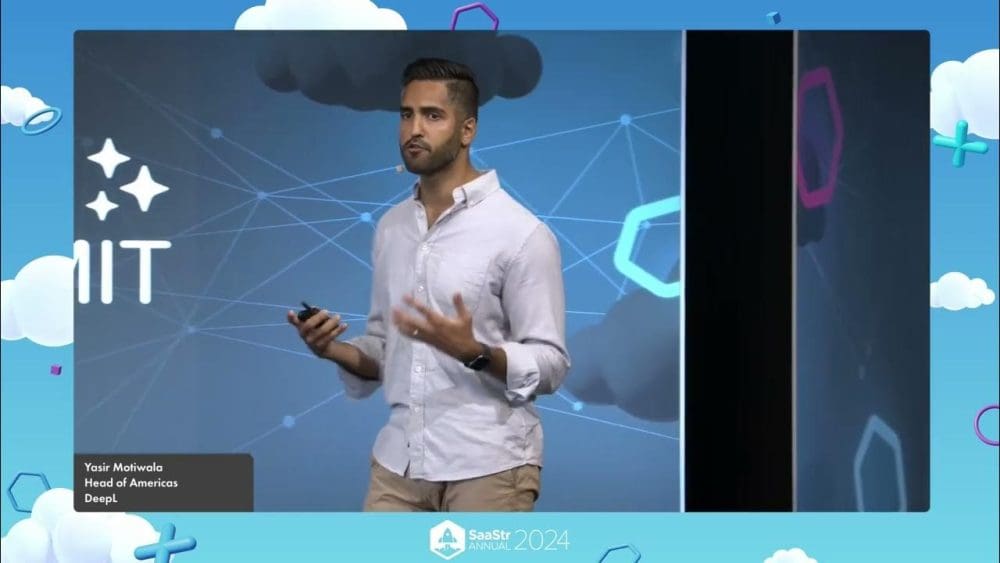
Growing a new region sounds glamorous until somebody has to figure out payroll, rewrite the contracts, recruit a team that can actually sell, and explain to headquarters why “just use the same playbook” is not a strategy. It is a wish. A beautifully formatted wish, maybe, but still a wish.
That is exactly why the DeepL Americas story is so interesting. In under a year, the company reportedly grew the Americas operation from zero to 40 people and tripled ARR, while turning a European AI success story into a more serious U.S. go-to-market engine. On paper, it looks like a hypergrowth headline. In practice, it is a case study in how enterprise expansion really works: executive commitment, clear operating rules, disciplined hiring, localization, and a product strong enough to earn the right to scale.
For founders, CROs, regional leaders, and anyone trying to build an international SaaS or AI business without setting the office on fire, there is a lot to learn here. The DeepL playbook is not just about translation software. It is about how to scale a category-defining B2B company in a market where product quality matters, but organizational execution decides whether growth compounds or quietly faceplants.
Why this DeepL growth story matters
DeepL did not arrive in the Americas as an unknown experiment with a nice logo and a dream. It already had serious product credibility, a growing enterprise footprint, and a clear market tailwind. By 2024, the company had more than 100,000 business customers, raised $300 million at a $2 billion valuation, and was leaning harder into enterprise growth, sales, and marketing. That matters because regional expansion works very differently when the product already has pull.
In other words, DeepL was not selling mystery soup. It was selling specialized Language AI in a market where global businesses increasingly needed better translation, better multilingual communication, better security, and better workflow efficiency. The company also benefited from a broader AI shift: buyers were becoming more skeptical of hype and more interested in tools that solved specific business problems. Translation, writing, internal communication, legal review, localization, and customer support all happen to be very real business problems. Convenient.
That makes the DeepL Americas expansion especially useful as an example. This was not just “hire a few reps in the U.S. and hope for the best.” It was a deliberate move from product-led momentum toward a more mature enterprise go-to-market motion.
The first lesson: a new geography has to become a real company priority
One of the clearest lessons from the DeepL expansion is painfully simple: if leadership says a region matters, the calendar, budget, KPIs, and executive behavior must agree. Otherwise, the new market becomes an internal side quest. Everyone nods politely, then goes back to focusing on headquarters.
According to the reported DeepL playbook, executive engagement was not symbolic fluff. It included frequent leadership visits, regular KPI reviews, and explicit ownership across core functions like finance, legal, and HR. That is exactly what real regional commitment looks like. It is not motivational poster language. It is operational alignment.
This matters because a new region usually loses not because demand is weak, but because support is weak. Sales teams can generate meetings. They cannot single-handedly fix contracting friction, hiring delays, compensation confusion, time-zone neglect, or missing internal resources. If the region is truly strategic, every function must behave as if it is strategic.
For companies scaling internationally, this is the first brutal truth: executive attention is not a soft variable. It is infrastructure.
The second lesson: define what the region is supposed to be
DeepL’s reported “Horizon” framing is one of the smartest ideas in the story. Before building aggressively, leadership clarified whether the region was a test case, a promising expansion, or a core strategic priority. That distinction sounds obvious until you remember how many companies hire like the region is mission-critical while budgeting like it is a hobby.
When expectations are vague, everything gets weird. Candidates hear a grand vision that the organization has not funded. Local teams promise urgency that headquarters does not share. Managers debate whether short-term losses are acceptable because nobody agreed on the timeline. Soon, morale starts wheezing in the corner.
Clear expansion stages solve that. They help set realistic hiring velocity, resource allocation, and performance expectations. They also improve recruiting because strong candidates can smell ambiguity from three LinkedIn tabs away. If the role is genuinely high-upside but still early and messy, say that. Great operators usually do not fear ambiguity; they fear dishonest ambiguity.
The third lesson: hiring is not headcount collection
One of the most useful DeepL takeaways is that hiring was treated as a precision system, not a volume contest. That sounds less sexy than “we added 40 people fast,” but it is the part that probably made the ARR result possible.
Reported hiring priorities included discovery skills, pipeline generation ability, long-term commitment, and comfort with startup ambiguity. That is exactly right for a fast-scaling regional business. Early hires are not just filling seats. They are writing the unwritten rules of the office, setting performance norms, and teaching later hires what “good” looks like.
Just as important, DeepL reportedly learned not to overload on account executives without building enough support around them. This is one of the classic scale-up mistakes. A company gets excited, hires sellers, and then wonders why pipeline quality, ramp time, and rep morale all wobble. Sales capacity is not the same thing as sales productivity. Without recruiting support, enablement, legal, marketing, operations, and clear processes, extra headcount can simply multiply confusion.
That is why the best regional scale-ups do not ask, “How many people can we hire?” They ask, “What sequence of hires creates the strongest system?” Those are very different questions. One produces a headcount slide. The other produces revenue.
The fourth lesson: pick a hub model on purpose
DeepL reportedly chose Austin as its primary hub and used a hybrid, in-office model to accelerate knowledge transfer, culture building, and new-hire ramping. Whether another company would pick Austin, New York, San Francisco, Toronto, or Miami is less important than the principle behind the decision: the hub model should match the operating reality.
Early regional teams often need dense communication. They are learning the product, translating HQ context, building a local culture, and handling the daily messiness that comes with new-market growth. Remote-only can work, but it is not automatically the highest-leverage choice when a business is still forming its muscle memory.
A good hub creates speed. It helps new hires overhear how experienced teammates handle objections. It shortens the distance between “I have a question” and “I got an answer.” It builds cohesion before everyone disperses into dashboards and calendar invites. For a young regional office, that matters more than many companies admit.
Later, DeepL also expanded its U.S. footprint with a New York tech hub, reinforcing the idea that regional scale is not only a sales story. Product, engineering, and enterprise proximity matter too. When global software companies build seriously in the Americas, they eventually need local commercial muscle and local innovation muscle. One without the other leaves growth lopsided.
The fifth lesson: recruiting should be treated like sales
This might be the most delightful sales-adjacent truth in the whole DeepL story: recruiting for a new region often works best when it is run like outbound. Not spammy outbound, to be clear. Not “Dear [FirstName], saw your impressive background” nonsense. Real outbound.
According to the reported playbook, hiring leaders were heavily involved in sourcing, value-driven job posts replaced generic templates, and the message was clear about why top talent should join now. That is exactly the right move. Strong candidates are not applying because they enjoy forms. They are choosing a story, a market, a manager, and a moment in time.
Great regional recruiting answers four questions fast: Why this company? Why this role? Why this market? Why now? If you cannot explain those crisply, your best candidates will take one look at the opportunity and go work somewhere with a cleaner narrative and better snacks.
The sixth lesson: culture is built early, whether you mean to or not
DeepL reportedly emphasized transparency, small-win celebration, cross-functional unity, and clear behavior expectations from the start. Good. Because early regional culture is not formed in an offsite deck. It is formed in who gets listened to, how information is shared, how wins are credited, and whether supporting functions are treated like strategic partners or glorified ticket machines.
This is especially important for an enterprise AI company. When growth is fast, product capabilities evolve, and market demand is high, internal confusion can spread just as quickly as momentum. Teams need clarity on what success looks like, which feedback matters, and how decisions get made between local leaders and HQ.
The best cultural choices in early expansion are usually boring in the best possible way: communicate clearly, celebrate progress, reduce political theater, and make people feel that building the region is a shared mission rather than a sales-only burden.
The seventh lesson: knowledge transfer is a growth lever, not an HR side project
DeepL’s reported use of buddy systems, safe question channels, and structured knowledge transfer is a reminder that new-market scaling is really a learning problem disguised as a revenue problem. Yes, you need pipeline. Yes, you need customers. But first, you need people to become effective fast without making the same avoidable mistakes 47 times.
That is where enablement becomes a serious multiplier. The faster new hires learn product positioning, internal processes, customer objections, competitive context, and how HQ actually works, the faster the region becomes independently productive. This is one reason hybrid hubs, local leadership presence, and hands-on management matter so much in the first year. They compress learning cycles.
In DeepL’s case, this was especially important because the company was moving deeper into enterprise use cases. Enterprise growth is not just more leads. It involves more sophisticated buying committees, security expectations, workflow integration questions, and proof-of-value conversations. Teams need context, not just enthusiasm.
The eighth lesson: headquarters friction is normal, but ignoring it is expensive
Every international expansion creates tension between HQ consistency and local adaptation. DeepL’s playbook reportedly addressed that directly with stakeholder communication, swap programs, empathy around time zones, and a localization mindset instead of blind replication.
That last point is gold. You do not scale a region by copying headquarters with better weather. You scale it by preserving what must remain consistent while adapting what must become local. That includes sales motion, hiring profile, customer expectations, legal processes, meeting cadence, and sometimes even how direct or indirect communication should be.
American enterprise buyers often expect different pacing, different commercial clarity, and different levels of executive accessibility than European teams are used to. If leadership refuses to localize, the region loses speed. If leadership localizes everything, the company loses coherence. The art is in knowing which muscle is global and which is local.
Why the DeepL model worked so well in this moment
The DeepL Americas scaling story landed at the right intersection of product, market, and operating discipline. The product had real differentiation in a crowded AI conversation. The market had urgent multilingual communication needs. And the operating model increasingly matched enterprise reality.
That last piece is critical. TechCrunch reported that DeepL was pushing further into enterprise and building stronger outbound customer relationships rather than relying only on inbound momentum. That shift matters because enterprise ARR rarely triples on charm alone. At some point, the company needs repeatable pipeline generation, structured account coverage, better local support, and tighter coordination across sales, marketing, customer success, and product.
DeepL also expanded its product surface around this period, with launches including DeepL Write Pro, more enterprise-focused Language AI positioning, and a next-generation model built specifically for translation and business use cases. In other words, the company was not scaling a static offering. It was scaling a growing platform. That gave the Americas team more reasons to win, more ways to expand accounts, and more substance behind the sales narrative.
The mistakes are just as valuable as the wins
One reason this story feels credible is that the mistakes are practical, not theatrical. Underestimating legal complexity, scheduling around HQ time zones, over-relying on the home-country playbook, and misbalancing support functions are all classic expansion errors. They are also wonderfully fixable if leadership notices them early enough.
That is the real beauty of the DeepL case study. It is not a fairy tale about perfect execution. It is a reminder that strong companies still trip over operational details. The difference is whether they correct the pattern before it hardens into culture.
Too many businesses romanticize international growth. They imagine logo wins, launch parties, and ARR charts that go up like a caffeinated rocket. But the truth is more mechanical. Expansion is won through sequencing, communication, local credibility, hiring quality, and disciplined support structures. Which is less cinematic, yes, but far more useful.
Experience from the field: what scaling a region like this actually feels like
There is also a human side to this kind of scaling that does not always show up in the headline metrics. When a company goes from zero to a serious regional team in under a year, the experience is equal parts exhilarating and slightly absurd. Every week feels like three different quarters stitched together with coffee and calendar invites.
In the early stage, the regional leader is part evangelist, part builder, part translator, and part therapist. One moment you are explaining the market opportunity to HQ. The next, you are persuading a candidate to leave a stable job for an office that still feels half blueprint, half ambition. Then you are in a customer call proving that the company can support enterprise requirements locally, not just from afar.
What usually surprises people most is how often the smallest operational details shape the biggest commercial outcomes. A delayed contract review can stall a quarter. A missing enablement deck can slow a rep’s ramp by weeks. A poorly timed all-hands meeting can make a new office feel like an afterthought. None of these issues look dramatic in isolation, but together they determine whether a new region feels like a real business or a temporary branch office with nice branding.
Another common experience is that early team members become cultural architects whether they signed up for that or not. The first sales managers define how pressure is handled. The first recruiters define what talent quality means. The first cross-functional partners define whether collaboration is easy or exhausting. In a fast-growth environment, behavior scales before policy does. That is why early hiring quality matters so much. You are not just hiring performers. You are hiring examples.
There is also a funny emotional curve to regional scaling. At first, everyone is energized because the mission is fresh. Then the complexity kicks in: approvals take longer than expected, systems do not fully fit, and HQ assumptions collide with local realities. This is the danger zone. If leadership misreads that friction as failure, they pull back too early. But if they understand that friction is the natural price of building something real, they invest through it and come out stronger.
The most successful expansions usually develop a kind of dual identity. They are deeply loyal to the company’s broader mission, but they are also confident enough to say, “That may work at headquarters, but here is what our market needs.” That confidence is healthy. It means the region is no longer just executing orders; it is generating intelligence.
And perhaps the most important experience-based lesson is this: ARR growth is the visible result, not the full story. Underneath it sit a hundred invisible decisions about prioritization, trust, recruiting, localization, and follow-through. When a company scales from zero to 40 people and triples ARR in under a year, it is rarely because one tactic was magical. It is because the organization kept stacking good decisions faster than problems could pile up. That is not flashy. But it is how real growth happens.
Final takeaway
The DeepL Americas expansion offers a sharp lesson for any company trying to scale internationally: product strength gets you invited to the table, but regional execution determines whether you stay for the meal. The reported 0-to-40 team build and 3x ARR growth were not the result of blind speed. They were the result of focused speed.
Make the region a genuine company priority. Clarify what stage of expansion you are really funding. Hire in sequence, not in panic. Build a hub model that accelerates learning. Treat recruiting like sales. Invest in culture before it forms accidentally. Build knowledge-transfer systems. And manage HQ friction like the strategic issue it is.
That is the deeper lesson from scaling DeepL’s Americas business. Regional growth is not a copy-paste exercise. It is a localization exercise for leadership itself. And the companies that understand that are the ones that turn international expansion from a nice slide in the board deck into a real growth engine.