Note: SEO tags are placed at the end in JSON format for easy web publishing.
Some crossover ideas feel so obvious that you wonder how they have not already happened. A Tim Burton version of Star Wars is one of those deliciously strange concepts. On paper, the pairing sounds like a sugar rush for movie nerds: take the moody whimsy, crooked silhouettes, melancholy oddballs, and Gothic storybook energy of Burton’s world, then drop it straight into a galaxy already packed with masked villains, strange creatures, haunted destinies, and one very dramatic family tree. Suddenly, Darth Vader is not just a villain in black armor. He is the saddest Halloween decoration in the universe. Honestly, that tracks.
The idea has fascinated illustrators and fan artists for years, especially artist Andrew Tarusov, whose pop-culture reimaginings have shown just how easily Burton’s visual language can slip over familiar franchises like a black-and-white striped glove. And when the subject becomes Star Wars, the fit feels even better. George Lucas built his saga from myth, fairy tales, Westerns, samurai films, and bold concept art. Burton built his brand from outsiders, eerie humor, German Expressionist shadows, and worlds that look like they were sketched in the margins of a haunted notebook. Put those two creative currents together, and you get something that feels both ridiculous and weirdly inevitable.
This is why the phrase “What would happen if Tim Burton directed Star Wars movies?” works so well. It is not just a meme. It is an aesthetic thought experiment. It asks what happens when one of cinema’s most recognizable visual storytellers takes control of one of the most mythic franchises in modern entertainment. The answer is not simply “everything gets spookier.” The real answer is much more fun than that.
Why This Mashup Feels Weirdly Perfect
At first glance, Burton and Star Wars seem to come from different planets. Burton’s films often lean inward. They are full of loners, misunderstood dreamers, deadpan misfits, and beautifully gloomy places where sadness and comedy share the same umbrella. Star Wars, on the other hand, usually plays on a larger, brighter canvas. It is a saga of rebellion, destiny, hope, and huge emotional swings backed by laser blasts and orchestral thunder.
But look closer, and the overlap becomes obvious. Burton loves fairy-tale logic. Star Wars runs on fairy-tale logic. Burton loves exaggerated silhouettes, eccentric production design, and characters who look like they were assembled by a particularly theatrical moon. Star Wars has always thrived on bold visual identities, from stormtrooper armor to droid shapes to the regal menace of Vader’s helmet. Burton gravitates toward tragic figures who carry pain on the outside. Vader is basically already there, just waiting for a few more dramatic shadows and maybe a castle with even more unnecessary spires.
That is what makes Burton-inspired Star Wars illustrations so satisfying. They are not fighting the material. They are uncovering a hidden setting on the same machine. It is still Star Wars, just tuned from mythic adventure to Gothic opera.
The Real Ingredients Behind the Fantasy
Tim Burton’s signature visual grammar
Tim Burton’s appeal has always rested on a style that is instantly recognizable. His worlds are playful but haunted, cute but macabre, theatrical but deeply emotional. Faces stretch. Limbs sharpen. Buildings lean like they have opinions. Costumes are rarely just costumes; they are personality turned into fabric. Even when Burton works with familiar studio material, his best images feel handmade, personal, and slightly off-center in the best possible way.
That Burton touch usually comes with a few trademark ingredients: Gothic architecture, exaggerated curves, pale dreamlike characters, moody humor, and an affection for people or creatures who do not quite fit the ordinary world around them. He turns awkwardness into beauty. He makes melancholy look stylish. He also knows that darkness lands better when it arrives with a smirk instead of a lecture.
Now apply those instincts to Star Wars, and the possibilities start multiplying faster than tribbles. Yes, wrong franchise, but Burton would probably enjoy the confusion.
Star Wars was already built for bold design
Star Wars has never been just about plot. It has always been about visual mythmaking. Ralph McQuarrie’s concept art helped define the look of the original trilogy, shaping icons like Darth Vader, C-3PO, and the lived-in environments that made Lucas’s galaxy feel tactile rather than sterile. The saga’s best design choices blend fantasy and machinery, elegance and wear, wonder and grime. It is part fairy tale, part scrapyard miracle.
That balance matters because Burton would not be stepping into a blank canvas. He would be inheriting one of cinema’s most carefully designed worlds. The challenge would not be inventing style from scratch. It would be bending an already beloved aesthetic toward something more whimsical, mournful, and unnervingly beautiful.
And honestly, Star Wars can handle it. This is a franchise where a golden robot can be fussy, a tiny green hermit can speak in riddles, and a black-cloaked villain can become one of the most emotionally recognizable characters in film history. The elasticity is already there.
If Burton Took the Controls of the Millennium Falcon
Darth Vader would become a tragic Gothic knight
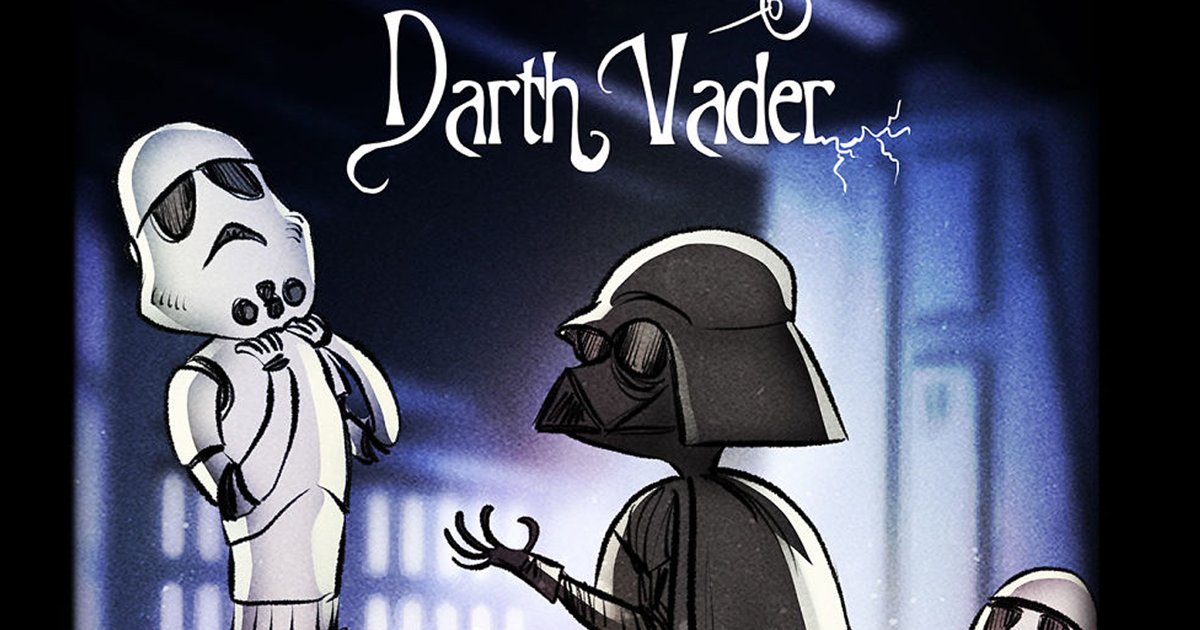
Burton would have a field day with Darth Vader. Instead of presenting him only as an armored symbol of fear, a Burton version would probably lean harder into the heartbreak. The mask would feel more skeletal. The cape would move like it had its own weather system. The breathing would sound even lonelier. Vader’s silhouette might become narrower, more haunted, almost cathedral-like, as if grief itself had put on boots.
He would still be terrifying, of course. Burton knows how to make the monstrous sympathetic without making it harmless. That is the trick. A Burton-directed Vader would not lose power. He would gain a sharper emotional silhouette. You would look at him and think, “That man definitely runs the Empire, but he also writes sad poetry in a tower somewhere.”
Stormtroopers, droids, and side characters would get stranger and better
One of the most entertaining changes would happen on the edges of the frame. Burton excels at background personalities: oddball townsfolk, wonderfully eerie side characters, and creatures who seem to arrive from fully formed alternate realities. In a Burtonized Star Wars, stormtroopers might become even more faceless and unnerving, with elongated helmets and exaggerated posture that makes them look part soldier, part wind-up skeleton.
Droids would be a feast. C-3PO might feel more fragile and theatrical, like a nervous stage actor made of polished brass and anxiety. R2-D2 would remain lovable, but with more stitched-together charm, like a mechanical pet who keeps saving everyone while pretending not to care. Burton has always had a soft spot for the handmade and the eccentric, so the droids would likely gain even more personality through shape, wear, and movement.
As for creatures, Burton would not sanitize them. He would enjoy the weirdness. That means longer limbs, bigger eyes, more surreal textures, and the kind of visual choices that make you say, “I am unsettled, but I would buy the collectible.” Which, to be fair, is also a classic Star Wars response.
The planets would feel like fairy tales after midnight
Tatooine under Burton would not just be a desert. It would become a moonlit fable of bent towers, skeletal moisture farms, and horizons that feel lonely enough to hum. Hoth would turn from icy battlefield to ghostly snow globe. Endor would lose some of its sunny woodland vibe and become a storybook forest with twisted branches, sleepy fog, and the faint sense that the trees are quietly judging your decisions.
Coruscant, meanwhile, could become spectacular. Burton would likely push the city toward a Gothic metropolis of vertical excess, all looming shapes and theatrical gloom, like a cyberpunk cathedral that forgot how to blink. The Death Star might stop feeling like pure military design and start looking like a giant, elegant funeral machine. Still evil, obviously. Just more fashionable.
Why Fan Illustrations Like This Work So Well
Burton-style Star Wars illustrations thrive because they do two things at once. First, they honor the source material. The best fan art does not erase what people love. It exaggerates the parts that are already there. Second, they invite viewers to play along. You are not just looking at an image of Leia or Luke. You are mentally recasting the whole universe. What would the cantina sound like? How creepy would Yoda’s hut become? Would Jack Skellington and Emperor Palpatine exchange style tips? Important questions. Science may never answer them.
Artists like Andrew Tarusov understand that successful mashups depend on visual translation, not simple decoration. You cannot just paint a character pale and call it “Burton.” The proportions, mood, setting, and storytelling all need to shift together. That is why Burton-inspired reimaginings of well-known franchises often work best when the artist captures the emotional tone as much as the costume design. The eyes get emptier. The smiles get stranger. The backgrounds become dreamier and more off-kilter. Suddenly the image does not feel like cosplay. It feels like an alternate universe with its own internal weather.
That is also why this concept spreads so easily online. It delivers nostalgia, humor, and visual surprise in one package. People instantly recognize Star Wars. They instantly recognize Burton. Put them together, and the brain lights up like a Christmas tree wearing eyeliner.
What the Art Gets Right About Both Worlds
The smartest Burton-meets-Star Wars art does not simply make the galaxy darker. It makes it more emotional. Burton’s cinema is rarely about horror for horror’s sake. It is about longing, alienation, romance, and the ache of being different. Star Wars already understands those themes. Luke longs for more. Leia shoulders impossible pressure. Anakin falls because he cannot live with fear. Even Vader’s arc is a tragedy wrapped in armor.
That emotional foundation is why the mashup feels richer than a visual joke. Burton’s style amplifies the loneliness and theatricality already present in the saga. It turns the Force into something that feels less like a glowing space religion and more like a haunted fairy-tale current running beneath everything. The Jedi become more mystical. The villains become more operatic. The romance becomes more bittersweet. Even the comedy gets sharper because Burton knows how to place absurdity beside sincerity without ruining either one.
In other words, a Burton-inspired Star Wars universe would not betray the material. It would reveal another side of it.
Would a Tim Burton Star Wars Movie Actually Work?
As an actual feature film, the answer is probably yes, with a few caveats and at least one beautifully unnecessary spiral staircase. Burton works best when he can shape a world visually and emotionally around outsiders. Star Wars works best when it balances mythic scale with human feeling. Those strengths could absolutely meet in the middle.
The bigger question is tone. A full Burton Star Wars movie would need to avoid becoming all mood and no momentum. The saga still needs propulsion, adventure, conflict, and a bit of swashbuckling charm. But if Burton focused on a character-driven corner of the galaxy, especially one involving a tragic villain, a lonely hero, or a weirdly lovable found family, the result could be spectacularly odd in all the right ways.
Would it please every fan? Of course not. This is Star Wars. Someone would complain if a lightsaber blinked too thoughtfully. But as an imaginative exercise, the concept works because it reminds us how flexible iconic storytelling can be. Great franchises survive reinterpretation. Sometimes they even glow because of it.
The Experience of Looking at Burtonized Star Wars Art
There is a particular feeling that comes from looking at illustrations imagining what would happen if Tim Burton directed Star Wars movies, and it is not the same feeling you get from ordinary fan art. It is more immersive than that. It feels like opening a secret door inside a franchise you already know by heart. You are still in the same galaxy, but the air is colder, the shadows are longer, and every familiar face suddenly looks like it has been keeping deliciously dramatic secrets.
The first experience is recognition. You instantly know who you are looking at. Luke is still Luke. Leia is still Leia. Vader is still Vader. But then your brain takes a second pass and notices the Burton details: the stretched proportions, the haunted eyes, the crooked scenery, the whimsical darkness, the visual sadness wrapped in playful exaggeration. That second beat is what makes the concept so addictive. Your nostalgia is activated, but so is your curiosity. You are not just seeing a character. You are seeing a character translated into a new emotional language.
There is also a strange thrill in how the mashup changes the mood of the Star Wars universe without breaking it. In a Burton-inspired version, heroism feels lonelier, villains feel sadder, and humor becomes a little drier and more mischievous. The entire galaxy seems to tilt. It is still adventurous, but the adventure now comes with midnight fog and the sensation that every corridor might lead to either destiny or an awkward family confession. Honestly, that still sounds like Star Wars; it just sounds like Star Wars after too much espresso and a thunderstorm.
What makes the viewing experience memorable is the emotional layering. Burton’s style often invites you to smile and feel slightly heartbroken at the same time. When that approach is applied to Star Wars, the result becomes unexpectedly moving. Vader looks more doomed. Leia looks more quietly fierce. The droids become more fragile and endearing. Even the landscapes start to feel emotional, as if architecture itself has joined the cast. A desert is no longer just a desert. It becomes a lonely stage set for yearning. A city is no longer just futuristic. It becomes a monument to beautiful alienation.
That is why these illustrations linger in the mind. They do not just say, “Here is a funny crossover.” They say, “Here is another possible emotional temperature for a story you thought you already understood.” That shift is powerful. It makes viewers imagine scenes that do not exist, soundtracks they have never heard, and performances that nobody has ever filmed. You start directing the movie in your head. You cast the shadows. You redesign the throne room. You picture what a Burton-style cantina band would sound like, and suddenly your imagination is doing unpaid overtime.
In the end, the experience is playful, cinematic, and a little hypnotic. It reminds us why mashup art matters. At its best, it does not just remix two famous properties for cheap novelty. It uncovers a hidden conversation between them. In this case, that conversation is between Gothic melancholy and space opera myth. And once you see it, it becomes very hard to unsee. The galaxy far, far away starts looking like it always had room for a crooked moon, a skeletal tree, and one very fashionable nightmare.
Conclusion
The idea of Tim Burton directing Star Wars movies works because both worlds already speak a similar visual and emotional language. Burton brings the Gothic charm, the outsider heart, and the handmade weirdness. Star Wars brings the myth, the iconic design, the operatic stakes, and the endlessly flexible universe. When artists imagine those elements together, the result is not random fan-service. It is a surprisingly smart collision of two storytelling traditions that both understand how to turn image into feeling.
That is why Burton-style Star Wars illustrations continue to grab attention. They let us revisit characters we know while seeing them from a beautifully crooked angle. They prove that strong design travels well, that pop culture thrives on reinvention, and that sometimes the most entertaining artistic question is also the simplest one: what if? In this case, the answer is clear. If Tim Burton directed Star Wars movies, the galaxy would get stranger, sadder, funnier, and probably much better dressed.