Note: This guide is written for U.S. medals and U.S. civilian-wear customs. When in doubt, always check your own service branch’s current rules before a formal event.
Wearing medals on civilian clothes sounds simple until you are standing in front of a mirror asking serious questions like, “Does this look respectful?” and “Why does my blazer suddenly feel like it joined the infantry?” The good news is that there are real guidelines behind the sparkle. The even better news is that you do not need to look like you got dressed by a committee of confused mannequins.
If you are a veteran, retiree, or former service member attending a patriotic ceremony, military-themed social function, memorial event, wedding, dining-out, or formal observance, medals can absolutely be worn with civilian attire in the right setting. The trick is doing it with accuracy, restraint, and enough common sense to avoid turning an honorable display into a costume accident. Think dignified, not dramatic. Ceremonial, not chaotic. Respectful, not “I pinned six pounds of metal to a polo shirt and called it heritage.”
This guide walks you through how to wear medals on civilian clothes in 10 clear steps, with practical advice on medal size, placement, order, outfit choice, and etiquette. After that, you will also find a longer reflection on the real-life experience of wearing medals in civilian settings, because rules are important, but so is understanding what the moment actually feels like.
Why Medal Etiquette Matters
Military medals are not random accessories. They represent service, sacrifice, achievement, campaigns, hardship, unit pride, and sometimes memories that are heavier than the medal rack itself. That is exactly why wearing them well matters. Proper medal wear on civilian clothing sends the right message: you are honoring the occasion, respecting the award, and avoiding the visual equivalent of shouting during a memorial service.
There is also a practical side to it. Different branches handle civilian medal wear a little differently. Some guidance is broad and flexible. Some is very specific, especially around evening dress, lapel placement, miniature medals, and lapel buttons. So the smartest approach is not “I saw a guy do it once.” The smartest approach is “I know the occasion, I know the outfit, and I know the standard.” That combination will save you from looking either overdressed, underdressed, or accidentally dressed like a very patriotic chandelier.
How to Wear Medals on Civilian Clothes: 10 Steps
Step 1: Start with the occasion
Before you pin on anything, ask the first and most important question: does this event actually call for medals? Appropriate occasions usually include patriotic holidays, memorial services, military funerals, formal veterans events, military weddings, inaugurals, military balls, dining-outs, and social functions with a military character. Medals are about honoring the moment, not dressing up an ordinary Tuesday lunch just because you felt fancy.
If the event is formal, commemorative, or clearly tied to military service, medals can make sense. If it is casual, recreational, or socially loose, they usually do not. A ceremony? Good. A memorial brunch? Maybe, depending on the dress code. A backyard cookout in cargo shorts? That is where your medals deserve a day off. Medal etiquette begins with situational awareness, which, conveniently, is a military skill already in your toolbox.
Step 2: Know your branch’s rules before trusting your instincts
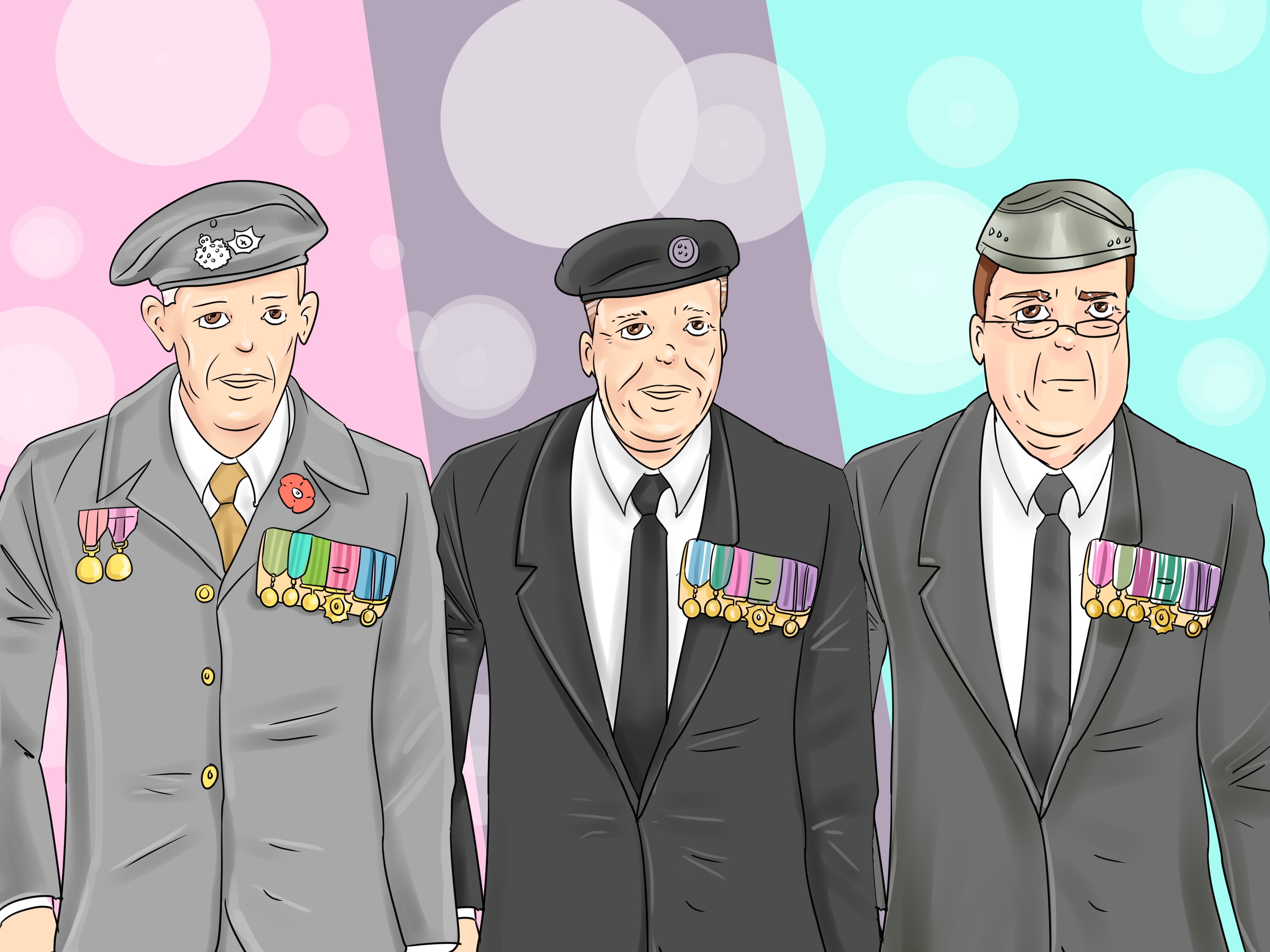
General etiquette is helpful, but service-specific guidance matters. Army guidance is broad and allows retirees and former members to wear medals on appropriate civilian clothing, with either full-size or miniature medals, placed in roughly the same location and style as on the Army uniform. Air Force and Space Force guidance also allow full-size or miniature medals on civilian suits or equivalent dresses. Navy and Marine guidance gets more detailed, especially for formal evening wear, where miniature medals are the normal choice.
That means you should not assume one branch’s habit applies to every other branch. A retired Army officer showing up in full-size medals on a suit jacket for Memorial Day may be perfectly within tradition. A Navy or Marine attendee at a black-tie event is more likely to look correct in miniature medals. Same goal, different playbook. Respect the branch culture as much as the medal rack itself.
Step 3: Choose full-size or miniature medals based on the outfit
This is where many people either nail it or wander bravely into fashion turbulence. In general, miniature medals are the safer choice for formal civilian evening wear such as a tuxedo, dinner jacket, or black-tie outfit. They look proportional, polished, and intentional. Full-size medals can work for appropriate civilian clothing at patriotic events, parades, memorial observances, and similar ceremonial settings, especially where branch guidance clearly allows them.
Here is the easy version: if the outfit says “formal evening,” miniature medals usually win. If the outfit says “ceremonial daytime suit” or “patriotic event attire,” full-size medals may be fine. If the outfit says “casual Friday,” the medals should stay home and enjoy retirement. The goal is harmony between the medals and the clothing. You want the awards to look earned and properly displayed, not like they accidentally boarded the wrong jacket.
Step 4: Put them on the left side
Medals on civilian clothes belong on the left side. That is the standard visual anchor across U.S. service guidance for civilian wear, whether you are using medals, lapel buttons, rosettes, or service pins. On a suit, sport coat, dinner jacket, or formal coat, the left chest or left lapel is where the action belongs. Not the right side. Not both sides. Not wherever the fabric looked lonely.
If you are wearing full-size medals on a civilian suit or jacket, place them in approximately the same relative position they would occupy on your service uniform. If you are wearing miniatures for black tie or evening dress, center them neatly on the left side or lapel according to your branch tradition and the shape of the jacket. The big picture is consistency: the display should look balanced, intentional, and familiar to anyone who understands military wear.
Step 5: Follow the correct order of precedence
Even the sharpest-looking medal rack falls apart if the order is wrong. Awards should be arranged according to official order of precedence, with the senior award in the position of honor. That means your rack is not organized by color preference, sentimental ranking, or “the shiny one looks cool in the middle.” Military decorations, service medals, campaign medals, unit awards, and specialty insignia all have established precedence rules.
If you are unsure, use your branch’s official chart or a reputable medal-building reference based on official precedence. This matters because the display tells a story, and the story should be correct. A proper order says you understand the significance of what you earned. A random order says you got dressed in low light and made bold choices. One of those looks professional. The other looks like a patriotic slot machine.
Step 6: Mount them neatly and keep the rows proportional
Medals should sit straight, hang evenly, and look intentional. That means no crooked rows, no one medal leaning off like it is trying to escape the formation, and no strange spacing that makes the whole rack look seasick. When wearing multiple medals, use a proper mounting bar. The rows should be balanced, and the overlap should be clean if your branch guidance allows overlapping.
Neat mounting is not just about appearance. It also keeps the jacket from sagging, reduces movement when you walk, and prevents the medals from turning into a metallic wind chime every time you breathe. If you have not worn them in a while, inspect the fasteners, clutches, bars, and backing before the event. Nothing ruins a dignified entrance faster than hearing your hard-earned medal hit the floor during the opening remarks.
Step 7: Match the medals to the formality of the clothes
Medals do not live in a vacuum. The rest of the outfit matters. A dark suit, blazer, tuxedo, or equivalent formal dress gives the medals the visual respect they need. A wrinkled sport coat, novelty tie, or ultra-casual shirt does not. You do not need expensive clothing, but you do need appropriate clothing. Clean lines, conservative colors, and a good fit will always beat over-styled “look at me” energy.
Men usually look best in a dark suit or tuxedo, depending on the event. Women can wear equivalent formal or semi-formal attire that accommodates proper medal placement without distortion. If the cut of the garment makes correct placement impossible, pick a different garment. The clothes should support the display, not fight it. Your medals are the point. The outfit is the frame. No one buys a picture frame because it is louder than the picture.
Step 8: Use lapel buttons or rosettes when subtle is smarter
Not every occasion calls for a full rack. Sometimes a smaller, more restrained display is the best move. Lapel buttons, rosettes, miniature ribbon replicas, retirement buttons, or honorable discharge buttons can be appropriate for civilian clothes, depending on the service and the setting. These are especially useful when you want to honor your service without wearing a full medal arrangement.
This works well for business attire, veterans organization events, receptions, and less formal commemorative gatherings. Think of it as the quiet professional version of medal wear. It still says something meaningful, but it does not dominate the outfit. When worn correctly on the left lapel, a small device can carry a lot of dignity without requiring your jacket to become structural engineering homework.
Step 9: Do not mix military costume energy with civilian clothes
There is a difference between honoring your service and building an accidental costume. Avoid mixing random uniform parts with civilian clothing unless your branch specifically authorizes it. A proper civilian outfit with medals is one thing. A sports coat plus mismatched uniform elements plus five unrelated pins plus an old beret you found in a closet is quite another. That road leads to confusion, and confusion is not a dress code.
You should also avoid overloading casual clothing with medals or badges. A polo shirt, T-shirt, denim jacket, or hoodie is almost never the right partner for a formal medal display. When the clothing gets too casual, the medals stop looking ceremonial and start looking misplaced. Respect often looks simpler than people expect. That is one reason tasteful medal wear always beats theatrical medal wear.
Step 10: Do a final mirror check and let dignity be the boss
Once everything is on, step back and inspect the whole presentation. Are the medals straight? Is the left-side placement clean? Does the rack suit the event? Do the outfit and awards look balanced? Can you move, sit, shake hands, and breathe without your jacket looking like it is under attack? These little checks matter more than people think.
The best civilian medal wear has a certain calm to it. It does not beg for attention. It carries itself. You should look like someone attending an important occasion with respect, not like a one-person museum exhibit with an espresso problem. If anything looks off, fix it before you leave. Tasteful medal wear is not about maximum hardware. It is about accuracy, dignity, and honoring the moment well.
Common Mistakes to Avoid
The most common errors are surprisingly ordinary: wearing medals to an event that is too casual, using the wrong size for the outfit, placing them on the wrong side, ignoring precedence, or choosing a jacket that cannot support the display. Another frequent mistake is treating medals like generic patriotic accessories. They are not. They are earned awards, and they deserve the same precision in civilian wear that they would receive on a uniform.
Also avoid the temptation to over-explain your rack all night. Wear the medals correctly, carry yourself well, and let the occasion lead. If someone asks respectfully, answer respectfully. If no one asks, that is fine too. Not every honorable act needs a monologue.
What the Experience Often Feels Like in Real Life
Wearing medals on civilian clothes is not only about placement, rules, and whether the left lapel sits flat. It is also an experience. For many veterans and retirees, putting on medals for a civilian event feels strange the first few times. In uniform, the medals are part of a complete system. Everything around them makes sense. On civilian clothes, the medals suddenly stand out more. They feel more personal, more visible, and sometimes more emotional.
One common experience is the odd mix of pride and self-consciousness. You may feel proud to wear what you earned, but also slightly uncomfortable because civilian clothes do not provide the same built-in context as a military uniform. In uniform, medals look expected. On a suit jacket, they can feel like an announcement. That is why many people spend a few minutes adjusting them, removing them, reattaching them, and then staring at the mirror like they are negotiating a treaty with their own reflection.
There is also the emotional weight of memory. Medals are not just polished metal. They can bring back deployments, unit milestones, ceremonies, friendships, losses, and entire chapters of life. A simple patriotic event can suddenly feel deeper when you pin on a medal tied to a hard season or a particular operation. Sometimes family members notice that shift immediately. A spouse sees it. A child asks about a medal. A friend says, “I never knew you had all those.” In that moment, medal wear becomes more than dress etiquette. It becomes storytelling without a speech.
Another very real experience is practical annoyance. Medals look dignified, but they can behave like tiny rebellious gym equipment. They tug on lighter jackets. They shift when you sit. They tap the fabric when you walk. If the mounting is weak, they can tilt at exactly the wrong moment. Anyone who has ever spent ten calm minutes before an event saying, “Why are you leaning like that?” to a medal rack already understands this deeply human struggle.
Then there are the conversations. Wearing medals on civilian clothes invites a different kind of interaction than wearing a veteran T-shirt or a service cap. People often assume the occasion is important, and they respond accordingly. Some will say thank you. Some will ask respectful questions. Some will recognize a campaign or decoration and quietly nod. For many wearers, that is one of the strongest parts of the experience: the medals create connection without requiring performance. They do not have to dominate the night to mean something.
Many veterans also discover that subtlety feels better with age. Early on, a full display may feel like the obvious choice. Later, a smaller arrangement, miniature medals, or even a single lapel device may feel more appropriate. That is not less respect. Often it is more refined respect. It reflects confidence, maturity, and the understanding that honor does not need to shout to be heard.
And finally, there is the quiet satisfaction of getting it right. The jacket fits. The medals are straight. The event is meaningful. You walk in knowing you are dressed appropriately, respectfully, and accurately. That feeling matters. It lets you stop thinking about the mechanics and focus on the reason you came in the first place: to honor service, remember people, support tradition, and be present for a moment that deserves your best.
Conclusion
If you want to wear medals on civilian clothes the right way, the formula is simple: choose the right occasion, follow your branch guidance, use the correct medal size, place the display on the left side, respect order of precedence, and keep the overall look formal, balanced, and dignified. That is really the heart of it. Medal etiquette is not about showing off. It is about showing respect.
When done well, medals on civilian attire can look sharp, meaningful, and deeply appropriate. When done poorly, they can look awkward in about six different ways at once. So take the extra minute. Check the event. Check the rack. Check the mirror. Then walk in like you belong there, because if you earned those medals and wear them properly, you do.