Garage door openers are one of those household upgrades you barely think about until the day you are trapped in the driveway during a thunderstorm, holding a grocery bag, a coffee, and your last shred of patience. Suddenly, that little motor on the ceiling feels less like a convenience and more like a loyal but underappreciated butler.
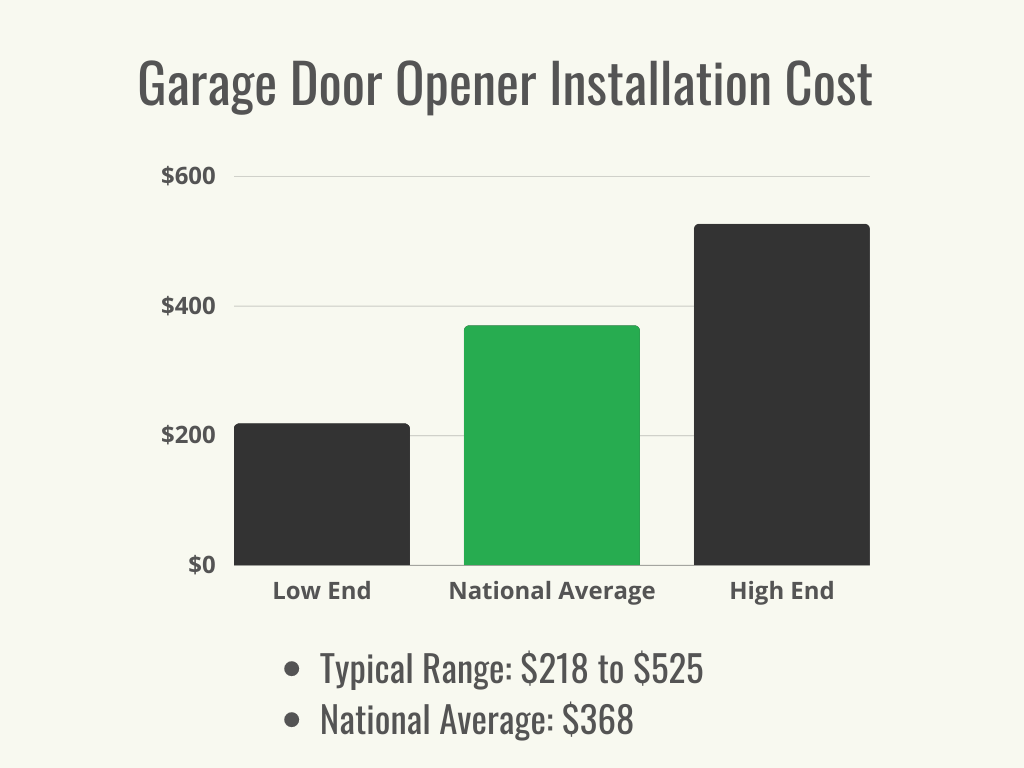
So, how much does garage door opener installation cost? In most U.S. homes, professional garage door opener installation typically costs between $218 and $540, with many homeowners paying around $379 for a standard replacement. However, the total can stretch from about $300 to $900 when you include the opener, labor, accessories, and added features. Premium wall-mounted units, heavy-duty motors, battery backup systems, and smart garage door technology can push the final bill closer to $1,000 or more.
The good news? This is not usually a “sell a kidney and cancel vacation” home project. The better news? Choosing the right opener can make your garage quieter, safer, more secure, and far less likely to wake the baby, the dog, and possibly the neighbors three houses down.
Average Garage Door Opener Installation Cost
The average garage door opener installation cost depends on whether you are replacing an old unit, installing an opener for the first time, upgrading to a smart model, or dealing with a garage door that has a personality disorder. A straightforward replacement is usually the least expensive because the mounting brackets, electrical outlet, and general setup may already be in place.
| Project Type | Typical Cost Range |
|---|---|
| Basic opener unit only | $150 to $300 |
| Midrange opener unit | $250 to $500 |
| Professional labor | $150 to $400 |
| Standard installed total | $218 to $540 |
| Premium smart or wall-mounted installation | $700 to $1,100+ |
For a typical home, a realistic planning budget is $350 to $650. That usually covers a dependable opener, professional installation, setup of remotes and safety sensors, and basic testing. If your garage needs new wiring, reinforcement brackets, door repairs, or special smart-home integration, your final cost may climb higher.
Garage Door Opener Cost by Type
Not all garage door openers work the same way. Some are affordable and sturdy. Some are smooth and whisper-quiet. Some mount on the wall and look like they belong in a garage owned by someone who alphabetizes their screwdrivers. The opener type is one of the biggest factors in your final price.
Chain-Drive Garage Door Openers
A chain-drive opener is the budget-friendly workhorse of the garage world. It uses a metal chain to pull or push the trolley that opens the door. Chain drives are strong, reliable, and usually the least expensive option, often making them ideal for detached garages or homeowners who do not mind a little mechanical rumble.
The downside is noise. If your garage sits under a bedroom, a chain-drive opener can sound like a tiny train doing laps over your ceiling. Still, for heavy doors and basic functionality, this type offers excellent value.
Belt-Drive Garage Door Openers
Belt-drive openers use a reinforced rubber belt instead of a chain. They cost more than chain-drive models, but they run much more quietly. For attached garages, townhomes, or households where someone sleeps near the garage, belt-drive openers are often worth the upgrade.
A belt-drive opener commonly lands in the midrange price category. It offers a nice balance of quiet operation, durability, and modern features such as Wi-Fi connectivity, LED lighting, and battery backup.
Screw-Drive Garage Door Openers
Screw-drive openers use a threaded steel rod to move the garage door. They have fewer moving parts than chain-drive systems, which can mean less maintenance. However, they may not be ideal in climates with major temperature swings, since metal expansion and contraction can affect performance.
These openers are less common than they used to be, but they can still be a practical option for certain homes. Pricing generally falls in the middle of the pack.
Wall-Mounted or Jackshaft Garage Door Openers
Wall-mounted openers, also called jackshaft openers, are installed beside the garage door rather than on the ceiling. They are sleek, space-saving, and excellent for garages with high ceilings, storage racks, car lifts, or oversized vehicles.
They are also more expensive. A professional installation for a wall-mounted smart opener can reach $700 to $1,100 or more, especially if electrical work or door hardware upgrades are needed. Think of this option as the “luxury SUV” of garage door openers: useful, polished, and not shy about the price tag.
Labor Cost to Install a Garage Door Opener
Labor is a major piece of the total garage door opener installation cost. Many installers charge a flat project fee, but hourly rates may apply if the work is more complicated. Labor commonly ranges from $150 to $400, depending on the region, installer, setup, and whether old equipment needs to be removed.
A simple replacement may take two to four hours. A brand-new installation may take longer if the installer needs to add support brackets, mount a new rail, install sensors, program remotes, adjust force settings, and test the automatic reverse system. If electrical work is required, such as adding an outlet near the opener location, a licensed electrician may add another $100 to $300+ to the total.
Main Factors That Affect Garage Door Opener Installation Cost
1. New Installation vs. Replacement
Replacing an existing opener is usually cheaper than installing one for the first time. With a replacement, the garage may already have power, brackets, and a basic layout ready to go. A first-time installation may require new mounting hardware, an outlet, a reinforcement bracket, and extra setup time.
2. Motor Power
Residential garage door openers typically range from 1/2 horsepower to 1-1/2 horsepower. A 1/2-HP opener is often enough for a standard sectional double-car door, but heavier doors may need 3/4 HP or higher. Wood doors, insulated doors, and oversized doors usually require stronger motors.
Choosing too little power is like asking a hamster to tow a pickup truck. It might try, but nobody will enjoy the results. A properly sized motor works more smoothly, lasts longer, and places less strain on the system.
3. Smart Features
Smart garage door openers let homeowners open, close, monitor, and schedule the door from a phone app. Some models include camera systems, motion detection, Amazon Key compatibility, voice-assistant support, LED lighting, or real-time alerts.
These features can add $50 to $300+ to the cost of the unit. For many homeowners, the convenience is worth it. If you have ever driven three miles from home and then wondered, “Did I close the garage?” smart monitoring can feel like emotional support technology.
4. Battery Backup
A battery backup keeps the opener working during a power outage. This is especially useful in areas with wildfires, hurricanes, winter storms, or unreliable electrical service. In California, battery backup is required for many newly sold or installed residential garage door openers.
Battery backup can add $50 to $150+ to the equipment cost, but it can be a smart safety investment. It also prevents the classic outage scenario where the power goes out, the car is inside, and everyone suddenly remembers the manual release cord exists.
5. Accessories and Controls
Most garage door opener kits include at least one or two remotes, a wall control, and safety sensors. Additional accessories can increase the price. Common add-ons include exterior keypads, extra remotes, motion-sensing wall panels, laser parking guides, automatic locks, and upgraded lighting.
Expect small accessories to cost around $25 to $75 each, while more advanced controls or lock systems may cost more.
6. Door Condition
An opener is not designed to do all the heavy lifting. The springs, cables, rollers, hinges, and tracks should allow the garage door to move smoothly by hand. If the door is unbalanced, noisy, crooked, or unusually heavy, the installer may recommend repairs before installing the opener.
Common repairs include spring adjustment, roller replacement, track alignment, cable repair, and hinge replacement. These repairs can add anywhere from $100 to $600+, depending on the problem.
Garage Door Opener Installation Cost Examples
Budget Replacement Example
A homeowner replaces an old chain-drive opener with a new basic chain-drive model. The outlet is already installed, the door is balanced, and the installer can reuse the general layout.
Estimated cost: $300 to $450
Quiet Attached-Garage Upgrade
A family with a bedroom above the garage upgrades from a noisy chain-drive opener to a belt-drive smart opener with LED lighting and app control. Labor includes removal of the old opener, safety sensor setup, and Wi-Fi programming.
Estimated cost: $450 to $750
Premium Wall-Mount Installation
A homeowner with high ceilings chooses a wall-mounted jackshaft opener with battery backup, automatic locking, and smart-home control. The installer adds hardware and confirms the sectional door is compatible.
Estimated cost: $800 to $1,100+
DIY vs. Professional Garage Door Opener Installation
Some homeowners install garage door openers themselves, especially when replacing a similar model. DIY installation can save labor costs, but it is not always the best move. Garage doors are heavy, spring systems are dangerous, and opener settings must be adjusted correctly for safe operation.
A confident DIYer may spend $150 to $500 on the opener and accessories. However, professional installation offers important advantages: correct mounting, force adjustment, travel-limit setting, safety sensor alignment, door balance testing, warranty support, and fewer opportunities to invent new swear words.
Professional installation is strongly recommended if the door is heavy, old, unbalanced, custom-sized, or missing proper reinforcement. It is also wise if electrical work is needed or if you are installing a wall-mounted opener.
Safety Requirements Homeowners Should Know
Modern automatic garage door openers are required to include safety features that help prevent entrapment. These include an automatic reversing system and external protection such as photoelectric safety sensors. The sensors are usually mounted near the floor on both sides of the garage door opening.
If the sensors are misaligned, dirty, or disconnected, the door may refuse to close. This is annoying, yes, but it is also the system doing its job. A properly installed opener should reverse when it meets an obstruction and should not close on a person, pet, bicycle, storage bin, or emotionally fragile lawn chair.
When Should You Replace a Garage Door Opener?
Many garage door openers last 10 to 15 years, though some keep going longer with regular maintenance. Replacement may be smarter than repair if the opener is loud, unreliable, missing safety sensors, incompatible with modern remotes, or frequently breaking down.
You should consider replacement if:
- The opener is more than 10 to 15 years old.
- The door shakes, jerks, or stops mid-cycle.
- The motor sounds strained or unusually loud.
- The unit lacks modern safety sensors.
- You want smart controls or battery backup.
- Repair costs are more than half the price of a new opener.
How to Save Money on Garage Door Opener Installation
Homeowners can keep costs under control without buying the cheapest opener on the shelf. The trick is to match the opener to the door, not to the flashiest box at the store.
Compare at Least Three Quotes
Labor prices vary by region and company. Getting three estimates helps you spot suspiciously high bids and suspiciously low ones. A bargain installer who skips safety testing is not a bargain.
Choose the Right Drive Type
If the garage is detached, a chain-drive opener may be perfectly fine. If the garage is under a bedroom, spend more for a belt-drive model. Paying a little extra for quiet operation can be cheaper than apologizing every morning at 6:15.
Skip Features You Will Not Use
Smart controls, cameras, backup batteries, and automatic locks are useful for many households, but not everyone needs every feature. Avoid paying for luxury extras unless they solve a real problem.
Bundle With Garage Door Repairs
If your garage door needs rollers, weatherstripping, track adjustment, or spring service, ask whether bundling the work reduces labor costs. Many installers can handle opener installation and minor door repairs in one visit.
Real-World Experience: What Homeowners Learn After Installing a Garage Door Opener
The first thing many homeowners learn after installing a new garage door opener is that quiet matters more than expected. On paper, a louder chain-drive opener may seem perfectly acceptable. In real life, the sound travels. If the garage is attached to the home, the opener can rumble through walls, floors, and morning routines. A homeowner who parks below a bedroom may quickly decide that a belt-drive opener was not an upgrade; it was a peace treaty.
The second lesson is that the garage door itself matters as much as the opener. A new motor cannot magically fix a door with worn rollers, weak springs, bent tracks, or loose hinges. If the door is hard to lift manually, the opener will struggle too. Many installation surprises happen when the technician tests the door by hand and finds that it is out of balance. That can add repair costs, but it also protects the new opener from premature wear.
Another common experience is underestimating how useful smart features can be. Some homeowners buy a Wi-Fi opener thinking it is a gimmick, then end up using the app constantly. Delivery coming while you are at work? Open the garage for two minutes. Teenager forgot the remote? Tap the phone. Vacation anxiety? Check the app and confirm the door is closed. That small feature can deliver a surprising amount of daily reassurance.
Battery backup is another feature people appreciate most when things go wrong. In calm weather, it may feel optional. During a storm, blackout, or emergency, it can feel essential. Homeowners who live in areas with power outages often say the extra cost is easier to accept after the first time the door opens normally while the rest of the block is dark.
Professional installation also tends to be worth it for people who value time. A skilled installer can often finish in a few hours, align sensors correctly, set travel limits, program remotes, and explain basic maintenance. A DIY homeowner may spend a whole Saturday wrestling with rails, brackets, wiring, and instructions written in the ancient dialect of “diagram only.” DIY can work, but it is best for people who are comfortable with tools and patient with adjustments.
Finally, homeowners often learn that the cheapest option is not always the cheapest over time. A low-cost opener may be fine for a light, standard door, but a heavy insulated door needs the right motor. A noisy unit may save money upfront but cause daily frustration. A poorly installed opener may lead to service calls. The best value is usually a properly sized, professionally installed opener with the features your household will actually use.
Conclusion
Garage door opener installation usually costs between $218 and $540 for a standard professional project, while broader real-world totals often range from $300 to $900 depending on the opener type, labor, accessories, and door condition. Budget-friendly chain-drive units work well for detached garages, belt-drive models are ideal for quieter attached spaces, and wall-mounted openers are best for premium setups with high ceilings or storage needs.
The smartest way to budget is to look beyond the opener price alone. Labor, safety sensors, horsepower, battery backup, smart features, electrical access, and garage door repairs can all affect the final bill. A good installation does more than open and close the door; it improves safety, convenience, security, and everyday sanity. And really, any machine that lets you stay inside your car during a cold rain deserves at least a little respect.