If you have ever looked at a skateboard and thought, “This is too pretty to live under a pile of hoodies,” welcome. You are among friends. A skateboard is not just sporting equipment. It is part transportation, part personality test, part wall art with attitude. And yes, it absolutely deserves a better fate than leaning sadly in a corner like it just got grounded.
The good news is that hanging a skateboard on a wall is not complicated. The even better news is that you have options. You can go full gallery mode with an almost invisible mount, keep things simple with brackets or ledges, or choose a setup that lets you pull the board down and skate it later. The trick is choosing the right method for your board, your wall, and your tolerance for doing the project twice because the first attempt looked “kind of centered” until you stepped back.
In this guide, you will learn the best methods for hanging a skateboard on a wall, how to choose the right hardware, where people mess up, and how to make the final display look intentional instead of “I found a drill and got emotional.”
Why Hang a Skateboard on a Wall?
There are two big reasons people hang skateboards on walls. The first is storage. Floors get crowded. Closets get chaotic. A wall gives your board a home that does not involve being tripped over by you, your roommate, or the family dog with zero spatial awareness.
The second reason is style. Skateboard graphics are art. Sometimes the deck has sentimental value. Sometimes it is signed. Sometimes it is retired. Sometimes it is still rideable, but it is just so good-looking that you want it displayed when it is off duty. A wall mount turns the board into a statement piece instead of random clutter.
And yes, there is a third secret reason: it makes a room look cooler with almost suspiciously little effort.
Before You Hang Anything, Know What You Are Displaying
Not every skateboard setup should be mounted the same way. Start by figuring out what exactly is going on the wall.
Deck Only
A deck-only display is the easiest and usually the prettiest option. Without trucks and wheels attached, the board sits flatter, looks cleaner, and works beautifully with floating or nearly invisible wall mounts. This is the best choice if your goal is more gallery than garage.
Complete Skateboard
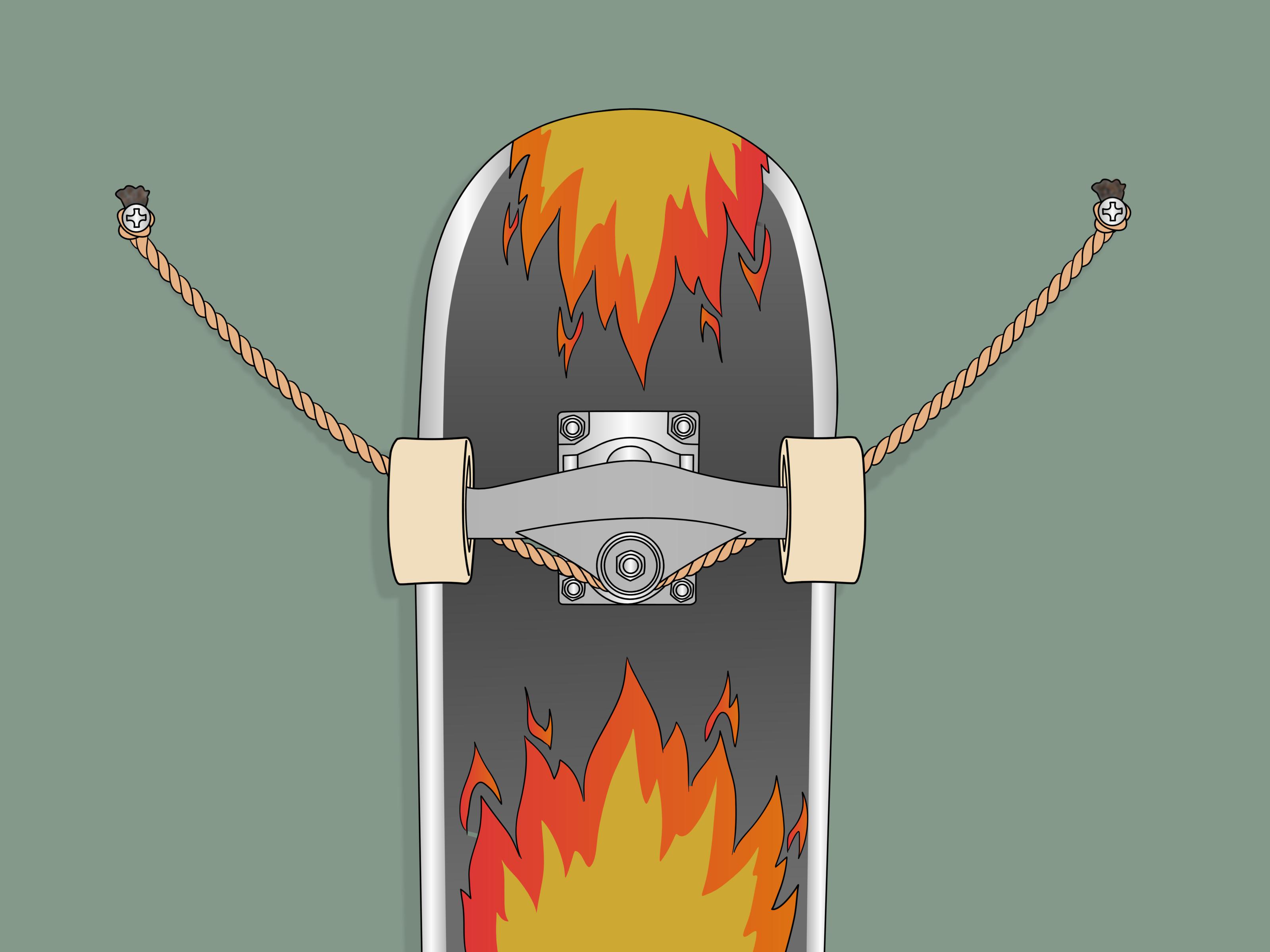
If the trucks and wheels are still attached, the board will stick farther out from the wall. That is not a bad thing, but it does mean you need a method that can handle the shape and the extra bulk. Brackets, hooks, shelves, and certain purpose-built mounts usually work better for a complete skateboard than ultra-flat art-style displays.
Single Board or Full Collection
A single board can be centered like a focal point. A collection needs spacing, alignment, and at least one moment where you stare at the wall with a tape measure and whisper, “Why is math like this?” Plan the layout first. It saves both drywall and dignity.
Best Methods for Hanging a Skateboard on a Wall
1. Use a Skateboard Wall Mount for a Clean, Floating Look
This is the best method for most people, especially if you are hanging a deck without trucks. A skateboard-specific wall mount is designed to hold the board through the truck holes or with a discreet support system that makes the deck appear to float.
Why this method works:
- It looks clean and intentional.
- It usually uses minimal hardware.
- It keeps the focus on the graphic.
- It is ideal for collectible, signed, or retired decks.
If you want that neat “gallery wall” effect, this is your winner. It is also a smart choice when you do not want a bulky bracket stealing attention from the board itself.
Best for: deck-only displays, art walls, collectors, minimalist rooms.
Heads-up: Measure carefully before drilling. A floating display looks amazing when it is level. When it is crooked, it looks like the board has opinions about gravity.
2. Hang It Vertically for a Bold, Simple Display
Vertical hanging is the classic move. It is clean, space-efficient, and easy to style over a desk, next to a dresser, or in a narrow wall section. For most standard decks, vertical mounting works beautifully because the shape naturally draws the eye upward.
It is also great if you want the graphic fully visible from nose to tail. Many homeowners and renters choose vertical displays because they feel tidy and dramatic without demanding a huge wall.
Best for: small rooms, narrow wall spaces, single deck displays.
3. Hang It Horizontally for a Gallery Feel
Horizontal mounting gives the room a more curated, art-forward vibe. It is a strong choice above a bed, couch, bench, or media console. It can also make a deck feel wider and more like a centerpiece instead of an accessory.
The catch is that horizontal hanging usually needs two supports or a system specifically meant for that orientation. If you rush this part, the board may tilt, wobble, or look like it is trying to escape the wall one inch at a time.
Best for: above furniture, multi-board layouts, modern gallery walls.
4. Use Shelf Ledges or Small Brackets for a Complete Skateboard
If your skateboard is fully assembled and you want to keep it ride-ready, shelf ledges or discreet brackets are often the simplest answer. Instead of forcing a complete board into a flat art mount, you let the hardware support the actual shape of the setup.
This option is practical, sturdy, and easy to remove if you decide the board belongs back on the pavement instead of the wall.
Why people like it:
- No need to strip the board down.
- Easy to grab and use later.
- Works well in bedrooms, garages, and entryways.
- Can double as storage and display.
Best for: complete skateboards, active riders, casual display setups.
5. Use Heavy-Duty Hooks for a Functional Storage Display
Hooks are less “art gallery” and more “smart use of wall space,” but that is not an insult. Sometimes practical wins. A sturdy hook setup can be great for garages, mudrooms, dorms, or spaces where you want the board off the floor fast.
The look is more utilitarian, but it is easy, effective, and affordable. If your priority is simple storage with decent visual appeal, hooks deserve a spot in the conversation.
Best for: garages, utility rooms, teen rooms, high-traffic areas.
6. Use Adhesive Solutions Only with Caution
Now for the spicy truth: adhesive options are the most tempting and the most conditional. People love the words “no drill.” Walls love them too. But your skateboard? That depends.
Adhesive picture-hanging products can work for some lightweight wall decor and smooth indoor surfaces, but they are not always the best choice for a real skateboard deck, especially one you care about. If the board is valuable, irreplaceable, or going over a bed, skip the gamble. A mechanical mount is usually safer and more dependable.
Best for: very temporary setups, lightweight decorative uses, low-risk situations.
Not best for: prized decks, textured walls, humid rooms, wallpaper, or anywhere you would hate to hear a loud crash at 2:13 a.m.
How to Choose the Right Method
The best way to hang a skateboard on a wall depends on four things:
1. Your Wall Type
Drywall is the most common and the most likely to punish lazy hardware choices. If you hit a stud, wonderful. If you do not, use the right wall anchor for the load and follow the hardware instructions exactly. Brick and concrete require different anchors and a different mood.
2. The Board Setup
A bare deck is much easier to display cleanly than a complete board. If you want the sleekest look, remove the trucks and wheels. If convenience matters more, display the full setup with brackets or hooks.
3. Whether You Want Art or Access
If the board is collectible, go for an invisible or floating display. If you still ride it, use a method that lets you remove it without a wrestling match.
4. Your Room Style
A floating mount suits minimalist and modern rooms. Hooks or ledges suit practical spaces. Horizontal arrangements look more curated. Vertical displays feel classic. There is no universal winner, only the method that makes the board look like it belongs there.
Step-by-Step: How to Hang a Skateboard on a Wall the Smart Way
Step 1: Pick the Exact Spot
Do not eyeball it. Eyeballing is how people end up with a board that looks centered until they put a lamp next to it and suddenly the whole room feels haunted. Use a tape measure. Mark the height. Stand back. Check sight lines from the doorway.
Step 2: Decide on the Orientation
Vertical, horizontal, or angled? Pick now. Your hardware placement depends on it.
Step 3: Find a Stud If Possible
If a stud lines up with your planned location, great. Use it. Stud mounting is usually the strongest and least fussy option. If there is no stud where you need one, use an anchor rated for the wall and the hardware system you chose.
Step 4: Mark Carefully
Use a pencil and level. If your mount has a template, even better. If not, mark once, check twice, and resist the ancient human impulse to drill first and regret later.
Step 5: Install the Hardware
Follow the mount or anchor instructions exactly. Use the correct drill bit, keep the hardware flush, and do not improvise with random screws from the “mystery jar” in the garage unless you enjoy chaos as a design philosophy.
Step 6: Test Before Letting Go
Once the mount is installed, place the skateboard carefully and test stability with gentle pressure. Not enough to launch it, just enough to confirm it is secure.
Step 7: Adjust the Final Look
After it is hanging, step back and tweak anything that looks slightly off. Sometimes the difference between “nice” and “wow” is half an inch and a functioning level.
Mistakes to Avoid
- Using weak hardware on drywall: Drywall is not magical. It needs help.
- Ignoring the board’s shape and weight: A complete skateboard is not the same as a bare deck.
- Skipping the level: Crooked art becomes all you can see forever.
- Hanging it too high: You want “statement piece,” not “airport departure screen.”
- Using adhesives on risky surfaces: Wallpaper, textured paint, and humid rooms are not your friends here.
- Forgetting room function: If the board sticks into a walkway, someone will eventually meet it face-first.
Styling Ideas That Actually Look Good
Create a Single-Deck Focal Point
One beautiful deck centered over a desk or console table can do a lot of work. It looks thoughtful, polished, and slightly more expensive than it probably was.
Build a Grid of Boards
If you have several decks, line them up evenly for a collector-style wall. Match the spacing. Keep the top edges aligned. Suddenly your room looks like a boutique gallery with better music.
Mix Skateboards with Framed Art
A skateboard wall does not have to be skateboard-only. Pair decks with black frames, concert posters, photography, or small shelves. It helps the display feel designed rather than accidental.
Use Lighting
A picture light, soft LED strip, or even a nearby lamp can make a skateboard display look dramatically better. Good lighting turns “board on wall” into “curated visual decision.”
Which Method Is Best Overall?
If you want the short answer, here it is: a skateboard-specific floating wall mount is usually the best method for a deck-only display, while brackets or ledges are usually the best choice for a complete skateboard.
That answer is not flashy, but it is honest. The right solution is the one that fits the board, suits the wall, and makes the display feel secure. Good skateboard wall decor is equal parts style and common sense. Too much style without support ends in heartbreak. Too much support without style looks like sporting goods storage. The sweet spot lives in the middle.
Real-Life Experiences: What Happens After You Hang a Skateboard on a Wall
Here is the part people do not always mention in ultra-neat tutorials: hanging the board is only half the experience. Living with it is the other half, and that is where you learn what actually matters.
For starters, almost everyone underestimates how much a skateboard changes the room once it is off the floor and on the wall. A board leaning against a dresser looks temporary. The same board mounted neatly on the wall suddenly looks collected, intentional, and oddly important. It stops being “sports stuff” and starts feeling like a piece of personal history. That is true whether the deck is a limited graphic, your first setup, or the board that survived a truly disrespectful number of curb attempts.
Another common experience is realizing that placement matters more than expected. A board can look perfect in your head and weird in real life if it is too close to a shelf, too high above a bed, or floating awkwardly in a giant blank wall. People usually get the best results when they mock up the size first with painter’s tape or even a sheet of paper cut roughly to skateboard dimensions. It feels a little dramatic in the moment, but it saves you from making decorative decisions based on hope alone.
There is also a huge difference between displaying a board you still use and one you have officially retired. Riders who still skate the board usually prefer a mount that makes removal easy. They want the board secure, but not so secure that getting it down feels like applying for a permit. Collectors and design-minded homeowners tend to go the other direction. They want the deck to sit flatter, cleaner, and more permanently, almost like framed art.
One of the funniest real-world lessons is that a skateboard wall can become a conversation magnet. People ask where you got the mount. They ask if the board is rideable. They ask if it is signed. They ask if you “did the art yourself,” which is flattering even when the answer is absolutely not. A good display makes the board feel meaningful, even to people who do not know a kickflip from a kitchen spatula.
And finally, once people hang one skateboard successfully, they often want to hang more. This is how collections start expanding from “just one board over the desk” to “well, maybe a row of three would look balanced.” That is not a problem. That is interior design evolving under the influence of grip tape and confidence.
The best experience, though, is simple: every time you walk into the room, the board looks like it belongs there. Not hidden. Not shoved aside. Not waiting to fall over in the middle of the night like a wooden jump scare. Just clean, secure, and displayed the way something cool should be displayed.
Conclusion
If you want to hang a skateboard on a wall the right way, start with the purpose. Is it art, storage, or both? Then match the mount to the board, the wall, and the room. Floating skateboard wall mounts are best for a polished deck display. Brackets and ledges are excellent for complete boards. Hooks work well when function matters more than finesse. Adhesives can work in limited situations, but they should not be your first choice for a prized setup.
Do the measuring, use the right hardware, and take five extra minutes to make it level. That is the difference between “nice wall decor” and “why does this look like it is sliding emotionally to the left?”
Get it right, and your skateboard will finally have the display it deserves: safe, stylish, and dramatically less likely to attack your ankles from the floor.