Becoming a chess grandmaster sounds simple until you try to explain it at a family dinner. “I just need a 2500 FIDE rating, three GM norms, years of disciplined study, elite tournament results, deep opening preparation, endgame technique, psychological toughness, and the emotional stability to survive losing to a 12-year-old who looks like he still needs permission to cross the street.” Easy, right?
In reality, the grandmaster title is one of the most respected achievements in competitive chess. It is awarded by FIDE, the international chess federation, and it represents more than being “pretty good at chess.” A grandmaster is a player who has proven, under strict tournament conditions, that they can perform at an elite international level. The title usually requires a FIDE rating of at least 2500 and three grandmaster norms, which are outstanding performances in approved tournaments with strong and international fields.
This guide breaks down how to become a grandmaster in 7 practical steps. No magic wand, no “win every game with the London System,” and no motivational fog machine. Just a serious, realistic path from ambitious player to title contender.
What Does It Mean to Be a Chess Grandmaster?
A grandmaster, often abbreviated as GM, is one of the highest titles in chess. Apart from World Champion, it is the most famous chess title in the world. Once earned, the GM title is generally held for life. That means you do not have to keep reapplying every time you hang a rook in blitz. Thankfully.
The standard route to becoming a chess grandmaster includes two major milestones: reaching a FIDE rating of 2500 or higher and earning three GM norms. A GM norm normally requires a performance rating of at least 2600 in a qualifying tournament, plus specific conditions involving opponent ratings, titled players, grandmasters, national federations, rounds, and time controls. In plain English: you must score extremely well against very strong players in serious international events.
Because the requirements are demanding, the road to grandmaster is not only about talent. It is about training structure, tournament planning, emotional recovery, financial commitment, physical endurance, and learning how to lose without deciding that chess was a terrible invention and checkers had the right idea all along.
How to Become a Grandmaster: 7 Steps
Step 1: Build a Rock-Solid Chess Foundation
Every future grandmaster starts with the same boring-but-beautiful basics: tactics, calculation, piece activity, king safety, pawn structure, endgames, and opening principles. Skipping these fundamentals is like trying to build a castle on pudding. It may look impressive for five seconds, then collapse dramatically.
At the beginner and intermediate levels, improvement often comes from reducing obvious mistakes. Learn common tactical patterns such as forks, pins, skewers, discovered attacks, deflections, back-rank mates, and mating nets. Then move into deeper calculation: candidate moves, forcing lines, quiet moves, defensive resources, and evaluation after the sequence ends.
Endgames are equally important. Many players avoid them because endgames feel less flashy than attacking sacrifices. But strong endgame technique is one of the clearest differences between casual players and serious competitors. Learn king and pawn endings, opposition, rook endings, basic theoretical draws, queen versus pawn positions, minor piece endgames, and practical conversion methods. If tactics are fireworks, endgames are plumbing. Nobody claps for plumbing, but the whole house depends on it.
A solid foundation also means understanding opening principles before memorizing endless theory. Control the center, develop pieces, protect the king, connect the rooks, and know the plans behind your openings. Memorized moves without understanding are like GPS directions with no map. The moment your opponent turns left instead of right, you are spiritually lost.
Step 2: Create a Serious Training Routine
To become a grandmaster, “I play online sometimes” is not a training plan. It is a hobby with excellent procrastination potential. A serious chess training routine should include tactical exercises, calculation practice, annotated master games, endgame study, opening review, tournament game analysis, and regular classical games.
A balanced weekly schedule might include daily tactics, two or three deep calculation sessions, one endgame theme, one opening review session, and at least one long game with full analysis afterward. The exact schedule depends on your rating, time, coach, school or work responsibilities, and tournament calendar. The key is consistency. Chess improvement rewards repetition, but only if the repetition is thoughtful.
Use active learning whenever possible. Do not just watch a grandmaster explain a brilliant sacrifice while you nod like a wise statue. Pause the board, calculate, write down your candidate moves, compare your ideas to the game, and ask why your move did or did not work. Passive chess study feels comfortable, but active chess study makes you stronger.
Spaced repetition can help with opening lines, tactical motifs, and endgame patterns. Reviewing difficult material at planned intervals helps move ideas from “I saw this once” to “I can actually use this under pressure.” That matters, because tournament chess does not care what you understood yesterday if you cannot remember it on move 34 with ten minutes left.
Step 3: Analyze Your Own Games Like a Detective
If you want to improve quickly, your own games are pure gold. Unfortunately, they are sometimes gold buried under blunders, panic moves, and mysterious decisions made by your past self. That is fine. The point of analysis is not to feel brilliant. The point is to find truth.
After each serious game, analyze without an engine first. Write down where you felt confident, where you felt confused, what plans you considered, and which moves changed the evaluation. Then use an engine to check tactics, missed resources, and critical turning points. The engine is a microscope, not a substitute for thinking. If you only click through computer lines, you may learn that Stockfish is good at chess. Shocking news, but not enough.
Create a mistake journal. Organize errors by category: opening confusion, missed tactics, poor time management, weak endgame knowledge, emotional decisions, bad exchanges, king safety, calculation blindness, or overconfidence. Patterns will appear. Maybe you always misplay isolated queen pawn positions. Maybe rook endings haunt you like a tiny wooden ghost. Maybe you spend 45 minutes proving your opponent’s bad move is bad, then make a worse one. Once you know your patterns, you can train them directly.
Grandmaster-level growth comes from closing leaks. Every serious player has weaknesses. The difference is that strong players hunt them down instead of pretending they are “style choices.”
Step 4: Study Master Games and Model Players
One of the best ways to become a stronger chess player is to study the games of people who are already strong. Master games show how plans develop, how advantages are converted, how attacks are prepared, and how small positional details become decisive.
Choose model players whose openings and style match your goals. If you play the Catalan, study players known for positional pressure and long-term compensation. If you play sharp Sicilian lines, study attacking specialists and modern elite games. If you want to improve endgames, study technical players who squeeze small advantages with terrifying patience.
Do not only memorize moves. Ask questions: Why did White improve that knight before opening the center? Why did Black accept a weak pawn structure for bishop activity? Why was the exchange sacrifice positional rather than tactical? Why did the stronger player avoid a tempting attack and choose a quiet improving move?
Annotated games are especially valuable because they explain human decision-making. Engine analysis may say a move is +0.42, but humans need ideas: weak squares, better bishops, outposts, pawn breaks, king safety, and practical pressure. A future grandmaster learns to connect calculation with strategic understanding.
Step 5: Build an Opening Repertoire With Ideas, Not Just Memory
Opening preparation matters more as you climb the rating ladder. At lower levels, knowing principles is often enough. At master level and beyond, opponents punish vague preparation. By the time you are chasing IM and GM norms, you need a reliable opening repertoire with depth, flexibility, and practical surprise value.
Start by choosing openings that suit your style and tournament goals. Aggressive players may prefer sharp Sicilians, King’s Indian structures, or dynamic gambits in selected situations. Positional players may enjoy Queen’s Gambit structures, Catalan systems, Carlsbad pawn structures, or the Berlin. Universal players eventually need comfort in both quiet and sharp positions.
Your repertoire should include main lines, sidelines, typical middlegame plans, common tactical shots, model games, and endgame structures that arise from the opening. For example, learning the Ruy Lopez is not just memorizing move orders. It includes understanding central tension, knight routes, queenside expansion, kingside attacks, and when to release or maintain pawn pressure.
Also prepare for real opponents. At serious tournaments, players study each other. If your games are in databases, your opponents can see your habits. That means you need backup lines and move-order awareness. Opening preparation is partly chess and partly spy movie, except everyone is wearing hoodies and drinking coffee from paper cups.
Step 6: Play Strong Tournaments and Chase Norms Strategically
You cannot become a grandmaster by only studying at home. Eventually, you must enter the arena. To earn GM norms, you need tournaments that qualify under FIDE title regulations. These events must meet requirements involving number of games, opponent strength, titled players, grandmaster opponents, federation mix, and performance rating.
A typical GM norm requires a performance rating of at least 2600. That does not mean you must be rated 2600. It means your result in that event must be strong enough, against the rating average of your opponents, to count as a grandmaster-level performance. You also need to face enough grandmasters and titled players, and your opponents must represent a proper international mix. In many cases, the event should be at least nine rounds or otherwise meet specific approved exceptions.
This is why tournament selection is a serious skill. Strong players and coaches often plan norm attempts carefully. They look for events with the right field, enough grandmasters, suitable time controls, fair pairings, and realistic chances to score. A player rated 2450 may not need random tournaments; they need the right tournaments.
Travel can become part of the journey. Many aspiring grandmasters play international opens, round robins, closed norm events, national championships, continental events, and strong club leagues. The goal is not just to play more chess. The goal is to play the right chess against the right opposition under conditions where a great result can become a norm.
Step 7: Reach 2500 FIDE and Develop Grandmaster Habits
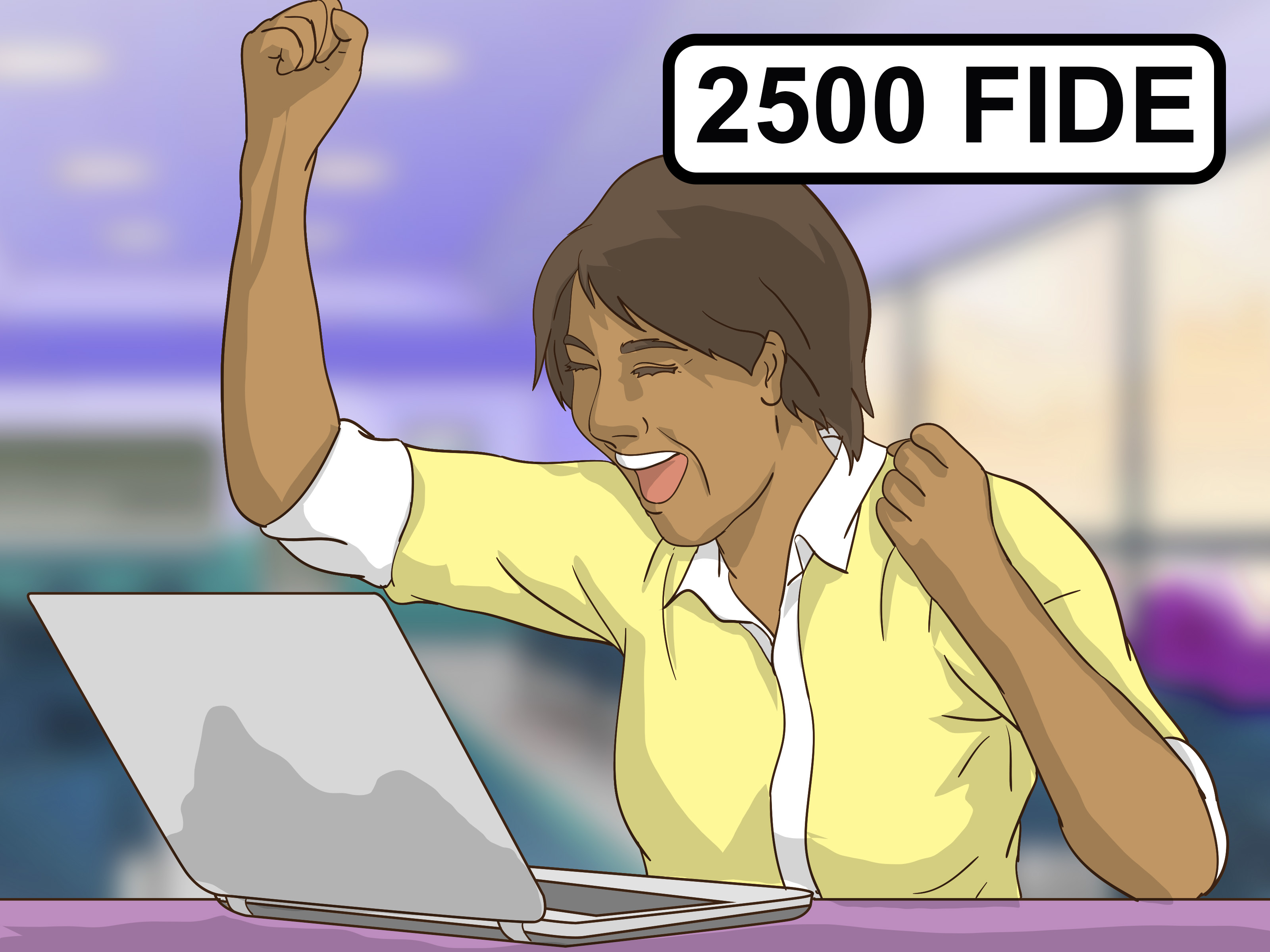
The final milestone is reaching a FIDE rating of at least 2500. Some players earn norms before crossing 2500. Others cross 2500 and still need norms. Either way, both parts matter. The rating shows sustained strength; the norms show elite tournament performance.
To reach 2500, you need more than chess knowledge. You need professional habits. That includes sleep, physical fitness, emotional control, tournament preparation, nutrition, time management, and the ability to recover after losses. Long classical games are mentally exhausting. A single tournament can involve hours of calculation every day. If your brain is the engine, your body is the power supply. Ignore it and the lights flicker.
Grandmaster habits also include humility. Strong players constantly update their understanding. They are willing to change openings, rebuild weak areas, accept criticism, and learn from younger players. Chess has no mercy for ego. The board does not care how talented you are, how many puzzle streaks you completed, or whether your coach said you have “great potential.” It asks one question: what is your move?
At the highest levels, progress slows. Gaining rating from 1200 to 1600 may happen quickly. Moving from 2400 to 2500 can take years. The margins become thinner. One inaccurate endgame defense, one overpressed position, or one poor tournament decision can cost valuable rating points. This is where discipline separates dreamers from title contenders.
Common Mistakes Aspiring Grandmasters Make
Studying Too Much Opening Theory Too Early
Openings matter, but many players hide inside opening study because it feels productive. They memorize twenty moves of theory, then reach a playable middlegame and immediately wonder where all the pieces went. If your tactics, calculation, and endgames are weak, opening knowledge will not save you. Build the house before choosing curtains.
Avoiding Slow Games
Blitz is fun, useful in moderation, and excellent for testing pattern recognition. But classical chess builds deep calculation, patience, and decision-making. If you want norms, you need to become comfortable thinking for long periods. Bullet chess may improve your mouse speed; it will not teach you how to hold a worse rook ending for 80 moves.
Letting Losses Become Identity Crises
Every serious chess player loses painful games. The difference is how they respond. A bad loss should become data, not drama. Analyze it, learn from it, and move forward. If you treat every defeat as proof that you are doomed, chess will become emotionally expensive very quickly.
How Long Does It Take to Become a Grandmaster?
There is no universal timeline. Some prodigies become grandmasters as teenagers. Other players take much longer, and many strong masters never reach the title. Starting young helps because pattern recognition, tournament experience, and coaching can accumulate over many years. However, the core ingredients remain the same: disciplined training, strong competition, expert feedback, resilience, and enough opportunity to play norm-eligible events.
For most players, becoming a grandmaster is not a short-term goal. It is a long-term project. Think in years, not weeks. A realistic path often includes reaching expert strength, then national master level, then FIDE master or international master strength, then pushing toward GM norms and 2500. Each stage demands new skills. The player who dominates at 2000 may need a completely different mindset to compete at 2400.
Experience Notes: What the Grandmaster Journey Feels Like in Real Life
The experience of trying to become a grandmaster is less glamorous than people imagine. From the outside, it looks like trophies, elegant sacrifices, and dramatic tournament photos. From the inside, it often looks like sitting in a hotel room at midnight wondering why you played 32…Rc8 instead of 32…Qe7. Chess ambition is beautiful, but it is not always comfortable.
One major experience aspiring grandmasters share is learning to live with uncertainty. You can study for weeks and still get surprised in the opening. You can calculate deeply and still miss a defensive resource. You can play a great tournament and then lose rating in the final round because chess has a wicked sense of humor. This uncertainty teaches emotional discipline. You learn to focus on decisions, not outcomes. You cannot control whether your opponent finds the only move. You can control your preparation, energy, time usage, and attitude.
Another real experience is the gradual change in how you see the board. Early on, you look for attacks and captures. Later, you start noticing weak squares, bad bishops, pawn breaks, king safety, piece coordination, and long-term endgame transitions. Positions become less like puzzles and more like conversations. Every move asks a question. Every pawn move leaves a footprint. Every exchange changes the story.
Travel is also part of the grandmaster path for many players. Norm tournaments may not happen conveniently next door. Players often travel to different cities or countries, adjust to new food, new rooms, new schedules, and new opponents. Some tournament halls are inspiring. Others have lighting that makes everyone look like they are being questioned by detectives. Either way, the serious player learns to perform.
Coaching and community matter more than many people admit. A good coach can save years by identifying weaknesses clearly. Training partners can test openings, analyze games, and keep motivation alive. Parents, friends, clubs, and sponsors may also play important roles, especially for young players. Chess is played one-on-one, but improvement is rarely a solo movie.
Perhaps the most important experience is learning patience. Grandmaster strength is not built in one heroic summer. It comes from thousands of small acts: solving one more calculation exercise, reviewing one more rook ending, checking one more model game, sleeping properly before a round, apologizing to your ego, and trying again. The path is demanding, but that is exactly why the title means something.
Conclusion
Becoming a grandmaster is not about discovering one secret trick. It is about building a complete chess life. You need fundamentals, disciplined study, deep analysis, strong tournaments, opening preparation, endgame technique, psychological resilience, and the ability to keep improving when progress becomes slow.
The 7 steps are simple to understand but difficult to execute: build your foundation, train seriously, analyze your games, study master play, create a meaningful opening repertoire, choose norm-eligible tournaments wisely, and reach 2500 FIDE while developing professional habits. That is the road. It is steep, occasionally brutal, and definitely not paved with easy wins. But for players who love the game deeply, the climb itself becomes part of the reward.
Note: This article is written for educational and SEO publishing purposes. The official requirements for titles can change, so serious players should always verify current FIDE title regulations before planning norm attempts.