Note: This article is for informational and editorial purposes only. It does not diagnose any astronaut or replace statements from NASA medical officials.
Why One Space Photo Turned Into a Global Health Debate
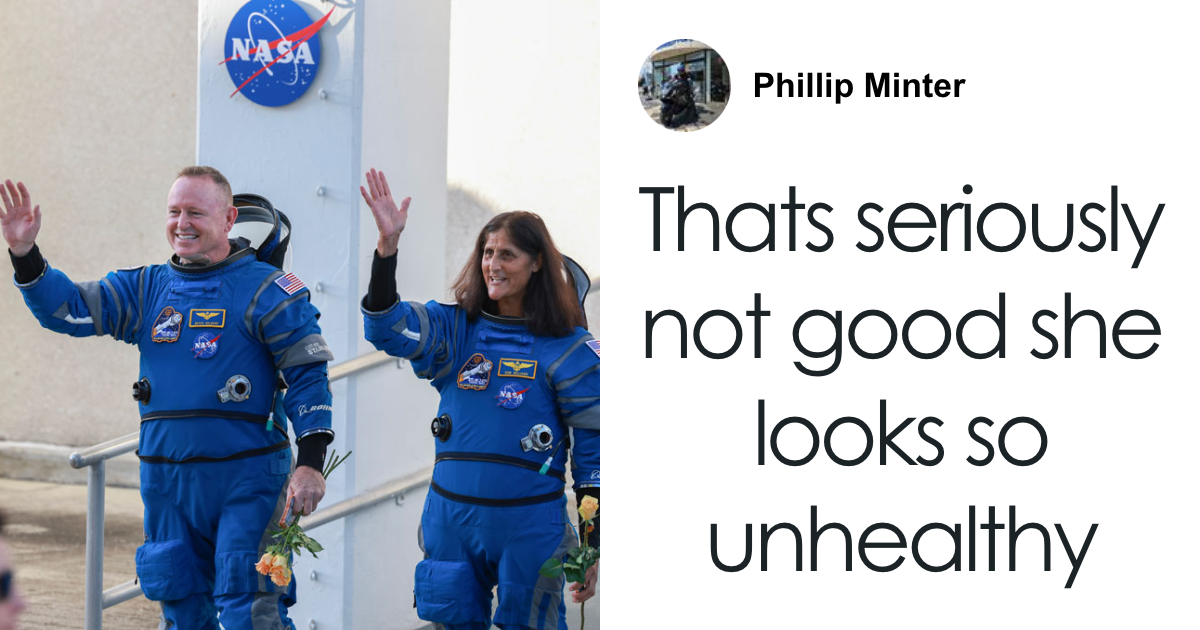
Space is already dramatic enough without the internet acting like a group chat with a telescope. But when recent photos of NASA astronauts Sunita “Suni” Williams and Barry “Butch” Wilmore circulated online during their unexpectedly long stay aboard the International Space Station, public concern moved at rocket speed. Some viewers thought Williams looked thinner or more tired than usual. Others wondered whether months in microgravity had taken a visible toll. Within hours, a technical spaceflight story had become a health story, a social media mystery, and a reminder that the human body was never exactly designed to live in a floating laboratory 250 miles above Earth.
The two astronauts launched on Boeing’s Starliner spacecraft in June 2024 for what was expected to be a brief crewed test flight. The mission was supposed to help prove that Starliner could safely carry astronauts to and from the International Space Station. Instead, helium leaks and thruster problems changed the plan. NASA eventually decided to send Starliner back to Earth without its crew and have Williams and Wilmore return later aboard a SpaceX Dragon capsule. The astronauts were not lost, abandoned, or floating around with nothing but freeze-dried snacks and vibes. They were safe aboard the ISS, working with the station crew, performing science, exercising, eating, and communicating regularly with mission control.
Still, the photos struck a nerve. Space medicine is not science fiction; it is a serious field built around real risks. Astronauts can experience muscle loss, bone density changes, fluid shifts, vision problems, immune changes, sleep disruption, and the psychological strain of confinement. So while viral speculation about a single photo can be misleading, the broader concernwhat long-duration spaceflight does to the bodyis absolutely worth discussing.
The Boeing Starliner Mission: How an Eight-Day Trip Became a Months-Long Stay
Williams and Wilmore were chosen for Boeing’s Crew Flight Test, the first Starliner mission to carry astronauts. They lifted off from Cape Canaveral on June 5, 2024, aboard a United Launch Alliance Atlas V rocket. Starliner reached the International Space Station the next day, but the flight was not as clean as NASA and Boeing had hoped. Engineers observed helium leaks and performance issues with some reaction control thrusters.
In spaceflight, “mostly fine” is not good enough when human lives are involved. A spacecraft that behaves imperfectly on the way up must be studied carefully before being trusted for the trip down. NASA and Boeing spent weeks analyzing data, testing systems, and debating return options. Eventually, NASA made the conservative decision: Starliner would come home without the astronauts. That choice allowed teams to collect more performance data while avoiding unnecessary crew risk.
Williams and Wilmore then became part of the long-duration ISS crew. Their stay stretched from days to months, and they ultimately returned safely to Earth in March 2025 as part of NASA’s SpaceX Crew-9 return. By the time they splashed down, they had spent 286 days in space. That number is not a world record, but it is a very long time to live without gravity, fresh breezes, showers, sidewalks, or the simple joy of dropping something and watching it stay dropped.
Why the Photos Sparked Health Concerns
The online conversation focused heavily on appearance. Some viewers described Williams as looking “gaunt” or unusually thin in photos released from the space station. Outside medical commentators speculated about calorie deficits, muscle loss, or stress. The concern spread because it seemed visual and immediate: people saw a face and filled in the blanks.
But photos from space can be deceptive. Lighting inside the ISS is harsh and inconsistent. Cameras capture angles that may exaggerate shadows. Microgravity changes how fluids move through the body, often making the face look puffy, the head look fuller, or the body look differently proportioned. Astronauts also wear loose clothing, float in odd postures, and are photographed in a place where “normal body language” has basically left the building.
NASA pushed back against the rumors. Agency medical officials said the astronauts aboard the ISS, including Williams and Wilmore, were in good health and were being monitored by dedicated flight surgeons. Williams herself also addressed the speculation, saying she weighed the same and explaining that her body had changed because of regular space workouts, including cycling, treadmill work, and resistance exercise.
That does not mean space is easy on the body. It means a photo is not a medical chart. A still image can start a conversation, but it cannot replace bloodwork, nutrition tracking, medical monitoring, exercise data, and direct evaluation by professionals who specialize in astronaut health.
What Space Really Does to the Human Body
Muscle Loss and Strength Changes
On Earth, gravity is the world’s most reliable personal trainer. You resist it every time you stand, walk, climb stairs, or carry groceries. In microgravity, the body no longer needs to support its own weight in the same way. Muscles, especially in the legs, hips, back, and core, can weaken if they are not challenged.
That is why exercise is not optional aboard the ISS. Astronauts typically spend about two hours per day working out using specialized equipment. The Advanced Resistive Exercise Device mimics weightlifting. The treadmill uses harnesses and bungee-like loading to keep astronauts from floating away mid-run. The cycle ergometer provides cardiovascular conditioning without shaking the station like a washing machine full of sneakers.
Even with these countermeasures, returning astronauts often need time to regain balance, coordination, and full strength after landing. Their bodies must remember that gravity is backand gravity, being gravity, does not offer a gentle onboarding process.
Bone Density Loss
Bone responds to stress. Without weight-bearing activity, bones can lose mineral density. NASA has reported that weight-bearing bones may lose an average of 1% to 1.5% of mineral density per month during spaceflight if countermeasures are not effective. That is one reason exercise, diet, vitamin D, and medical monitoring are central to long-duration missions.
For astronauts, bone health is not just a long-term concern. It affects mission safety, post-flight recovery, and future exploration plans. A Mars crew, for example, would need to land after months in transit and still be capable of working in partial gravity. Nobody wants the first sentence on Mars to be, “Great landing, but my femur would like a word.”
Fluid Shifts and Puffy-Face Confusion
One of the strangest effects of microgravity is fluid redistribution. On Earth, gravity pulls blood and other fluids toward the lower body. In orbit, fluids shift upward toward the head. This can make astronauts’ faces appear fuller and their legs appear slimmer. It can also contribute to nasal congestion and changes in eye pressure.
This matters because it may help explain why space photos sometimes look unusual. A face may appear different not because of dangerous weight loss, but because fluids are behaving differently. It is one of the many reasons visual guesswork is unreliable.
Vision and Brain Changes
Long-duration spaceflight has been associated with Spaceflight Associated Neuro-ocular Syndrome, often shortened to SANS. Researchers believe fluid shifts may contribute to changes in the eyes and optic nerve. Some astronauts have reported vision changes after time in space, and NASA continues to study how to detect, prevent, and treat these effects.
Microgravity can also affect balance systems and spatial orientation. When astronauts return to Earth, walking can feel strange. Standing upright may be tiring. Simple movements can require recalibration. The brain and inner ear have spent months adapting to a world where up, down, and “please stop spinning” are negotiable concepts.
Radiation, Immunity, and Stress
Astronauts aboard the ISS are still partly protected by Earth’s magnetic field, but they receive more radiation exposure than people on the ground. Space radiation is a major concern for future lunar and Mars missions. Long-term exposure can raise risks related to DNA damage, cancer, cardiovascular health, and the central nervous system.
Closed environments can also affect immune function. The ISS is clean and carefully monitored, but it is still a sealed habitat where people live, work, exercise, sleep, and share air for months. Stress, sleep disruption, workload, and isolation can influence both physical and mental health. Astronauts train for these conditions, but training does not make them magically immune to being human.
Were the Boeing Astronauts Actually “Stuck”?
The word “stuck” is catchy, but it can oversimplify the situation. Williams and Wilmore could not return on the original schedule or aboard the originally planned spacecraft. That part is true. However, NASA repeatedly emphasized that they were safe on the ISS, had supplies, had medical support, and had return options in case of emergency.
Williams also pushed back against the idea that she and Wilmore had been abandoned. In interviews from orbit, she described the station as fully staffed and said they had food, clothing, work, and a ride home if an emergency occurred. That is not the same as a vacation extension, of course. Nobody books a one-week trip and happily discovers the hotel has turned it into nine months. But in astronaut terms, the crew adapted to a changed mission profile and continued working.
The public reaction makes sense because space is emotionally charged. People imagine astronauts as brave but fragile figures surrounded by vacuum, machinery, and tiny margins for error. When a spacecraft problem keeps them in orbit longer than planned, concern is natural. The key is to aim that concern at facts instead of fear.
What NASA Did to Protect Crew Health
NASA does not treat astronaut health casually. Crew members undergo extensive screening before flight, monitoring during flight, and rehabilitation after landing. On the ISS, astronauts follow personalized exercise and nutrition plans. Medical teams on Earth monitor their condition through regular check-ins and health data. Food intake is planned to meet energy and nutrient needs, and dietitians help ensure astronauts are not just surviving on space snacks and optimism.
Space food is more sophisticated than many people imagine. The ISS menu includes shelf-stable meals, rehydratable foods, snacks, beverages, and occasional fresh items delivered by cargo missions. Nutrition has to support muscle, bone, cognition, immunity, morale, and performance. Food also matters psychologically. A familiar meal in orbit can provide comfort when Earth is visible through a window but unreachable by Uber.
After returning to Earth, astronauts typically undergo medical checks and rehabilitation. The first days and weeks back can involve balance work, strength rebuilding, cardiovascular conditioning, and readjustment to normal gravity. Recovery varies by mission length, individual physiology, exercise compliance, and other factors.
The Bigger Issue: Why Space Health Research Matters
The concern over Williams and Wilmore’s photos reflects a bigger truth: human spaceflight is not just about rockets. It is about biology. Every long mission is also a medical experiment in how people adapt to extreme environments.
This research matters for future missions to the Moon and Mars. A Mars mission could last years, not months. Crews may be far from Earth, with delayed communications and limited emergency return options. NASA’s human research programs study radiation, isolation, distance from Earth, gravity changes, and closed environments because those hazards will shape the future of exploration.
It also matters on Earth. Studies of muscle loss, bone loss, balance, cardiovascular changes, nutrition, and immune shifts can inform medicine for aging populations, bedridden patients, rehabilitation programs, and people living in isolated or extreme environments. Space medicine may sound exotic, but many of its lessons land right back in hospitals, gyms, labs, and homes.
How to Read Viral Space Health Stories Without Panicking
When a space photo goes viral, ask three questions before assuming the worst. First, what does the official medical source say? NASA has flight surgeons and mission doctors with access to actual data. Second, could the image be misleading because of lighting, posture, microgravity, or camera angle? In orbit, even hair becomes a physics demonstration. Third, is the article separating known risks from confirmed diagnoses?
There is a difference between saying “long-duration spaceflight can cause muscle and bone loss” and saying “this astronaut is clearly dangerously ill.” The first statement is supported by decades of research. The second requires medical evidence that the public usually does not have.
Healthy skepticism is useful. Space agencies should be transparent, especially when missions change unexpectedly. Boeing’s Starliner problems deserved scrutiny, and NASA’s decision-making deserved careful public attention. But scrutiny works best when it is aimed at systems, timelines, engineering choices, and verified health informationnot at diagnosing a person from a screenshot.
What the Starliner Story Reveals About Trust
The Starliner mission became a test of more than spacecraft hardware. It tested public trust. Boeing was already under a harsh spotlight because of broader safety and quality concerns in its aviation business. When Starliner’s first crewed test flight ran into technical trouble, many people saw it through that wider lens. The health concerns around the astronauts added another layer: if the vehicle had problems, were the humans paying the price?
NASA’s challenge was to communicate clearly without sounding dismissive. Saying “the astronauts are fine” is important, but people also want to understand why the mission changed, how medical monitoring works, and what risks are real. The public does not need panic, but it does need plain language. Space agencies earn trust when they explain uncertainty honestly.
In that sense, the photos did something useful, even if the speculation went too far. They reminded millions of people that astronauts are not superheroes in matching polo shirts. They are highly trained humans living in an environment that constantly tests their bodies. Their courage is impressive precisely because the risks are real.
Experience-Based Reflections: What This Story Teaches Us About Health, Risk, and Public Attention
One of the most relatable parts of this story is not the rocket science. It is the way people react when someone looks different in a photo. Most of us have experienced this on a smaller scale. A bad angle, tired lighting, weight changes, stress, illness, aging, or even a weird camera lens can make people ask, “Are you okay?” Sometimes the concern is kind. Sometimes it is nosy. Sometimes it becomes a full internet courtroom where everyone has a medical degree from the University of Comment Section.
The Starliner photo debate is that familiar human habit magnified by orbit. Viewers saw an astronaut in an unusual environment and tried to interpret her health based on appearance. That instinct is understandable because faces are powerful. Humans are wired to detect fatigue, stress, and danger in one another. But our instincts can misfire when the setting is unfamiliar. Microgravity changes posture. Fluids shift. Exercise changes muscle distribution. The ISS turns ordinary movement into slow-motion ballet performed inside a closet full of science equipment.
There is also a lesson about endurance. Williams and Wilmore trained for uncertainty, but no one launches expecting a short test flight to become a nine-month assignment. Their experience resembles other high-pressure professions where plans change and people must keep performing: military deployments, medical emergencies, disaster response, long research expeditions, or even family caregiving. You may not be orbiting Earth, but you may know the feeling of thinking, “This was supposed to be temporary,” and then realizing temporary has unpacked a suitcase.
The healthiest response in those situations is structure. Astronauts rely on routines: exercise, meals, work schedules, check-ins, sleep periods, maintenance tasks, and communication with support teams. Those same principles help on Earth. When life gets unexpectedly extended in the difficult direction, routines become emotional scaffolding. Eat regularly. Move your body. Track what matters. Stay connected. Do useful work. Keep humor nearby, preferably strapped down so it does not float into the ventilation system.
The story also shows why expert guidance matters. Public concern can raise important questions, but professionals need evidence before drawing conclusions. NASA’s doctors had access to health data the public did not. That does not mean people should never question institutions. It means good questions should be paired with humility. A photograph can be a clue, not a verdict.
Finally, this episode reminds us that exploration has always included discomfort. The clean images of astronauts floating in space can hide the hard parts: sore muscles, altered sleep, no privacy, constant noise, strict schedules, and the knowledge that home is visible but unreachable. The courage of Williams and Wilmore was not only in launching aboard a new spacecraft. It was in adapting calmly when the mission changed, continuing their work, and returning home with lessons that may make future flights safer.
Conclusion: Concern Is Human, but Facts Should Lead
The health concerns that followed photos of the Boeing Starliner astronauts were not random. Long-duration spaceflight truly can affect the human body in serious ways. Muscle, bone, vision, balance, immunity, nutrition, and mental resilience all matter in orbit. But in this case, NASA stated that Williams, Wilmore, and the ISS crew were medically monitored and in good health, and Williams herself said she had not lost weight.
The better takeaway is not that a photo proved a crisis. It is that human spaceflight is hard, medical monitoring is essential, and transparent communication matters. The Starliner mission exposed engineering challenges, public anxiety, and the biological reality of living away from Earth. It also showed two experienced astronauts doing what astronauts do best: adapting, working, and making the impossible look almost routineexcept for the part where routine includes floating past your lunch.
As NASA, Boeing, SpaceX, and other space organizations prepare for longer missions, the health of astronauts will remain central to exploration. Rockets may get people off the planet, but biology determines how well they live, work, and come home.