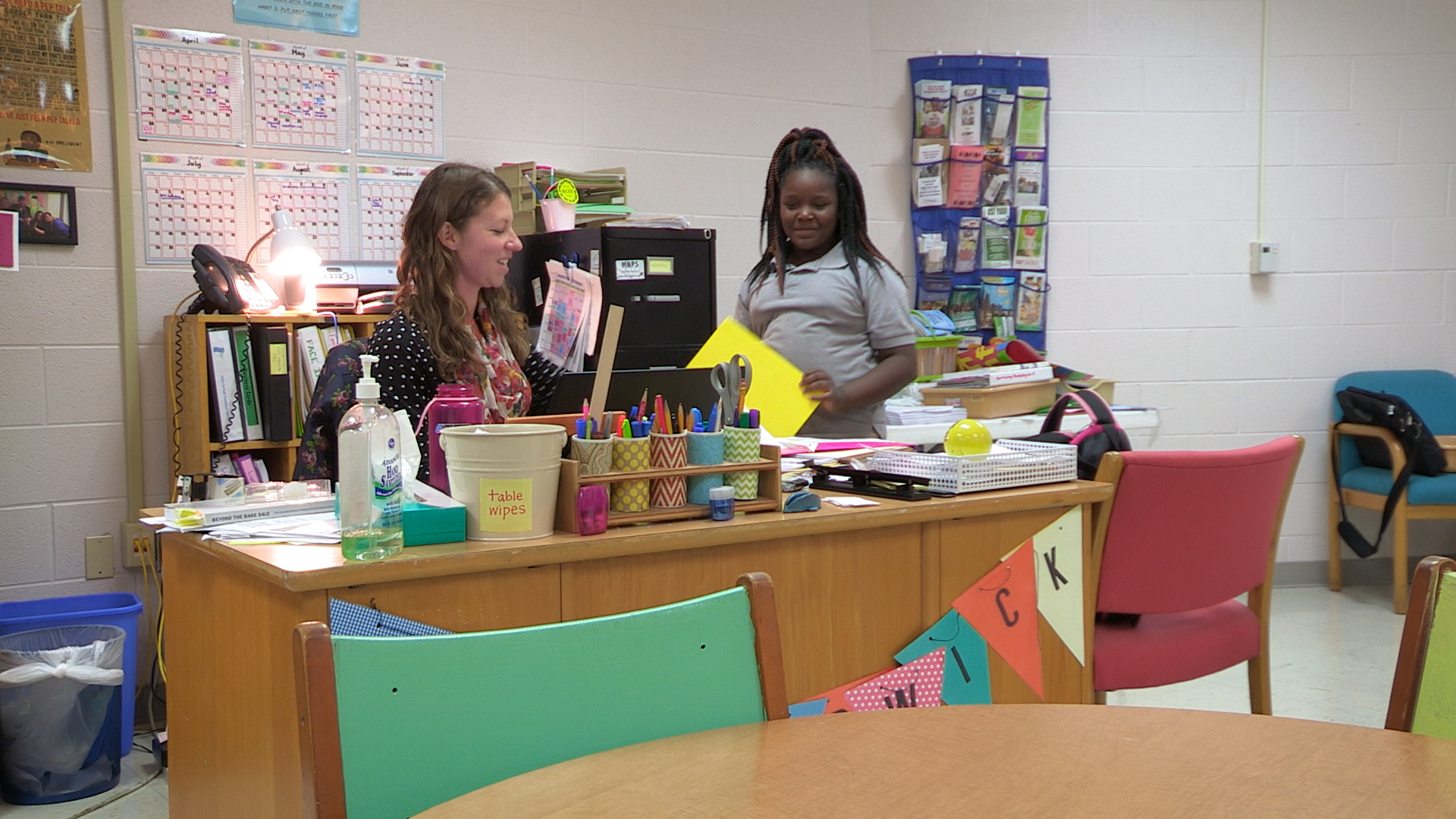
Elementary classrooms are magical places. They are also noisy, wiggly, unpredictable, emotionally charged, and occasionally powered by one missing pencil and twelve urgent bathroom requests. Beneath the daily buzz, teachers are doing something far more important than covering standards: they are helping children learn how to feel safe, trust adults, manage big emotions, build friendships, and believe that school is a place where they belong.
That is exactly where trauma-informed teaching and social-emotional learning, often called SEL, become a powerful team. Trauma-informed teaching helps educators understand how stress and adversity can affect a child’s brain, behavior, attention, and relationships. SEL gives students practical skills for recognizing emotions, solving problems, making responsible choices, and getting along with others. Separately, they are helpful. Together, they can transform an elementary school from a place that simply manages behavior into a community that builds resilience.
What Trauma-Informed Teaching Really Means
Trauma-informed teaching is not about turning teachers into therapists. Nobody is asking a third-grade teacher to diagnose trauma between spelling tests and lunch duty. Instead, it asks educators to shift the question from “What is wrong with this child?” to “What might this child be trying to communicate?”
A student who rips up a worksheet may not be “lazy.” The work may feel overwhelming. A child who argues every morning may not be “defiant.” Transitioning from home to school may feel unsafe or unpredictable. A student who stares out the window may not be ignoring the lesson. Their nervous system may be on high alert, scanning for danger instead of decoding fractions.
Trauma-informed education focuses on safety, trust, choice, collaboration, empowerment, cultural awareness, and strong relationships. In an elementary school, those principles show up in ordinary routines: greeting students by name, previewing schedule changes, offering calm spaces, using predictable expectations, and correcting behavior without humiliation. It is less about one dramatic program and more about the daily tone of the building.
Trauma affects learning before it affects test scores
Children who experience chronic stress may struggle with memory, impulse control, emotional regulation, and attention. These are not “soft” skills; they are learning skills. A child cannot confidently read, write, ask questions, or try hard things when their brain’s internal alarm system is blaring like a smoke detector that smelled burnt toast.
Trauma-informed teaching lowers the emotional temperature of the classroom. It does not remove accountability. It makes accountability possible by helping children return to a regulated state where thinking, listening, and problem-solving can happen.
What SEL Brings to the Elementary Classroom
Social-emotional learning teaches children how to understand themselves, relate to others, and make thoughtful choices. In elementary school, SEL is not a poster on the wall that says “Be kind,” although posters do try their best. Real SEL is practiced through morning meetings, role-play, class discussions, cooperative learning, conflict resolution, reflection, and teacher modeling.
The core SEL skills include self-awareness, self-management, social awareness, relationship skills, and responsible decision-making. For young children, that may sound like:
- “I feel frustrated because my tower fell.”
- “I need a break before I try again.”
- “My friend looks sad; maybe I should ask what happened.”
- “I can disagree without grabbing the marker like a tiny courtroom attorney.”
SEL gives students language for emotions and tools for handling them. That language matters. A child who can say, “I am embarrassed and need help,” is less likely to communicate embarrassment by hiding under the desk, shouting, or launching an eraser into low orbit.
Why Trauma-Informed Teaching and SEL Work Better Together
Trauma-informed teaching creates the conditions for SEL to work. SEL gives students the skills to thrive within those conditions. This is the synergy.
Imagine trying to teach deep breathing to a child who does not feel safe with the adult leading the lesson. The strategy may fall flat. Now imagine a classroom where the teacher has built trust, keeps routines predictable, offers choices, and avoids public shaming. In that environment, SEL practices are not random activities; they become believable, useful, and emotionally safe.
On the other side, trauma-informed teaching without SEL can become too adult-driven. Teachers may create calm routines and supportive relationships, but students still need direct instruction in naming emotions, repairing harm, asking for help, and making decisions. SEL turns a supportive environment into a skill-building environment.
The classroom equation
Trauma-informed teaching says, “You are safe here.” SEL says, “Here are the tools to understand yourself and others.” Together they say, “You are safe here, and you can grow here.”
Practical Strategies for Combining Trauma-Informed Teaching and SEL
1. Begin with predictable routines
Predictability is not boring to children; it is comforting. Elementary students, especially those who have experienced instability, benefit from knowing what comes next. A visual schedule, a consistent arrival routine, and clear transition signals reduce uncertainty.
Connect this with SEL by asking students to reflect on how routines help them feel. For example, after morning arrival, the teacher might ask, “What helps your brain get ready for learning?” Students may mention unpacking slowly, checking the schedule, greeting a friend, or taking a quiet minute. This turns routine into self-awareness.
2. Use morning meetings as emotional check-ins
Morning meeting is one of the simplest ways to blend trauma-informed teaching and SEL. A short greeting, a feelings check, and a low-pressure share can help students feel seen before academics begin.
A teacher might use a feelings chart with options such as calm, excited, worried, tired, frustrated, or unsure. Students can point, write, or use a private signal. The goal is not to force emotional confession. The goal is to normalize emotional awareness and give the teacher a quick read of the room.
3. Teach regulation before correction
When a child is dysregulated, a lecture usually becomes background noise. The adult may be delivering wisdom, but the child’s nervous system hears only danger, shame, or pressure. A trauma-informed SEL approach starts with regulation.
Instead of saying, “Why did you do that?” a teacher might say, “You are having a hard moment. Let’s take two breaths, then we will solve it.” After the child calms, SEL skills can enter: identifying the feeling, naming the impact, choosing a repair, and planning what to try next time.
4. Offer choices that preserve dignity
Choice is a powerful trauma-informed tool because it restores a sense of control. In elementary classrooms, choices should be small, structured, and realistic. “Would you like to write with a pencil or type your first draft?” is helpful. “Would you like to do math today?” is not a choice; it is a trap wearing a mustache.
SEL deepens the practice by helping students notice which choices support their learning. Over time, students learn to ask for a break, choose a quiet workspace, select a partner wisely, or use a calm-down strategy before conflict grows.
5. Replace public shame with private repair
Public discipline may stop behavior temporarily, but it often damages trust. Trauma-informed teaching favors correction that protects dignity. A quiet conversation, a restorative question, or a private redirection can keep the student connected to the classroom community.
SEL adds the repair process. Students can learn to ask: What happened? Who was affected? What can I do to make it better? What support do I need next time? This approach does not excuse harmful behavior. It teaches responsibility without turning the child into the problem.
6. Build calm spaces, not escape zones
A calm corner or regulation space can be useful when it is taught as a tool, not used as a punishment. The area might include breathing cards, sensory tools, paper for drawing, a timer, and simple reflection prompts.
Teachers should introduce the space when students are calm. Model how to use it, practice as a class, and explain that it is for returning to learning. The message is, “Everyone needs strategies,” not “You are in trouble, go sit by the basket of fidgets.”
Creating a Schoolwide Culture, Not Just a Classroom Strategy
The strongest results come when trauma-informed SEL is schoolwide. If one teacher uses restorative language while another uses public humiliation, students receive mixed signals. If classrooms teach emotional regulation but the cafeteria is chaos with milk cartons, the work becomes fragmented.
A schoolwide approach includes shared language, professional development, family partnerships, referral systems, and consistent expectations. Teachers, counselors, administrators, paraprofessionals, bus drivers, office staff, and cafeteria teams all shape a child’s sense of safety. The front office greeting may be as important as the classroom mini-lesson.
Support adults first
Trauma-informed SEL cannot depend on exhausted adults pretending to be calm while internally screaming into a clipboard. Staff wellness matters. Teachers need planning time, supportive leadership, realistic behavior systems, collaboration with mental health professionals, and permission to be human.
Adult SEL is part of the work. Educators who practice self-awareness, stress management, and healthy communication are better able to model those skills for children. Students learn as much from the way adults repair mistakes as from any formal lesson.
Examples of Trauma-Informed SEL in Action
Example 1: The student who refuses to write
A fourth-grade student puts his head down every time writing begins. A traditional response might be, “Sit up and get started.” A trauma-informed SEL response looks deeper. The teacher notices that the student becomes anxious during open-ended tasks. She offers a graphic organizer, a choice between two prompts, and a private check-in.
Then she teaches the student to identify the feeling: “My brain feels stuck.” Together, they create a plan: choose a starter sentence, write for five minutes, then check in. The child is not rescued from writing; he is supported into it.
Example 2: The playground conflict
Two second graders argue over a soccer ball. One yells, one cries, and everyone nearby suddenly becomes a legal witness. Instead of asking, “Who started it?” the adult helps both children regulate first. Then they use SEL questions: What did you feel? What did you need? What did you do? What can we try next time?
The result is not a perfect friendship sealed with a rainbow sticker. The result is practice. Children learn that conflict can be repaired, feelings can be named, and problems can be solved without declaring recess a national emergency.
Example 3: The class after a community crisis
When a school community experiences a crisis, students may arrive distracted, worried, tired, or unusually clingy. A trauma-informed SEL approach does not ignore the event, nor does it force children to discuss it. The teacher keeps routines predictable, offers space for questions, reminds students of available supports, and uses grounding activities such as breathing, drawing, journaling, or reading together.
The classroom becomes a steady place. That steadiness is not small. For many children, it is the bridge back to learning.
Common Mistakes to Avoid
Mistake 1: Treating SEL as a 20-minute block only
A weekly SEL lesson is useful, but children need practice throughout the day. The real curriculum is in line formation, group work, transitions, mistakes, apologies, and disagreements over who gets the blue marker.
Mistake 2: Confusing trauma-informed with consequence-free
Trauma-informed teaching does not mean “anything goes.” It means consequences should be predictable, respectful, connected to the behavior, and focused on learning. Children need boundaries. They also need adults who enforce boundaries without threats, sarcasm, or shame.
Mistake 3: Asking teachers to do everything alone
Teachers are essential, but they are not a one-person mental health system. Schools need referral pathways, counselor collaboration, family communication, and administrative support. A strong classroom strategy becomes stronger when the whole school carries it.
Mistake 4: Ignoring culture and identity
Trauma-informed SEL must be culturally responsive. Students’ communication styles, family structures, languages, histories, and community experiences matter. A strategy that feels supportive to one child may feel intrusive to another. Listening is not a bonus skill; it is the work.
How to Measure Progress Without Turning Feelings into Another Test
Schools can track whether trauma-informed SEL is working, but the goal is not to grade children on emotions. Useful indicators include attendance, office referrals, classroom disruptions, student surveys, teacher observations, family feedback, and academic engagement.
Teams can ask practical questions: Are students using regulation strategies independently? Are conflicts being repaired more quickly? Do students report feeling safe and connected? Are teachers using shared language? Are discipline patterns becoming more equitable?
Progress may look quiet. A student asks for a break instead of running out. A class returns from recess with fewer conflicts. A child says, “I felt mad, but I used my breathing.” These moments may not sparkle on a data dashboard, but they are evidence of growth.
Experiences from the Field: What This Looks Like in Real Elementary Schools
In many elementary schools, the most successful trauma-informed SEL work begins with small changes that teachers can actually sustain. One first-grade teacher described replacing her rushed morning routine with a two-minute doorway greeting. Students chose a wave, fist bump, smile, or quiet nod. At first, it seemed almost too simple. But within a few weeks, she noticed fewer morning meltdowns. Children who once entered the room guarded and silent began making eye contact. One student who often hid behind his backpack started choosing a fist bump every day. The greeting did not solve every problem, but it gave the day a safer beginning.
Another common experience involves calm corners. Schools sometimes buy beautiful materials, arrange the space, and expect magic. Then a child throws the glitter jar. The missing step is instruction. Teachers who introduce calm spaces as part of SEL, practice using them during peaceful moments, and model how to return to learning usually see better results. Students need to know that a calm corner is not exile. It is a tool. When children understand that everyone uses tools to reset, the space becomes less stigmatizing and more effective.
Teachers also report that trauma-informed SEL changes how they interpret behavior. A student who constantly asks, “Is this right?” may be seeking reassurance, not attention. A child who melts down during partner work may need help with social problem-solving, not isolation. A student who jokes during serious conversations may be avoiding vulnerability. When adults pause long enough to look for the need beneath the behavior, responses become more accurate.
One powerful example comes from restorative circles after classroom conflict. In a fifth-grade room, students were arguing during group projects. The teacher paused the academic task and held a short circle. Students named what made collaboration hard: feeling ignored, not knowing roles, fear of being judged, and frustration when one person took over. The teacher connected their comments to SEL skills, then created group role cards and sentence stems such as “I disagree because…” and “Can we try another idea?” The next project was not perfect, because children are children and group work is still group work. But the conflict became more manageable because students had language and structure.
The most important lesson from real classrooms is that trauma-informed SEL is not a script. It is a mindset practiced through hundreds of small decisions. It is the teacher who lowers her voice instead of raising it. It is the principal who asks what support a student needs before assigning a consequence. It is the counselor who helps a class practice coping skills before a crisis, not only after one. It is the school that treats connection as an academic strategy, not a decoration.
Experienced educators often say the work helps them too. When classrooms become more predictable, respectful, and emotionally literate, adults spend less energy reacting and more energy teaching. The room feels steadier. Students still have hard days. Teachers still need coffee. But the community develops a shared belief: big feelings are manageable, mistakes are repairable, and every child deserves a path back into learning.
Conclusion: A Safer Classroom Is a Smarter Classroom
Harnessing the synergy between trauma-informed teaching and SEL in elementary school is not about adding one more shiny initiative to an already crowded plate. It is about aligning what educators already know: children learn best when they feel safe, connected, respected, and capable.
Trauma-informed teaching builds the foundation of safety and trust. SEL builds the skills students need to understand emotions, form relationships, solve problems, and make responsible choices. When schools combine the two, they create classrooms where children are not merely controlled; they are coached. They are not labeled by their hardest moments; they are guided toward better ones.
In the end, this work is both compassionate and practical. A regulated child can learn. A connected child can take risks. A supported teacher can teach with clarity and warmth. And an elementary school that understands both trauma-informed practice and SEL becomes more than a place of instruction. It becomes a place where resilience gets practiced every single day, right between reading groups and the great mystery of disappearing glue sticks.