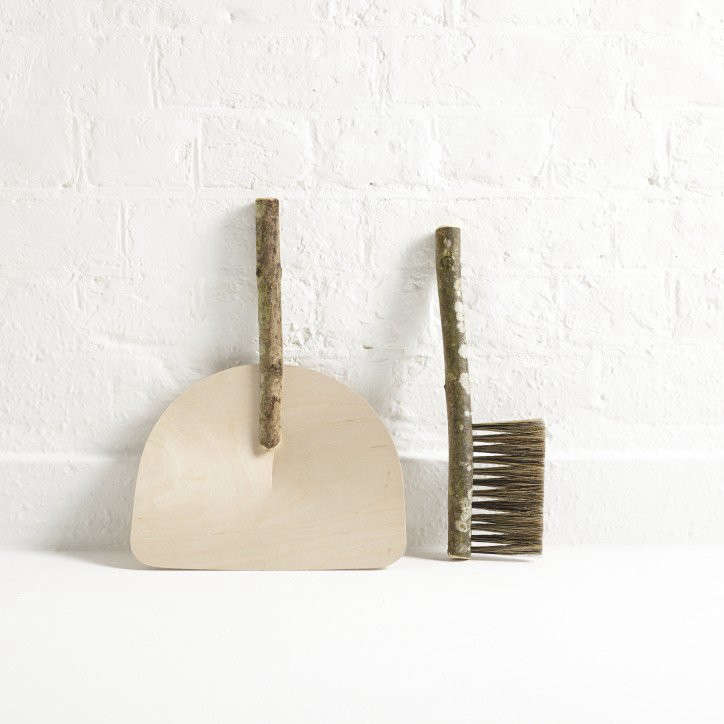
There are cleaning tools you hide under the sink, and then there are cleaning tools that quietly suggest you have your life together. Geoffrey Fisher Design’s Table Dustpan & Brush belongs firmly in the second camp. It is not a neon plastic crumb catcher with the personality of a gas station squeegee. It is a handmade wooden table brush and pan set designed for the small daily rituals that keep a home feeling calm: sweeping toast crumbs from the breakfast table, brushing sawdust from a workbench, tidying a desk after a pencil-sharpening incident, or recovering from the cookie avalanche that somehow happens whenever guests say, “I’ll just have one.”
At first glance, the appeal is simple. This is a compact tabletop dustpan and brush made from natural materials, with a soft bristle brush and a wooden pan that feels closer to a craft object than a standard cleaning product. Look a little closer, though, and it becomes a miniature lesson in sustainable design, British craftsmanship, slow living, and why the best household objects are often the ones that make ordinary chores feel slightly less like chores.
What Is Geoffrey Fisher Design’s Table Dustpan & Brush?
Geoffrey Fisher Design’s Table Dustpan & Brush is a handcrafted crumb-sweeper set made for use on tables, counters, desks, worktops, and other small surfaces. Unlike a full-size floor dustpan, this piece is scaled for the areas where everyday messes actually gather: the breakfast table after toast, the kitchen island after chopping herbs, the craft table after paper trimming, or the office desk after a long afternoon of snacks and questionable productivity.
The set has been described in product listings as a soft pure-bristle brush paired with a dustpan crafted from locally sourced wood. Earlier listings note a pan length of about 35 centimeters and a brush length of about 30 centimeters, while related Geoffrey Fisher brush-and-pan sets vary in size depending on the model. That handmade variation is part of the charm. This is not the kind of product that looks as though it fell out of a mold by the thousand. It looks touched by weather, woodland, and human hands.
The brush is typically associated with natural hog or boar bristles, depending on the specific listing, and the handles are made from woods such as beech or ash. Some versions use European birch plywood for the pan; others feature metal pans with wooden handles. Across the range, the visual language stays consistent: honest materials, visible grain, soft curves, and a pleasing contrast between the refined and the rustic.
The Designer Behind the Object
Geoffrey Fisher was a British artist, designer, and maker known for transforming locally sourced wood into practical home objects. His work often celebrated the natural character of branches, twigs, and hardwoods rather than disguising them. In a world where many household goods look like they were designed by a committee trapped in a fluorescent conference room, Fisher’s pieces feel refreshingly direct. They say: here is wood, here is a tool, here is a useful thing that did not need to become ugly to do its job.
His studio practice was rooted in traditional making and woodland materials. Public product descriptions and design coverage describe his use of locally sourced hardwoods, including wood from coppiced woodland management. Coppicing is a long-established method of cutting trees or shrubs back to encourage regrowth, often supporting biodiversity and helping maintain healthy woodland systems. In simpler terms, it is the opposite of the “grab resources and run” attitude. It is more like a long conversation with a forest.
Fisher’s objects also show a rare sensitivity to touch. The table brush is not merely shaped to look good in a photograph. The naturally formed wooden stock gives the hand a comfortable grip, while the bristles are dense enough to gather crumbs, dust, and debris without making the user feel like they are scrubbing a ship deck. The result is a product that is humble, clever, and surprisingly elegant.
Why a Table Dustpan Still Makes Sense
Modern kitchens are full of machines that beep, blink, connect to apps, and occasionally require software updates just to toast bread. A table dustpan, by contrast, is beautifully uncomplicated. It does one job: it gathers small messes quickly. No charging cable, no disposable wipes, no mystery cartridge, no subscription plan called CrumbPlus.
That simplicity is exactly why a table brush and pan remains useful. Many small household messes are too tiny for a vacuum and too visible to ignore. Crumbs on a dining table, coffee grounds near an espresso station, eraser dust on a desk, dried herb flakes on a counter, seed shells on a patio tablethese are not disasters. They are just little signs that life is happening. The right tool lets you clean them up in seconds without turning tidying into a full production.
The Geoffrey Fisher Design version elevates the idea by making the tool handsome enough to leave out. That matters more than it sounds. A cleaning tool stored in a drawer is useful only when you remember it exists. A beautiful table brush resting near the counter becomes part of the room. It invites use. It makes the better habit the easier habit.
Materials: Wood, Bristles, and the Beauty of Variation
One of the strongest selling points of Geoffrey Fisher Design’s Table Dustpan & Brush is its relationship with natural materials. The wood may show grain, knots, tonal shifts, small irregularities, and subtle marks from its previous life as part of a tree rather than a catalog SKU. These variations are not flaws. They are the receipt from nature.
Wooden tools age differently from plastic tools. Plastic often moves from shiny to scratched to sad. Wood moves from new to seasoned. With handling, it can develop a warmer surface and a more personal patina. A wooden brush used on a kitchen table may gradually absorb the story of breakfasts, homework sessions, dinner parties, and quiet Sunday mornings. That is a lot of emotional range for something that sweeps up croissant flakes.
The bristles are another important detail. Natural bristles are flexible and effective for gathering fine debris. They can reach into the shallow texture of a wooden tabletop or the corner of a workbench without feeling harsh. The right bristle density also makes a tabletop brush satisfying to use: one or two strokes, and the mess slides obediently into the pan. It is the rare cleaning experience that offers instant gratification without requiring a motivational podcast.
Design Analysis: Rustic, Refined, and Quietly Smart
The table dustpan and brush works because it balances three design qualities: function, material honesty, and visual restraint. It does not shout for attention. It does not pretend to be futuristic. It simply looks like a well-made object that knows exactly what it is.
Function Comes First
The set is small enough to live near the table, light enough to pick up quickly, and shaped to handle everyday crumbs. Some Geoffrey Fisher brush-and-pan designs allow the brush to sit neatly into or through the pan, creating compact storage. That detail is more than cute. It prevents the classic household tragedy in which the dustpan survives but the brush disappears into the same alternate universe as missing socks and the good scissors.
Natural Form Adds Character
Fisher’s use of naturally shaped wood gives each piece individuality. A handle may curve slightly, show a distinctive grain line, or reveal the contrast between bark-like texture and smoothed surfaces. This makes the product feel alive in a way that mass-produced cleaning tools rarely do.
It Looks Good Enough to Display
Because the table brush and pan is attractive, it can hang from a hook, sit on a shelf, or rest near a kitchen work area without visual shame. In small homes especially, objects that do not need to be hidden are valuable. They reduce storage pressure and add texture to the room.
Where to Use a Table Dustpan & Brush
The obvious place is the dining table, but the Geoffrey Fisher Design Table Dustpan & Brush is more versatile than its name suggests. It works anywhere small debris accumulates and a full cleaning setup would feel dramatic.
In the Kitchen
Use it for bread crumbs, coffee grounds, flour dust, herb bits, salt flakes, or the mysterious crunchy particles that appear after someone “just made a quick sandwich.” A table brush is especially handy around a breakfast nook or baking station.
On a Desk
Pencil shavings, eraser crumbs, paper trimmings, and snack evidence can all be swept away without pulling out a vacuum. For anyone who works from home, it is a small tool that helps maintain a cleaner, calmer workspace.
In a Craft Room
Paper scraps, dried clay dust, thread clippings, beads, and tiny offcuts often need careful cleanup. A soft brush gives more control than a cloth and less chaos than blowing on the table like a cartoon wolf.
In a Potting Shed or Garden Room
Related Geoffrey Fisher brush-and-pan sets have been promoted for potting sheds and gardening spaces, where soil, seed husks, and plant debris collect quickly. The natural materials also look right at home among terracotta pots, twine, hand tools, and muddy optimism.
Why It Appeals to Slow Design Lovers
Slow design is not just about buying fewer things. It is about choosing objects with enough quality, usefulness, and emotional appeal that they earn their place. Geoffrey Fisher Design’s Table Dustpan & Brush fits that philosophy beautifully.
It replaces a forgettable disposable attitude with something more durable and thoughtful. The product’s value is not only that it cleans. Plenty of things clean. The value is that it makes a daily task feel intentional. It asks the user to notice the material, the grip, the bristle texture, and the rhythm of the motion. That may sound poetic for a crumb brush, but homes are built from exactly these tiny interactions.
There is also an environmental argument. A well-made wooden brush and pan can reduce reliance on cheap plastic cleaning tools that crack, warp, or get tossed when they become unattractive. Natural materials are not automatically perfect, but when responsibly sourced and crafted for longevity, they offer a more considered alternative to disposable household goods.
How It Compares With Ordinary Crumb Sweepers
Most crumb sweepers fall into one of two categories: purely practical or purely decorative. The practical ones work, but they often look like they belong in a cafeteria supply closet. The decorative ones look charming until you discover they have the sweeping power of a tired eyebrow.
The Geoffrey Fisher Design set succeeds because it does not treat beauty and usefulness as enemies. The soft bristles gather debris. The pan receives it. The handle feels good. The set stores neatly. At the same time, it brings the warmth of wood and the individuality of handcraft into a daily routine.
Compared with a plastic mini dustpan, it is more tactile and display-worthy. Compared with a cloth, it is more precise for dry crumbs and particles. Compared with a handheld vacuum, it is quieter, simpler, and less absurd when the mess is only three toast crumbs and a sesame seed.
Care Tips for a Handmade Table Brush and Pan
Because this is a natural-material object, it deserves gentle care. Do not soak the wooden components in water. If the pan or handle needs cleaning, wipe it with a lightly damp cloth and dry it promptly. Avoid harsh chemical cleaners, which can damage wood or bristles. For the brush, tap out loose debris after use and occasionally comb the bristles gently with your fingers to remove trapped particles.
Store the set in a dry place. If it has a hanging loop or integrated storage design, use it. Hanging helps the brush dry, keeps the bristles from being crushed, and gives the object a chance to look charmingly useful on the wall. Think of it as home decor that also judges your croissant habits.
Who Should Buy Geoffrey Fisher Design’s Table Dustpan & Brush?
This product is ideal for people who appreciate handmade home goods, natural materials, and small rituals of tidiness. It is especially appealing for design-conscious homeowners, renters with limited storage, cooks, bakers, gardeners, makers, and anyone who believes everyday tools should be pleasant to use.
It may not be the best choice for someone who wants the cheapest possible dustpan or a tool for heavy-duty messes. This is not meant for sweeping garage grit, fireplace ash, or anything wet and sticky. Its sweet spot is dry, small-scale debris in visible living areas.
As a gift, it is unexpectedly strong. A table dustpan and brush sounds humble, but a handmade version feels thoughtful, useful, and unusual. It works for housewarmings, host gifts, design lovers, gardeners, bakers, and that one friend whose kitchen looks like a Nancy Meyers movie even when they are “not ready for guests.”
Buying Considerations
Because Geoffrey Fisher pieces have appeared through curated design retailers, garden shops, and product archives, availability may vary. Some listings refer to original publication prices, while others reflect later retail pricing or remaining stock. Buyers should check current availability, dimensions, materials, and condition carefully before purchasing.
Handmade wooden goods also vary from piece to piece. That means the exact grain, color, curve, and finish may differ from product photos. For many buyers, this is the point. You are not buying uniformity; you are buying character. Still, it is wise to read the product description closely, especially if you want a specific size for a table, desk, or potting bench.
Experience Notes: Living With a Table Dustpan & Brush
The first thing you notice when using a well-made table dustpan and brush is how often you reach for it. Before owning one, crumbs seem like tiny annoyances that can wait. After owning one, they become quick little victories. A breakfast table that once stayed sprinkled with toast dust until lunch can be clean in ten seconds. A desk that collected eraser bits can look civilized again before the next video call. It is not life-changing in the dramatic movie-trailer sense, but it does improve the day in a quiet, repeatable way.
The Geoffrey Fisher Design style makes that experience more enjoyable because the object feels good in the hand. The wood has a warmth that plastic lacks, and the natural shape creates a sense of grip without needing aggressive molded ridges. There is something almost meditative about sweeping crumbs into the pan. The sound is soft. The movement is small. The result is immediate. For people who find big cleaning sessions overwhelming, a tabletop brush supports the opposite approach: clean the little mess now, before it joins forces with other little messes and stages a coup.
In a kitchen, the set earns its place quickly. After slicing bread, it clears the board area. After grinding coffee, it handles the scatter. After baking, it gathers flour from the counter without smearing it into paste. A cloth can work, of course, but a cloth often pushes crumbs around before trapping them. The brush gathers them with more direction. The pan gives them somewhere to go. This sounds obvious, but many household tools fail because they interrupt the task. A good table brush finishes the task.
On a desk, it becomes surprisingly useful. Anyone who writes, sketches, builds models, wraps gifts, or eats crackers while pretending not to eat crackers will appreciate the control. The brush can clear a keyboard-adjacent area without sending debris into the keys. It can sweep around notebooks, lamps, and small objects without requiring a full reset of the workspace. It is a tiny but satisfying tool for restoring order.
The emotional experience matters, too. Because the set is handsome, using it feels less like punishment and more like care. It changes the tone of cleaning from “ugh, mess” to “let me put this right.” That shift is subtle but powerful. Homes stay tidier when the tools are accessible, pleasant, and easy to use. The best cleaning tool is not always the most powerful one; it is often the one you do not mind picking up.
The only real caution is that a handmade brush and pan should be treated with respect. It is not a wet mop, a scraper, or a toy sword for dramatic kitchen battles. Keep it dry, avoid greasy messes, and store it where the bristles will not be crushed. Do that, and it can remain a useful and beautiful part of the home for years. It may even make you the kind of person who sweeps the table after breakfast. Terrifying, yes, but also impressive.
Conclusion
Geoffrey Fisher Design’s Table Dustpan & Brush proves that practical household tools do not have to be dull, disposable, or hidden in shame. With natural wood, soft bristles, handmade character, and a scale suited to everyday crumbs and small messes, it turns a basic cleaning task into a satisfying domestic ritual.
Its appeal lies in the balance: rustic but refined, simple but thoughtful, decorative but genuinely useful. Whether placed on a kitchen shelf, hung in a potting shed, kept near a breakfast table, or used on a workbench, it offers a small reminder that good design often lives in ordinary moments. A crumb brush may not sound glamorous, but when it is made this well, even sweeping the table can feel like an act of taste.