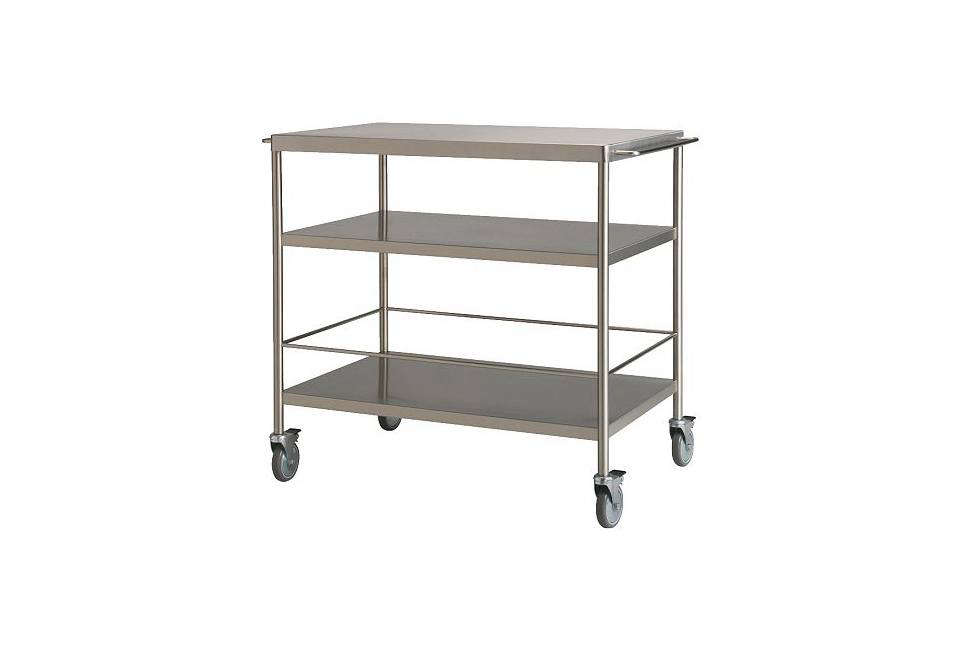
The Flytta Kitchen Cart is the kind of kitchen helper that looks simple at first glance, then quietly starts taking over half the jobs in your home. Need more counter space? It rolls in. Need a place for mixing bowls, pantry jars, or that suspiciously large collection of olive oils? It has shelves. Need a stylish serving station for coffee, cocktails, desserts, or weeknight tacos? It shows up like a tiny stainless-steel butler on wheels.
Best known as the IKEA FLYTTA kitchen trolley, this stainless-steel rolling cart has earned attention because it blends commercial-kitchen practicality with home-friendly proportions. It is not a delicate decorative cart that panics at the sight of a soup pot. It is a sturdy, smooth-surfaced, easy-to-clean storage and prep piece designed for real use in busy kitchens, apartments, studios, dining rooms, and even laundry rooms.
In this in-depth guide, we will look at what makes the Flytta Kitchen Cart useful, how it compares with a traditional kitchen island, where it works best, how to organize it, and what to consider before buying one. We will also cover practical ownership experiences at the end, because kitchen carts are like roommates: you do not truly understand them until you have lived with them during dinner prep.
What Is the Flytta Kitchen Cart?
The Flytta Kitchen Cart is a stainless-steel kitchen trolley designed to provide extra storage, utility, and mobile workspace. The official IKEA version is commonly listed as the FLYTTA kitchen trolley in stainless steel, with a length of about 98 cm, width of 57 cm, and height of 86 cm. In U.S. measurements, that is approximately 38.6 inches long, 22.5 inches wide, and 33.9 inches high.
Those dimensions put it in a sweet spot: large enough to be genuinely helpful, but not so massive that it turns your kitchen into an obstacle course. It can function as a compact kitchen island, a prep cart, a serving trolley, a pantry overflow station, or a movable storage rack. Unlike built-in islands, it does not require renovation, electrical planning, countertop installation, or a dramatic conversation with your landlord.
Key Features of the Flytta Kitchen Cart
Stainless-Steel Construction
The most recognizable feature of the Flytta Kitchen Cart is its stainless-steel body. Stainless steel is popular in both home and professional kitchens because it is strong, durable, resistant to rust, and relatively easy to wipe clean. It also pairs well with common kitchen appliances such as refrigerators, ranges, dishwashers, and range hoods.
From a design perspective, stainless steel gives the Flytta a clean, modern, slightly industrial personality. It does not try to look like a farmhouse heirloom or a luxury marble island. Instead, it says, “I am here to help you chop vegetables, hold the stand mixer, and survive spaghetti night.” Honestly, that kind of emotional honesty is refreshing.
Three Open Shelves
The Flytta Kitchen Cart typically features three open tiers. The top shelf works as a prep surface or serving area, while the lower shelves provide storage for cookware, bowls, dry goods, small appliances, baskets, or serving pieces. Open shelving makes everything visible and easy to grab, which is excellent if you like fast access and less excellent if your storage style is “organized chaos with a lid on it.”
Because the shelves are smooth and edge-free, they are easy to clean and simple to use with bins, trays, jars, or folded kitchen linens. This makes the cart especially helpful in small kitchens where cabinet space is already negotiating for survival.
Lockable Casters
A kitchen cart is only as good as its wheels. The Flytta includes casters, with lockable wheels that help keep the cart stable when it needs to stay in place. This is important if you plan to use it as a prep station. Nobody wants a rolling cart that slowly escapes while you are spreading frosting on a cake.
Locking the casters is especially useful when the cart is loaded with cookware, jars, or appliances. For best results, park it on an even floor, lock the wheels before chopping or mixing, and avoid pushing down aggressively on one corner.
Useful Load Capacity
The Flytta Kitchen Cart is often listed with a load capacity of around 20 kg per tier, or roughly 44 pounds per shelf. That gives it enough strength for common kitchen items such as pots, pans, mixing bowls, canned goods, small appliances, and serving supplies. Still, weight should be distributed thoughtfully. Heavy appliances belong on the lower shelf, while lighter items can go higher.
Why the Flytta Kitchen Cart Works So Well in Small Kitchens
Small kitchens are famous for teaching humility. One minute you are making pasta, and the next you are balancing a cutting board on the sink while your colander occupies the only clear counter. The Flytta Kitchen Cart helps solve that problem by adding movable surface area and storage without committing to a permanent island.
In narrow kitchens, the cart can be parked against a wall when not in use, then rolled into the center for meal prep. In open-plan apartments, it can divide the cooking zone from the dining or living area. In galley kitchens, it can become a temporary landing zone for groceries, washed produce, or trays coming out of the oven.
Unlike a fixed island, a mobile kitchen cart can adapt to the day. On Monday, it is a coffee station. On Wednesday, it is extra prep space. On Saturday, it becomes a snack cart that makes guests believe you are far more organized than you really are. That is not just furniture; that is public relations.
Flytta Kitchen Cart vs. Traditional Kitchen Island
Flexibility
A built-in island is beautiful, but it stays exactly where it is. The Flytta Kitchen Cart moves wherever you need it. That flexibility is ideal for renters, small-space dwellers, and homeowners who want more function without remodeling.
Cost and Commitment
A permanent kitchen island can involve cabinetry, countertops, labor, permits, and layout planning. A kitchen cart is much simpler. You assemble it, roll it into place, and begin using it. If your needs change later, the cart can move to another room or take on a new role.
Storage Style
Traditional islands often include closed cabinets and drawers. The Flytta uses open shelving. Open storage is excellent for frequently used items, but it does require a little discipline. Matching bins, stackable containers, and neatly grouped items can make the cart look intentional rather than like a cookware garage sale.
Best Uses for the Flytta Kitchen Cart
Extra Prep Station
The most obvious use is as a food prep surface. You can use the top shelf for chopping vegetables, staging ingredients, kneading dough, or organizing meal components. If you want to cut directly on the cart, use a cutting board rather than slicing on the stainless steel. Your knives will thank you, and so will the cart.
Small Appliance Storage
The Flytta Kitchen Cart is useful for appliances that are too bulky for cabinets but too frequently used to bury in a closet. Think stand mixers, food processors, rice cookers, air fryers, blenders, and coffee grinders. Place heavier appliances on the bottom shelf to keep the cart stable.
Coffee or Tea Station
With a coffee maker on top, mugs on the middle shelf, and beans, tea, filters, or syrups below, the Flytta can become a compact beverage station. This setup works especially well in apartments, offices, guest suites, and breakfast nooks.
Serving Cart
Because it rolls, the Flytta Kitchen Cart can transition from kitchen prep to dining-room service. Use it for brunch pastries, dinner plates, drinks, desserts, or holiday side dishes. When the meal is over, it can also help carry dishes back to the kitchen. That alone may make it the most emotionally supportive furniture in the room.
Pantry Overflow
If your pantry is small, the cart can hold frequently used dry goods. Use clear jars for pasta, rice, oats, flour, sugar, lentils, coffee, or snacks. Add labels if you are the organized type. If not, at least try not to confuse powdered sugar with flour. Pancake night can get weird quickly.
How to Organize a Flytta Kitchen Cart
Use Zones by Shelf
A simple way to organize the cart is to assign a purpose to each tier. For example, the top shelf can be for active prep, the middle shelf for daily-use tools, and the bottom shelf for heavier storage. This keeps the cart useful rather than cluttered.
For a baking station, store mixing bowls, measuring cups, flour, sugar, parchment paper, and a mixer together. For a coffee station, group mugs, beans, filters, spoons, and sweeteners. For a cooking station, keep oils, spices, cutting boards, towels, and prep bowls within easy reach.
Add Baskets and Trays
Open shelves work better when items are contained. Wire baskets, wooden crates, stainless-steel bins, and shallow trays can prevent smaller items from sliding around. A tray on the top shelf can also help protect the surface when serving drinks or condiments.
Keep Heavy Items Low
For stability, store heavy items on the bottom shelf. Dutch ovens, cast-iron pans, big mixing bowls, and small appliances should stay low. Lighter items like napkins, mugs, spices, and utensils can go higher.
Leave Breathing Room
The temptation is to fill every inch. Resist it. A kitchen cart works best when it has a little empty space for temporary tasks. If every shelf is packed, the cart becomes storage only, not a flexible work surface.
Design Style: Where the Flytta Kitchen Cart Looks Best
The Flytta Kitchen Cart naturally suits modern, minimalist, industrial, Scandinavian, and transitional kitchens. Its stainless-steel finish works beautifully with white cabinets, black accents, concrete floors, subway tile, butcher-block counters, and stainless appliances.
In a warm kitchen with wood cabinets, the stainless steel adds contrast. In a sleek white kitchen, it reinforces the clean look. In a colorful kitchen, it becomes a neutral anchor. The cart is not flashy, but that is part of its charm. It plays well with others, like the friend who brings chips to every party and never complains.
Cleaning and Maintenance Tips
Stainless steel is low-maintenance, but it is not magic. To keep the Flytta Kitchen Cart looking good, wipe spills promptly, clean with mild soap and warm water, and dry the surface to prevent water spots. Use a soft cloth or microfiber towel. Avoid harsh abrasive pads that can scratch the finish.
For fingerprints or streaks, wipe in the direction of the metal grain. If the cart is used for food prep, clean it before and after use. When handling raw meat, poultry, seafood, or eggs, use a separate cutting board and sanitize food-contact areas properly. The cart may be durable, but food safety should still be the grown-up in the room.
Things to Consider Before Buying
Measure Your Space
Before buying a Flytta Kitchen Cart, measure the area where you plan to use it. Consider not only the cart dimensions but also walking space around it. A cart that looks perfect online can feel much larger when it is blocking the refrigerator door like a stainless-steel bouncer.
Check Availability
Availability can vary by country, region, and retailer. Some buyers may find the Flytta Kitchen Cart through IKEA in certain markets, while others may need to look at resale platforms, secondhand listings, or similar stainless-steel kitchen carts. Always confirm the exact dimensions, condition, shelf count, and wheel function before purchasing.
Think About Your Storage Style
If you love open shelving and easy access, the Flytta is a strong match. If you prefer hiding clutter behind doors, you may need baskets or lidded bins to make the cart fit your style. Open carts reward thoughtful organization.
Consider Floor Type
The cart rolls best on smooth floors. Tile, hardwood, laminate, and polished concrete usually work well. If your floor has deep grout lines, uneven transitions, or thick rugs, test the cart carefully and use the locks whenever it is parked.
Pros and Cons of the Flytta Kitchen Cart
Pros
The Flytta Kitchen Cart offers durable stainless-steel construction, flexible storage, a compact footprint, lockable wheels, and a clean modern look. It is easy to adapt for different purposes, from prep space to serving station to pantry overflow. It is especially useful for renters and small-kitchen owners who need more function without renovation.
Cons
The open shelves require neat storage habits. Stainless steel can show fingerprints and water spots. The cart also does not offer drawers or hidden storage, so small items may need baskets or containers. Finally, depending on location, the Flytta may not always be easy to find new.
Who Should Choose the Flytta Kitchen Cart?
The Flytta Kitchen Cart is a smart choice for people who need practical, flexible kitchen storage. It is especially helpful for apartment dwellers, renters, home cooks with limited counter space, entertainers, bakers, coffee lovers, and anyone who wants a movable work surface without installing a full island.
It may not be ideal for someone who wants a decorative furniture-style island with drawers, doors, or a wood countertop. But for those who appreciate clean design, strong materials, and everyday utility, the Flytta is a quietly excellent choice.
Real-Life Experience: Living With a Flytta Kitchen Cart
Using a Flytta Kitchen Cart in daily life feels less like adding a piece of furniture and more like gaining a kitchen assistant who does not talk back. The first thing most people notice is how quickly it becomes part of their routine. At the beginning, you may plan to use it only for extra storage. Then one morning, you place your coffee maker on it. By lunch, it is holding a cutting board and salad ingredients. By dinner, it has become a landing zone for hot pans, serving bowls, and the pepper grinder you always lose.
In a small apartment kitchen, the cart can make cooking feel less cramped. Imagine a narrow kitchen with only one usable counter beside the sink. Without the cart, meal prep becomes a puzzle: the onions go on the stove, the cutting board sits halfway over the sink, and the mixing bowl balances somewhere it absolutely should not. With the Flytta, the top shelf becomes a real prep surface. Vegetables can be chopped in one place, ingredients can be staged neatly, and the lower shelves can hold the pots and tools needed for the meal.
For weekend cooking, the Flytta is especially useful. When making a large breakfast, the cart can hold pancake batter, toppings, plates, napkins, syrup, fruit, and coffee mugs. Instead of walking back and forth across the kitchen, everything stays in one compact station. During dinner parties, it works as a staging cart for appetizers or drinks. Guests may assume you planned everything with professional precision. You do not need to correct them.
The stainless-steel surface also changes how the kitchen feels. It gives the room a slightly professional mood, like a tiny restaurant prep zone has moved in. This is great for serious cooking, but it also helps visually if your kitchen already has stainless appliances. The cart looks intentional rather than random. Add a few glass jars, folded towels, and a wooden cutting board, and it can look polished without trying too hard.
There are a few practical lessons. First, do not overload the top shelf with heavy appliances. A stand mixer or air fryer may be fine, but the cart feels more stable when heavy items sit low. Second, use containers. Open shelving can become messy fast if every spice packet, measuring spoon, and snack bag is loose. Third, clean the cart regularly. Stainless steel is forgiving, but fingerprints, flour dust, and water drops will show if ignored.
One of the best experiences is discovering that the Flytta Kitchen Cart is not limited to the kitchen. It can become a laundry supply cart, plant station, craft cart, home bar, grilling station, or garage organizer. That flexibility matters because homes change. You may start with it as a kitchen island, then later use it in a dining room, pantry, office, or studio. It earns its keep by moving where the problem is.
Overall, living with the Flytta Kitchen Cart teaches a simple lesson: extra space does not always require a bigger kitchen. Sometimes it just requires a strong, mobile, easy-to-clean cart that knows when to roll in and save dinner.
Conclusion
The Flytta Kitchen Cart is a practical, durable, and stylish solution for anyone who wants more kitchen storage and workspace without committing to a built-in island. Its stainless-steel construction, open shelving, lockable casters, and compact dimensions make it especially valuable in small kitchens, rental homes, apartments, and multifunctional spaces.
It works as a prep station, serving cart, pantry extension, coffee bar, appliance stand, or mobile storage unit. While it does require some organization and regular cleaning to look its best, its flexibility makes it one of those pieces that can adapt as your home and habits change. In a world full of kitchen gadgets that promise miracles and mostly take up drawer space, the Flytta Kitchen Cart is refreshingly useful.
Note: This article is written from verified product characteristics, practical kitchen storage principles, and real-world usage analysis. Availability, article numbers, and regional product details may vary by market, so buyers should confirm current listings before purchase.