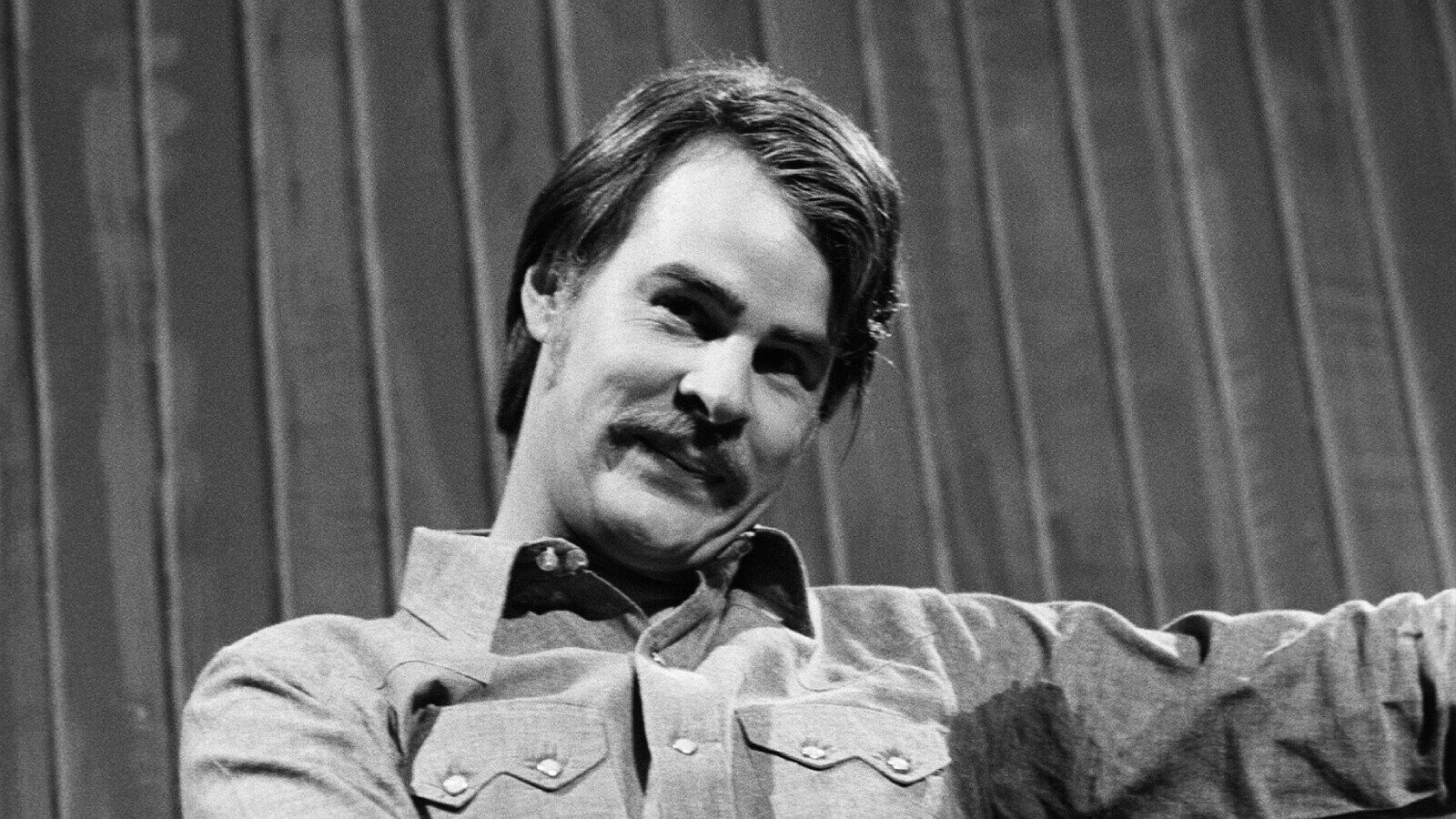
For a show built on surprise entrances, wild cameos, and the occasional sketch that looks like it was written on a napkin five minutes before airtime, SNL50 delivered exactly what fans expected: celebrities everywhere, nostalgia in industrial quantities, and enough comedy history to make Studio 8H feel like a living museum. But one missing face stood out more than most. Dan Aykroyd, one of the original “Not Ready for Prime Time Players,” was not there.
That absence did not just catch viewers off guard. It apparently surprised Lorne Michaels, too. And that detail matters, because when a friendship stretches back to the early 1970s, nothing about it is merely scheduling. Aykroyd is not just another former cast member in the giant orbit of Saturday Night Live. He is one of the foundational pieces of the show’s DNA: a writer-performer with a manic brain, a weird-genius rhythm, and the kind of comic intensity that made early SNL feel dangerous, thrilling, and just unstable enough to be essential television.
So when the 50th anniversary special rolled around without him, people noticed. And when the reason finally became clearer, the story got even more interesting. Aykroyd did not skip the night out of bitterness, drama, or some backstage comedy cold war. In classic Dan Aykroyd fashion, the explanation was more eccentric, more emotional, and honestly a little sweeter than that. He wanted to stay home, watch the show live from beginning to end, and soak it in with his family. In other words, one of SNL’s founding legends decided to experience the giant reunion the way millions of fans did: from the couch.
Why Dan Aykroyd Missing SNL50 Felt So Big
Aykroyd’s absence landed differently because of who he is in the show’s mythology. Plenty of former cast members missed the special for one reason or another. That happens when you are dealing with 50 years of comedians, actors, writers, musicians, and famous people who once wandered into a sketch and never fully left the building. But Aykroyd is not just “former cast.” He is first-generation SNL royalty.
He helped define the original voice of the series after its 1975 debut, alongside Chevy Chase, Jane Curtin, Garrett Morris, Laraine Newman, John Belushi, and Gilda Radner. He was there when the show was still trying to prove that late-night live sketch comedy could be smart, chaotic, political, weird, and mainstream at the same time. He was there before the institution became an institution.
And unlike some stars whose reputations are built on one signature bit, Aykroyd’s legacy is sprawling. He could play absurd characters, nail sharp impressions, write with speed, and bring a kind of barely-contained voltage to the screen. The Blues Brothers. Coneheads. Julia Child. Bass-O-Matic. Fast talking. Bug-eyed sincerity. Controlled lunacy. He was not just funny. He was one of the people who helped invent what SNL even was.
That is why his absence from the anniversary celebration felt more than logistical. It felt symbolic. All surviving original cast members were present except Aykroyd. When one of the architects is missing from the anniversary party, the room feels just a little unfinished.
Lorne Michaels and Dan Aykroyd: A Long, Complicated, Loyal Bond
The headline angle is irresistible because it points to the deeper relationship at the center of the story: Dan Aykroyd and Lorne Michaels go way back. They are not simply boss and employee from a distant television era. They are old friends, fellow Canadians, and creative lifers who helped build one of the most influential comedy institutions in American culture.
Michaels has spent decades presiding over SNL with the calm of a man who can survive both a live broadcast and a room full of comedians arguing over a sketch about alien landlords. He has seen cast members rise, burn out, return, host, feud, reconcile, and become their own industries. Yet Aykroyd belongs to that smaller, more intimate circle from the very beginningthe people who were there when the whole thing was still a gamble.
That is why Michaels reportedly saying Aykroyd was the big absence that surprised him carries real emotional weight. It suggests not a rift, but expectation. Michaels thought Aykroyd would be there because Aykroyd matters that much to the show’s origin story. And maybe because, when you have known someone since they were a teenager, you assume certain milestone moments are simply non-negotiable.
Instead, the moment became a reminder that old friendships do not always follow audience expectations. Sometimes affection looks like showing up onstage. Sometimes it looks like watching from home with popcorn, smiling through the whole broadcast, and calling afterward to say, “Well done as usual.”
Why Dan Aykroyd Really Skipped the Special
Early reports around SNL50 framed Aykroyd’s no-show in practical terms, with “prior commitments” floating around as the official explanation. That sounded tidy, but also suspiciously genericHollywood’s version of “I can’t make it, something came up.” Fans naturally wondered whether there was more to the story.
Later, Aykroyd gave the fuller version, and it was far more human. He said he wanted to be at home and watch the special from beginning to end. He knew that if he attended in person, he would be working, waiting, preparing, or tucked away backstage missing half the show. Instead, he wanted to experience the event live as a viewer, with his family, nostalgically and completely.
That explanation may sound simple, but it says a lot. It suggests that Aykroyd saw SNL50 not just as a career milestone, but as an emotional event. He did not want to be trapped in production mode. He wanted to feel it. That is a very different posture from the usual anniversary-special logic, where everyone rushes to be seen in the room, even if they spend half the night under hot lights waiting for their cue.
In fact, Aykroyd had hinted at this mindset before the special even aired. In interviews before February 2025, he suggested he might prefer watching the event on television and said any decision about attending would depend on how he could best serve Lorne Michaels and the enterprise. In retrospect, that sounds less like a dodge and more like a man deciding that his best role on that particular night was not as a performer, but as a witness.
There Was No Public DramaJust Nostalgia, Distance, and Timing
That distinction matters. In entertainment coverage, every absence gets treated like a possible feud, because “scheduling conflict” is boring and “ancient comedy war erupts at reunion special” is catnip. But Aykroyd’s own comments undercut the juicy theories. He praised the anniversary special after it aired. He praised Michaels. He celebrated the concert. He sounded delighted, not alienated.
In fact, his reaction after the show was almost disarmingly warm. He wrote that the advantage of not attending was getting to watch every second of the concert and special on television. He even shared that his children noticed how big his smile was from start to finish. That is not the language of someone throwing shade from the sidelines. That is the language of a proud founder enjoying the institution he helped create.
And there is another layer here that often gets overlooked. Anniversaries do not just celebrate the living; they stir the absent. For Aykroyd, SNL nostalgia is inseparable from John Belushi and Gilda Radner, two beloved early stars whose presence still hangs over every major tribute to the original era. Watching from home may have offered him a more private way to process those feelings.
The Gilda Radner Moment Says a Lot
When Aykroyd later talked about what moved him most during the special, he pointed to the touching moment when Laraine Newman and Jane Curtin honored Gilda Radner during the goodnights. That response says everything. Of all the giant sketches, all-star cameos, and history-soaked punch lines, the part that hit him hardest was an act of remembrance.
That is a clue to why sitting at home may have felt right. Some reunions are not just parties. They are emotional time machines. And time machines, sadly, do not come with a mute button.
What SNL50 Represented Beyond the Cameos
SNL50 was never just another anniversary special. It was a giant act of institutional self-portraiture. The show wanted to celebrate its legends, embrace its current cast, nod to its controversies, and reassure the audience that yes, somehow, this machine still runs. The special packed in old characters, musical performances, celebrity drop-ins, and a lot of reverent chaos. It also drew a massive audience, proving that the cultural grip of Saturday Night Live remains unusually strong for a 50-year-old television property.
That huge scale is exactly why Aykroyd’s decision is so fascinating. He skipped a career coronation and still managed to be part of the story. His absence became one of the most discussed elements of the night because it highlighted something that gigantic nostalgia spectacles often try to smooth over: not everyone experiences memory the same way.
For some alumni, the joy is in walking back into Studio 8H, hearing the applause, and putting the costume back on one more time. For others, the better seat may be the sofa. One is not more authentic than the other. They are simply different ways of belonging.
What Dan Aykroyd’s Choice Reveals About Fame, Friendship, and Legacy
There is something unexpectedly moving about the idea that Dan Aykroydlegend, original cast member, comedy machine, owner of one of the most recognizable voices in sketch historywanted to spend the night doing what regular viewers were doing. It collapses the distance between icon and audience.
It also reveals a certain confidence. Only someone secure in his place in the legacy can afford not to show up physically. A lesser figure might fear being forgotten. Aykroyd knows he is baked into the architecture. SNL cannot tell its own story without him.
And Michaels’ reported surprise adds another emotional note. It reminds us that the SNL empire, for all its size, still runs on personal relationships forged in the pressure cooker of live television. Under the branding, the monologues, the ratings, the red carpet, and the peacock feathers of prestige TV, there are still just old friends wondering whether the other guy will make it to the party.
In that sense, the story is not really about absence. It is about connection surviving in an unusual form. Michaels missed Aykroyd in the room. Aykroyd still celebrated Michaels from afar. The friendship was not interrupted. It was simply rerouted through television, memory, and mutual respect.
The Experience of Watching From Home: A 500-Word Reflection on Why This Story Resonates
What makes this whole episode stick in people’s minds is that it feels familiar, even if the players are comedy royalty. Almost everyone understands the strange emotional math of a major reunion. You love the people. You love the history. You are proud of what was built. And yet, sometimes the thought of physically walking back into the old room feels heavier than expected.
That is what gives Aykroyd’s choice its surprising power. He did not reject the celebration. He chose a different seat for it. He picked the experience of watching over the experience of being watched. In an era when public life is built around visibilitywho showed up, who got photographed, who trended, who hugged whomthere is something almost radical about saying, “Actually, I’d like to take this in privately.”
For fans, that lands because it mirrors how memory works in real life. School reunions, family anniversaries, retirement parties, old band get-togethers, milestone weddingsthese events sound joyful on paper, but they also open emotional trap doors. You do not just remember the funny stories. You remember who is missing. You remember versions of yourself that no longer exist. You remember people who made the early years electric, messy, hilarious, and impossible to recreate.
That is especially true for SNL, a show whose early seasons are wrapped in legend and loss. To think about Aykroyd watching from home is to imagine someone not just enjoying sketches, but mentally flipping through decades of friendships, adrenaline, grief, pride, and absurdity. Maybe he was laughing at a callback. Maybe he was thinking about Belushi. Maybe he was impressed by the younger cast. Maybe all of the above. That is what nostalgia does: it never arrives in a single flavor.
There is also something deeply human in the idea that one old friend expected another to be at the event, only to learn that the other friend needed a different kind of participation. That happens outside show business all the time. One person says, “I can’t believe you weren’t there.” The other says, “I was there, just not the way you imagined.” Both can be telling the truth.
And for viewers at home, the story quietly flattered them, too. Aykroyd made the couch feel honorable. He turned staying home into a form of devotion. He reminded fans that witnessing matters. That you do not always need the backstage pass to belong to a moment. Sometimes the truest experience is the one where you get to sit still, watch it all unfold, and let the feelings arrive in their own weird, inconvenient, slightly beautiful order.
Maybe that is why the story has endured. It is not really gossip. It is a small lesson in how public legends handle private emotion. SNL50 was a giant television event. Dan Aykroyd made it personal. And Lorne Michaels, for one night, was reminded that even after 50 years of live television, the biggest surprise can still be the friend you expected to see walking through the door.
Final Take
Dan Aykroyd’s absence from SNL50 became a story because his presence has always meant so much to Saturday Night Live. Lorne Michaels reportedly being surprised only underscores that truth. But the real twist is that Aykroyd’s no-show was not a rejection of the show’s history. It was an unusually heartfelt way of honoring it.
He stayed home. He watched every second. He laughed, remembered, and felt the weight of 50 years in real time. For a man who helped invent the madness of SNL, that may have been the most fitting full-circle moment of all.