What happens when a house stops being a container for furniture and starts becoming the creative spark itself? You get a home with a pulse, a point of view, and possibly one chair that nobody is allowed to sit in because it is “part of the composition.”
When the House Becomes the Starting Point
A house can be many things: shelter, storage unit, tax headache, snack headquarters, and on ambitious Sundays, a place where we pretend we are the kind of people who alphabetize spices. But at its best, a house is also a muse. It whispers ideas. It nudges choices. It tells you when a wall wants art, when a hallway needs a runner, and when your living room is begging you to stop buying beige pillows as though beige pillows are a retirement plan.
The phrase house as muse captures a growing design attitude: instead of forcing a space into a trend, we let the home itself guide the design. Its light, age, proportions, quirks, floorboards, windows, memories, and even inconveniences become the creative brief. The result is not a showroom-perfect interior. It is better. It is a home that looks as if it could only belong to the people who live there.
This idea has deep roots in design culture. The original “Current Obsessions: House as Muse” conversation circled around homes that inspire stories, including childhood houses, artists’ interiors, thoughtful kitchens, quiet lighting, and lived-in lofts. Today, the concept feels even more relevant. In a design world crowded with algorithmic trends, people are craving interiors with soul, history, texture, and personality. The house is no longer just the backdrop. It is the collaborator.
Why “House as Muse” Feels So Current
For years, many interiors chased speed: instant makeovers, same-day shipping, viral paint colors, and rooms designed to look like they had just been ironed. Now the pendulum is swinging toward slower, more personal design. Slow decorating, collected interiors, natural materials, vintage finds, imperfect finishes, and biophilic design are all part of the same larger mood. We want homes that feel lived in, not staged for a fictional couple named Chad and Beige-lyn.
A house-as-muse approach begins by asking different questions. Not “What is trending?” but “What does this room already know?” Not “How do I copy this look?” but “What is this house trying to become?” A sunny 1920s bungalow may ask for warm wood, patterned textiles, and a reading chair near the window. A city loft may want industrial shelving, oversized art, and one enormous plant that acts like it pays rent. A coastal cottage may call for linen, driftwood tones, and surfaces that can survive sandy feet and emotionally unstable toddlers.
This shift also explains the renewed love of antiques and vintage pieces. Older objects bring instant narrative. A gilt mirror, a farmhouse table, a hand-thrown lamp, or a slightly moody landscape painting gives a room the kind of depth that cannot be ordered by typing “soulful decor, two-day delivery.” The best homes are built in layers, and some layers need to come with a little mystery.
The Main Ingredients of a Home That Inspires
1. Memory-Rich Objects
A home becomes a muse when it holds evidence of a life actually being lived. This does not mean every shelf needs a shrine to your third-grade spelling bee trophy. It means choosing objects that carry emotional weight: a ceramic bowl from a trip, a family photograph in a simple frame, a quilt from a grandparent, a stack of books that says more about you than a wall decal ever could.
These objects give a room its voice. They also make decorating easier because they create a natural design direction. A blue-and-white bowl might inspire a kitchen palette. A weathered bench might soften a modern entry. A painting inherited from an aunt may become the reason your dining room suddenly needs cranberry walls and candlelight. Congratulations, your aunt has become the creative director.
2. Natural Materials That Age Gracefully
Wood, stone, linen, wool, terracotta, unlacquered brass, plaster, and clay all have one powerful advantage: they get better with use. They gather patina instead of simply looking tired. That matters because a house-as-muse interior is not frozen in time. It is allowed to evolve.
Natural materials also connect a home to the outside world. A kitchen with wood cabinetry, stone counters, woven shades, and handmade tile feels grounded because it borrows from nature’s own design library. No offense to plastic laminate, but a tree has a stronger portfolio.
3. Light as a Design Partner
Every house has a relationship with light. Some rooms glow in the morning. Others come alive at dusk. Some bathrooms have lighting so dramatic you begin questioning every life decision before brushing your teeth. Instead of ignoring this, use it.
Observe when each room looks its best. A north-facing study may want warm paint, layered lamps, and textured walls. A bright kitchen may thrive with pale stone, open shelves, and linen curtains that diffuse the glare. A dark hallway can become a jewel box with saturated color, framed art, and sconces. Light tells you what the house can handle.
4. A Productive Amount of Imperfection
Perfect rooms can feel oddly lifeless. A little asymmetry, a worn edge, a handmade object, or a chair that does not match the rest of the set can make a room feel human. Wabi-sabi, the Japanese-influenced appreciation of imperfection and transience, continues to resonate because it gives homeowners permission to stop polishing the personality out of everything.
This does not mean embracing chaos. There is a difference between charming imperfection and a laundry chair that has become a textile mountain with legal rights. The goal is warmth, not surrender.
How to Let Your House Inspire the Design
Start With What the Architecture Already Offers
Before buying anything, study the bones of the home. Are the ceilings low and cozy or high and dramatic? Are the windows generous or shy? Does the floor plan encourage gathering or quiet separation? Is there original trim, exposed brick, old hardware, a beautiful stair rail, or a fireplace that deserves more than a random candle and three remote controls?
Good design begins by respecting what is already there. A historic home does not need to become a glass-box minimalist fantasy. A modern apartment does not need fake farmhouse beams to feel warm. When the design works with the architecture, the whole house exhales.
Create a Mood Board From Your Own Life
Instead of building a mood board only from internet images, add personal references. Include a photo from a favorite vacation, a textile you love, a restaurant that made you want to linger, a childhood memory, a garden path, a museum room, or the colors of a place you miss. The more specific the references, the less generic the result.
This is where house as muse becomes personal interior design. A room inspired by “coastal style” may look like a catalog. A room inspired by your grandmother’s porch in Maine, your favorite striped shirt, and the green-gray sky before rain will look like you.
Decorate Slowly, but Not Fearfully
Slow decorating is not an excuse to live with one folding chair and call it “curation.” It simply means allowing time for better decisions. Buy the essential pieces first: a comfortable sofa, a proper bed, a dining table that can handle real life, lighting that does not make everyone look mildly haunted. Then layer in rugs, art, side tables, textiles, and accessories as the house reveals what it needs.
The slow approach helps avoid expensive mistakes. It also creates a collected look because rooms gain pieces from different periods, makers, and places. The home begins to feel assembled rather than installed.
Room-by-Room Obsessions for a Muse-Led Home
The Entry: A First Sentence
The entryway is the opening line of the house. It should tell visitors what kind of story they are walking into. A narrow entry might need a slim antique console, a mirror, and one excellent lamp. A mudroom might call for Shaker pegs, baskets, durable tile, and a bench that can survive backpacks, boots, and one dog with questionable timing.
Do not waste the entry on pure practicality. Even a tiny foyer can carry atmosphere. Add art, color, scent, texture, or a small bowl for keys that makes losing them feel more elegant.
The Kitchen: Character Over Perfection
The kitchen is often where the house speaks loudest. It reveals habits, rituals, and priorities. A muse-led kitchen may include open shelving for objects used daily, a farmhouse table instead of a formal island, unlacquered brass hardware that changes over time, or handmade tile with slight variation. It may also include one drawer that contains batteries, tape, birthday candles, and a mysterious key. This is not design failure. This is civilization.
Instead of chasing the most expensive kitchen possible, aim for a kitchen with character. Mix practical surfaces with warm materials. Use lighting at different levels. Add art if there is wall space. Choose stools that are genuinely comfortable, because no one has ever enjoyed perching on a chic metal triangle while eating soup.
The Living Room: The Biography of the House
The living room should feel like a portrait of the household. Books, textiles, plants, lamps, art, music, and seating all contribute to the atmosphere. The best living rooms invite conversation without looking as if they are auditioning for a furniture showroom.
Try mixing eras: a clean-lined sofa with a vintage rug, a modern coffee table with antique chairs, contemporary art above an old cabinet. The tension between old and new keeps the room alive. Add plants or natural branches for movement. Use lamps instead of relying only on overhead lighting. Overhead lighting is useful when looking for a dropped earring, but it should not be the emotional centerpiece of the room.
The Bedroom: A Private Weather System
A bedroom should not be designed for applause. It should be designed for nervous-system relief. Soft textiles, layered bedding, warm lighting, natural fibers, and calming colors help create a room that feels restorative. The “cocoon bedroom” idea fits beautifully here: not dark and gloomy, but enveloping, quiet, and deeply comfortable.
If the rest of the house is expressive, the bedroom can be restrained. If the rest of the house is neutral, the bedroom can hold a richer mood. Let the room’s light and your own sleep habits make the decision. The muse may be poetic, but she still appreciates blackout curtains.
The Role of Biophilic Design
Biophilic design is one of the strongest companions to the house-as-muse philosophy. It focuses on connecting interiors to nature through daylight, ventilation, plants, water, natural materials, organic shapes, and views. The goal is not to turn your living room into a greenhouse unless that is your dream, in which case please name one fern after me. The goal is to make the home feel more alive.
Even small changes matter. Move a desk toward natural light. Add a tree to an empty corner. Choose wood over glossy synthetic surfaces. Use botanical patterns, woven textures, stone bowls, clay planters, or linen curtains. Bring in colors found outdoors: olive, ochre, mushroom, rust, sky blue, moss, cream, bark, and sun-faded terracotta.
The best biophilic rooms do not scream “nature theme.” They simply feel grounded. They remind the body that it is not living inside a spreadsheet.
Why Craft and Antiques Matter More Than Ever
Craft gives a home texture that mass production often cannot. A hand-built chair, a woven basket, a mouth-blown glass vase, a block-printed textile, or a locally made table carries the mark of human effort. These pieces do not have to be expensive. They simply need presence.
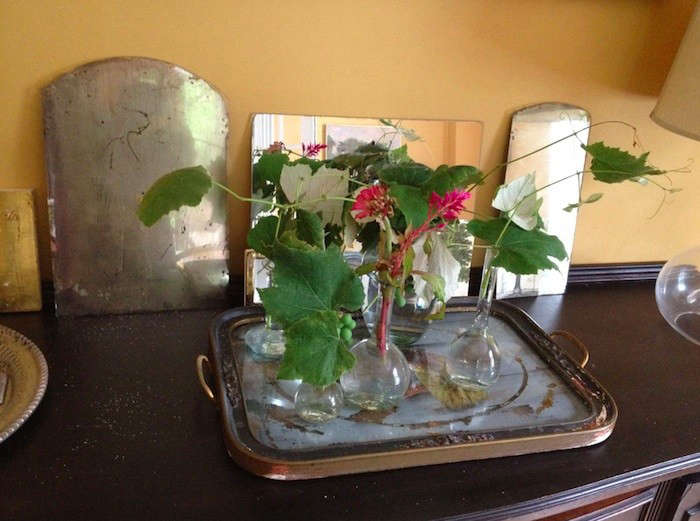
Antiques and vintage finds work the same way. They bring age, shape, and story into rooms that might otherwise feel too new. A single antique mirror can make a builder-grade bathroom feel more intentional. A vintage landscape can soften a modern hallway. A weathered chest can turn an empty corner into a moment.
This is not about nostalgia for nostalgia’s sake. It is about balance. Contemporary homes need friction: old against new, smooth against rough, polished against humble. Without that contrast, rooms can feel flat. With it, they begin to hum.
Common Mistakes When Treating the House as Muse
Mistake 1: Romanticizing Inconvenience
A charming old house is still allowed to have functioning storage, comfortable seating, and lighting that does not require a miner’s helmet. Respecting a home’s character does not mean preserving every irritation. Improve what makes daily life harder. Keep what makes the home distinctive.
Mistake 2: Copying Someone Else’s Soulful Home
The internet is full of beautiful spaces, but copying a deeply personal room can create a strange effect. It is like borrowing someone else’s diary and framing the pages. Use inspiration as a prompt, not a prescription. Ask what you admire: the color mood, the material mix, the confidence, the restraint, the clutter-free shelves that clearly belong to people without mail.
Mistake 3: Forgetting Function
A muse-led home still needs to work. If you host often, design for conversation and cleanup. If you work from home, create a real workspace. If you have children, pets, or relatives who treat coasters as theoretical objects, choose materials accordingly. Beauty is better when it survives Tuesday.
Experience Notes: Living With “House as Muse”
The most interesting thing about using a house as a muse is that the process rarely begins with a grand vision. More often, it starts with a small irritation or a quiet attraction. You notice that morning light lands beautifully on one wall, so you move a chair there. Then the chair needs a table. The table needs a lamp. The lamp makes the wall look empty. Suddenly, you are searching for art, and the house has successfully tricked you into a design project. Very clever, house.
One of the best experiences related to this approach is learning to listen before buying. A room may look empty, but emptiness is useful information. Live with it for a while. Watch how people move through it. Notice where bags land, where coffee cups gather, where everyone naturally wants to sit. The house will reveal its traffic patterns like a shy map. Once you understand those patterns, design choices become clearer and less impulsive.
Another lesson is that the “wrong” feature can become the most memorable one. A low ceiling can make a dining room feel intimate. An awkward alcove can become a bar, library nook, or tiny office. A too-small bedroom can become wonderfully cocoon-like with wall-to-wall curtains and soft lighting. A narrow hallway can become a gallery. The trick is to stop treating quirks as flaws and start treating them as prompts. The house is not being difficult. It is giving you homework.
There is also pleasure in allowing objects to arrive over time. The best rooms often contain pieces discovered accidentally: a chair found at an estate sale, a lamp from a local maker, a rug bought after months of searching, a framed drawing from a flea market, a bowl picked up on vacation. These pieces carry stories, and stories are what make interiors feel alive. A fast room can be attractive, but a slow room can become magnetic.
Living with house-as-muse design also changes how you define “finished.” Instead of chasing completion, you begin to value evolution. A home can be finished enough for comfort and still open to change. Seasons shift. People change jobs. Children grow. Hobbies appear. Dogs destroy rugs with the emotional confidence of tiny emperors. A good home adapts without losing its identity.
Perhaps the deepest experience is realizing that a house reflects attention. The more carefully you observe it, the more generous it becomes. You start noticing the sound of rain on a window, the usefulness of a bench near the door, the calm of a well-lit corner, the happiness of a kitchen shelf that holds exactly what you reach for every morning. These are not glamorous details, but they are the details that make a home beloved.
In the end, the house as muse is not about decorating more. It is about noticing more. It asks you to stop treating home as a performance and start treating it as a relationship. Like any relationship, it improves with patience, humor, compromise, and the occasional difficult conversation about where all these throw pillows are coming from.
Conclusion: Let the House Have a Say
“Current Obsessions: House as Muse” is more than a design phrase. It is a philosophy for creating interiors that feel personal, grounded, and alive. It encourages homeowners to look at architecture, memory, light, materials, craft, and daily routines as sources of inspiration. Instead of chasing a perfect trend, the goal is to build a home that tells the truth beautifully.
The most compelling homes are not the ones that look newly completed. They are the ones that feel discovered over time. They carry evidence of choice, care, and character. They mix old and new, polished and imperfect, practical and poetic. They leave room for change. They invite people in. They make ordinary rituals feel slightly more meaningful.
So before you repaint, renovate, or panic-buy another accent chair at midnight, pause and listen. Your house may already know what it wants to become. And if it asks for better lighting, more books, a vintage rug, and fewer beige pillows, frankly, it has excellent taste.