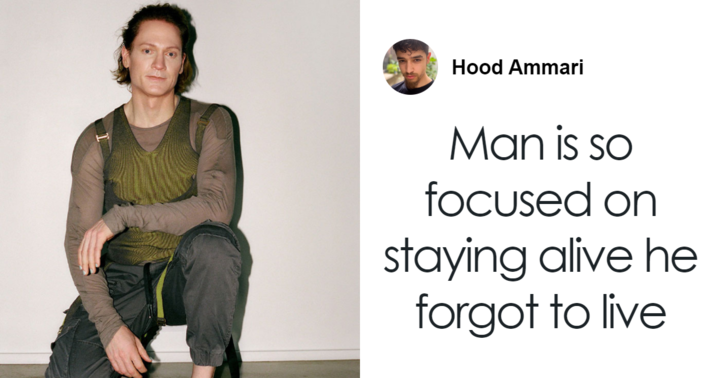
Some people buy a new moisturizer and call it a glow-up. Bryan Johnson, the tech entrepreneur and biohacker behind Project Blueprint, built an entire anti-aging operating system for his body and then invited the internet to grade his homework. Naturally, the internet arrived wearing steel-toed boots.
Johnson, who became widely known for spending millions on a data-driven longevity routine, went viral after sharing update photos of his physical transformation. The photos were meant to show progress. The comments section, however, treated them like an open-mic night at a comedy club. Many users joked that he looked older, not younger. Others questioned whether the intense effort to slow aging had made him look more stressed than refreshed.
The story is not just about one millionaire trying to out-negotiate Father Time. It is about our cultural obsession with youth, the rise of biohacking, the limits of personal health experiments, and the strange reality that even a man with doctors, data, supplements, controlled meals, elite testing, and a strict bedtime still cannot escape the most powerful force in the universe: online trolling.
Who Is Bryan Johnson?
Bryan Johnson is an American entrepreneur best known for founding Braintree, the payments company that was acquired by eBay’s PayPal unit in a deal valued at about $800 million. After making his fortune, Johnson turned his attention toward a much bigger target than online payments: aging itself.
His anti-aging project, known as Blueprint, is built around the idea that the body should be managed through measurements rather than moods. Instead of waking up and asking, “What do I feel like eating today?” Johnson’s protocol asks, “What do the biomarkers say?” It is less “treat yourself” and more “submit your bloodwork for review.”
Blueprint has included a highly structured plant-based diet, daily exercise, carefully managed sleep, frequent medical testing, supplements, skin treatments, and experimental interventions. Johnson has described his goal as slowing his biological aging and improving the function of organs and systems across his body. In simpler terms, he is trying to turn his body into a software project with fewer bugs, better uptime, and ideally no final shutdown.
Why His Update Went Viral
The viral moment came when Johnson shared a series of photos comparing his appearance over several years. He suggested that his face and body had changed so much that even facial recognition technology seemed confused. The post quickly spread because it had all the ingredients the internet loves: a wealthy tech founder, an extreme lifestyle, a dramatic before-and-after comparison, and a claim bold enough to make everyone stop scrolling.
Instead of universal applause, the reaction was mixed. Some followers praised his discipline and willingness to publish his data. Others mocked the transformation, saying he looked better before the protocol or that his quest to look younger had produced the opposite effect. A poll reportedly showed many people preferred his earlier appearance, which is the kind of result that would make anyone want to throw their phone into a lake.
The trolling revealed something important: anti-aging is not judged only by lab values. It is judged by faces, vibes, posture, skin tone, confidence, and the deeply unfair lighting of social media. A blood marker may improve, but if the public thinks someone looks tired, the comments will not politely wait for a peer-reviewed explanation.
The Internet’s Favorite Question: Does He Actually Look Younger?
That question is both irresistible and unfair. Appearance is subjective. A person can lose weight, gain definition, improve cardiovascular fitness, and reduce certain risk factors while looking older to strangers online. Weight loss can sharpen the face. Caloric restriction can reduce facial fullness. Skin treatments may change texture. Hair color, lighting, camera angle, stress, and even facial expression can alter how old someone appears.
This is where the Johnson story becomes more interesting than a simple “before and after” roast. His project is not only about looking young; it is about measuring biological function. Yet the public tends to treat aging as a visual performance. If someone says they are aging more slowly, people immediately inspect the face like detectives at a crime scene.
That is the central tension of biohacking. The data may say one thing. The mirror may say another. The comments section will say whatever causes the most emotional damage in the fewest words.
What Is Biohacking, Really?
Biohacking is a broad term for using lifestyle changes, technology, testing, supplements, and sometimes experimental medical interventions to improve the body’s performance. At the mild end, biohacking can mean tracking sleep, lifting weights, eating more protein, reducing alcohol, using a continuous glucose monitor, or improving morning sunlight exposure. At the extreme end, it can involve expensive therapies, frequent lab testing, off-label drugs, plasma procedures, and treatments that are not yet proven for anti-aging.
Johnson sits at the extreme, highly public end of the spectrum. His approach is not “drink water and take the stairs.” It is a full-time system built around measurement, optimization, and strict rules. He has become a symbol of the longevity movement because he is willing to do publicly what many wealthy biohackers do quietly: test, track, publish, repeat, and absorb the ridicule.
To supporters, he is a pioneer. To critics, he is a walking caution label. To everyone else, he is proof that the wellness industry has officially entered its science-fiction era.
The Science: What We Know and What We Do Not
Aging science is real, serious, and rapidly developing. Researchers study cellular damage, inflammation, DNA methylation, metabolism, mitochondrial function, senescent cells, protein regulation, and other mechanisms linked to aging. There is growing interest in “healthspan,” meaning the number of years a person lives in good health, not just the number of candles on the birthday cake.
However, slowing biological aging in a measurable, reliable, clinically proven way is complicated. Many tests that estimate biological age are still evolving. Some may be useful for research, but they do not always translate neatly into a simple promise like “you are now seven years younger.” Biology does not operate like a return policy at a department store.
Evidence strongly supports basics such as regular exercise, healthy eating patterns, quality sleep, not smoking, limiting alcohol, managing blood pressure, maintaining social connections, and reducing chronic stress. These are not glamorous, but they work. The problem is that “go to bed on time and eat vegetables” does not go viral as easily as “tech millionaire attempts to defeat aging with a protocol named Blueprint.”
The Young Plasma Controversy
One of the most controversial parts of Johnson’s public anti-aging story involved plasma exchange. Reports noted that he participated in a multi-generational plasma procedure involving his son and father. The idea of “young blood” has fascinated Silicon Valley and longevity enthusiasts for years, partly because animal studies have suggested that factors in blood may influence aging biology.
But human use is a different story. The U.S. Food and Drug Administration has warned that young plasma infusions are not approved for anti-aging or related wellness claims and that there is no established clinical benefit for such uses. Johnson later said he stopped the young plasma intervention after determining it did not add benefits on top of his existing routine.
That detail matters. Even the most committed biohacker sometimes has to admit that a shiny intervention is not worth continuing. In a field full of bold claims, “we tried it and stopped” may be one of the more useful lessons.
Rapamycin and the Reality Check
Johnson also publicly discussed stopping rapamycin, a drug that has attracted attention in longevity circles because of animal research and interest in its effects on aging pathways. In his own update, he said he discontinued it after years of experimentation because potential benefits did not justify side effects such as infections, lipid changes, glucose elevations, and increased resting heart rate.
This is where the anti-aging conversation becomes more grounded. Biohacking is often marketed as clean, futuristic, and precise. But the body is not a spreadsheet. One intervention can improve one marker while worsening another. Something promising in mice may not deliver the same results in humans. A treatment that helps one population may not make sense for a healthy person already following a strict regimen.
Johnson’s decision to stop rapamycin is a useful reminder that experimentation is not the same as certainty. In longevity, the most honest sentence may be: “We do not know yet.”
Why People Troll Bryan Johnson
The trolling is not only about his appearance. It is also about what he represents. Johnson’s lifestyle touches several cultural nerves at once: wealth inequality, fear of death, obsession with youth, distrust of tech elites, and the wellness industry’s habit of turning ordinary health advice into expensive rituals.
When a wealthy entrepreneur says he spends millions trying to slow aging, many people hear, “Rich people are now trying to buy more time while the rest of us are trying to find a dentist who takes our insurance.” That emotional reaction fuels mockery, even when some parts of his routine are perfectly reasonable.
There is also the uncanny factor. People are comfortable with someone looking healthier. They get uncomfortable when someone appears to be optimizing every inch of life. A strict bedtime is admirable. A life where every meal, supplement, workout, test, and treatment is part of a master longevity system can feel less like wellness and more like being trapped inside a luxury laboratory.
The Part Critics Sometimes Miss
It is easy to laugh at Johnson, but it is also easy to overlook why his project attracts attention. Many people are tired, inflamed, sleep-deprived, overworked, lonely, and metabolically unhealthy. A person loudly saying, “We should take aging seriously before disease arrives,” is not automatically wrong.
Modern medicine is often excellent at emergency care but less effective at helping people build sustainable daily systems for long-term health. Johnson’s message lands because prevention feels more empowering than waiting for a diagnosis. His critics may reject the extremes, but plenty of people quietly agree with the basic idea: sleep matters, food matters, exercise matters, and tracking health can reveal problems before they become disasters.
The challenge is separating useful habits from expensive spectacle. You do not need a multimillion-dollar protocol to improve your health. You may need a consistent bedtime, a walk after dinner, fewer ultra-processed foods, resistance training, regular checkups, and the courage to stop treating five hours of sleep like a personality trait.
The Best Lessons From the Blueprint Debate
1. Data Can Help, But It Should Not Become a Religion
Tracking sleep, blood pressure, glucose, cholesterol, fitness, or body composition can be useful. But numbers should support life, not replace it. A perfect chart does not automatically mean a joyful existence.
2. Healthspan Beats Vanity
The goal should not be to look 18 forever. That is a losing battle, and frankly, most 18-year-olds are running on iced coffee and questionable decisions. A better goal is to stay strong, mobile, mentally sharp, socially connected, and independent for as long as possible.
3. Extreme Interventions Need Extreme Caution
Experimental therapies, off-label drugs, and invasive procedures should never be treated like casual wellness hacks. They require serious medical supervision, clear evidence, and a realistic understanding of risks.
4. The Basics Are Still Underrated
The most powerful longevity habits are not mysterious: exercise consistently, eat mostly nutrient-dense foods, sleep enough, avoid smoking, limit alcohol, manage stress, build relationships, and get preventive medical care. Not flashy. Very effective.
What This Story Says About Us
The reason Johnson’s update exploded online is that aging is universal. Everyone has a relationship with the mirror. Everyone knows what it feels like to notice a new line, a slower recovery, a bad night’s sleep written across the face like a public announcement. Johnson’s version is simply louder, richer, and more quantified.
His story also exposes how contradictory we are. We tell people to take care of themselves, then mock them when they take it too far. We admire discipline, then call it obsession. We want science to solve aging, but we distrust anyone who becomes the experiment. We say looks do not matter, then judge an anti-aging protocol by cheek volume and hair color.
That does not mean the criticism is unfair. Public claims deserve public scrutiny. If someone promotes a lifestyle, sells products, or influences health behavior, skepticism is healthy. But there is a difference between questioning evidence and simply dunking on someone’s face. One improves the conversation. The other just gets likes.
Real-World Experiences and Takeaways From the Anti-Aging Obsession
For ordinary readers, the Bryan Johnson saga can feel both fascinating and exhausting. Most people are not deciding whether to run a multimillion-dollar anti-aging protocol. They are deciding whether they can squeeze in a workout before dinner, resist scrolling until 1 a.m., or finally schedule the blood test their doctor recommended six months ago.
That is why the most relatable experience connected to this story is not “How do I become biologically 18?” It is “How do I age without feeling like I am losing control?” Many people first become interested in longevity after a small personal wake-up call. Maybe climbing stairs suddenly feels harder. Maybe a parent’s health changes. Maybe a routine checkup shows cholesterol, blood sugar, or blood pressure moving in the wrong direction. Maybe the mirror simply starts telling the truth with unnecessary enthusiasm.
At that point, the wellness internet becomes tempting. It offers hacks, protocols, supplements, devices, morning routines, cold plunges, red lights, fasting windows, and influencers who appear to have solved the human condition with a blender and a discount code. The experience can be motivating at first. You buy better food. You walk more. You sleep earlier. Then the optimization spiral begins. Suddenly, every normal human behavior looks suspicious. Dinner with friends becomes a “metabolic event.” Birthday cake becomes a “glucose spike.” Staying up late to watch a movie feels like committing a felony against your mitochondria.
The healthier path is to borrow the useful parts of biohacking without inheriting the anxiety. Data can be helpful when it identifies patterns. A sleep tracker may show that late caffeine ruins your rest. A food diary may reveal that you feel better with more fiber and protein. Strength training may prove, week by week, that aging does not have to mean getting weaker. These are practical wins. They do not require turning your life into a clinical trial.
The Johnson story also teaches a social lesson: looking healthy and being healthy are not always the same. Someone can appear youthful while having poor habits, and someone else can look their age while building excellent long-term health. The internet often rewards the surface, but the body keeps deeper records: blood pressure, mobility, endurance, mood, sleep quality, inflammation, muscle mass, and resilience.
For anyone inspired by the topic, the best experience is not copying extreme protocols. It is building a personal “Blueprint Lite” that fits real life. That could mean a consistent bedtime, two or three strength sessions per week, daily walking, more whole foods, fewer sugary drinks, regular dental and medical checkups, sunscreen, stress management, and meaningful relationships. Not dramatic. Not meme-worthy. But over years, those habits compound.
And perhaps the most human takeaway is this: aging is not a personal failure. It is the price of being alive. Wanting to age well is wise. Wanting to never age at all can become a very expensive way to argue with reality. Bryan Johnson may continue testing the limits of longevity science, and the internet may continue roasting him from the cheap seats. The rest of us can watch, learn, laugh a little, and then go do the boring things that actually help: move our bodies, sleep like adults, eat something green, and call someone we love.
Conclusion
Bryan Johnson’s viral update became a perfect storm of anti-aging ambition, internet skepticism, and cultural discomfort with extreme self-optimization. His Blueprint project raises legitimate questions about longevity science, personal experimentation, wealth, evidence, and the future of preventive health. It also reminds us that the public will always judge anti-aging claims with the simplest test available: “But does he look younger?”
The fairest view is balanced. Johnson’s discipline is impressive, and his willingness to share data has helped push longevity into mainstream conversation. At the same time, many of his more extreme experiments remain controversial, expensive, and far beyond what most people should consider. The best anti-aging strategy for everyday life is not chasing immortality. It is building a healthier, stronger, more enjoyable life while science continues to study what is truly possible.
In the end, the internet may have trolled Johnson, but the conversation he sparked is real. People do want longer, healthier lives. They just also want to keep their humor, freedom, dinner plans, and maybe a little facial volume along the way.