Note: This article synthesizes public reporting and industry context from reputable entertainment, technology, legal, labor, and media sources. No source links are inserted in the article body for publication cleanliness.
The One Where A.I. Discovers the Couch and Immediately Falls Through It
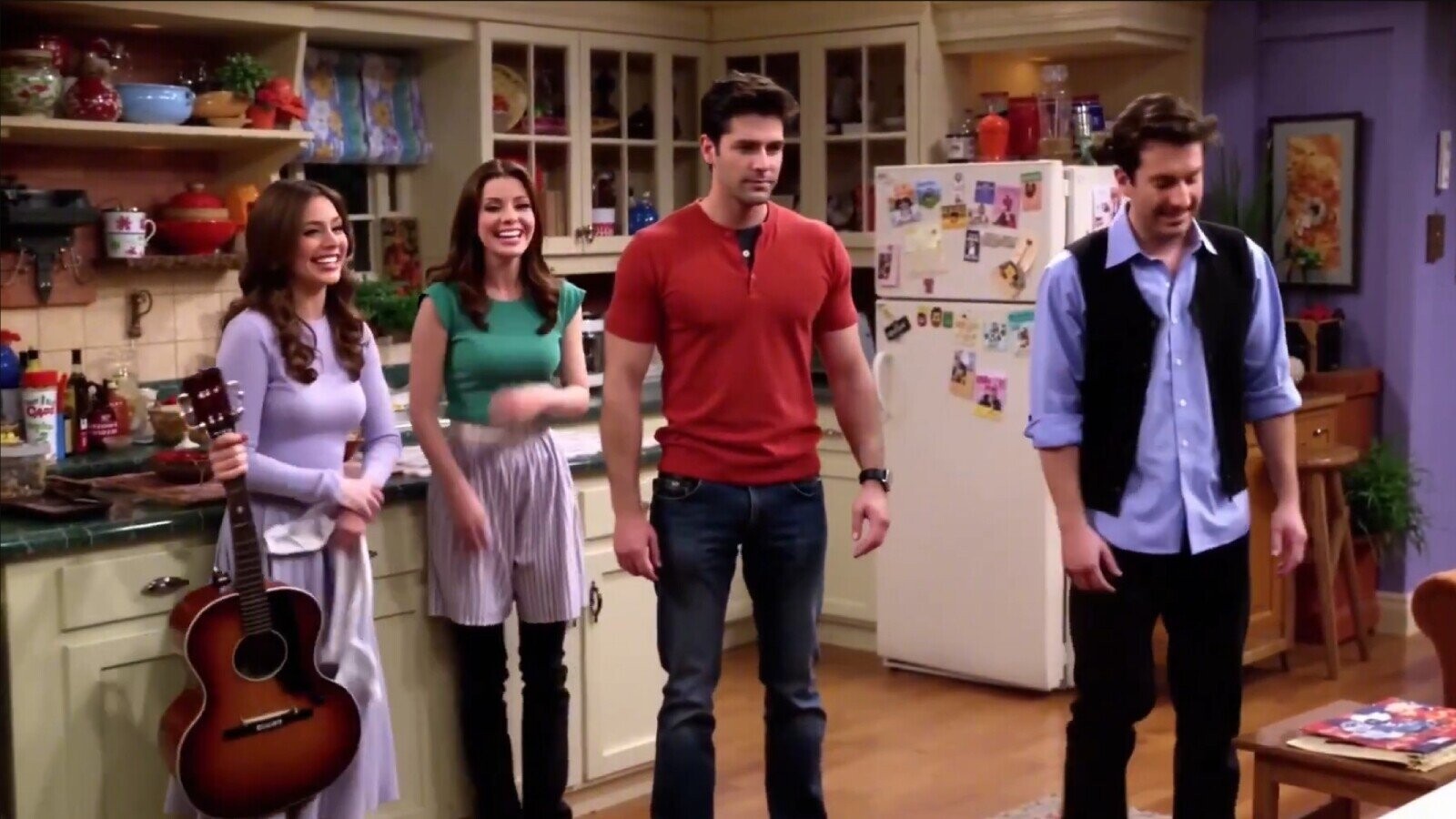
Every few months, the internet is handed a fresh reminder that artificial intelligence can do many astonishing things: generate code, summarize dense documents, help small businesses brainstorm, and occasionally produce a human hand that looks like it has been assembled by a committee of nervous crabs. The latest example arrived in the form of an A.I.-generated Friends-style sitcom clip, shared by an A.I. booster with the dramatic claim that “sitcoms will never be the same.”
Technically, that statement may be true. After watching the clip, sitcoms may never be the same because viewers now have to live with the memory of characters blinking like haunted mannequins, voices floating slightly outside their owners’ faces, and apartment geography that seems governed by dream logic, bad Wi-Fi, and possibly a vengeful ghost in the writers’ room.
The clip, reportedly made with the LTX-2 A.I. video model, attempted to evoke the look and rhythm of Friends, one of the most recognizable American sitcoms ever made. The problem was not simply that it looked imperfect. Imperfection can be charming. Sitcom pilots are imperfect. Student films are imperfect. Your uncle’s karaoke version of “I’ll Be There for You” is imperfect, although legally questionable at Thanksgiving. The issue was that the video seemed to misunderstand the entire reason audiences love sitcoms in the first place.
A sitcom is not just a couch, a laugh track, a few attractive people, and a door that everyone enters through as if they have been summoned by a stage manager. A great sitcom depends on timing, chemistry, character memory, emotional rhythm, and the tiny human choices that make a punchline land. The viral A.I. clip had the furniture of comedy, but not the heartbeat. It was less “The One Where Everybody Laughs” and more “The One Where Software Discovers Foreheads.”
Why the Internet Roasted the A.I. ‘Friends’ Clip So Hard
The backlash was swift because the claim was enormous. Saying “sitcoms will never be the same” sets a high bar. It suggests a revolutionary moment: the television equivalent of sound replacing silent film, color changing broadcast TV, or streaming turning everyone into a person who says, “Just one more episode,” at 1:14 a.m. on a work night.
Instead, viewers saw something closer to a comedy-shaped fever dream. Characters appeared to move without clear motivation. Facial expressions wandered in and out like confused tourists. Dialogue delivery felt strangely detached from emotion. The scene seemed to know that sitcoms contain banter, but not why banter works. Human comedy is not merely words arriving in sequence. It is hesitation, interruption, eye contact, embarrassment, escalation, and the beautiful little pause before a room explodes in laughter.
That is why the roasting became its own entertainment event. The internet loves nothing more than a bold technology prediction attached to a video that looks like it was directed by a toaster having a panic attack. Social media users mocked the clip not only because it looked strange, but because it represented a familiar pattern in A.I. hype: a product demo is presented as a world-changing breakthrough, while ordinary viewers respond, “Respectfully, this looks like a cursed screensaver.”
The Real Problem: A.I. Can Mimic the Container, Not the Comedy
The reason Friends remains such a tempting target for A.I. recreation is obvious. The show has a fixed visual grammar: apartments, coffeehouse scenes, group entrances, reaction shots, and a rhythm that millions of viewers can recognize instantly. It ran for 10 seasons, produced 236 episodes, and became a pop-culture machine built on repetition, character catchphrases, and emotional familiarity.
But that familiarity is also the trap. A.I. can identify surface patterns: six people in a room, one person says something silly, another reacts, the camera cuts, laughter happens. What it struggles with is comic intention. Chandler’s sarcasm was not funny because sentences ended in a certain shape. It was funny because Matthew Perry delivered insecurity, intelligence, panic, and self-defense in one breath. Joey’s “How you doin’?” was not just a phrase. It was a performance of confidence so ridiculous that it became endearing. Phoebe was not random because randomness is funny; she was funny because Lisa Kudrow played her as someone whose internal logic made complete sense to Phoebe, even when it baffled everyone else.
That is the difference between imitation and authorship. A.I. can remix what a sitcom looks like. It can reproduce visual signals associated with the genre. It can produce a room that resembles a place where jokes might occur. But comedy is not a wallpaper choice. It is a series of decisions made by writers, actors, directors, editors, and audiences who understand when a moment needs speed, silence, surprise, or emotional truth.
Why ‘Friends’ Is the Wrong Mountain to Climb First
Choosing Friends as a demonstration vehicle is especially risky because viewers know it too well. The show is embedded in American television memory. Even people who do not consider themselves fans can identify the orange couch, Central Perk, Monica’s apartment, and the general rhythm of the ensemble. That makes every A.I. mistake more obvious.
If an original A.I. sitcom looks strange, viewers might accept the weirdness as part of the experiment. But when an A.I. clip borrows the language of Friends, it invites comparison to one of the most polished ensemble comedies of the network era. That comparison is brutal. The original series was built by professional writers who knew how to create set-ups and callbacks, by actors who developed years of chemistry, and by directors who understood multi-camera timing. The A.I. clip borrowed the costume and forgot the person inside it.
In that sense, the “unholy abomination” label is not merely internet cruelty. It captures the uncanny discomfort of watching a familiar cultural object reproduced without the human texture that made it beloved. The result is not a revival, parody, reboot, homage, or satire. It is a souvenir from a gift shop in the uncanny valley.
A.I. Video Is Improving, But Sitcoms Are a Different Beast
To be fair, modern A.I. video tools are advancing quickly. Models such as LTX-2, Sora, Veo, Runway, Kling, and others have made dramatic progress in visual generation, motion, image-to-video transformation, and synchronized sound. For advertisers, storyboard artists, game developers, educators, and independent creators, these tools can be genuinely useful. They can help visualize concepts, test scenes, create mood boards, or produce short experimental clips without a full production crew.
But a polished sitcom is not just “video.” It is writing plus performance plus continuity plus editing plus audience calibration. A.I. video often performs best in short, visually driven bursts: a dragon flying over a city, a product spinning in a futuristic showroom, a dreamlike fashion montage, or a moody establishing shot. Sitcom scenes are harder because they demand consistent characters, believable eyelines, precise lip sync, emotional continuity, and dialogue that responds to character history.
Comedy is also merciless. A horror scene can survive a little awkwardness because awkwardness may increase dread. A surreal music video can absorb visual glitches because weirdness is part of the aesthetic. A sitcom cannot easily hide broken timing. If a character smiles one beat too late, if the punchline arrives without setup, if the reaction shot feels dead, the joke collapses like Ross trying to move a couch up a stairwell.
The Hollywood Context: Writers and Actors Saw This Coming
The viral clip landed in an entertainment industry already tense about generative A.I. During the Hollywood labor battles of recent years, writers and actors pushed for protections around A.I.-generated scripts, digital replicas, synthetic performers, consent, and compensation. Their concern was not that technology exists. Creative professionals have always used technology, from editing software to visual effects to digital color grading. The concern is replacement without consent, imitation without payment, and the idea that human creative labor can be scraped, blended, and sold back as “innovation.”
That is why a fake Friends clip can feel bigger than a joke. It touches several live wires at once: copyright, likeness rights, voice imitation, training data, fan culture, and the future of creative work. If a tool can generate a show that resembles a famous sitcom, who owns the output? What material trained the model? Were performers’ likenesses or voices approximated? Is it parody, infringement, experimentation, or marketing? The answers are not simple, and the law is still catching up.
For viewers, though, the emotional answer is simpler: people can tell when something feels hollow. The internet roasted the clip because it looked like a shortcut trying to wear the clothes of craft.
What A.I. Evangelists Keep Getting Wrong About Art
The phrase “A.I. evangelist” often describes someone who believes so strongly in the technology that every demo becomes evidence of an inevitable future. That enthusiasm can be useful when it encourages experimentation. But it becomes grating when it confuses technical possibility with artistic success.
Just because a system can generate something that resembles a sitcom does not mean it has created a good sitcom. A photocopier can reproduce a restaurant menu; that does not make it a chef. A keyboard can type a sonnet; that does not make the desk Shakespeare. Technology can assist creativity, but it does not automatically possess taste, restraint, context, or emotional intelligence.
The best A.I. advocates understand this distinction. They talk about tools, workflows, previsualization, accessibility, and creative augmentation. The worst ones declare victory every time a model produces a recognizable room with three vaguely human figures in it. That is how you end up telling the world that sitcoms have been transformed while everyone else is trying to figure out why one character’s arm appears to be negotiating independence from the rest of the body.
Could A.I. Ever Make a Good Sitcom?
Yes, but probably not in the way the hype suggests. A.I. may become part of sitcom development. Writers might use it to brainstorm alternate scene directions, generate joke premises, organize continuity, test episode structures, or create temporary animatics. Production teams might use it for set visualization, background assets, dubbing support, editing experiments, or accessibility features. Independent creators may use A.I. tools to make projects that would otherwise be impossible on tiny budgets.
But a sitcom that people love will still need a point of view. It will need characters who want things. It will need performers who can surprise each other. It will need writers who understand why a bad date, a lost apartment key, or a Thanksgiving disaster can reveal something about friendship, insecurity, ambition, loneliness, and love. It will need human judgment, because comedy is a social contract. The audience laughs when it feels that someone understands the absurdity of being alive.
A.I. may help build the scaffolding. It may help more creators enter the room. It may even produce strange new hybrid formats that do not resemble traditional television at all. But replacing sitcom craft with automated nostalgia paste is not the future of comedy. It is a screensaver with commitment issues.
Why the Backlash Was Actually Healthy
The roasting of the A.I. Friends clip was not just negativity. It was criticism, and criticism is useful. Audiences were drawing a boundary between novelty and quality. They were saying that recognizable does not equal good, that automation does not equal artistry, and that “content” is not the same as entertainment.
That distinction matters in an era when platforms reward volume. Generative A.I. makes it easier to produce endless media-shaped objects. But viewers are already drowning in things to watch. The future does not need more empty clips. It needs sharper writing, better taste, clearer ethics, and tools that serve creators rather than flatten them into training material.
In a funny way, the clip may have done sitcoms a favor. By failing so loudly, it reminded people what human-made comedy actually contains. A great sitcom scene is an intricate machine disguised as casual conversation. It looks easy because talented people worked very hard to make it look easy. When A.I. tries to skip that labor, the missing pieces become hilariously visible.
Experiences and Reflections: Watching the Future Trip Over the Coffee Table
Anyone who has spent time around creative technology has seen this cycle before. A new tool appears, early adopters declare the old world finished, skeptics roll their eyes, and then the truth lands somewhere in the messy middle. The A.I. sitcom controversy feels familiar because it echoes earlier creative disruptions. Digital cameras were supposed to destroy filmmaking. YouTube was supposed to kill television. Streaming was supposed to liberate everyone and somehow also gave us 900 shows with titles like Dark River Secrets. Every tool changes the landscape, but rarely in the clean, triumphant way evangelists predict.
My strongest reaction to the A.I. Friends clip is not fear. It is secondhand embarrassment with a side of curiosity. The technology is impressive in the abstract. The fact that a person can type, prompt, generate, and share a sitcom-like scene would have sounded magical twenty years ago. But once the magic trick is over, the ordinary questions return. Is it funny? Do I care about the characters? Would I watch another episode? Did anyone involved know why the joke was supposed to work?
That last question is the killer. Comedy requires accountability to the audience. A stand-up comic learns from silence. A writers’ room learns when a joke dies at the table read. Actors learn from timing, trust, and failure. A.I. does not feel embarrassment when the punchline face-plants. It does not go home and think, “Maybe the duck subplot needs a rewrite.” It optimizes patterns. Humans make meaning out of failure.
There is also something strangely comforting about how quickly audiences identified the problem. Viewers are not as passive as the word “content consumer” makes them sound. They know vibes. They know when a scene has rhythm. They know when a character seems alive. People may not be able to explain multi-camera blocking or joke construction, but they can feel when the soul has left the building and been replaced by a software update.
The best future for A.I. in entertainment is not a factory that pumps out synthetic versions of shows we already loved. That is the creative equivalent of microwaving a memory. The better future is one where human artists use new tools to make stranger, smaller, riskier, more personal work. Let A.I. help with rough drafts, visual tests, language access, production planning, or impossible indie experiments. Let it be useful. But do not ask it to wear Matthew Perry’s cadence like a borrowed jacket and then act shocked when the internet throws tomatoes.
In the end, sitcoms may indeed never be the same, but not because one viral A.I. clip cracked the code. They will change because technology, audience habits, labor rules, and creative economics are changing at the same time. The lesson of the roasted Friends abomination is not that A.I. has no place in comedy. The lesson is that comedy has standards. It wants timing. It wants humanity. It wants characters who feel like they have lives beyond the prompt box. Until A.I. can understand why a pause is funnier than a sentence, the sitcom throne remains safely in human hands.
Conclusion
The viral A.I.-generated Friends clip became a perfect internet spectacle because it combined massive technological ambition with deeply awkward execution. It showed how far A.I. video has come, but also how far it still has to go before it can replace the human machinery of sitcom comedy. The clip could imitate the surface of television, yet it missed the craft underneath: timing, chemistry, intention, character, and emotional truth.
For creators, the moment is a useful warning. A.I. tools can be powerful assistants, but they are not automatic substitutes for taste. For audiences, the backlash was a reminder that people still value human performance and storytelling. And for A.I. evangelists, the lesson is simple: before declaring that an art form has been revolutionized, make sure the demo does not look like Central Perk was invaded by sleep-paralysis extras.