Animal monuments are proof that human beings are sentimental, dramatic, and occasionally willing to build a giant lobster because a town’s seafood reputation demands it. Across the world, people have raised statues to loyal dogs, mythical horses, heroic sled teams, agricultural pests, roadside elephants, and one shiny cryptid with glowing red eyes. Some of these famous animal statues honor real courage. Others celebrate local identity. A few seem to exist because someone looked at an empty public space and thought, “You know what this needs? A massive blue bear peeking through a window.”
That is the charm of weird animal monuments. They are not just stone, bronze, steel, or concrete; they are stories with paws, claws, wings, hooves, antennae, and sometimes suspiciously muscular torsos. They turn ordinary places into travel landmarks and remind us that history is not always written by generals and presidents. Sometimes it is written by dogs who waited, insects that ruined cotton, and lobsters large enough to make a seafood buffet nervous.
Below are ten weird and wonderful animal monuments that combine public art, folklore, roadside attraction energy, and genuine emotion. Some are touching. Some are funny. Some are extremely photogenic. All of them prove that when humans love an animal story, we do not whisper about itwe build a statue.
1. The Boll Weevil Monument Enterprise, Alabama
Most towns do not build monuments to the pest that nearly destroyed their economy. Enterprise, Alabama, however, decided to take the scenic route through disaster and ended up with one of America’s strangest and most inspiring animal monuments: the Boll Weevil Monument.
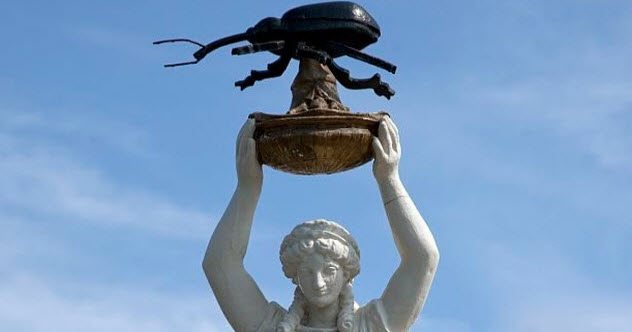
Dedicated in 1919, this unusual statue honors the tiny insect that devastated cotton crops across the South. At first glance, thanking a crop-eating beetle sounds like sending a fruit basket to a burglar. But the boll weevil forced local farmers to diversify away from cotton and embrace crops such as peanuts. That painful shift helped reshape the area’s agricultural economy.
The monument shows a classical female figure holding up a boll weevil, making the insect look like a tiny, villainous trophy. Its message is surprisingly modern: sometimes disruption pushes people toward reinvention. In SEO terms, the boll weevil pivoted Enterprise’s entire content strategy before pivoting was cool.
Why It Is Weird And Wonderful
It may be the world’s most polite thank-you note to an agricultural menace. The Boll Weevil Monument is weird because it honors destruction, but wonderful because it celebrates resilience, adaptation, and the ability to turn bad luck into a new beginning.
2. Lucy the Elephant Margate, New Jersey
Lucy the Elephant is not merely a statue. She is a six-story elephant-shaped building standing near the beach in Margate, New Jersey, looking like she wandered out of a Victorian fever dream and decided to stay for summer vacation.
Built in the 1880s by James V. Lafferty, Lucy was originally designed as a novelty structure to attract attention and promote real estate. The plan worked. More than a century later, Lucy remains one of the most beloved roadside attractions in the United States. She is tall, charming, historic, and just odd enough to make every passerby ask, “Wait, can I go inside the elephant?” Yes, you can.
Lucy is listed as a National Historic Landmark and has survived storms, decay, changing tourism tastes, and countless jokes about elephant-sized maintenance bills. She represents the golden age of American roadside imagination, when architecture did not always need to be subtle. Sometimes it needed tusks.
Why It Is Weird And Wonderful
Lucy is wonderful because she is both a landmark and a building. She is weird because most buildings do not have ears, tusks, and a personality large enough to qualify for its own zip code.
3. Balto Statue Central Park, New York City
The Balto statue in Central Park honors one of the most famous sled dogs in American history. In 1925, a diphtheria outbreak threatened Nome, Alaska, and teams of sled dogs helped relay lifesaving antitoxin across brutal winter terrain. Balto led the final leg into Nome and became a national hero.
Just ten months later, a bronze statue of Balto was unveiled in Central Park. Balto himself reportedly attended the dedication, which is the kind of celebrity appearance most statues can only dream of. The monument remains one of the park’s most popular sculptures, especially with children who often climb onto it as if Balto is still ready to race through snow.
The statue’s inscription honors the endurance, fidelity, and intelligence of the sled dogs involved in the serum run. While history also recognizes other crucial dogs and mushers from the relay, Balto’s monument continues to stand as a tribute to teamwork, courage, and the astonishing bond between humans and working animals.
Why It Is Weird And Wonderful
Balto’s statue is not weird in appearance, but it is wonderfully unusual because it gives a dog the heroic treatment usually reserved for military leaders. Frankly, Balto earned itand probably would have accepted payment in snacks.
4. Hachiko Statue Shibuya, Tokyo
Few animal monuments are as emotionally powerful as the Hachiko statue outside Shibuya Station in Tokyo. Hachiko, an Akita dog, became famous for waiting daily at the station for his owner, Professor Hidesaburo Ueno, even after Ueno died in 1925. For years, Hachiko returned to the same spot, becoming a symbol of loyalty in Japan and around the world.
The current statue is a beloved meeting point in one of Tokyo’s busiest districts. It is surrounded by movementcommuters, tourists, neon, traffic, and constant urban energyyet the story at its center is quiet and deeply human. Hachiko waited because love, in its purest form, does not always understand absence.
As famous animal statues go, Hachiko’s is less about spectacle and more about shared emotion. People visit it not because it is enormous or bizarre, but because the story makes even the busiest traveler slow down for a moment.
Why It Is Weird And Wonderful
It is wonderful because it turns loyalty into a public ritual. It is slightly weird because one of the world’s most famous meeting spots is, essentially, “Meet me by the dog who waited forever.” Somehow, that is perfect.
5. Greyfriars Bobby Edinburgh, Scotland
Greyfriars Bobby is another legendary loyal dog, and his statue in Edinburgh has become one of the city’s most photographed landmarks. According to the popular story, Bobby guarded the grave of his owner, John Gray, for many years after Gray’s death. Whether every detail of the tale is historically exact is still debated, but the emotional power of the legend has never needed much help.
The small statue sits near Greyfriars Kirkyard and has become a symbol of devotion. Visitors often rub Bobby’s nose for luck, although preservationists would probably prefer everyone express admiration without polishing the poor dog’s face into a golden button.
What makes Greyfriars Bobby especially charming is the modest scale of the monument. It is not huge. It does not roar, leap, or dominate the skyline. It simply stands there, a small dog with a large legacy, reminding visitors that loyalty does not need to be loud to last.
Why It Is Weird And Wonderful
Bobby’s statue is wonderful because it captures love in miniature. It is weird because tourists have collectively decided that rubbing a bronze dog’s nose is a perfectly reasonable travel tradition. Honestly, they are not wrong.
6. The Dog on the Tuckerbox Gundagai, New South Wales
The Dog on the Tuckerbox is one of Australia’s most beloved roadside monuments. Located near Gundagai in New South Wales, the statue has stood since 1932 and is tied to bush poetry, pioneer mythology, and the working dogs that accompanied bullock drivers through difficult terrain.
A “tuckerbox” is a food box, and the monument’s legend comes from comic and sentimental verses about bullockies, mishaps, and the faithful dogs who guarded belongings on the road. Over time, the dog became a symbol of loyalty, perseverance, and Australian bush identity.
Like many great roadside attractions, the Dog on the Tuckerbox is both simple and surprisingly memorable. It does not need to be massive to work. It sits there with quiet dignity, as if keeping watch over every traveler who stops for a photo, a snack, or a quick stretch before getting back on the highway.
Why It Is Weird And Wonderful
The name alone is delightful. The monument is weird because it sounds like the setup to a country joke, but wonderful because it honors working animals, travelers, folklore, and the humor of life on the road.
7. The Kelpies Falkirk, Scotland
The Kelpies in Falkirk, Scotland, are monumental horse-head sculptures that rise about 30 meters above The Helix parkland. Created by sculptor Andy Scott, these enormous steel forms honor the heavy horses that powered Scottish industry, agriculture, canals, and transport.
The name also refers to kelpies, mythical shape-shifting water spirits from Scottish folklore. That combination gives the sculptures a rare double life: they are both industrial memorials and mythological guardians. From a distance, they look like colossal horses emerging from the land itself. Up close, the engineering is breathtaking.
Unlike many animal monuments that focus on one individual creature, The Kelpies celebrate an entire class of working animals. They remind visitors that before engines and modern machinery, horses carried the weight of economies on their backs.
Why It Is Weird And Wonderful
The Kelpies are wonderful because they are elegant, powerful, and deeply rooted in local history. They are weird because giant horse heads beside a canal sound surreal until you see themthen they seem completely inevitable.
8. Denver’s Big Blue Bear Denver, Colorado
Officially titled “I See What You Mean,” Denver’s Big Blue Bear is a 40-foot-tall sculpture by artist Lawrence Argent outside the Colorado Convention Center. The bear appears to peer curiously through the glass, as if it has arrived late for a conference and is checking whether the keynote speaker is still talking.
The sculpture has become one of Denver’s most recognizable public art pieces. Its bright blue color, enormous scale, and playful posture make it irresistible to photographers. It is not a memorial in the traditional sense, but it is a monument to curiosity, urban whimsy, and the way public art can make a city feel more human.
The bear is especially effective because it reverses the usual relationship between people and wildlife. Instead of humans observing animals, the animal observes us. It asks, without saying a word, “What exactly are you all doing in there?” A fair question, especially during trade shows.
Why It Is Weird And Wonderful
It is weird because it is a giant blue bear spying on a convention center. It is wonderful because it makes downtown Denver feel playful, approachable, and slightly less allergic to fun.
9. The Mothman Statue Point Pleasant, West Virginia
The Mothman Statue in Point Pleasant, West Virginia, is not technically an animal monument in the biological sense. Mothman is a cryptida legendary creature associated with reported sightings in the 1960s. But with wings, red eyes, and a name that includes “moth,” he earns a place on any list of weird animal-inspired monuments.
The metallic statue stands in downtown Point Pleasant and has become the centerpiece of local Mothman tourism. It is dramatic, shiny, strange, and oddly charismatic. Visitors pose with it day and night, proving that nothing says “vacation memory” like standing beside a winged omen with abs.
Mothman’s appeal comes from the intersection of folklore, mystery, pop culture, and small-town branding. Many places try to attract travelers with beaches or mountain views. Point Pleasant offers a paranormal insect-man and absolutely commits to the bit.
Why It Is Weird And Wonderful
The statue is weird for obvious reasons: red eyes, wings, cryptid mythology, and a physique that raises questions. It is wonderful because it shows how folklore can become community identity, tourism, and public art all at once.
10. The World’s Largest Lobster Shediac, New Brunswick
Shediac, New Brunswick, is known as the “Lobster Capital of the World,” so naturally it needed a lobster large enough to make visitors reconsider their place in the food chain. The World’s Largest Lobster monument was created as a tribute to the town’s lobster fishing industry and has become a major roadside attraction.
The sculpture is enormous, detailed, and wonderfully unapologetic. It celebrates local seafood heritage while also serving the essential roadside attraction function of making people say, “Pull over. I need a picture with the giant crustacean.”
Food-related monuments are often funny because they enlarge something familiar until it becomes surreal. A lobster on a plate is dinner. A giant lobster on a platform is civic identity. That transformation is exactly what makes this monument so charming.
Why It Is Weird And Wonderful
It is weird because few things are more visually dramatic than a giant lobster waiting beside the road. It is wonderful because it honors a real industry, a real community, and the universal human need to take goofy travel photos.
What Animal Monuments Tell Us About People
At first, weird animal monuments may look like simple tourist attractions. But look closer and they reveal how communities tell stories. A dog statue may honor loyalty. A horse sculpture may remember labor. A beetle monument may celebrate survival after economic shock. A giant lobster may say, “This town knows exactly what it is about, and yes, butter is involved.”
Animal monuments also make public history easier to approach. Not everyone wants to read a dense plaque about agriculture, industry, folklore, or urban development. But almost everyone will stop for a giant elephant, a heroic dog, or a suspiciously shiny Mothman. Once people stop, the story has a chance to begin.
That is the secret power of quirky landmarks: they lower the barrier to curiosity. They invite families, road-trippers, history lovers, art fans, and casual tourists to engage with place-based stories. The weirdness is not a distraction from meaning. Often, it is the doorway into meaning.
Experiences Inspired By Weird And Wonderful Animal Monuments
Visiting animal monuments is a different kind of travel experience from checking famous museums or grand cathedrals off a list. These landmarks are often more relaxed, more surprising, and more personal. You do not need to whisper. You do not need to pretend you understand abstract art while staring at a white square. You can simply show up, laugh, learn something, and take a photo that will confuse your friends in the best possible way.
One of the best experiences related to animal monuments is the joy of the unexpected stop. Road trips are full of practical pauses: gas, coffee, bathrooms, snacks, and the occasional emergency search for phone chargers. But when a giant animal monument appears on the route, the journey suddenly gains a story. Nobody remembers the ordinary rest area. Everybody remembers the day they met a giant lobster, stood inside an elephant, or posed beside a dog famous for sitting on a tuckerbox.
Another great experience is discovering how deeply locals care about these monuments. To outsiders, a statue may look funny or eccentric. To residents, it may represent identity, pride, memory, and resilience. Enterprise’s Boll Weevil Monument is not just a beetle on a pedestal; it is a reminder that a community survived agricultural crisis. The Kelpies are not just giant horse heads; they honor the animals and workers tied to Scotland’s industrial past. Hachiko and Greyfriars Bobby are not merely cute dog statues; they are emotional landmarks that continue to attract people because loyalty is a language everyone understands.
Animal monuments are also excellent for family travel. Children may not immediately care about economic diversification, 19th-century transport, or civic public art programs. But they understand animals. A dog, bear, elephant, horse, or lobster gives them an instant point of connection. From there, adults can sneak in the history. It is educational travel disguised as “Look at that enormous thing!”which, frankly, is one of the most effective teaching methods ever invented.
For photographers and content creators, these quirky monuments are gold. They offer scale, humor, color, and personality. The best photos usually include people interacting with the monument: standing under The Kelpies, peeking back at Denver’s Big Blue Bear, saluting Balto, or pretending to negotiate dinner terms with the lobster. These images work because they show not just the object, but the human reaction to it.
The deeper experience, though, is emotional. Weird animal monuments remind us that culture is not only built from serious things. It is also built from affection, jokes, legends, gratitude, grief, and local pride. Humans build monuments to animals because animals help us explain ourselves. They symbolize courage, patience, labor, mystery, comfort, abundance, and adaptation. Sometimes they even symbolize the ability to turn a pest into a mascot, which is about as optimistic as public art gets.
So the next time you travel, leave room in the itinerary for the odd landmark. Take the exit. Walk across the square. Read the plaque. Buy the postcard. Ask a local why the statue matters. The answer may be funny, touching, strange, or surprisingly profound. That is the magic of weird and wonderful animal monuments: they begin as curiosities, but they often end as the stories you remember most.
Conclusion
From Alabama’s grateful beetle to Tokyo’s loyal dog, from Scotland’s steel horses to West Virginia’s legendary Mothman, these weird and wonderful animal monuments prove that public art does not need to be boring to be meaningful. The best animal monuments combine local history, humor, emotion, and visual surprise. They help towns stand out, preserve unusual stories, and give travelers a reason to pause.
Some of these landmarks honor real animals. Others celebrate industries, myths, or regional character. Together, they show how animalswhether heroic, symbolic, edible, mythical, or mildly inconvenient to cotton farmerscontinue to shape human imagination. They are strange. They are memorable. They are exactly the kind of travel landmarks that make the world feel bigger, funnier, and more wonderfully alive.
Note: This article is based on real monuments and publicly available historical information. Travel details, hours, access rules, and restoration schedules may change, so readers should check official local resources before planning a visit.