Flank steak is the dramatic friend of the beef world: bold, flavorful, affordable, and capable of stealing the whole dinner tableif you treat it right. Treat it wrong, though, and it can chew like a yoga mat in a steak costume. The good news? The secret to tender flank steak is not fancy equipment, a culinary degree, or whispering encouraging words to your cutting board. It is learning how to cut flank steak properly, especially how to slice it against the grain.
This one simple technique can turn a lean, muscular cut into juicy strips perfect for fajitas, steak salads, tacos, rice bowls, sandwiches, stir-fries, and “standing over the counter eating slices with your fingers” dinners. No judgment. We have all been there.
In this guide, you will learn exactly how to identify the grain, how to cut cooked flank steak, how to slice raw flank steak for recipes, what mistakes make it tough, and how resting, knife angle, marinade, and thickness all work together. By the end, you will be the person at the barbecue casually saying, “Oh, I just sliced it against the grain,” while everyone else wonders why your steak tastes like it came from a restaurant.
What Is Flank Steak?
Flank steak is a long, flat, lean cut of beef that comes from the abdominal area of the cow. Because this muscle does real work, the meat has long, visible muscle fibers. That is why flank steak has such a rich, beefy flavorand also why it can become tough if it is sliced incorrectly.
Unlike heavily marbled cuts such as ribeye, flank steak does not have much internal fat to soften each bite. Its tenderness depends more on preparation and slicing technique. That is why chefs and experienced home cooks treat the cutting step like the grand finale, not an afterthought.
Why Flank Steak Is So Popular
Flank steak is beloved because it cooks quickly, takes marinades beautifully, and works in dozens of meals. It is excellent grilled, broiled, pan-seared, stir-fried, or sliced into strips for fajitas. It also has enough flavor to stand up to bold seasonings like garlic, lime, soy sauce, chili powder, Worcestershire sauce, cumin, brown sugar, ginger, and vinegar-based marinades.
But the same structure that gives flank steak its big personality also creates the main challenge: those long muscle fibers. If you cut with them, you leave each slice full of long, chewy strands. If you cut across them, you shorten those strands into tender, bite-size fibers. That is the whole magic trick.
The Most Important Rule: Cut Flank Steak Against the Grain
If you remember only one thing from this article, make it this: always cut flank steak against the grain. The “grain” refers to the direction of the muscle fibers. On flank steak, these fibers usually run lengthwise, from one long end of the steak to the other.
Cutting against the grain means slicing perpendicular to those lines. Imagine the fibers as a bundle of tiny ropes. If you slice in the same direction as the ropes, every bite contains long strands that your teeth have to fight through. If you slice across the ropes, each bite contains short pieces that are much easier to chew.
That is why two people can cook the exact same flank steak to the exact same temperature, yet one tastes tender and the other tastes like a workout for your jaw. The difference often happens on the cutting board.
How to Find the Grain on Flank Steak
Before cooking, place the raw flank steak on a cutting board and look closely at the surface. You should see long, parallel lines running through the meat. Those lines are the grain. On most flank steaks, they run from left to right along the length of the cut.
A helpful trick is to turn the steak so the grain runs horizontally in front of you. Then, when it is time to slice, cut vertically across those lines. If the lines run east to west, your knife should move north to south. Yes, your dinner now has a compass. Congratulations.
Mark the Grain Before Cooking
Once flank steak is cooked, browned, sauced, or covered in a glorious crust, the grain can be harder to see. Before cooking, take a mental note of the direction. You can also make a tiny shallow notch on one edge to remind yourself. Another option is to cut the steak into two or three large sections with the grain before cooking, especially if the steak is too long for your pan or grill. After cooking and resting, slice each section against the grain.
How to Cut Cooked Flank Steak Step by Step
Perfectly sliced flank steak is thin, juicy, and easy to chew. Here is the simple process.
Step 1: Let the Steak Rest
After cooking, transfer the flank steak to a clean cutting board and let it rest for at least 5 to 10 minutes. Resting helps the juices redistribute through the meat instead of running all over the board the second your knife touches it. A little juice on the board is normal. A full beef puddle is usually a sign the steak was sliced too soon.
Step 2: Identify the Grain Again
Look for the direction of the fibers. They may be visible on the cut surface or along the edges. If you checked before cooking, this step is easy. If not, tilt the steak under the light and look for the long lines.
Step 3: Use a Sharp Knife
A sharp chef’s knife or carving knife makes clean slices without shredding the meat. A dull knife presses down too hard, squeezes out juices, and creates ragged strips. Flank steak deserves better. So do you.
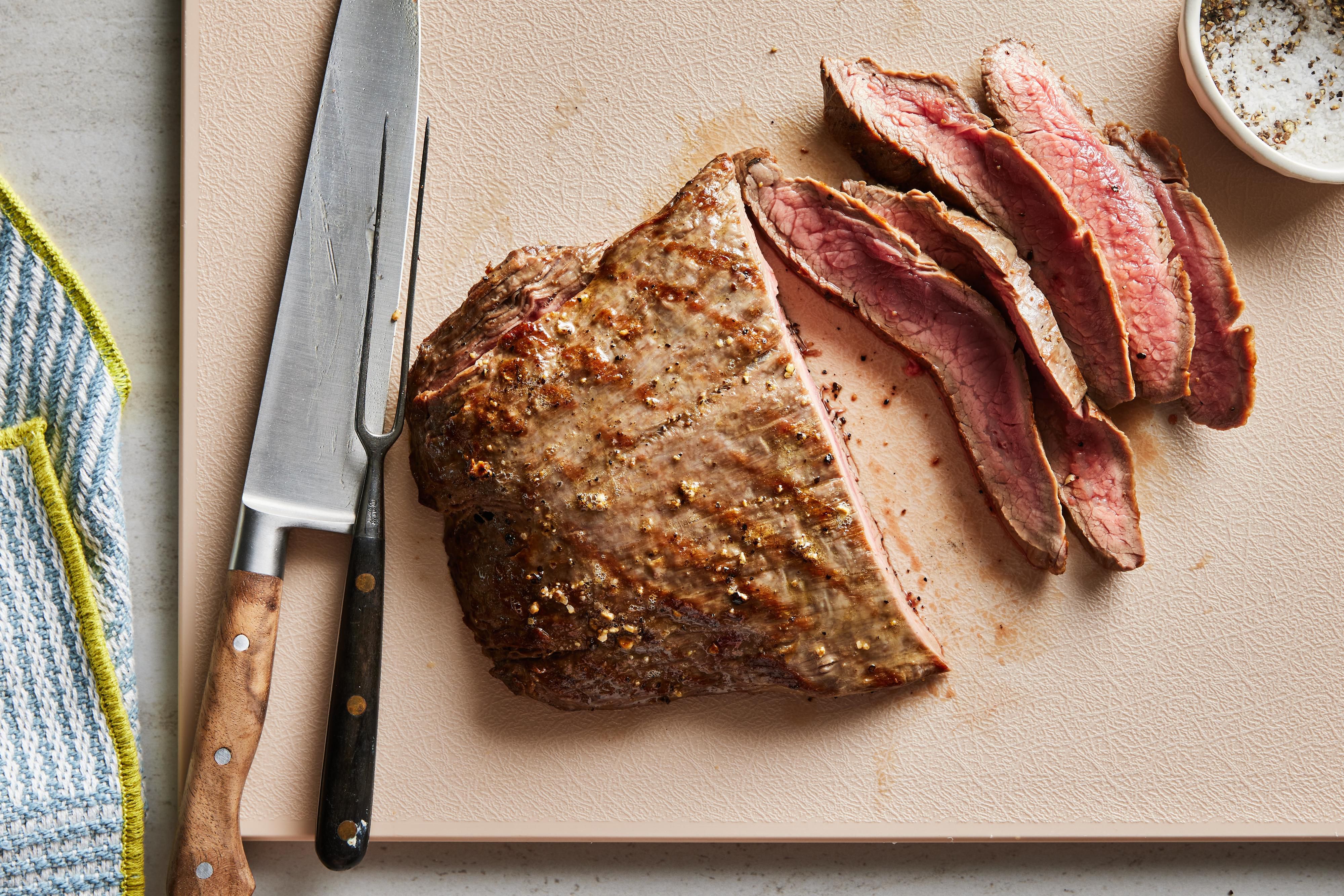
Step 4: Slice Thinly Across the Grain
Cut across the grain into thin slices, about 1/4 inch thick or slightly thinner. Thin slices make flank steak feel more tender because each piece contains less muscle fiber. For tacos, salads, and sandwiches, thin slices are especially important.
Step 5: Cut on a Slight Diagonal
For an attractive restaurant-style presentation, hold your knife at a slight diagonal angle. This creates wider slices and a softer mouthfeel. The angle does not replace cutting against the grainit works with it. Think of it as the difference between wearing a good outfit and adding sunglasses. Not required, but it helps.
How to Cut Raw Flank Steak for Stir-Fry, Fajitas, and Meal Prep
Sometimes you need to slice flank steak before cooking, especially for stir-fries, fajitas, cheesesteak-style sandwiches, noodle bowls, or quick skillet meals. The same rule applies: cut against the grain.
Raw flank steak can be slippery, so place it in the freezer for 20 to 30 minutes before slicing. You do not want it frozen solid; you just want it firm. This makes it easier to cut thin, even strips. Use a sharp knife and slice across the muscle fibers. For stir-fry, aim for thin strips that cook quickly over high heat. For fajitas, slightly wider strips work well because they hold their shape in tortillas.
Should You Cut Flank Steak Before or After Cooking?
It depends on the recipe. If you are grilling or broiling a whole flank steak, cook it whole, rest it, then slice it against the grain. Cooking it whole helps keep the inside juicy. If you are making stir-fry or fajitas, slicing before cooking helps the meat cook quickly and absorb sauce or marinade more efficiently.
For meal prep, you can cook the steak whole and slice it afterward. Store the slices in an airtight container and use them in salads, wraps, grain bowls, or quick dinners throughout the week.
How Thin Should You Slice Flank Steak?
For the most tender texture, slice flank steak thinly. A good target is about 1/4 inch thick. If you are serving it in tacos or sandwiches, you can go slightly thinner. If you are plating it as a main dish, 1/4-inch slices look generous while staying tender.
Thick slices are more likely to feel chewy because the muscle fibers remain longer and more noticeable. That does not mean thick slices are “wrong,” but if tenderness is the goal, thin is your friend.
Common Mistakes That Make Flank Steak Tough
Flank steak is not difficult, but it is honest. It tells on you immediately if you skip the key steps. Here are the most common mistakes.
Mistake 1: Cutting With the Grain
This is the number one reason flank steak turns chewy. Cutting with the grain leaves long fibers intact. Even a beautifully marinated, perfectly cooked steak can feel tough if sliced the wrong way.
Mistake 2: Skipping the Rest
Slicing immediately after cooking causes juices to run out too quickly. Resting gives the meat time to settle, making each slice juicier and more enjoyable.
Mistake 3: Using a Dull Knife
A dull knife tears meat instead of slicing it. If the steak looks ragged or shredded, the knife may be the problem. A sharp blade gives cleaner cuts and better presentation.
Mistake 4: Slicing Too Thick
Flank steak is flavorful but lean. Thick slabs can feel dense and chewy. Thin slices are the way to go, especially for serving a crowd.
Mistake 5: Overcooking
Flank steak is at its best when cooked quickly over high heat and not pushed too far. Many cooks prefer it around medium-rare to medium, while following safe cooking guidance and using a food thermometer. Overcooking dries out this lean cut and makes slicing technique work harder than it should.
Does Marinade Make Flank Steak More Tender?
Marinade can help, but it is not a magic spell. Acidic ingredients such as vinegar, citrus juice, or wine can slightly tenderize the surface of the meat, while salt and flavorful ingredients season it. Soy sauce, garlic, honey, Worcestershire sauce, olive oil, lime juice, herbs, and spices are all classic choices.
However, marinade does not erase the need to slice against the grain. A good marinade adds flavor and helps the surface texture, but the knife work determines how the steak feels in your mouth. In other words, marinade writes the flavor story; slicing delivers the happy ending.
How Long Should You Marinate Flank Steak?
For most recipes, 2 to 12 hours is a practical range. A quick 30- to 60-minute marinade can still add flavor, especially if the steak is sliced thin for stir-fry. Avoid leaving flank steak in a highly acidic marinade for too long, because the surface can become mushy rather than tender. Mushy steak is not the dream.
Best Ways to Cook Flank Steak Before Cutting
Flank steak loves high heat. The goal is to build a flavorful browned exterior while keeping the inside juicy.
Grilling
Grilling is a classic method because flank steak’s flat shape cooks evenly over hot grates. Pat the steak dry, season it well, and grill over medium-high to high heat. Flip once or twice until it reaches your desired doneness, then rest before slicing.
Broiling
Broiling is a great indoor option. Place the steak on a broiler-safe pan and position it close enough to the heat to brown well without burning. Turn it once during cooking, rest it, and slice thinly against the grain.
Pan-Searing
A heavy skillet, especially cast iron, gives flank steak a deep crust. Heat the pan until very hot, add a little high-heat oil, and sear the steak on both sides. Because flank steak is thin, it cooks quickly, so keep a thermometer nearby.
Stir-Frying
For stir-fry, slice the raw steak thinly against the grain, then cook quickly in a hot pan or wok. Do not overcrowd the pan, or the meat will steam instead of sear. Cook in batches if needed.
How to Serve Sliced Flank Steak
Once your flank steak is sliced properly, it becomes one of the most versatile proteins in the kitchen. Serve it over mashed potatoes with chimichurri, tuck it into warm tortillas with onions and peppers, pile it onto a steak salad, or layer it in a crusty sandwich with arugula and horseradish sauce.
For a simple dinner, arrange the slices on a platter and spoon any resting juices over the top. Add flaky salt, black pepper, chopped herbs, or a squeeze of lime. If you want to look extra fancy with minimal effort, fan the slices slightly so people can see the rosy interior. It says, “I know what I’m doing,” even if five minutes ago you were Googling whether the grill was supposed to smoke that much.
Experience Notes: What Actually Works in a Real Kitchen
After cooking flank steak many times for weeknight dinners, backyard cookouts, and last-minute “we have people coming over?” situations, one lesson becomes obvious: the cutting step matters more than almost anything else. You can buy a beautiful steak, use a great marinade, and cook it carefully, but if you slice it with the grain, the texture will disappoint. The flavor may still be good, but every bite will ask your jaw to sign a waiver.
The easiest habit is to check the grain before you season the steak. Lay it flat, find the long lines, and decide where your knife will go later. This takes about ten seconds, but it prevents confusion after cooking when the steak is darker, juicier, and possibly covered in sauce. I like to rotate the steak on the board so the grain runs left to right. That way, slicing against the grain feels natural: straight down from top to bottom.
Another practical experience: do not rush the rest. When dinner smells incredible, waiting feels personally offensive. Still, give the steak at least 5 minutes. For a larger piece, 10 minutes is better. During that time, finish the salad, warm tortillas, stir the sauce, or pretend to clean the kitchen while actually guarding the cutting board from snack thieves.
A sharp knife also changes everything. The first time you slice flank steak with a truly sharp knife, you understand why cooks are so dramatic about blades. The knife glides through instead of crushing the meat. The slices look cleaner, the juices stay where they belong, and the final platter looks intentional rather than “beef confetti.”
For families or parties, cutting the steak into two or three sections before slicing can make serving easier. This is especially helpful when the grain runs lengthwise across a large piece. Cut the cooked steak into shorter sections with the grain first, then turn each section and slice across the grain. The final pieces are easier to pick up with tongs, fit better in tacos, and look neater on plates.
If you are slicing raw flank steak for stir-fry, the freezer trick is worth remembering. Twenty to thirty minutes in the freezer firms the meat just enough to cut clean strips. This is especially useful for recipes with quick cooking times, where evenly sized slices make the difference between tender beef and a pan full of mixed textures.
One more real-world tip: sauce can rescue dryness, but it cannot fully rescue bad slicing. Chimichurri, garlic butter, salsa verde, steak sauce, or pan juices are wonderful, but tenderness starts with the knife. Cut thin, cut across the grain, and serve promptly. That simple routine turns flank steak from “pretty good” into “why don’t we make this every week?”
Conclusion
Learning how to cut flank steak so it is tender every single time is less about chef-level mystery and more about respecting the meat’s structure. Flank steak has long, strong muscle fibers, so your job is to shorten them. Find the grain, let the steak rest, use a sharp knife, slice thinly, and always cut against the grain. Add a good marinade, cook with high heat, and avoid overcooking, and you will have steak that is juicy, flavorful, and easy to chew.
The best part is that this skill works beyond flank steak. Once you understand how muscle fibers affect texture, you can use the same idea with skirt steak, hanger steak, brisket, tri-tip, and other cuts. It is a small kitchen habit with a big payoffand unlike some cooking advice, it does not require buying a gadget that will live in a drawer forever.
So the next time flank steak is on the menu, do not fear the grain. Find it, face it, slice across it, and serve the kind of tender steak that makes people suspiciously quiet at the table. That silence means success. Or everyone is busy chewing happily, which is even better.