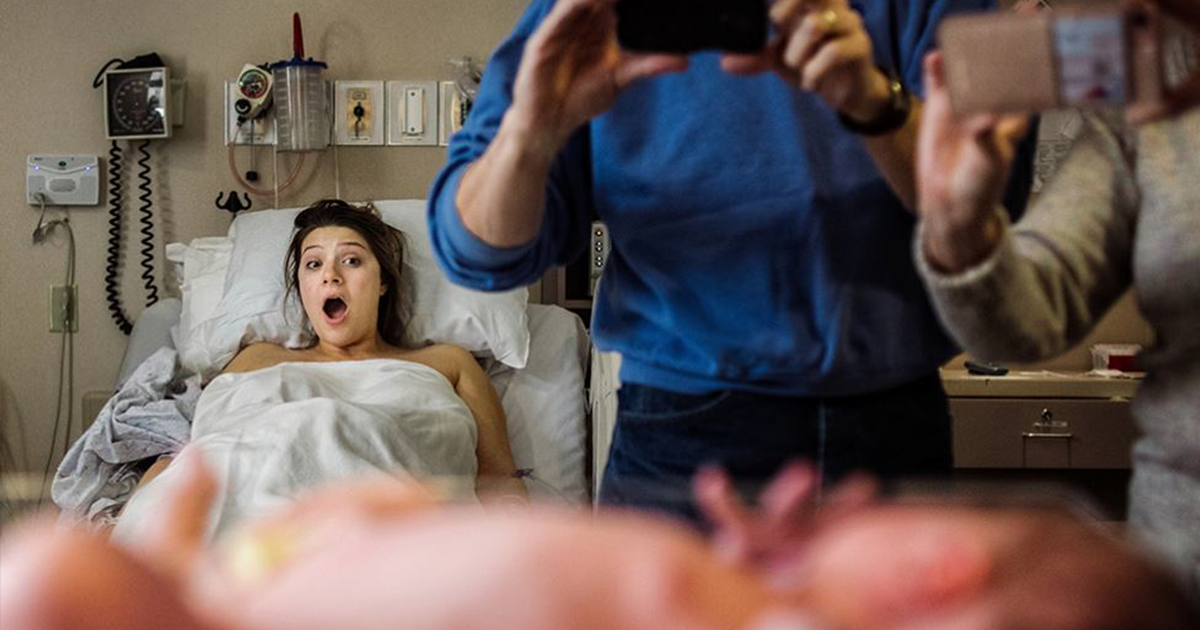
“NSFW” usually makes people think of something spicy. Birth photography flips that expectation on its head.
In the world of childbirth images, “NSFW” is almost always code for real life: clinical nudity, intense emotion,
and moments you don’t typically see on your lunch break. Not because they’re shamefulbecause they’re private,
powerful, and sometimes a little too honest for office Wi-Fi.
And that’s exactly why birth photo competitions matter. They take an experience that’s often sanitized,
joked about, or hidden behind a curtain, and show it as it actually is: physically demanding, emotionally huge,
and (yes) unbelievably brave. If you’ve ever heard someone casually say, “Women have babies every day,”
these images are a polite but firm visual response: “Correctand it’s still a superhuman feat.”
This article doesn’t display or graphically describe the photos themselves. Instead, it breaks down the themes
that made the 2018 birth photography winners and finalists so strikingand why the moms at the center of them
deserve a standing ovation (and probably snacks).
What “The 2018 Birth Photo Competition” Usually Refers To
In 2018, multiple well-known birth photography contests drew wide attention online. One of the most cited is the
International Association of Professional Birth Photographers (IAPBP) “Image of the Year” competition, which celebrates
excellence in birth photography with categories that typically reflect the arc of childbirth: Labor,
Delivery, Postpartum, and Birth Details.
The structure matters because it reminds us: birth isn’t one instantit’s a process, a marathon, and a story.
Media coverage around the 2018 winners often highlighted how judges evaluate these images on both craft and meaning:
technical quality (light, focus, clarity), emotional impact (does it move you?), and composition/storytelling
(does it lead your eye and tell a narrative?). In other words: it’s not just “a picture of a baby.”
It’s the visual evidence of endurance, support, and a life changing in real time.
Why These Images Get Labeled “NSFW” (And Why That Label Is Misleading)
Childbirth photography can include partial nudity, medical settings, and body-focused moments that social platforms
often flag automatically. That doesn’t make the images sexual. It makes them human.
Most “NSFW” birth photos are better described as “Not For Scroll-By Judgment.”
The label can also be a practical warning. Some viewers are squeamish. Others have a personal history with pregnancy
loss, traumatic births, infertility, or postpartum challenges. Giving people a heads-up is a kindness.
The point isn’t shockit’s respect.
The 30 Powerful Moments These Photos Capture
Here are 30 recurring “you can practically feel it through the screen” moments that made 2018’s standout birth images
so unforgettable. Think of this as a guided tour of what the winning photographs tend to showwithout turning
anyone’s private medical moment into a spectacle.
- The first “okay, this is happening” breath. That split-second when a mom shifts from daily life into full focus, like an athlete hearing the starting gun.
- Hands gripping hands. A partner, a doula, a nursesomeone becomes a human anchor when the room spins with intensity.
- Support that looks quiet, but isn’t. A calm face nearby can be doing Olympic-level emotional labor behind the scenes.
- The “I can’t” moment. The point where exhaustion speaks upright before strength answers back.
- Movement as medicine. Walking, swaying, leaningphotos that show how birth is physical problem-solving, not just “waiting.”
- A hospital room turned into a home base. Dim lights, a playlist, a corner with snackstiny choices that restore control.
- Water as a reset button. Tubs and showers where shoulders drop an inch and pain becomes a little more manageable.
- The serious face of concentration. Birth isn’t always tears and yelling; sometimes it’s intense, quiet determination.
- The team huddle. Care providers coordinating with minimal dramabecause competence is its own kind of comfort.
- A partner learning in real time. The expression that says: “I am helpful… I think… please confirm.”
- The strength in stillness. A mom pausing between waves, conserving energy like a marathoner pacing miles 23–26.
- “One contraction at a time” reality. Photos that show endurance isn’t glamorousit’s repeated effort.
- Unexpected humor. A grin, a joke, a look that says “this is wild”because laughter sometimes keeps fear from taking the wheel.
- Powerful vulnerability. The brave act of being seen (by the right people, with consent) during something incredibly hard.
- A nurse’s steady hands. Not the spotlight moment, but the “we’ve got you” presence that changes everything.
- The “here comes the hard part” focus. When the body and mind align for the work that requires everything a person has.
- Proof that birth isn’t one look. Different bodies, different faces, different storieseach one valid.
- Dad/partner tears that surprise them. The emotional whiplash of relief hitting like a wave.
- The sibling meeting (when it happens). Small hands, big curiosityfamily expanding in one breath.
- Respectful documentation of medical care. Images that show interventions as support tools, not “failure.”
- The exact second everything changes. The room’s energy flipsbefore anyone even finds the right words.
- Relief that looks like collapse. Not weaknessrelease. Like finally unclenching a fist you didn’t realize was tight for hours.
- Skin-to-skin calm. A newborn settling in, and a mom’s face softening as the world narrows to one safe point.
- The “we did it” glance. A look exchanged across a room that contains exhaustion, love, disbelief, and pride.
- Postpartum reality. The honest, unfiltered “after”because birth doesn’t end at delivery; it continues into recovery.
- Care in the small details. A blanket adjusted, water offered, a hand on a shouldertiny acts that say, “You matter.”
- First feeding moments. Not polished, not scriptedjust learning and trying, with patience and support.
- A mom looking at her baby like a miracle and a responsibility. Awe paired with instant protectiveness.
- Partners doing the practical stuff. Refill water, hold a leg, translate emotions into decisionslove with a checklist.
- The quiet room after the storm. A scene that feels sacred: less talking, more breathing, more “this is our life now.”
What These Photos Teach Us About Childbirth (Beyond “Wow”)
1) Birth is a process, not a single snapshot
Many competitions organize images around the timeline of birth for a reason. Labor builds. Delivery peaks. Postpartum begins immediately,
and recovery is a whole chapter of its own. That framing echoes how clinicians describe childbirth in stagesearly work, active work,
the birth itself, and then the body’s transition into recovery. Seeing the full arc helps people understand why “she just had a baby”
is an understatement the size of a moving truck.
2) Support changes outcomesand experience
A consistent theme across standout birth photography is teamwork: partners, doulas, nurses, midwives, and OB-GYNs all playing roles that can
reduce fear and increase confidence. Even when birth goes “off-script,” support can turn panic into problem-solving.
The best photos don’t romanticize pain; they highlight resilience and care.
3) Postpartum is not an afterthought
The “after” is part of the story: physical healing, emotional swings, sleep deprivation, feeding challenges, and the mental load of caring
for a newborn. Modern postpartum guidance increasingly emphasizes ongoing care rather than a single six-week check-in.
From a public health perspective, it’s also crucial to take postpartum warning signs seriously and to speak up when something feels wrong.
Birth photos that include postpartum moments help normalize recovery and remind families: you still deserve care after the baby arrives.
Ethics and Privacy: The Unseen Backbone of Birth Photography
If you take nothing else from this topic, take this: birth photography should be grounded in consent and confidentiality.
Professional organizations emphasize respecting the birth space, following hospital and birth center rules, and getting permission before
sharing imagesespecially on social media. That’s not just a professional courtesy; it’s basic human decency.
Privacy rules can get complicated in medical settings. In the U.S., HIPAA applies to covered entities (like health care providers and hospitals)
and their handling of protected health information. It doesn’t automatically mean families can record anything, anywhere, with no limitsbecause
facilities can still set policies to protect patients, staff, and the environment. The practical takeaway is simple:
always ask, always clarify, and always get consentfrom the birthing person first, and from the facility when required.
There’s also an important “internet reality check”: once an identifiable image is shared publicly, it can travel far beyond the original intent.
Ethical sharing means thinking about future privacyespecially for the childand being cautious with anything identifiable.
The goal is empowerment, not exposure.
If You’re Considering Hiring a Birth Photographer
- Start with the vibe: You want someone calm, respectful, and comfortable in a medical environmentnot someone chasing a “viral shot.”
- Talk boundaries early: Ask what they do (and do not) photograph, how they handle sensitive moments, and how you can pause or stop shooting anytime.
- Ask about privacy and sharing: Will they post images online? Only with written permission? Can you choose “no public sharing” by default?
- Confirm facility rules: Hospitals and birth centers may have their own policies for recording and photography. Your photographer should be ready to comply.
- Make a “comfort list”: Some families want only labor and first cuddles. Others want the full story. There’s no “right” choiceonly your choice.
Experiences: What People Say These Photos Mean (About )
People often describe seeing award-winning birth photos as a strange mix of emotions: awe, tenderness, and a deep “waitthat’s what birth looks like?”
For first-time parents, the experience can be grounding. You can read ten articles about contractions and still feel unprepared.
But a single photographsomeone leaning into a partner’s shoulder, eyes closed, body workingcan make the process feel real in a way that’s not scary,
just honest. It’s like switching from a movie trailer to the full film: you finally understand why the “strongest thing you’ll ever do” line exists.
Many moms say the most meaningful images aren’t the dramatic ones. They’re the ones that capture effort.
A strand of hair stuck to a forehead. A hand braced against a wall. A look that says, “I’m still here.”
Some describe looking back at those photos weeks later and realizing, “I didn’t know I looked that strong.”
That matters, especially postpartum, when exhaustion can mess with your memory and confidence.
A well-timed photograph can become evidence against the inner voice that whispers, “You didn’t do enough.”
Partners often report their own surprise. In the moment, they may feel helplesslike the world’s least useful assistant,
holding a water cup and wondering if breathing encouragement counts as a skill. But photos can show them what they couldn’t see:
their presence mattered. The way they stayed close, followed cues, asked questions, advocated, or simply didn’t leave.
Later, those images can turn “I didn’t do much” into “I showed up,” which is sometimes the biggest job.
For photographers, the experience is frequently described as emotionally intense, even when they’re trained and professional.
They’re witnessing a private, high-stakes moment, and they have to balance artistry with respect and restraint.
The best birth photographers talk about learning to read a room quickly: when to step back, when to lower the camera,
and when a family needs presence more than documentation. In that sense, birth photography is less like event photography
and more like quiet storytelling with strict boundaries.
And for people who’ve had hard experiencesloss, trauma, infertilitythese photos can land differently. Some find them healing and validating.
Others need distance. That’s okay. Birth photography at its best doesn’t demand a reaction. It offers a truth:
motherhood and birth are not “pretty” or “ugly.” They’re real. They’re varied. And they deserve to be treated with care.
Final Thoughts: “Badass” Is an Understatement
The 2018 birth photo competition spotlight didn’t create strengthit revealed it. These images remind us that moms don’t become powerful
because they look calm or composed. They’re powerful because they keep going: through uncertainty, intensity, and exhaustion,
supported by a team and driven by love. If the photos are “NSFW,” maybe it’s because real life deserves more respect
than a quick scroll can give.