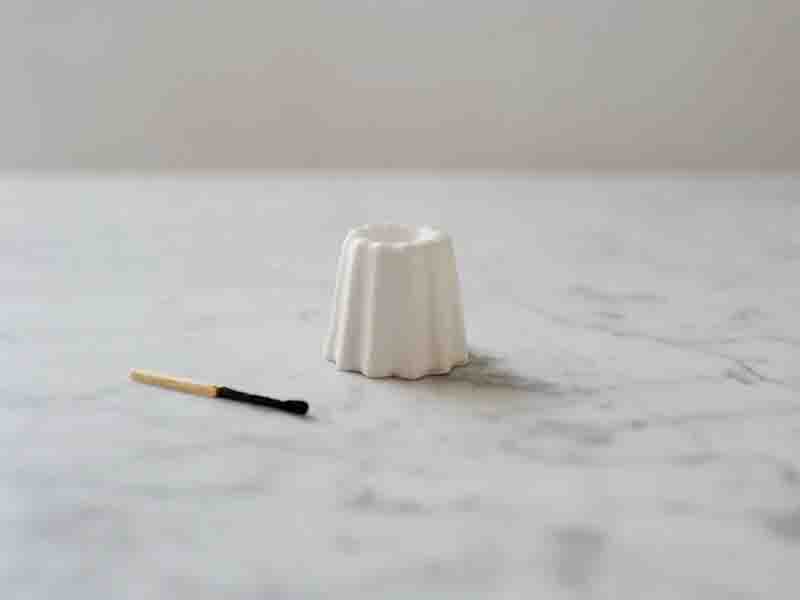
Some home accessories announce themselves with the subtlety of a marching band. Porcelain canele candle holders take the opposite approach. Small, sculptural, and inspired by the fluted shape of the French canelé pastry, they quietly sit on a table until someone notices them and asks, “Is that a tiny cake holding a candle?” At that point, the evening is officially going well.
These miniature porcelain candle holders combine culinary whimsy with refined craftsmanship. Their ridged silhouettes reference the famous Bordeaux pastry, while their white or softly colored glazes give them the clean appearance associated with contemporary ceramic decor. Most are designed for slim candles rather than standard dinner tapers, making them especially useful for intimate tablescapes, birthday celebrations, mantels, shelves, and decorative displays.
Although the design appears simple, the best porcelain canele candle holders offer a carefully balanced mix of function, proportion, texture, and personality. They are playful without looking childish and elegant without behaving as though they require their own security detail.
What Is a Porcelain Canele Candle Holder?
A porcelain canele candle holder is a compact candlestick shaped like a canelé, a small French pastry traditionally associated with Bordeaux. The pastry is recognized by its vertical flutes, rounded crown, and central indentation. Designers translate those distinctive features into a decorative porcelain object with a narrow opening that supports a slim candle.
Many contemporary versions measure only a few centimeters tall. Some models have a base diameter of roughly 1.3 inches and an opening near 0.2 inches, although exact dimensions vary by maker. Because the opening is much narrower than that of a conventional taper holder, buyers should check candle diameter rather than assuming every candle in the kitchen drawer will fit. Several handmade designs are intended for candles approximately 0.5 centimeters in diameter.
Finishes commonly include glossy white, matte white, blue-gray, pale pink, and softly mottled green. White remains especially popular because it emphasizes the fluted form and allows the candle color to become the visual accent. A glossy glaze reflects candlelight, while a matte finish creates a quieter, chalkier appearance that works well in minimalist interiors.
Why the Canele Shape Works So Well
It Turns a Familiar Pastry Into a Tiny Sculpture
The canelé is unusually well suited to object design. Its repeating ridges create texture without requiring painted decoration, and its compact shape feels recognizable even when rendered in a completely different material. The original pastry has a dark caramelized exterior and a soft custard-like center, but a porcelain interpretation strips the design down to pure form: flutes, curves, and a neat central opening.
The result is a candle holder that looks architectural from across the room and amusing up close. It has enough detail to catch the light but not so much that it competes with plates, flowers, linens, or other tabletop pieces.
It Looks Decorative Even Without a Candle
A successful candle holder should not become visually unemployed the moment the flame goes out. The fluted porcelain body gives canele holders the character of miniature ceramic sculptures, so they can remain on display between dinners and celebrations.
Interior designers often treat candlesticks as sculptural tabletop elements, not merely as equipment for holding wax. Their shapes can contribute height, rhythm, and visual interest even when no candles are burning.
It Balances Humor and Sophistication
Food-shaped decor can become cartoonish very quickly. One minute you have a charming lemon-shaped bowl; the next, your kitchen looks like a theme park gift shop. Porcelain canele candle holders avoid that problem because their inspiration is subtle. Someone unfamiliar with the pastry may simply see an elegant fluted form, while a baking enthusiast will recognize the reference immediately.
How Porcelain Canele Candle Holders Are Made
Handmade examples may begin with liquid porcelain poured into individual molds. After the clay body has formed, the pieces are removed, dried, refined, and fired. Glazing and additional firing steps produce the final surface. Depending on the workshop, pieces may also be trimmed, washed, polished, or inspected between stages.
Porcelain is valued for its fine surface, hardness, and ability to create crisp details. Traditional porcelain bodies use white-firing clay materials, including kaolin, and are fired at high temperatures. This process can produce a dense, fine ceramic body with a clean appearance that is especially effective for small decorative objects.
The ridges of a canele holder reveal whether the molding and finishing were handled carefully. Well-made pieces tend to have clearly defined flutes, a stable base, and an evenly positioned candle opening. A glossy glaze may pool slightly in the recesses, adding depth, while a matte finish tends to emphasize the object’s silhouette.
Because many versions are made individually or in small batches, slight variations in color, height, shape, and glaze are normal. One holder may lean toward creamy white while another appears cooler. A ridge may be a fraction softer or a glaze mark slightly different. These distinctions are generally signs of handmade production rather than defects.
Glossy Versus Matte Porcelain
Glossy Glaze
Glossy porcelain reflects nearby light and makes the fluted pattern appear more pronounced. When a candle is lit, tiny highlights move across the ridges, giving the holder a jewel-like quality. Glossy white is a strong choice for formal dinners, polished marble surfaces, lacquered furniture, or rooms with glass and metallic accents.
The tradeoff is that shiny surfaces may show fingerprints, soot, or colored wax residue more readily. Fortunately, their smooth finish is usually straightforward to wipe clean once the holder has cooled.
Matte Glaze
Matte porcelain has a softer, more contemporary look. It pairs naturally with linen, unfinished wood, plaster walls, stoneware plates, and muted Scandinavian-inspired interiors. The lack of shine allows the shape to do the talking, although it speaks in a calm indoor voice.
Matte finishes may require gentler cleaning because aggressive scrubbing can alter the surface or leave shiny patches. Dark wax can also be more noticeable on pale matte porcelain, so careful candle placement is worthwhile.
Choosing the Right Candles
Candle diameter is the most important consideration. These holders are frequently designed for slim celebration candles, narrow beeswax candles, or specialty tapers. A standard dinner candle may be far too wide.
The candle should fit securely without being forced. Pressing an oversized candle into a narrow porcelain opening can stress the ceramic, damage the glaze, or leave the candle sitting at an unsafe angle. A candle that is too narrow may wobble or tip as it burns.
When the fit is slightly loose, a small amount of softened wax can sometimes be used to stabilize the base. However, the finished candle must stand upright and remain secure before it is lit. The holder should also sit flat on a stable, heat-resistant surface away from curtains, paper decorations, dried flowers, pets, children, and enthusiastic dinner guests who communicate primarily with their hands.
For dining tables, unscented candles are usually the best choice. Their light adds atmosphere without competing with the aromas of food and wine. Slim ivory or natural beeswax candles produce a classic look, while colored candles can turn the small white holders into lively accents.
Decorating With Porcelain Canele Candle Holders
Create a Low Dining-Table Arrangement
Large floral arrangements are beautiful until everyone at the table has to lean sideways to make eye contact. Because canele holders are low and compact, they add candlelight without blocking conversation.
Place three, five, or seven holders along the center of a table, leaving enough space between them for safe burning. An odd-numbered cluster often feels more relaxed and visually balanced than a perfectly symmetrical row. Mixing candle heights can add movement, but keep the tallest flames away from overhanging greenery or decorations. Designers frequently combine ceramic, metal, and glass candle vessels to create layered table arrangements.
Use One at Each Place Setting
A single porcelain candle holder beside each plate can act as both decoration and a small guest favor. This approach works particularly well for birthdays, showers, intimate weddings, or holiday dinners.
For a polished result, use candles in one consistent color and vary the place cards or napkins instead. For a more playful table, assign each guest a different candle color. Just make sure nobody mistakes the holder for a very ambitious after-dinner mint.
Style a Mantel or Shelf
On a mantel, bookshelf, or console table, combine canele holders with objects of different heights. A framed print, a small vase, a stack of books, and two or three porcelain holders can create a balanced vignette.
Leaving some holders empty prevents the display from looking over-arranged. Their fluted shapes remain visually interesting without candles, particularly when placed where natural light can reveal the ridges.
Decorate a Birthday Cake Carefully
Some miniature canele candle holders are marketed as reusable alternatives to inserting candles directly into a cake. They can create an impressive presentation, especially when arranged around a simple frosted cake.
Only use a holder this way when the manufacturer specifically presents it as suitable for cake decoration. Keep the base clean, confirm that the piece is stable, and protect the food from wax drips. Remove the holder before slicing. Porcelain may be lovely, but it remains a disappointing cake ingredient.
Color and Styling Combinations
White porcelain is unusually adaptable. For a warm neutral table, combine glossy or matte holders with oatmeal linen, cream candles, clear glassware, and natural wood. Add a few pears, figs, or seasonal branches for color.
For a modern look, pair white canele holders with black candles, dark stoneware, and stainless-steel flatware. The contrast makes the tiny silhouettes feel more graphic.
Pastel candles work well for spring events, baby showers, and birthdays. Pale blue, butter yellow, lavender, and blush pink bring out the confectionery inspiration without turning the arrangement into a candy store explosion.
During the holidays, deep red, forest green, or ivory candles can transform the same holders. Because the porcelain base remains neutral, there is no need to buy separate candle accessories for every season. Your storage closet may now release a small sigh of relief.
How to Clean and Care for Porcelain Candle Holders
Always allow the holder and remaining wax to cool completely before cleaning. Sudden temperature changes can stress ceramic materials, and hot wax is not known for improving anyone’s afternoon.
Once the wax has hardened, gently lift it away with a fingernail, wooden tool, or plastic scraper. Avoid knives, metal blades, and abrasive pads, which can scratch the glaze or chip the candle opening. For light residue, use warm water, mild dish soap, and a soft cloth.
Do not pour melted wax down a drain. Let it cool and discard it with household waste. If the maker permits it, briefly chilling the holder may help hardened wax contract and release, but avoid extreme temperature changes and never move porcelain directly from a freezer into hot water.
Store individual holders with padding between them. Their small size makes them easy to drop, and the narrow candle opening can chip if it knocks against another ceramic object.
Candle Safety Matters
Porcelain is heat resistant, but that does not make every porcelain object suitable for every candle. Use only the candle size recommended by the maker, and inspect the holder for cracks or damage before lighting.
Place the holder on a level, heat-safe surface. Keep the flame away from drafts and combustible materials, and never leave a burning candle unattended. U.S. consumer-safety standards for candle accessories address issues such as stability and flammability because candle holders can create hazards when they tip, overheat, or are paired with unsuitable candles.
Extinguish the candle before it burns close to the holder. Do not allow a tall flame to reach decorative materials, and never carry a holder while the candle is lit or while wax remains liquid.
What to Look for Before Buying
Begin with dimensions. Confirm the overall height, base width, and candle-hole diameter. Then check whether candles are included or sold separately. Product photographs can make a miniature holder appear much larger than it is, especially when photographed alone against a blank background.
Look for a flat, stable base and a centered candle opening. Read the maker’s care and safety directions, particularly if you plan to use the holder on cakes or with long candles.
Handmade variation should be expected, but visible cracks, sharp chips, or an unstable base are not charming quirks. They are reasons to request a replacement.
Finally, think in groups. One porcelain canele candle holder is delightful. Three create a composition. Seven suggest you are either an accomplished tablescape enthusiast or preparing to host a very small, very elegant wizard council.
A Practical Experience With Porcelain Canele Candle Holders
The First Impression
The first surprise is usually scale. Online photographs often make these candle holders look like standard candlesticks, but many are closer to the size of the pastry that inspired them. In the hand, they feel more like small ceramic objects than traditional table hardware.
That compactness is part of their appeal. They do not dominate a shelf or require a large dining table. A group can fit on a narrow tray, windowsill, bedside table, or small apartment mantel. Their weight and density also make them feel more substantial than disposable birthday-candle holders.
The second thing people notice is the craftsmanship. Under bright light, tiny differences between handmade pieces become visible. One glossy ridge may catch more glaze, while another holder may have a slightly warmer white tone. Arranged together, those variations prevent the display from feeling mass-produced.
Finding the Correct Candle
The most common practical challenge is candle fit. Standard tapers are usually too thick, while inexpensive birthday candles can be too short or loose. Specialty slim candles provide the best proportions because they extend the vertical line of the holder without overwhelming its small base.
Testing the fit before an event is essential. A candle that seemed acceptable in the package may tilt once installed. The safest setup is snug, vertical, and stable without requiring pressure. It is better to purchase candles made for the holder than to carve down a larger taper and hope it develops good posture.
Styling the Table
On a dining table, three holders can be more effective than a large centerpiece. Space them loosely between serving dishes, then repeat one candle color throughout the arrangement. Because the porcelain bases remain low, guests can still see one another, pass food, and argue politely about whether the playlist needs more jazz.
Glossy holders work especially well after sunset, when their ridges reflect tiny points of flame. Matte versions look strongest during daytime gatherings, where their soft surfaces complement linen and natural ceramics.
A useful lesson is to avoid crowding them with too many other miniature decorations. Small objects multiply visually. Tiny flowers, place-card holders, salt dishes, figurines, and canele candles can quickly make a table resemble a beautifully organized yard sale. Let the candle holders have some breathing room.
Living With Them After the Party
Unlike event decorations that return immediately to a box, canele holders transition easily into everyday decor. A pair can sit beside a vase on a bookshelf. One can hold a short candle on a breakfast tray. Several can be displayed empty as a small ceramic collection.
Wax cleanup is manageable when addressed promptly. Letting the wax harden usually makes removal easier than wiping it while soft. A gentle plastic edge can release drips without scratching the glaze, followed by mild soap and water.
The biggest long-term risk is not candle heat but ordinary handling. Their small size makes them easy to knock from a counter or sweep into a drawer with napkin rings. Keeping them together in a padded box or shallow tray helps prevent chips.
Are They Worth It?
For someone seeking maximum illumination, these tiny holders are not replacements for lamps, lanterns, or full-size candlesticks. Their value is emotional and decorative. They turn a narrow candle into a conversation piece and bring a sense of occasion to an ordinary meal.
They are particularly worthwhile for people who appreciate handmade ceramics, French pastry references, minimalist table decor, or reusable birthday accessories. They also make memorable gifts because they are small, unusual, and easy to combine with a box of slim candles.
The experience is ultimately about proportion. A miniature porcelain object creates a surprisingly large amount of charm. It can make takeout feel intentional, make a birthday cake look professionally styled, or make a quiet dinner for two seem as though someone remembered to make an effort. Sometimes good design is not about adding more. Sometimes it is about giving a tiny ceramic pastry a very important job.
Conclusion
Porcelain canele candle holders combine craftsmanship, humor, and practical tabletop design in one compact object. Their fluted pastry-inspired forms bring texture to modern interiors, while neutral glazes allow them to work with nearly any color scheme.
Choose the finish that suits your space, verify the candle diameter, and treat handmade differences as part of the design. With proper care and safe candle use, these miniature holders can move from birthday cakes to dinner tables, shelves, and seasonal displays for years.
They may be small, but they perform several impressive tricks at once: holding a flame, decorating a room, starting conversations, and making everyone crave a French pastry.
Note: Candle openings and safety recommendations vary among manufacturers. Always follow the instructions supplied with the specific holder, use correctly sized candles, and never leave an open flame unattended.