Modern life is weird. We carry tiny glass rectangles that know our location, our shopping habits, our sleep schedule, and somehow still cannot stop us from ordering fries at midnight. We live in a world where people say “self-care” while answering work emails from bed, where social media promises connection but occasionally delivers a full-course meal of anxiety, comparison, and someone’s suspiciously perfect vacation photos. That is exactly why dark comics about today’s society hit so hard.
The best hilariously dark comics do not simply make readers laugh. They make readers laugh, pause, stare at the wall for three seconds, and whisper, “That is unfortunately accurate.” These comics use simple drawings, sharp punchlines, absurd scenarios, and uncomfortable truths to reflect the strange comedy of being alive in the 21st century. They poke fun at technology addiction, consumer culture, workplace burnout, loneliness, climate anxiety, online outrage, fake productivity, and the small daily tragedies we pretend are normal.
This article explores why these comics are so popular, what makes them effective, and how a collection like “50 Hilariously Dark Comics About Today’s Society” can become more than a scrollable gallery. It can become a mirror. A cracked mirror, yes. Possibly haunted. But still a mirror.
Why Dark Comics About Society Are So Addictive
Dark humor has always had a strange job: it laughs at things that are not exactly funny. That sounds wrong until you remember that humans have been using jokes to survive awkward family dinners, bad bosses, expensive dental bills, and existential dread since forever. In comic form, dark humor becomes even more powerful because the joke is visual. A tiny facial expression, a blank stare, or a cheerful character walking into disaster can say more than a 900-word rant.
Today’s society gives cartoonists plenty of material. We are overstimulated, overconnected, overworked, and somehow still asked to “circle back” on emails. The modern world is full of contradictions: we want privacy but post everything, crave authenticity but filter our faces, talk about wellness while glorifying hustle, and worry about the planet while buying things shipped in boxes inside bigger boxes.
Dark comics succeed because they compress those contradictions into quick, memorable moments. A four-panel comic about a person choosing between sleep and scrolling can capture an entire cultural problem in ten seconds. A one-panel cartoon about robots replacing humans at work can make a reader laugh and quietly update their résumé. The darkness is not just for shock value. It is a shortcut to honesty.
What Makes a Hilariously Dark Comic Work?
Not every grim joke is clever. A great dark comic needs balance. Too soft, and it becomes a basic observation. Too harsh, and it loses the reader. The best artists walk the line with timing, restraint, and empathy. They know that the punchline should reveal something true, not simply kick the reader in the emotional shins.
1. A Familiar Setup
Most successful dark comics begin with something ordinary: a job interview, a phone notification, a doctor’s appointment, a date, a family dinner, or a quiet moment before bed. The reader recognizes the scene immediately. That familiarity builds trust. Then the comic gently pushes the situation off a cliff.
2. A Sharp Twist
The twist is where dark comics earn their reputation. A character may discover that the monster under the bed is less scary than student debt. A robot may become depressed after reading human social media posts. A motivational poster may accidentally admit that “following your dreams” is easier when rent is paid by someone else. The joke works because the twist is exaggerated, but the truth underneath it is painfully recognizable.
3. Emotional Accuracy
Good dark comics are emotionally accurate even when they are ridiculous. A comic about a phone battery lasting longer than a person’s patience is not literally serious, but the feeling is real. A joke about people treating algorithms like gods works because many readers understand the strange power recommendation feeds have over attention, mood, and identity.
4. Simple Art With Big Meaning
Many popular webcomics use minimal drawings: round heads, stick limbs, blank eyes, or soft cartoon shapes. That simplicity helps the joke travel quickly. The less visual clutter there is, the faster the punchline lands. A small character staring into the void can be funnier than a detailed oil painting of despair wearing business casual.
50 Themes These Dark Comics Often Explore
A collection titled “50 Hilariously Dark Comics About Today’s Society” usually works best when the humor covers a wide range of modern frustrations. The comics may differ in style, but their targets often come from the same cultural pressure cooker.
Technology and the Tiny Rectangle Overlord
Some of the funniest dark comics focus on technology addiction. Phones become needy pets. Notifications behave like emotional burglars. Social platforms turn attention into currency, then act surprised when everyone feels broke. A comic might show a person ignoring a real sunset to edit a photo of the sunset. Another might portray an algorithm as a cheerful waiter serving endless plates of outrage, insecurity, and “you may also like” recommendations.
The joke is not that technology is evil. The joke is that technology is useful, addictive, convenient, exhausting, and somehow always asking for an update at the worst possible time.
Workplace Burnout and Corporate Poetry
Office culture is another gold mine. Dark comics love phrases like “we’re a family,” “fast-paced environment,” and “competitive salary,” especially when the comic reveals that these words may mean unpaid stress with free coffee. A good workplace comic can turn a meeting into a horror movie. The villain is not a ghost. It is a calendar invite titled “quick sync.”
These comics often mock fake productivity. A character may spend eight hours making a spreadsheet that proves another spreadsheet should exist. A manager may reward loyalty with more work. A worker may ask for work-life balance and receive a branded water bottle instead. It is dark because it is absurd. It is funny because it is not absurd enough.
Consumer Culture and the Myth of Buying Happiness
Modern advertising tells people that the right product can fix insecurity, loneliness, boredom, and possibly their entire personality. Dark comics expose that promise with surgical sarcasm. A character may buy a luxury planner to organize a chaotic life, then use it once to write “panic.” Another may purchase minimalist decor until their home looks peaceful and their bank account looks haunted.
Consumer satire works because readers recognize the cycle: want, buy, feel better briefly, repeat. Dark comics make that cycle visible. They turn shopping carts into emotional support vehicles and subscription services into tiny vampires nibbling at the monthly budget.
Social Media Performance
Few topics fit dark comedy better than social media. Everyone is expected to be authentic, but not too messy; successful, but relatable; informed, but not boring; beautiful, but naturally beautiful; busy, but calm; ambitious, but healed. No wonder comics about online life feel so accurate.
A comic may show someone taking a “candid” photo after twenty-seven attempts. Another may show a person posting “protect your peace” before fighting strangers in the comments. These jokes work because they reveal the gap between the public version of life and the private version, where laundry is everywhere and the phone is at 3%.
Environmental Anxiety
Dark comics often address climate worries with bleak wit. A smiling planet may ask humanity if it kept the receipt. A future museum may display a tree as a mythical creature. A person may switch to paper straws while a giant factory in the background coughs smoke like a dragon with a business degree.
The humor here is not meant to trivialize the issue. It gives readers a way to process fear without turning every paragraph into a panic alarm. Satire can highlight hypocrisy, inaction, and greenwashing while still making the reader laugh.
Artificial Intelligence and Human Replacement Anxiety
AI has become a perfect dark-comic subject because it mixes wonder, fear, laziness, and job-market nervousness into one shiny machine. A comic might show a robot learning human emotions and immediately requesting a day off. Another might show a person asking AI for life advice, only for the machine to say, “Have you tried being less online?”
These comics are funny because people are both fascinated and unsettled. Technology promises efficiency, but humans worry that efficiency may include deleting the human part. Dark comics turn that tension into a punchline with a charging cable.
Dating, Loneliness, and the Marketplace of Feelings
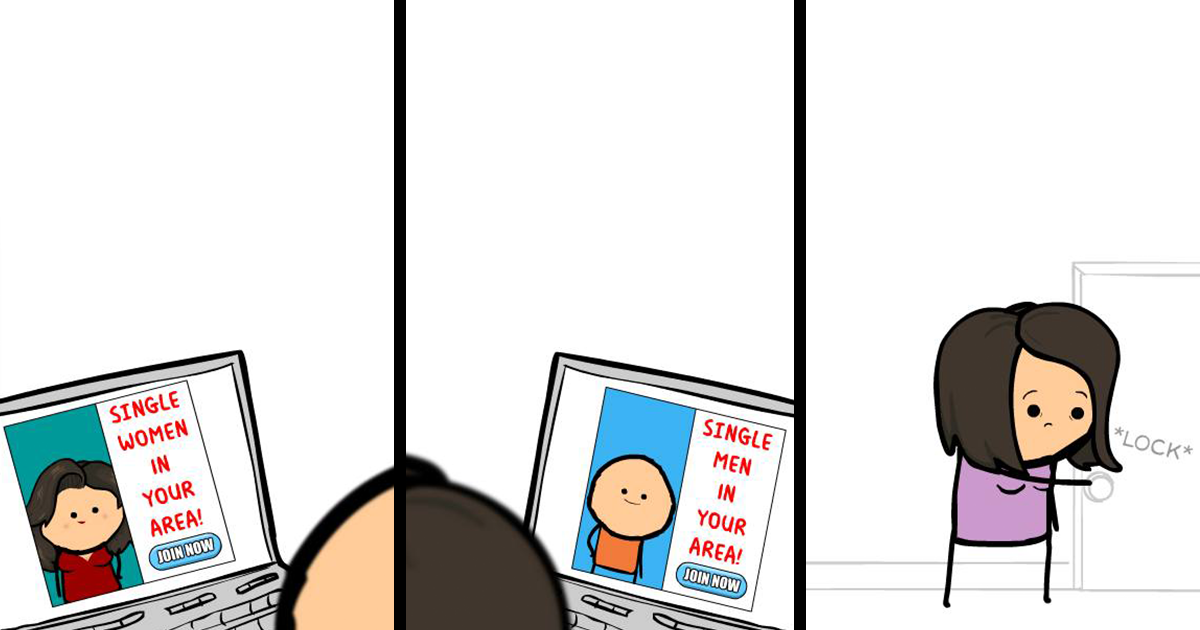
Dating apps have changed romance into a strange combination of job application, menu browsing, and emotional dodgeball. Dark comics often show love reduced to swipes, bios, ghosting, and awkward small talk. A skeleton waiting for a reply may be a little dramatic, but many readers understand the feeling.
At their best, these comics are not mean. They are tenderly cynical. They recognize that people want connection but are often trapped behind screens, expectations, fear, and the terrifying phrase “tell me about yourself.”
Why Readers Share These Comics So Quickly
Dark comics travel fast online because they are compact emotional packages. People share them when they do not want to write a long confession. Instead of saying, “I am tired of pretending modern life is manageable,” they send a comic of a tiny person being crushed by a calendar. The message is clear. Also, it is cute, which helps.
Shareable comics usually have three qualities: instant recognition, emotional release, and a punchline that feels slightly forbidden. Readers like feeling seen. They also like feeling clever for understanding the joke. When a comic captures something true about society, sharing it becomes a form of social bonding. It says, “This is us, unfortunately.”
The Difference Between Dark Humor and Cruel Humor
A strong article about dark comics should make one thing clear: dark humor is not a license to be careless. The best dark comics punch at systems, habits, contradictions, and shared anxieties. They do not need to mock vulnerable people to be funny. Cruel humor often leaves readers feeling smaller. Smart dark humor leaves readers feeling understood, even when the joke is sharp.
That distinction matters. A comic about burnout can be funny without dismissing real exhaustion. A comic about loneliness can be honest without turning pain into a spectacle. A comic about social media can criticize online behavior without bullying individuals. The darkness should illuminate the truth, not simply switch off the lights and shove someone into the furniture.
How Artists Turn Society Into Punchlines
Cartoonists are professional observers. They notice the small behaviors people stop seeing because they happen every day. They notice how people apologize to automatic doors, how they treat unread emails like moral failures, how they say “I’m fine” with the facial expression of a haunted printer. Then they exaggerate those details until the truth becomes visible.
Many webcomic artists use recurring characters or simple figures because the focus is not on biography. The character is “you,” “me,” “everyone,” and “that one coworker who says ‘happy Monday’ too loudly.” By keeping the character broad, the comic invites more readers to step into the joke.
Examples of Social Issues That Fit the Format
A collection of 50 hilariously dark comics about today’s society might include cartoons about people talking to smart speakers more politely than they talk to family members. It might show a student graduating into a world where entry-level jobs require five years of experience and the soul of a minor wizard. It might show a person trying meditation while their brain opens forty-two browser tabs. It might show a billionaire colonizing space because Earth’s comment section got too negative.
Other strong examples include comics about food delivery apps making people feel both powerful and financially irresponsible, fitness culture turning rest into guilt, news cycles moving so fast that yesterday’s crisis feels vintage, and online arguments where nobody changes their mind but everyone loses an afternoon.
These examples are not just jokes. They are social criticism wearing a silly hat. That is the magic of the format.
Why Dark Comics Feel Especially Relevant Now
Dark comics feel timely because modern society is full of pressure disguised as convenience. People can work from anywhere, which sometimes means they work everywhere. They can contact anyone instantly, which means everyone can contact them instantly. They can access endless entertainment, yet still feel bored. They can learn about every global crisis before breakfast. That is a lot for one nervous mammal with a Wi-Fi password.
Comics offer relief because they shrink overwhelming problems into something visible and laughable. A giant cultural issue becomes a four-panel joke. A private anxiety becomes a cartoon character with tired eyes. The world may still be chaotic, but for a moment, the reader gets to point at the chaos and laugh first.
What Readers Can Learn From These Comics
The biggest lesson is that laughter does not always mean denial. Sometimes it means recognition. A dark comic about society can help readers notice the strange rules they have accepted: always be available, always be improving, always be informed, always be presentable, always be grateful, always be online, and please do it all with clear skin and a reusable water bottle.
By laughing at these rules, readers create a little distance from them. That distance can be healthy. It allows people to ask whether the systems they live inside are reasonable or merely familiar. A comic cannot fix burnout, loneliness, climate anxiety, or digital overload, but it can make those issues easier to name. Naming things is the first step toward refusing to let them run the whole show.
Experiences Related to “50 Hilariously Dark Comics About Today’s Society”
Reading a collection like this feels a bit like walking through a museum curated by your most sarcastic friend. At first, you expect quick laughs. Then, three comics in, you realize the artist has been quietly reading your mind, your browser history, and possibly your group chat. The best experience is not just amusement. It is recognition with a tiny sting.
One common experience readers have is the “I should not be laughing, but I am” moment. That reaction is central to dark humor. A comic about a person trying to relax while their phone screams with notifications is funny because it exaggerates reality, but it also reminds readers of their own habits. The laugh arrives first. The self-awareness arrives right behind it, wearing uncomfortable shoes.
Another experience is emotional relief. Many people move through modern life carrying invisible pressure. They feel behind, distracted, broke, tired, or socially overloaded, but everyone else seems to be performing competence online. Dark comics interrupt that illusion. They say, “No, you are not the only one who feels like a raccoon in a productivity seminar.” That kind of humor can be oddly comforting.
These comics also create conversation. A reader may send one to a friend with a message like “This is literally us.” The comic becomes shorthand for a shared problem. Instead of writing a paragraph about burnout, someone can send a cartoon about a person being politely buried under tasks. Instead of explaining dating fatigue, they can share a comic about two people trying to flirt while both are emotionally sponsored by anxiety. The joke makes the topic easier to approach.
There is also a creative lesson in these comics. They prove that big ideas do not always require big speeches. A small drawing can criticize consumerism. A blank expression can explain digital exhaustion. A single absurd image can expose social hypocrisy faster than a formal essay. For writers, artists, marketers, and content creators, this is a reminder that clarity beats complexity. The sharpest message is often the simplest one.
Personally, the most memorable dark comics are the ones that stay funny after the first laugh. You read them once for the punchline. Later, you remember them while checking your phone too often, buying something unnecessary, or pretending a meeting could not have been an email. That lingering effect is what separates a disposable joke from meaningful satire. The comic becomes a tiny mental sticker attached to a real behavior.
A good collection of 50 dark comics should not feel like 50 random jokes thrown into a digital drawer. It should feel like a tour through modern absurdity: the workplace section, the social media section, the climate anxiety section, the “why is everything a subscription now?” section, and finally the quiet corner where a little cartoon person stares at the moon and wonders why inner peace requires so many passwords.
That is why these comics continue to attract readers. They make society look ridiculous without pretending the reader is above it. We are all in the comic. We are the person scrolling, the worker nodding in the meeting, the shopper chasing happiness, the friend saying “I’m busy” while lying under a blanket. Dark comics do not just roast society. They invite us to laugh at the parts of ourselves that society has trained, tricked, or tired out.
Conclusion
“50 Hilariously Dark Comics About Today’s Society” is more than a catchy title. It describes a type of humor that has become perfectly suited to modern life. These comics are quick, visual, brutally honest, and strangely comforting. They turn burnout, technology addiction, social media performance, consumer culture, environmental worry, and everyday awkwardness into jokes that readers can recognize instantly.
The best dark comics do not simply say, “Everything is terrible.” They say, “Everything is strange, and maybe laughing at it will help us see it more clearly.” That is why they work. They give readers a break from pretending society makes sense. They do not solve the chaos, but they do give it a funny face, tired eyes, and a punchline sharp enough to cut through the noise.
Note: This article is an original, publish-ready synthesis based on public knowledge of webcomics, social satire, online humor culture, and modern social issues. It does not reproduce copyrighted comic panels, captions, or source-link elements.