Egyptian Rat Screw is the card game that begins innocently with a shuffled deck and ends with everyone guarding their knuckles like professional athletes. Also called Egyptian Ratscrew, Egyptian Rat Slap, ERS, or simply “that game where my cousin almost flipped the table,” it blends the simple structure of War with the lightning-fast chaos of Slapjack. The goal is beautifully simple: collect every card in the deck. The journey there, however, involves face-card challenges, legal slap combinations, questionable reflexes, and at least one person shouting, “That was totally a sandwich!”
This guide breaks down 3 ways to play Egyptian Rat Screw: the basic rules, the classic slap-rule version, and a house-rules version for players who want extra mayhem. Whether you are teaching beginners, organizing a family game night, or trying to reclaim your dignity after losing to a 10-year-old with ninja hands, this article gives you a clear, practical, and fun way to play.
What Is Egyptian Rat Screw?
Egyptian Rat Screw is a fast-paced card game for two or more players using a standard 52-card deck. Players take turns flipping cards into a central pile. Number cards keep the game moving, while Jacks, Queens, Kings, and Aces trigger challenge rounds. At any moment, certain card patterns can appear, allowing the first player to slap the pile and win all the cards in it.
The game is popular because it is easy to learn, quick to set up, and wildly interactive. You do not need score sheets, tokens, special boards, or a PhD in medieval card theory. You only need a deck, a flat surface, and friends who can handle losing a pile of cards because they blinked at the wrong time.
What You Need to Play
Players
Egyptian Rat Screw works with two or more players, but three to six players usually creates the best balance of speed and chaos. With two players, the game becomes more strategic and predictable. With a larger group, it becomes a reflex battle where everyone’s hand hovers over the pile like a flock of hungry seagulls.
Deck
Use one standard 52-card deck. Jokers are optional, but beginners should leave them out until everyone understands the basic Egyptian Rat Screw rules. If you do use jokers, decide before the game begins what they do. In many house rules, a joker makes the pile immediately slappable.
Objective
The objective is to win all the cards. A player wins cards by successfully completing a face-card challenge or by being the first to slap the pile when a legal slap pattern appears.
Way 1: Play the Basic Face-Card Challenge Version
The first way to play Egyptian Rat Screw focuses on the face-card challenge system. This version is the easiest for beginners because it does not require many slap patterns. It teaches the rhythm of the game before everyone starts diving for doubles like caffeinated raccoons.
Step 1: Deal the Cards
Shuffle the deck and deal all cards face down, one at a time, to each player. Some players may have one more card than others, which is fine. Players should not look at their cards. Each person keeps their cards in a face-down stack.
Step 2: Flip Cards Into the Center
The player to the dealer’s left goes first. On a turn, the player flips the top card from their stack into the center pile. The card should be flipped outward so the player does not see it before everyone else. This small detail matters because Egyptian Rat Screw is already dramatic enough without suspicious “accidental” previews.
Step 3: Continue on Number Cards
If the card is a number card from 2 through 10, the next player clockwise flips one card into the pile. Play continues this way until a face card or Ace appears.
Step 4: Handle Face Cards and Aces
When a Jack, Queen, King, or Ace is played, the next player gets a limited number of chances to play another face card or Ace. The standard challenge counts are:
- Jack: 1 chance
- Queen: 2 chances
- King: 3 chances
- Ace: 4 chances
For example, if Player A plays a Queen, Player B has two chances to play a Jack, Queen, King, or Ace. If Player B succeeds, the challenge shifts to the next player. If Player B fails, Player A wins the entire center pile and places it face down at the bottom of their stack.
Step 5: Start the Next Round
The player who wins the center pile starts the next round by flipping a card into the middle. The game continues until one player has collected every card.
Why This Version Works for Beginners
The basic face-card challenge version is ideal for new players because it teaches the heartbeat of Egyptian Rat Screw. Players learn when turns continue, when challenges begin, and why face cards are powerful. It also reduces disputes, because there are fewer “Was that legal?” moments. Nobody has to argue whether a 4-6-4 pattern counts as a sandwich while Grandma is still reaching for her reading glasses.
This version is also useful for younger players or casual groups that want a fun card game without too much intensity. You can add slapping later once everyone understands the flow.
Way 2: Play Classic Egyptian Rat Screw With Slap Rules
The second way to play Egyptian Rat Screw is the classic version most people know: face-card challenges plus legal slaps. This is where the game becomes fast, funny, and occasionally hazardous to poorly placed beverage cups.
How Slapping Works
At any time during play, if a legal slap pattern appears in the center pile, any player may slap the pile. The first player to slap correctly wins the entire pile. This can interrupt a face-card challenge, which means even a player who is about to lose the pile can suddenly save themselves with quick reflexes.
Common Legal Slap Patterns
Doubles
A double happens when two cards of the same rank are played consecutively. For example, 8-8 or Queen-Queen. This is the simplest and most common slap rule. Beginners should learn doubles first because they are easy to spot and keep the game exciting without turning it into a courtroom drama.
Sandwiches
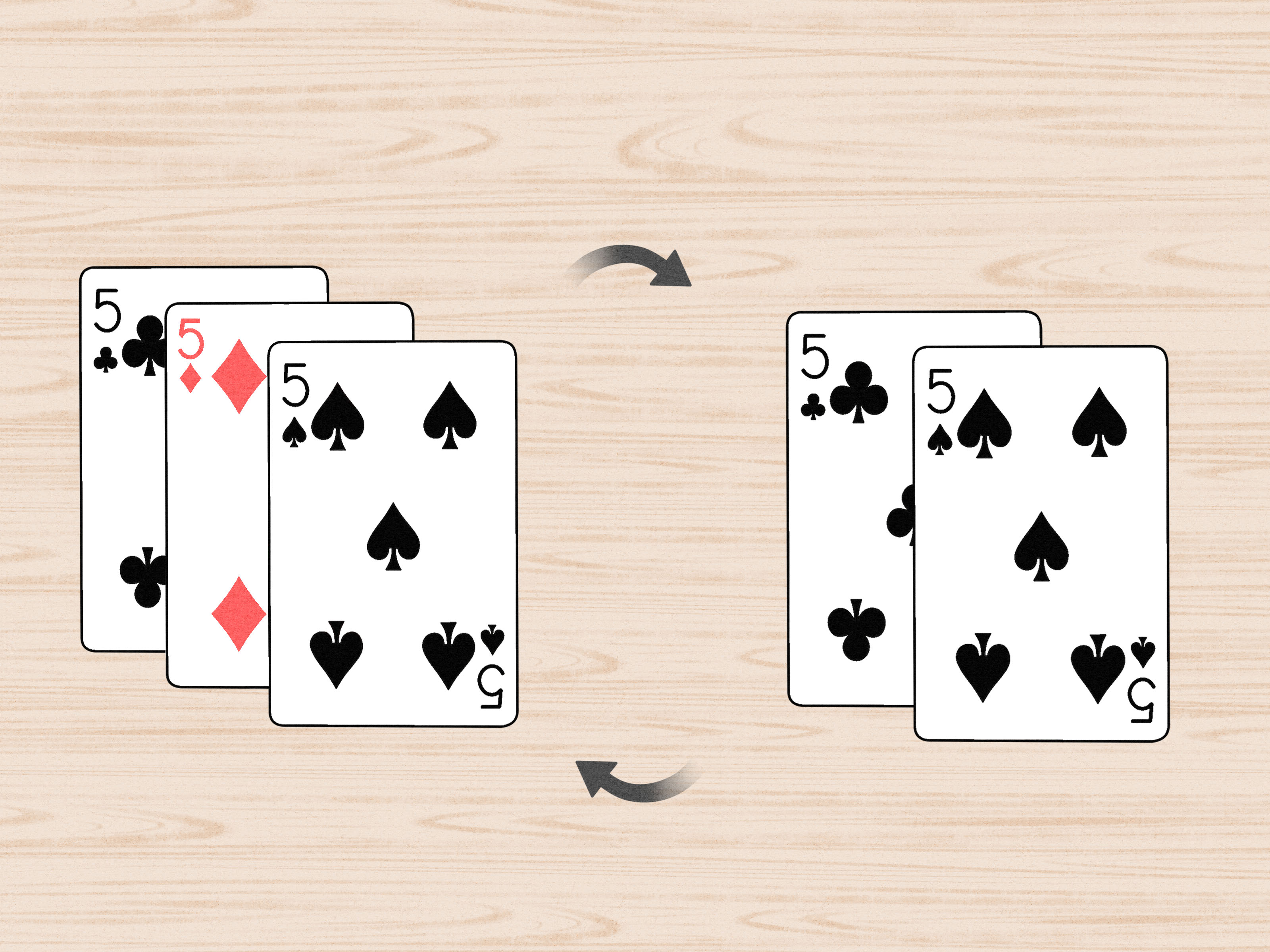
A sandwich happens when two cards of the same rank appear with one different card between them. For example, 5-9-5 or King-2-King. This rule is popular because it rewards memory and attention. You cannot just stare at the top card; you need to remember what came immediately before it.
Top-Bottom
A top-bottom slap happens when the newest card matches the first card played in the current pile. This rule is more advanced because players must remember the bottom card. It is fun, but it can be tricky in long piles. Use it only if your group enjoys memory-based chaos.
Tens
Some groups allow a slap when two number cards add up to 10. For example, 3 and 7 or 4 and 6. In many versions, Aces count as 1. Face cards may be ignored between number cards depending on the house rule. This variation adds a little mental math, which is great unless your brain leaves the room under pressure.
Marriage
Marriage usually means a King and Queen appear together, either King-Queen or Queen-King. It is easy to remember and adds another quick slap opportunity. It also gives players a reason to yell “marriage!” at a deck of cards, which is exactly the kind of harmless nonsense game night needs.
Four in a Row
Four in a row means four cards appear in ascending or descending order, such as 4-5-6-7 or 9-8-7-6. Some groups allow wraparound sequences like Queen-King-Ace-2. This rule is more advanced and should be agreed upon before playing.
False Slaps and Penalties
A false slap happens when someone slaps the pile when no legal pattern exists. The usual penalty is that the player must burn one or two cards by placing them from their own stack onto the bottom of the center pile. This penalty matters because it discourages wild guessing. Without penalties, one player will slap every three seconds and claim they are “just being energetic.” No, Kevin. That is not strategy. That is table percussion.
If a player has no cards, many groups still allow them to slap back into the game. However, if they slap incorrectly while out of cards, they may be eliminated. Decide this rule before the game begins to avoid the classic “I’m still alive spiritually” argument.
Way 3: Play With House Rules and Strategy Variations
The third way to play Egyptian Rat Screw is with house rules. This is where every family, dorm room, summer camp, and lunch table seems to have its own sacred constitution. House rules make the game more personal, but they should always be explained before the first card is flipped.
Add Jokers
If you add jokers to the deck, you can make them instant slap cards. Whenever a joker appears, the first player to slap wins the pile. This creates surprise moments and keeps everyone alert. It also makes the deck slightly larger, which can lengthen the game.
Use the “Burn Rule” Carefully
The burn rule says that incorrect slaps cost cards. Some groups burn one card, while others burn two. A larger burn penalty makes reckless slapping more dangerous. A smaller penalty makes aggressive play more tempting. For a fair game, choose the penalty before play starts.
Allow Slap-Backs
Slap-backs let players who have lost all their cards re-enter the game by successfully slapping a legal pattern. This keeps eliminated players engaged instead of sitting around watching everyone else have fun. The downside is that games can last longer. If you want a quick game, eliminate players once they lose all cards. If you want maximum suspense, allow slap-backs.
Play a Speed Round
In a speed round, players must flip quickly and cannot pause too long between cards. This variation is great for experienced groups but not ideal for beginners. The goal is to keep the rhythm sharp and prevent players from hovering too long over the pile.
Play a Gentle Version
Because Egyptian Rat Screw involves slapping a pile of cards, it is smart to set basic safety rules. Slap the cards, not people’s hands. Remove rings or bulky bracelets. Keep drinks away from the playing area. Use an older deck if possible, because this game treats cards like tiny paper crash-test dummies.
Egyptian Rat Screw Strategy Tips
Watch the Pile, Not the Players
It is tempting to watch your opponents’ hands, especially if someone has the reflexes of a startled cat. But the pile is where the information lives. Focus on the last two or three cards so you can catch doubles and sandwiches quickly.
Remember the Challenge Counts
Knowing the face-card counts helps you predict when a pile may be won. Jack gives one chance, Queen gives two, King gives three, and Ace gives four. If you know your opponent is running out of chances, you can stay ready for the next pile reset.
Do Not Slap Blindly
Fast hands help, but careless slaps can cost you cards. Strong players balance speed with judgment. A slightly slower correct slap is better than five dramatic wrong slaps that donate half your deck to the center pile.
Agree on Rules Before Playing
This may be the most important strategy of all. Egyptian Rat Screw has many variations, and confusion can ruin the fun. Before starting, confirm which slap patterns count, what penalty applies to false slaps, whether jokers are included, and whether eliminated players can slap back in.
Example Round
Imagine three players: Ava, Ben, and Chloe. Ava flips a 6. Ben flips a 10. Chloe flips a Queen. Because Chloe played a Queen, Ava now gets two chances to play a face card or Ace. Ava flips a 3, then a Jack. She succeeds. Now Ben has one chance because Ava played a Jack. Ben flips a 9 and fails. Ava wins the center pile.
Now imagine that during that same sequence, the cards were 6-10-Queen-3-Queen. The two Queens with one card between them form a sandwich. If your group plays with sandwich rules, anyone could slap the pile when the second Queen appears. The first correct slapper would win the pile immediately, interrupting the challenge.
Common Mistakes Beginners Make
Looking at Cards Before Flipping
Cards should be flipped outward so everyone sees them at the same time. Looking first gives an unfair advantage and makes the game feel less honest.
Forgetting That Slaps Interrupt Challenges
A legal slap can happen during a face-card challenge. The slap rule overrides the normal challenge flow, so stay alert even when another player is taking their chances.
Adding Too Many Rules Too Soon
Doubles and sandwiches are enough for most beginners. Add tens, marriage, jokers, and sequences later. Too many slap rules at once can make new players feel like they are studying for a very strange math test.
Slapping Too Hard
The goal is to touch the pile first, not flatten the table. Keep the game fun and safe. Quick beats aggressive.
Experiences and Practical Lessons From Playing Egyptian Rat Screw
The best thing about Egyptian Rat Screw is that every group develops its own personality around the game. In one group, everyone plays quietly and intensely, like card-playing chess ninjas. In another, every double causes a sound explosion that could alert nearby wildlife. After enough games, you realize Egyptian Rat Screw is not just about cards. It is about attention, timing, memory, and the hilarious human belief that “I definitely slapped first” is a legally binding statement.
One useful experience is that beginner games go much better when you start with only doubles as the slap rule. Doubles are visible, simple, and fair. Once players understand the rhythm, sandwiches can be added. Sandwiches make the game more exciting because they require short-term memory. Players must remember not only the top card but also the card underneath it. That tiny memory challenge changes everything. Suddenly, the quiet player who looked half-asleep starts winning piles because they have been tracking every card like a detective in a hoodie.
Another lesson is that the table setup matters. A small, stable table works better than a giant dining table where half the players need a passport to reach the center pile. Everyone should sit close enough to slap comfortably. The center pile should be clear, and drinks should be placed far away. Egyptian Rat Screw and open soda cans are natural enemies. The cards will lose that battle, and so will the carpet.
It also helps to use an older deck. New glossy cards can slide everywhere, and collectors may emotionally suffer when their pristine deck gets slapped, bent, and launched sideways during a disputed sandwich. An older deck makes the game feel relaxed. Nobody has to gasp when a card gets a corner wrinkle. In fact, a slightly worn deck almost feels more appropriate, like it has survived previous tournaments and knows too much.
Players also learn quickly that confidence is dangerous. The loudest player often becomes the easiest to bait. A quick fake motion near the pile can make an overexcited opponent slap incorrectly. Some groups allow fake-outs as long as the player does not touch the pile. Other groups ban fake-outs because they turn the game into psychological dodgeball. Either choice is fine, but it should be decided before playing.
Finally, Egyptian Rat Screw is most fun when players treat mistakes as part of the comedy. Someone will slap a 2-8-Queen and insist they “felt a pattern.” Someone will forget that an Ace gives four chances. Someone will celebrate winning a pile and immediately lose it on a double. That is the charm. The game is competitive, but it should stay friendly. Laugh at the chaos, protect your fingers, and remember: the deck always humbles everyone eventually.
Conclusion
Egyptian Rat Screw is easy to learn, fast to play, and endlessly replayable because every group can customize the experience. The three best ways to play are the basic face-card challenge version, the classic slap-rule version, and the house-rules version with extras like jokers, tens, marriage, and slap-backs. Start simple, agree on the rules, and add complexity as players become more comfortable.
For beginners, focus on the challenge counts: Jack gives one chance, Queen gives two, King gives three, and Ace gives four. Then add doubles and sandwiches as your first slap patterns. Once everyone can play without pausing every five seconds, bring in optional rules for more excitement. Above all, keep the game fair, safe, and fun. Egyptian Rat Screw is at its best when everyone is laughing, concentrating, and secretly preparing to slap the next double before anyone else notices.
Note: This article is written as original web content and is based on commonly accepted Egyptian Rat Screw rules, including standard face-card challenges, legal slap patterns, penalties, and popular house-rule variations.