There is a funny little habit many of us have: we dream about “real travel” as if it must come with a passport stamp, an overpriced airport sandwich, and the mild panic of wondering whether our suitcase is now enjoying a solo vacation in another country. But sometimes the most surprising adventure begins right outside your own front door, with two wheels, a stubborn sense of curiosity, and enough snacks to make a squirrel jealous.
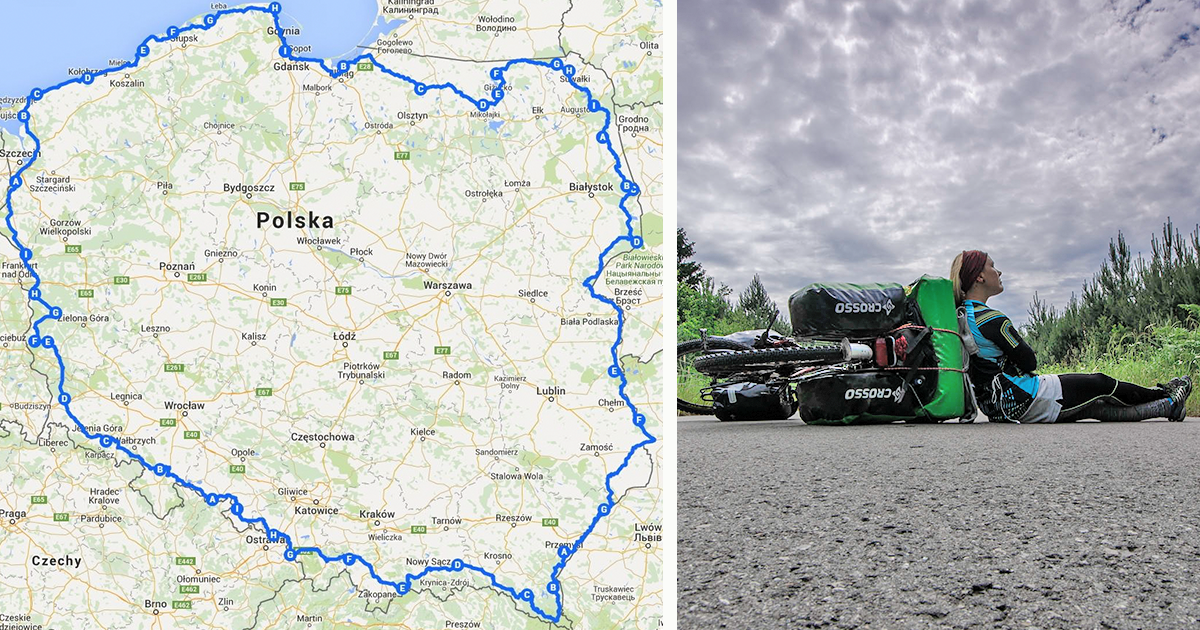
That was the spirit behind cycling 3,551 kilometers around Poland. The goal was simple: to prove that you do not need to travel abroad to discover beauty. Poland is not just a place between other places on the European map. It is a country of Baltic beaches, lake districts, old-growth forests, mountain passes, cobblestone towns, rebuilt cities, wooden churches, river valleys, and villages where the best meal of the day may arrive from a roadside bar mleczny before you even know how hungry you are.
This long-distance Poland cycling trip became more than a route. It became a slow-motion argument against the idea that adventure must be far away. Every kilometer offered a different answer: sea wind near the Baltic coast, golden fields in the countryside, red-brick Gothic towers in the north, rolling green hills in the south, and quiet eastern roads where the loudest sound was often my bicycle chain asking politely for oil.
Why Cycle Around Poland?
Traveling by bike changes the way a country reveals itself. In a car, landscapes become background. On a train, they become scenery behind glass. On a bicycle, they become personal. You smell the pine forest before you enter it. You feel the hill before you see the view. You learn which towns have kind shopkeepers, which roads have heroic potholes, and which bakeries should legally be required to warn cyclists about the power of fresh pączki.
Poland is especially rewarding for bicycle touring because it offers remarkable variety. The north has the Baltic Sea, dunes, fishing towns, and coastal cycling routes. The northeast opens into Masuria, a region of lakes, forests, marinas, and sleepy villages. The east has Green Velo, one of the country’s best-known long-distance cycling routes, connecting landscapes that feel peaceful, rural, and deeply atmospheric. Central Poland brings rivers, plains, castles, and historic towns. The south rises into the Carpathians, the Tatra Mountains, and the dramatic foothills that remind your legs they signed no paperwork agreeing to this.
The Route: 3,551 Kilometers of Homegrown Wonder
A 3,551-kilometer ride around Poland is not just a line on a map. It is a collection of mornings, wrong turns, weather negotiations, small victories, and evenings when soup tastes like a five-star event because you earned it with your calves. The route can be imagined as a broad loop touching many of the country’s most scenic regions: the Baltic coast, Gdańsk, the Masurian Lake District, Białowieża Forest, eastern Poland, the Bieszczady region, Kraków, the Tatra foothills, Lower Silesia, and back through central or western Poland.
Not every section is a perfect bike path, and that is part of the truth of bicycle travel. Some stretches are smooth and clearly marked. Others require route planning, patience, and the ability to make peace with gravel. Poland’s cycling infrastructure has grown significantly, with routes such as Green Velo in the east and EuroVelo 10 along the Baltic helping cyclists connect major natural and cultural highlights. But a long trip still asks you to be flexible. The reward is that you are not simply passing through Poland. You are meeting it, one village sign and one roadside chapel at a time.
Baltic Beginnings: Sea Wind, Dunes, and Big-Sky Freedom
The Baltic coast is a spectacular place to begin or anchor a cycling journey in Poland. Here, the ride feels open and cinematic. The air smells of salt, fish smoke, pine needles, and summer sunscreen. Towns like Gdańsk, Sopot, Gdynia, Łeba, Ustka, Kołobrzeg, and Świnoujście each offer a different personality, from elegant seaside promenades to ports, beaches, and old town streets.
Gdańsk is one of Poland’s great travel rewards. Its colorful facades, historic port atmosphere, amber shops, and maritime identity make it feel both proudly Polish and unmistakably Baltic. Cycling into Gdańsk after long coastal stages feels like arriving at a storybook city that also happens to have excellent coffee. Nearby, Sopot offers a breezy resort mood, while Gdynia brings modern harbor energy.
Słowiński National Park: Poland’s Moving Desert
One of the most unforgettable northern landscapes is Słowiński National Park, famous for its shifting sand dunes near Łeba. It is the sort of place that makes you stop pedaling and ask, “Wait, am I still in Poland?” The dunes roll toward the Baltic like pale waves frozen in place. Add the sound of the sea, the smell of coastal forest, and the strange joy of finding sand in every possible sock seam, and you have a memory that does not need a border crossing to feel exotic.
Masuria: Lakes, Forest Roads, and the Art of Slowing Down
If the Baltic coast is about wind and space, Masuria is about water and calm. Known as the land of lakes, this northeastern region is a dream for cyclists who like gentle roads, forest shade, sailing towns, and the feeling that time has quietly taken off its watch. Places such as Mikołajki, Giżycko, Mrągowo, Ryn, and Węgorzewo make excellent anchors for exploring the region.
Cycling through Masuria often means passing fields, lakeside cabins, marinas, wooden piers, and stretches of road where the water flashes blue between trees. It is not a place to rush. In fact, Masuria punishes rushing by being too pretty. You stop for one photo, then another, then suddenly you are having lunch at 4 p.m. and calling it “strategic pacing.”
The beauty of Masuria lies in its simplicity. There may not always be dramatic climbs or famous monuments around every bend, but there is a deep sense of ease. A long-distance cyclist learns to appreciate that. Not every day needs fireworks. Some days need a quiet lake, a bench, a sandwich, and the knowledge that the road continues when you are ready.
Eastern Poland: Green Velo and the Quiet Side of Adventure
Eastern Poland is one of the country’s richest regions for slow travel. The Green Velo trail, the longest consistently marked cycling trail in Poland, runs through picturesque eastern areas and gives cyclists access to landscapes that feel wonderfully unhurried. This is Poland at a lower volume: wooden houses, river valleys, wetlands, small towns, old churches, forest roads, and villages where life seems to move at the speed of conversation.
For cyclists, this region can feel like a gift. Traffic is often lighter than in more urbanized areas, and the cultural variety is fascinating. You may pass Orthodox churches, Catholic shrines, synagogues, market squares, castles, and open countryside in the same broad journey. The eastern route shows that Poland’s beauty is not only in famous cities. It is also in the quiet distance between them.
Białowieża Forest: A Living Ancient Landscape
Białowieża Forest deserves special mention because it is one of Europe’s most extraordinary natural areas. This primeval forest complex is known for old-growth woodland and European bison, giving visitors a rare glimpse into what ancient European forests once looked like. Cycling near Białowieża is not about speed. It is about respect. The trees feel older than your excuses, and the silence has weight.
Stopping there during a long ride creates a powerful contrast. After days of roads, towns, and human-made landmarks, the forest reminds you that beauty can be older than history books. It is not polished or staged. It simply exists, enormous and patient, while cyclists wobble past in bright helmets like confused beetles.
Historic Cities: Poland’s Beauty Is Built, Rebuilt, and Remembered
A cycling trip around Poland is also a journey through architecture and memory. The country’s cities are not interchangeable stops for food and laundry, although laundry becomes emotionally important after several hundred kilometers. They are chapters in a national story shaped by trade, war, resilience, art, religion, and reinvention.
Kraków: Medieval Streets and a Cyclist’s Reward
Kraków is one of Poland’s most beloved cities for good reason. Its historic center, Wawel Hill, market square, Kazimierz district, churches, cafes, and cultural energy make it a natural highlight. Arriving by bicycle gives the city an extra glow. You do not just visit Kraków; you earn it. Every cobblestone feels like applause, even when it is technically trying to shake your water bottle loose.
The city works well as a rest stop on a long cycling route. You can explore the Old Town, eat pierogi without guilt, wander along the Vistula River, and use the pause to clean your bike, recharge your batteries, and remember how chairs feel when they are not bicycle saddles.
Warsaw: A Rebuilt Capital With Modern Pulse
Warsaw is different from Kraków, and that difference is part of its appeal. The Polish capital blends reconstructed historic streets with skyscrapers, museums, parks, riverside paths, and a confident modern rhythm. For cyclists, Warsaw can be intense, but it also offers rewarding urban exploration, especially along the Vistula River.
What makes Warsaw inspiring is not only what it looks like, but what it represents. Its Old Town was meticulously rebuilt after wartime destruction, turning the city into a symbol of endurance. On a cycling journey about discovering beauty at home, Warsaw becomes a reminder that beauty is not always untouched. Sometimes beauty is rebuilt, brick by brick, because people refuse to let it disappear.
Wrocław, Toruń, and the Smaller Cities That Surprise You
Some of the best moments on a long Poland bike tour come from cities that were not the original headline. Wrocław charms with bridges, islands, colorful architecture, and a playful urban personality. Toruń offers Gothic brick beauty, medieval streets, and gingerbread so persuasive it should probably have a lawyer. Zamość, Lublin, Poznań, and smaller regional towns each add texture to the route.
These stops matter because they break the myth that only capital cities or famous tourist magnets are worth seeing. Poland’s beauty is distributed generously. It appears in town squares, riverside paths, old walls, market stalls, church towers, and the faces of people who ask where you have cycled from and then look at your bike as if it is either impressive or in need of therapy.
The South: Mountains, Foothills, and Humility on Two Wheels
Eventually, any serious cycling loop around Poland must deal with the south. The land begins to rise. The views become larger. The legs become philosophical. The Tatra Mountains, the Pieniny, the Beskids, and the Bieszczady region all offer some of the country’s most dramatic scenery, but they do not hand it out for free.
Zakopane and the Tatra region are among Poland’s most iconic mountain destinations. Even if some high mountain trails are not designed for bicycles, the surrounding routes, valleys, foothills, and scenic roads provide unforgettable riding. The reward is a landscape of sharp peaks, wooden architecture, alpine air, and meals hearty enough to make a cyclist believe in destiny.
Bieszczady: Wild, Green, and Wonderfully Remote
The Bieszczady Mountains in southeastern Poland feel different from the Tatras. They are softer in shape but wilder in mood. This is a region of open ridges, forests, winding roads, wooden churches, and a sense of distance that is increasingly rare in Europe. Cycling here can be challenging, but it is also deeply rewarding. The climbs ask questions. The descents answer them at high speed.
For anyone trying to prove that beauty exists close to home, Bieszczady makes the argument easy. It has that faraway feeling without requiring you to leave the country. The roads curve through green valleys, mist lifts off the hills, and suddenly “local travel” feels like a grand expedition.
What 3,551 Kilometers Teaches You About Beauty
The biggest lesson from cycling 3,551 kilometers around Poland is that beauty becomes more visible when you slow down. At highway speed, a field is a field. At bicycle speed, it is a living scene: poppies at the edge, storks in the distance, wind moving through grain, a farmhouse dog announcing your arrival to the entire county.
Long-distance cycling also teaches you that beauty is not always comfortable. Sometimes it is found after a headwind that turns a flat road into a personal insult. Sometimes it appears after rain, when clouds open over a village and the wet asphalt reflects the sky. Sometimes it waits at the top of a climb, where you are too tired to speak but not too tired to stare.
The ride also changes your relationship with distance. At first, 100 kilometers sounds heroic. Later, it becomes Tuesday. You begin to understand the country not as a list of attractions but as a continuous landscape. Regions connect. Rivers guide you. Food changes subtly. Architecture shifts. Accents, road surfaces, forest types, and even roadside shrines tell you where you are.
Practical Tips for Cycling Around Poland
Plan the Big Shape, Not Every Minute
For a ride as long as 3,551 kilometers, planning matters, but overplanning can steal the adventure. Build the route around major regions: Baltic coast, Masuria, eastern Poland, southern mountains, historic cities, and central river corridors. Use established trails where possible, including Green Velo, EuroVelo 10, regional Velo routes, and riverside paths. Then leave room for weather, repairs, rest days, and unexpected recommendations from locals.
Pack for Variety
Poland’s landscapes change, and so does the weather. Coastal wind, mountain rain, warm summer plains, cool forest mornings, and sudden storms can all appear in one tour. A reliable rain jacket, layered clothing, lights, basic tools, spare tubes, power bank, offline maps, and a comfortable saddle are not luxuries. They are peace treaties between you and the road.
Respect the Road and the Place
Use bike paths when available, ride defensively on rural roads, and remember that not every driver expects a touring cyclist loaded like a small moving apartment. In national parks and protected areas, follow local rules. Poland’s forests, wetlands, dunes, and mountain environments are part of what makes the journey special. The goal is to pass through beautifully, not leave behind proof that you were there.
Why You Don’t Need to Travel Abroad to Feel Amazed
Travel abroad is wonderful. It opens the mind, challenges assumptions, and introduces you to new cultures. But the danger is believing that wonder only begins at the border. Cycling around Poland proves the opposite. Beauty is often hidden by familiarity. We stop seeing what we think we already know.
A bicycle is an excellent cure for that blindness. It makes familiar roads feel new. It turns nearby towns into destinations. It transforms a national map into a physical experience measured in breath, weather, hunger, effort, and awe. Poland, seen slowly, becomes impossible to dismiss. It is too varied, too textured, too full of surprises.
The real discovery is not only that Poland is beautiful. It is that home can still surprise you. Your own country may contain landscapes you have never crossed, histories you have never studied, foods you have never tasted in their proper region, and people whose kindness arrives exactly when your chain is making a suspicious noise.
Additional Field Notes From the Saddle: The Experience Behind the Distance
After thousands of kilometers, the journey becomes less about the number and more about the rhythm. A day on the bike begins with small rituals. You check the tires, fill the bottles, pack the bags in the same order, and pretend you know exactly where your gloves are. You roll out while towns are still yawning awake. A bakery opens. A delivery truck rattles past. Somewhere, a rooster performs with unnecessary confidence.
The first kilometers are usually quiet. Your body complains, then accepts the plan. The road widens or narrows. The map says turn left in 12 kilometers, but the landscape has its own suggestions. Maybe there is a church tower on the horizon. Maybe a lake appears where you expected only fields. Maybe a local points you toward a better road with fewer cars and more shade. On a long ride, advice from strangers becomes a kind of unofficial navigation system.
There are difficult moments, of course. A 3,551-kilometer cycling adventure is not a postcard slideshow. There are days when the wind seems professionally trained to oppose you. There are climbs that arrive at the exact moment your snack supply reaches a national emergency level. There are wrong turns, closed roads, sore knees, wet shoes, and guesthouse stairs that look harmless until you carry a loaded bike up them.
But these small struggles make the beautiful moments sharper. A bowl of hot żurek after a rainy ride becomes unforgettable. A sunset over a lake feels earned. A flat tire fixed under a tree becomes a story instead of an inconvenience. Even laundry drying from bicycle bags begins to look like a tiny traveling festival of socks.
The most meaningful experiences often happen between famous places. A farmer waving from a tractor. Children shouting “hello” in English from a village sidewalk. A shopkeeper filling your bottle without making a fuss. A quiet cemetery beside a country road. A stork nest balanced above a power pole. These are not attractions in the usual sense, but they are the emotional glue of the journey.
Cycling around Poland also gives you a new sense of scale. You realize that the country is large enough to humble you and intimate enough to welcome you. One week you may be riding beside the Baltic Sea; later, you are in forests near the eastern border; later still, your legs are negotiating with mountain roads in the south. The variety is astonishing when experienced at human speed.
By the end, the bicycle is no longer just transportation. It is a passport into attention. It teaches you to notice road texture, cloud direction, village smells, regional foods, and the emotional difference between a gentle downhill and a suspiciously gentle downhill that is clearly saving its cruelty for later. Most of all, it teaches gratitude. Not dramatic, movie-soundtrack gratitude, but practical gratitude: for dry socks, safe shoulders, honest meals, working brakes, kind people, and the fact that beauty does not always require a boarding pass.
That is the heart of the ride. Cycling 3,551 kilometers around Poland is not only a physical challenge. It is a reminder that discovery is a habit, not a destination. You can travel far without leaving home. You can be surprised by places whose names you thought you already knew. And sometimes, the most beautiful journey is the one that proves your own backyard was never smallit was simply waiting for you to slow down and look.
Conclusion
Cycling 3,551 kilometers around Poland shows that adventure does not need to begin at an airport. It can begin with a bicycle, a map, and the decision to look at familiar places with fresh eyes. From the Baltic coast to Masurian lakes, from ancient forests to mountain roads, from rebuilt Warsaw to timeless Kraków, Poland offers a rich and deeply rewarding journey for anyone willing to move slowly enough to notice it.
The ride proves something simple but powerful: beauty is not always elsewhere. Sometimes it is waiting in your own country, tucked behind a bend in the road, reflected in a lake, carved into a church door, rising over a mountain pass, or served warm on a plate after a long day in the saddle.