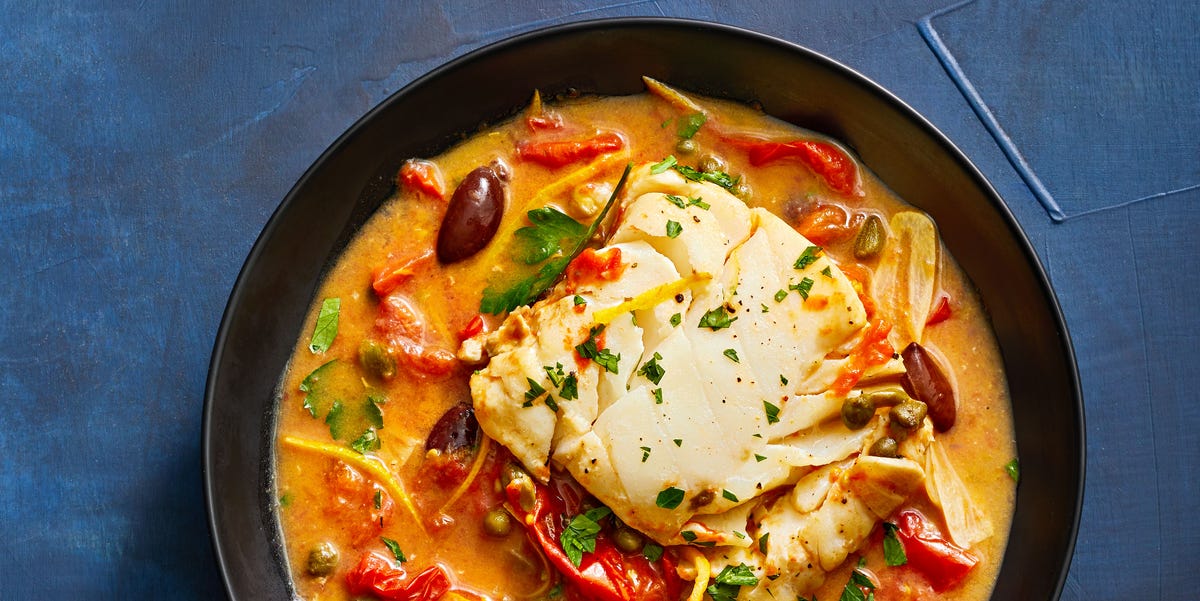
If dinner had a “looks fancy, secretly easy” category, tomato-poached cod with olives and capers would win by a very smug landslide. This dish tastes like something you might order at a breezy seaside restaurant where the napkins are linen, the plates are handmade, and nobody is worried about the sink full of dishes at home. Yet in real life, it comes together in one skillet, in about 30 minutes, with simple ingredients that do most of the heavy lifting for you.
The magic is in the sauce. Sweet tomatoes simmer with garlic, olive oil, briny olives, punchy capers, lemon zest, and a splash of wine or broth until they become a bright, savory poaching bath. Then the cod fillets gently cook right in that sauce, staying tender, flaky, and moist. No dry fish. No mystery technique. No dramatic kitchen monologue required.
This tomato-poached cod recipe is inspired by Mediterranean cooking: lean white fish, good olive oil, fresh herbs, citrus, and a sauce that begs for crusty bread. It is light enough for a weeknight but flavorful enough for guests. In other words, it is the kind of recipe that makes people say, “You made this?” while you casually pretend you did not spend most of the day answering emails in sweatpants.
Why This Tomato-Poached Cod Recipe Works
Cod is mild, firm, and naturally suited to poaching. Unlike delicate fish that can fall apart the moment you look at them sternly, cod holds its shape well while still turning beautifully flaky when cooked. Its clean flavor also makes it the perfect partner for a bold tomato sauce with olives and capers.
Poaching cod in tomato sauce solves one of the biggest problems home cooks face with fish: dryness. Because the fillets cook gently in a moist environment, they do not need aggressive heat. The tomato mixture surrounds the fish, helping it cook evenly while absorbing garlic, citrus, herbs, and salty Mediterranean flavor.
Another reason this recipe works is balance. Tomatoes bring sweetness and acidity. Olives add richness and salt. Capers offer a sharp, tangy pop. Lemon zest wakes everything up. Olive oil gives the sauce body. Fresh parsley at the end makes the dish taste clean and finished. Together, these ingredients create a sauce that tastes layered without requiring a long simmer.
Ingredients for Tomato-Poached Cod with Olives and Capers
This recipe serves 4 people and makes enough sauce for spooning generously over rice, couscous, pasta, potatoes, or toasted bread.
Main Ingredients
- 4 skinless cod fillets, about 5 to 6 ounces each
- 2 tablespoons extra-virgin olive oil
- 3 garlic cloves, thinly sliced or minced
- 1 small shallot, finely chopped
- 1 tablespoon capers, rinsed and drained
- 1/2 cup pitted Kalamata olives, halved
- 1 1/2 cups cherry tomatoes or Campari tomatoes, halved
- 1/2 cup dry white wine, dry rosé, seafood stock, or low-sodium vegetable broth
- 1 teaspoon lemon zest
- 1 tablespoon fresh lemon juice
- 1/2 teaspoon dried oregano
- 1/4 teaspoon crushed red pepper flakes, optional
- Kosher salt and freshly ground black pepper, to taste
- 2 tablespoons chopped fresh parsley
- Fresh basil or mint, optional for garnish
Ingredient Notes
Cod: Fresh or thawed frozen cod works well. Look for fillets that smell clean and mild, not fishy. Pat them dry before seasoning so the salt, pepper, and sauce cling properly.
Tomatoes: Cherry tomatoes, grape tomatoes, or Campari tomatoes are excellent because they become sweet and jammy quickly. Canned crushed tomatoes can also work when fresh tomatoes are out of season.
Olives: Kalamata olives add deep, fruity flavor, but Castelvetrano olives are a milder, buttery option. Avoid canned black olives here unless they are your only choice; they tend to be less expressive, like a background extra in a very flavorful movie.
Capers: Rinsing capers keeps the sauce from becoming too salty. They should add sparkle, not shout over the entire skillet.
Wine or broth: Dry white wine or rosé gives the sauce restaurant-style depth. Broth keeps the recipe alcohol-free and still delicious.
How To Make Tomato-Poached Cod with Olives and Capers
Step 1: Season the Cod
Pat the cod fillets dry with paper towels. Season both sides lightly with kosher salt and black pepper. Let the fish sit at room temperature for about 10 minutes while you start the sauce. This short rest helps the cod cook more evenly.
Step 2: Build the Aromatic Base
Heat the olive oil in a large skillet over medium heat. Add the shallot and cook for 2 to 3 minutes, stirring often, until softened. Add the garlic, capers, lemon zest, oregano, and red pepper flakes if using. Cook for about 30 to 60 seconds, just until fragrant.
Do not let the garlic burn. Burnt garlic turns bitter fast, and nobody invited bitterness to dinner unless it is hiding in a radicchio salad.
Step 3: Simmer the Tomato Sauce
Add the wine or broth and bring it to a gentle simmer. Let it reduce for 2 minutes. Stir in the tomatoes and olives, then season with a small pinch of salt and black pepper. Simmer for 6 to 8 minutes, stirring occasionally, until the tomatoes soften and begin to release their juices.
If the sauce looks too thick, add another splash of broth or water. If it tastes too sharp, let it simmer a few minutes longer so the tomatoes mellow.
Step 4: Poach the Cod
Reduce the heat to medium-low. Nestle the cod fillets into the tomato mixture, spooning a little sauce over the top. Cover the skillet and cook for 6 to 9 minutes, depending on the thickness of the fillets.
The cod is done when it turns opaque and flakes easily with a fork. For food safety, fish should reach an internal temperature of 145°F. Use an instant-read thermometer inserted into the thickest part of the fillet for the most accurate check.
Step 5: Finish and Serve
Turn off the heat. Add the lemon juice and sprinkle with parsley. Taste the sauce and adjust with more pepper, lemon, or a tiny pinch of salt if needed. Serve the cod warm, spooned generously with the tomato, olive, and caper sauce.
Best Tips for Perfect Tomato-Poached Cod
Use Gentle Heat
Cod does not need a roaring boil. A gentle simmer is enough. If the sauce bubbles like a hot tub during spring break, lower the heat. Vigorous boiling can make the fish tough and may break the fillets apart.
Do Not Overcook the Fish
Cod cooks quickly. Thin fillets may be done in 5 or 6 minutes, while thicker pieces may need closer to 9 or 10. Once the fish flakes easily, remove it from heat. The residual warmth of the sauce will continue cooking it slightly.
Control the Salt
Olives and capers are naturally salty, so season gradually. Add a little salt at the beginning, then taste at the end. This is much easier than trying to rescue a sauce that tastes like it spent summer vacation in the Dead Sea.
Choose a Wide Skillet
A wide skillet lets the cod fillets sit in a single layer. Crowding the pan can cause uneven cooking and make the fish harder to remove cleanly.
Recipe Variations
Spicy Tomato-Poached Cod
Add extra crushed red pepper flakes or a spoonful of Calabrian chili paste to the sauce. The heat pairs beautifully with sweet tomatoes and briny olives.
Spanish-Inspired Cod
Add smoked paprika with the garlic and finish the dish with chopped roasted red peppers. Serve with roasted potatoes or saffron rice.
Greek-Style Cod
Use Kalamata olives, oregano, dill, and a crumble of feta after cooking. Keep the feta modest so it enhances the sauce without overpowering the fish.
Alcohol-Free Version
Use seafood stock, vegetable broth, or even water with a squeeze of lemon. The olives, capers, garlic, and tomatoes still provide plenty of flavor.
What To Serve with Tomato-Poached Cod
This dish is saucy, so serve it with something that can catch every drop. Crusty bread is the obvious hero. Toasted sourdough, garlic bread, or a warm baguette can turn the skillet sauce into the best part of the meal.
For a heartier dinner, spoon the cod over couscous, orzo, rice, quinoa, creamy polenta, or mashed potatoes. If you want something lighter, pair it with a green salad, roasted asparagus, sautéed spinach, or steamed green beans.
A simple cucumber salad also works well because its cool crunch balances the warm tomato sauce. Add lemon, olive oil, herbs, and a pinch of salt, and you have a meal that tastes bright, clean, and complete.
How To Store and Reheat Leftovers
Store leftover tomato-poached cod in an airtight container in the refrigerator for up to 2 days. Because fish is delicate, reheat it gently. Place the cod and sauce in a covered skillet over low heat until warmed through. Add a splash of broth or water if the sauce has thickened.
Avoid microwaving on high heat if possible. It can make the cod rubbery and may also announce to the entire household that fish has entered the building. If you do use the microwave, heat in short intervals at reduced power.
Leftover sauce is excellent even if the fish is gone. Spoon it over eggs, pasta, roasted vegetables, or toast. It is too good to waste and too bossy to ignore.
Common Mistakes To Avoid
Using Wet Fish Straight from the Package
Moisture on the surface of cod can dilute seasoning and make the fish taste bland. Always pat it dry before adding salt and pepper.
Adding Too Much Salt Too Early
Capers and olives bring their own saltiness. Taste the sauce after it simmers before adding more salt.
Cooking the Sauce Too Fast
The tomatoes need a few minutes to soften and release their juices. Rushing this step can leave the sauce thin and less flavorful.
Moving the Fish Too Much
Once the cod is in the pan, let it be. Repeated flipping or poking can break the fillets apart. Spoon sauce over the top instead of stirring around them.
Why This Recipe Is Great for Weeknights
Tomato-poached cod with olives and capers is exactly the kind of recipe busy cooks need: fast, flavorful, flexible, and not dependent on a mountain of prep work. The ingredients are easy to keep around. Frozen cod can be thawed overnight in the refrigerator. Capers and olives live happily in jars. Tomatoes, garlic, lemon, and herbs are everyday staples in many kitchens.
The recipe also gives you a lot of payoff for very little drama. There is no breading station, no deep fryer, no complicated marinade, and no baking sheet to scrub. Everything happens in one skillet, and the sauce becomes both the cooking liquid and the finishing touch.
Best of all, this dish tastes fresh rather than heavy. It satisfies like comfort food but still feels bright and balanced. That makes it ideal for nights when you want something nourishing but refuse to eat another sad desk-adjacent sandwich.
Personal Cooking Experience: What Makes This Dish Feel Special
The first time you make tomato-poached cod with olives and capers, the most surprising thing is how quickly the kitchen starts smelling like dinner is under control. Garlic hits the olive oil, capers sizzle, tomatoes soften, and suddenly the entire skillet gives off that warm Mediterranean aroma that says, “Relax, we have a plan.” It is the kind of recipe that builds confidence because every step has a visible reward.
One practical experience worth mentioning is that the sauce is more forgiving than the fish. If the tomatoes need more time, let them simmer. If the sauce tastes too sharp, give it a few extra minutes. If it needs more body, add a drizzle of olive oil. But once the cod goes in, start paying attention. Cod is polite but not endlessly patient. It turns from silky to overdone faster than most people expect, especially if the fillets are thin.
A useful habit is to choose fillets that are similar in thickness. When one piece is twice as thick as another, the thinner piece may finish early while the thicker one still needs time. If that happens, simply remove the cooked piece to a plate and cover it loosely while the others finish. This small move keeps the whole meal tasting intentional instead of uneven.
Another lesson from cooking this dish often is that the garnish matters. Parsley, lemon juice, and a final thread of olive oil may look optional, but they lift the entire pan. Without them, the recipe is still good. With them, it tastes brighter, fresher, and more complete. It is like putting on shoes before leaving the house. Technically, you could skip it, but why create problems?
This recipe is also excellent for entertaining because it feels relaxed. You can make the tomato, olive, and caper sauce ahead of time, then rewarm it and poach the cod shortly before serving. Guests see a beautiful skillet of fish in a glossy red sauce and assume you have been calmly cooking for hours. You do not need to correct them. Some mysteries are good for morale.
The best serving experience is with toasted bread. Rice and couscous are wonderful, but bread turns the sauce into an event. Dragging a crusty piece through tomato juices, olive oil, garlic, and capers might be the real reason this recipe exists. The cod is the star, of course, but the sauce is absolutely trying to steal scenes.
For families or mixed tastes, this dish is easy to adapt. Keep the red pepper flakes out if someone dislikes heat. Use green olives for a milder flavor. Add spinach near the end for extra vegetables. Swap cod for halibut, haddock, pollock, or another firm white fish if needed. The basic method stays the same: make a lively sauce, nestle in the fish, cover, and cook gently until tender.
What makes tomato-poached cod with olives and capers worth returning to is its balance of elegance and ease. It is healthy without acting smug, simple without being boring, and fast without tasting rushed. That is a rare dinner combination. It belongs in the regular rotation, especially for nights when you want something beautiful on the table but do not want to wrestle with complicated cooking techniques.
Conclusion
Tomato-poached cod with olives and capers is one of the best ways to turn mild white fish into a vibrant, satisfying dinner. The cod stays tender because it cooks gently in a tomato-rich sauce, while olives, capers, garlic, lemon, and herbs bring bold Mediterranean flavor. It is quick enough for a weeknight, polished enough for company, and flexible enough to adapt with whatever firm white fish or pantry ingredients you have on hand.
If you want a seafood recipe that feels fresh, colorful, and deeply flavorful without requiring restaurant-level effort, this tomato-poached cod recipe deserves a permanent spot in your dinner lineup. Serve it with bread, rice, couscous, or potatoes, and do not be surprised when the sauce disappears first.