Some animals tiptoe into a family’s life. Others arrive with a medical mystery, a bottle-feeding schedule, a shaky little head, and the quiet ability to rearrange everyone’s heart forever. Floppy, the now-famous indoor pig who was once expected to survive only a week, belongs firmly in the second group.
Born with a severe shaking condition and unable to nurse or walk normally, Floppy was given a heartbreaking prognosis. A veterinarian reportedly recommended euthanasia because his chances looked painfully slim. But instead of saying goodbye, his caregivers chose something far less convenient and far more beautiful: they gave him a chance.
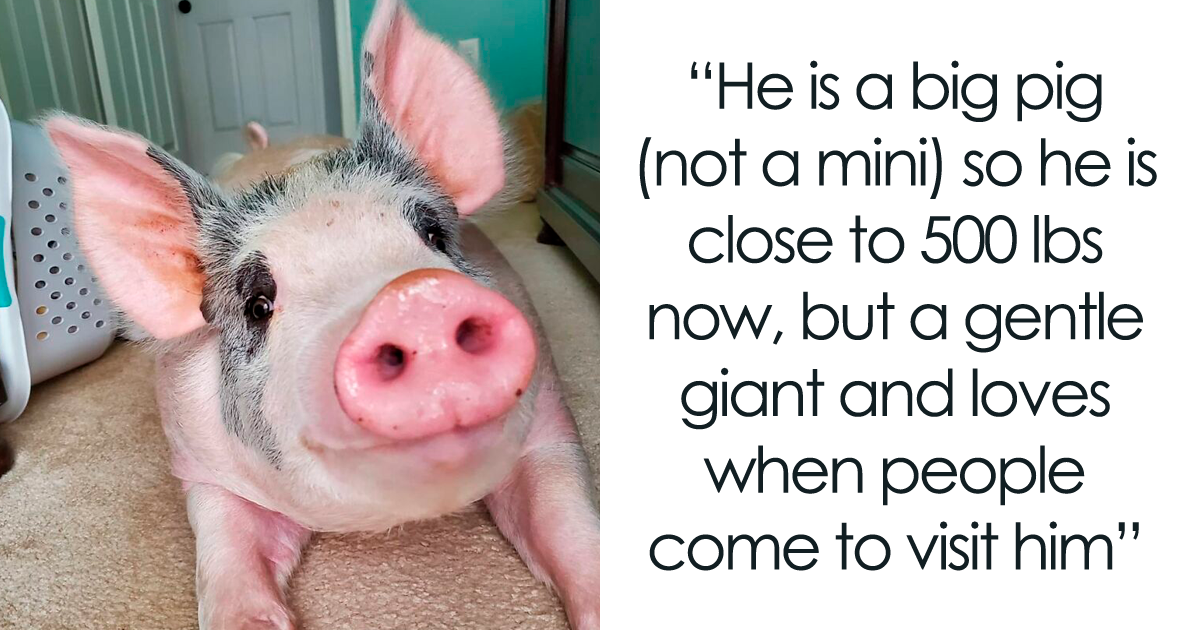
Today, Floppy is not only alive; he is thriving. At around 1.5 years old, he has become a roughly 500-pound indoor pig with his own room, a daily routine, a love of snacks, a talent for opening doors, and a personality big enough to require its own ZIP code. His story is not just cute internet magic. It is a reminder of what compassionate rescue, informed care, patience, and realistic pet pig ownership can look like when people refuse to treat a difficult beginning as the end of the story.
The Beginning: A Piglet With Almost No Odds
Floppy’s early life was fragile from the start. He was born with what his owner described as “shaking head syndrome,” a tremor-like condition that made basic newborn survival difficult. A healthy piglet usually needs to nurse quickly, stay warm, move toward its mother, and compete with littermates. Floppy could not do those things reliably.
For many families, that would have been the end of the road. Not because they lacked love, but because intensive piglet care is demanding. A newborn animal with neurological symptoms can need round-the-clock monitoring, frequent feeding, temperature control, and emergency veterinary support. It is not a “put him in a blanket and hope for the best” situation. It is alarms, bottles, cleanup, worry, and the kind of sleep schedule that makes coffee look like a food group.
When the veterinarian reportedly said Floppy had the worst case she had seen and likely would not live longer than a week, euthanasia was presented as a humane option. That is important to say clearly: veterinarians do not make such recommendations casually. They are often trying to prevent suffering. But Floppy’s family believed he still had a spark worth fighting for, so they brought him home and began caring for him by hand.
From Bottle Baby to Gentle Giant
Floppy’s caretakers bottle-fed him every few hours when he was tiny. They watched him closely, helped him through his shaky moments, and learned about pigs as they went. Over time, the little piglet who could barely manage basic movement began to improve. His shaking reportedly became much less noticeable, appearing mainly when he was excited or anxious.
Then came the surprise every experienced pig owner understands: pigs grow. A lot. And sometimes they grow with the enthusiasm of a sourdough starter left alone over a long weekend.
Floppy is not a mini pig. He is a full-sized domestic pig, and weighing close to 500 pounds is not unusual for many standard pig breeds. In fact, adult domestic pigs commonly reach several hundred pounds, and some can weigh much more. This is why stories like Floppy’s are heartwarming but also educational. A pig may begin life small enough to cuddle in a towel, but responsible ownership means preparing for the adult animal, not the baby photo.
Why Floppy’s Story Captures So Many Hearts
Animal rescue stories often go viral because they give us the emotional arc we secretly want from life: the underdog survives, the impossible becomes possible, and the little creature nobody expected to make it ends up ruling the living room. Floppy’s story has all of that, plus the unexpected comedy of a 500-pound indoor pig casually living like a beloved family member.
His owner has described him as loving, smart, social, and deeply attached to people. He reportedly enjoys visitors, belly rubs, snacks, pool time, and walks on a leash. He even taught himself to go up and down stairs and open doors, which is adorable until you remember he weighs about as much as a grand piano with opinions.
That intelligence is not surprising. Pigs are highly curious, food-motivated, social animals. They learn routines quickly, recognize people, enjoy interaction, and need mental stimulation. A bored pig is not a decorative throw pillow. A bored pig is a determined problem-solver with a snout, strength, and no concern for your security deposit.
The Reality of Living With an Indoor Pig
Floppy’s indoor life sounds charming, but keeping a pig indoors is not the same as keeping a large dog. Pigs have specific environmental, dietary, behavioral, and veterinary needs. They need space, enrichment, consistent routines, safe flooring, temperature control, and opportunities to root, forage, and explore.
Pigs Need Rooting and Foraging Opportunities
Rooting is one of the most natural pig behaviors. In a yard, a pig may use its snout to investigate soil, grass, leaves, and hidden snacks. Indoors, that same instinct can become carpet remodeling, wall investigation, blanket relocation, and other interior design choices nobody requested.
Responsible indoor pig care often includes a rooting box filled with safe materials such as blankets, straw, shredded paper, or large plastic balls. Food can be scattered inside so the pig has to work for meals. This turns feeding time into exercise and mental stimulation instead of a two-minute snack inhalation event.
Diet Matters More Than Cute Treats
Because pigs are food-motivated, it is easy to overfeed them. Those pleading eyes can make a carrot slice feel like a moral obligation. But obesity in pigs can lead to joint pain, lameness, reduced mobility, and other health problems. Pet pigs generally do best with a balanced pig-specific diet, controlled portions, fresh water at all times, fiber-rich foods, and vegetables used thoughtfully as treats.
Floppy’s size does not automatically mean he is unhealthy, because he is not a mini pig. However, his story does highlight a key point for readers: know what kind of pig you are caring for. A healthy weight for one pig may be dangerously excessive for another. Breed, age, body condition, mobility, and veterinary advice all matter.
Veterinary Care Is Non-Negotiable
Pet pigs need more than emergency care. They benefit from regular veterinary checkups, hoof maintenance, parasite checks, vaccinations when recommended, dental care, skin care, and weight monitoring. Owners should find a veterinarian experienced with pigs before an emergency happens.
This is especially important for large pigs. Transporting a 500-pound animal is not a casual errand. You cannot simply scoop him into the back seat and promise him a drive-thru apple slice. Families caring for large pigs need a plan for mobile veterinary visits, safe transport, emergency handling, and routine preventive care.
What Floppy Teaches About Second Chances
Floppy’s survival does not mean every critically ill animal can or should be kept alive at all costs. Compassion sometimes means treatment. Sometimes it means palliative care. Sometimes, when suffering cannot be relieved, it means euthanasia. The lesson is not “never listen to the vet.” The lesson is that every case deserves thoughtful consideration, honest medical guidance, and humane decision-making.
In Floppy’s case, his family was willing and able to provide the care he needed. They did not simply wish him well; they bottle-fed him, monitored him, adapted their home, learned about pigs, and accepted the responsibility of a very large animal. That is what made the second chance meaningful.
The Myth of the Tiny Pig
One reason Floppy’s story is so useful for pet owners is that it pushes back against the “tiny pig forever” fantasy. Many people see baby pigs online and imagine a permanent teacup-sized companion. In reality, even pigs marketed as mini pigs can become much larger than expected, and standard domestic pigs can reach several hundred pounds.
Before adopting any pig, families should ask practical questions. How large can this pig become? Is the home zoned for pigs? Is there enough indoor and outdoor space? Is fencing secure? Is there a pig-savvy veterinarian nearby? Can the family afford feed, hoof trims, bedding, enrichment, repairs, and emergency care? Does everyone in the home understand that pigs can live for many years?
The cutest baby pig in the world still becomes an adult pig. That adult deserves preparation, not surprise.
Dogs, Cats, and a Very Large Roommate
Floppy reportedly lives with dogs and cats, and his dogs have been described as close companions. This can work in some homes, but it requires caution. Dogs are predators by nature, and pigs are prey animals, even when the pig is much larger than the dog. A playful moment can turn risky quickly if excitement, food, fear, or resource guarding enters the picture.
Supervision is essential. Animals should have separate safe spaces, controlled introductions, and clear routines. Even when pets seem friendly, leaving dogs and pigs alone together is not recommended. A 500-pound pig is powerful, but he can still be injured, frightened, or stressed.
Why Routine Helps Pigs Feel Safe
Pigs thrive on routine. Predictable feeding times, sleeping areas, potty areas, outdoor time, enrichment, and human interaction help reduce stress. A pig who understands the rhythm of the day is less likely to become anxious or destructive.
For an indoor pig like Floppy, routine may include waking up, eating measured meals, going outside, walking on a leash, resting in his room, playing in a pool, greeting visitors, and enjoying supervised time with animal friends. To humans, routine may sound boring. To pigs, routine is comfort with a snack schedule.
Floppy as an Ambassador for Compassionate Animal Care
Floppy’s story has value beyond its viral charm. He reminds people that animals with disabilities or unusual medical needs can still have rich lives when their pain is managed and their needs are met. He also shows that rescue is not always glamorous. It can be messy, expensive, inconvenient, and emotionally exhausting. But for the right family, it can also be deeply rewarding.
His life is not a fairy tale because nothing hard happened. It is inspiring because hard things did happen, and his caregivers responded with patience instead of panic. They did not know everything at first. They learned. They adjusted. They made room for a pig who would eventually need quite a lot of room.
Practical Lessons for Anyone Inspired by Floppy
Do Your Research Before Bringing Home a Pig
Never adopt a pig based only on a cute video. Learn about adult size, diet, behavior, zoning rules, veterinary care, and housing requirements. A pig is not a novelty pet. He is a long-term commitment with hooves.
Plan for the Pig You Will Have Later
Prepare for the adult animal, not the baby. Flooring, fencing, transportation, bedding, and feeding plans should all make sense for a larger pig.
Build a Veterinary Relationship Early
Find a veterinarian who treats pigs before there is an emergency. Ask about vaccines, hoof care, parasite prevention, dental care, sedation options, and emergency plans.
Use Food Wisely
Food is a training tool, an enrichment tool, and a health responsibility. Scatter feeding, slow feeders, rooting boxes, and small vegetable treats can support natural behavior without overfeeding.
Respect the Animal’s Personality
Pigs are individuals. Some are outgoing. Some are shy. Some are cuddly. Some need time. A strong bond comes from patience, consistency, and positive experiences.
Extra Experience-Based Insights: What Caring for a Pig Like Floppy May Feel Like
Living with a large indoor pig is often described as a mix of farm management, toddler parenting, dog training, and moving furniture for someone who never pays rent but somehow owns the house. Floppy’s story makes people smile because it sounds almost unbelievable: a fragile piglet becomes a massive indoor companion with a fan club. But behind that cheerful image is a daily lifestyle built around commitment.
One major experience many pig owners report is learning to think ahead. With dogs, you may puppy-proof a room. With pigs, you pig-proof it like a tiny bulldozer will inspect your work. Cabinets need secure latches. Trash cans need protection. Food must be stored carefully. Blankets should be washable. Floors should provide traction because slippery surfaces can be dangerous for heavy animals. Doorways, ramps, and sleeping spaces must be practical, not merely cute.
Another experience is discovering how emotionally expressive pigs can be. A pig may grunt with satisfaction, flop over for belly rubs, protest when routine changes, or memorize exactly where snacks are kept. Owners often learn that pigs do not respond well to chaos or force. They respond better to calm handling, positive reinforcement, repetition, and trust. When a pig chooses to relax beside you, it feels earned.
Large pig care also teaches humility. You may think you are in charge until a pig decides a blanket belongs in a different corner. You may buy an expensive toy only to watch him prefer a cardboard box. You may carefully prepare a rooting activity and then realize he has solved it in thirty seconds and is now looking at you like, “Is that all, chef?” This is part of the charm. Pigs are clever enough to keep humans employed.
There is also the emotional side of caring for an animal who once had a poor prognosis. Every ordinary milestone feels extraordinary. Eating independently matters. Walking better matters. Showing excitement matters. A quiet nap in a safe room matters. Families who nurse fragile animals through uncertain beginnings often develop a special kind of gratitude for normal days. Normal becomes beautiful.
At the same time, Floppy’s story should not encourage impulsive rescue. A 500-pound indoor pig requires space, money, strength, planning, and support. The loving choice is not always taking an animal home immediately. Sometimes it is helping find a sanctuary, funding care, transporting safely, or connecting the animal with experienced rescuers. Good intentions need good logistics.
The best experience-based takeaway is this: compassion works best when it is paired with education. Floppy survived because love showed up with action. His family did not merely feel sorry for him. They fed him, studied, adapted, supervised, and stayed. That combination is what turns a rescue story into a life story.
Conclusion: The Pig Who Outgrew a Prognosis
Floppy’s life began with a grim prediction, but he has become a living argument for patience, informed care, and second chances. He is not just “the 500-pound indoor pig.” He is a reminder that animals are more than their hardest day, that rescue requires responsibility, and that sometimes the creature expected to survive only a week grows into the biggest personality in the house.
His story is funny, touching, and practical all at once. It warms the heart, then gently reminds readers to check their zoning laws, find a pig-savvy vet, and never believe every “tiny pig” promise online. Floppy may be unusual, but the lesson is universal: when compassion is supported by knowledge, a fragile beginning can become a remarkable life.
Note: This article is for informational and editorial purposes only. Pet pig health decisions should always be made with guidance from a qualified veterinarian experienced in pig care.