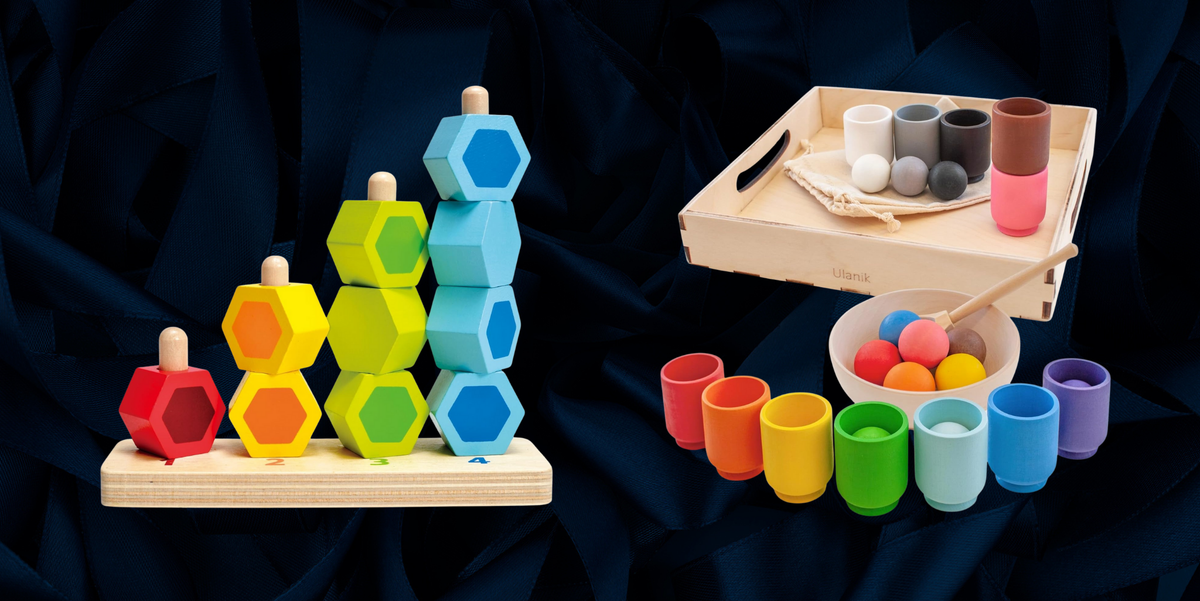
Choosing Montessori toys for 1-year-old toddlers can feel like shopping in a tiny wooden jungle. Every toy claims to build intelligence, creativity, focus, balance, emotional regulation, problem-solving, and possibly the ability to file taxes by preschool. The truth is simplerand better. The best Montessori toys for 1-year-olds are safe, hands-on, purposeful, and just challenging enough to make a toddler pause, try again, and beam like they just solved a mystery worthy of a detective hat.
At age one, toddlers are busy scientists. They drop things to test gravity. They fill containers, empty containers, and then empty your kitchen drawer because research must continue. They are learning to walk, grasp, stack, sort, imitate, communicate, and understand cause and effect. Montessori-inspired toys support this stage by offering real, concrete experiences instead of flashy entertainment. Think wood, fabric, metal, natural textures, simple movement, real-world practice, and toys that do one job beautifully.
This guide highlights 20 of the best Montessori toys for 1-year-old toddlers, with practical examples, developmental benefits, and buying tips for parents who want fewer noisy gadgets and more meaningful play. Bonus: many of these toys will not require batteries, which means your sanity gets a small but glorious vacation.
What Makes a Toy “Montessori” for a 1-Year-Old?
A Montessori toy is not automatically any toy painted beige and photographed next to a linen curtain. For toddlers, a Montessori-friendly toy usually has a few important qualities: it is simple, beautiful, child-sized, hands-on, safe, and connected to a real developmental skill. It invites the child to explore independently, repeat an action, correct mistakes, and build confidence.
For a 1-year-old, the best Montessori toys often support fine motor skills, hand-eye coordination, object permanence, sensory exploration, balance, early language, practical life skills, and concentration. A good toy does not need to sing the alphabet in seven languages. It simply needs to give your toddler something meaningful to do.
How to Choose Safe Montessori Toys for 1-Year-Olds
Before falling in love with a beautiful wooden toy, check the basics. Choose toys labeled for 12 months and up, avoid small detachable parts, inspect for splinters or sharp edges, and stay away from loose magnets, button batteries, long strings, water beads, and anything that can fit fully inside a toddler’s mouth. Toddlers explore with their hands, eyes, ears, andbecause apparently this is written into the baby constitutiontheir mouths.
Look for sturdy construction, non-toxic finishes, washable surfaces, and simple designs. If a toy has multiple pieces, ask yourself: “Would I feel calm if my child played with this while I watched from three feet away?” If the answer is no, it may be better for an older child.
20 Best Montessori Toys for 1-Year-Old Toddlers
1. Object Permanence Box
An object permanence box is a classic Montessori toy for 1-year-olds. The child drops a ball into a hole and watches it roll out again. Simple? Yes. Fascinating to toddlers? Also yes. This toy teaches cause and effect, hand-eye coordination, tracking, and the idea that objects still exist when they disappear briefly. It is a tiny physics lesson disguised as play.
2. Wooden Stacking Rings
Stacking rings help toddlers practice grasping, size comparison, sequencing, and problem-solving. Choose a stable, smooth wooden stacker with large rings and safe finishes. At first, your child may simply remove the rings. Later, they may place them back in any order. Eventually, they begin noticing size differences. Montessori play respects that progression instead of rushing it.
3. Nesting and Stacking Cups
Stacking cups are humble heroes. Toddlers can stack them, nest them, knock them down, hide objects underneath, pour water, scoop rice in a sensory bin, or wear one briefly as a hat. No judgment. These cups encourage spatial awareness, fine motor control, coordination, and open-ended play.
4. Shape Sorter with Large Pieces
A simple shape sorter supports early problem-solving and hand-eye coordination. For 1-year-olds, choose one with large, chunky shapes and only a few openings. Too many shapes can turn playtime into a tiny geometry exam. Start with circles, squares, and triangles, then increase complexity as your toddler becomes more confident.
5. Jumbo Knob Puzzle
Jumbo knob puzzles are excellent Montessori-inspired toys because they isolate one skill: picking up a piece and matching it to a place. Large knobs are easier for small hands to grasp. Animal, vehicle, or fruit puzzles also support language development when parents name the objects during play.
6. Wooden Peg Board
A wooden peg board helps toddlers practice placing objects into holes, removing them, sorting colors, and developing wrist control. Keep it simple for this age. Large pegs are safer and easier to manipulate. This toy supports concentration and repetition, two things Montessori learning values deeply.
7. Ball Tracker or Ball Run
A ball tracker lets toddlers place a ball at the top and watch it roll down a track. It builds visual tracking, cause-and-effect understanding, and motor planning. Toddlers love repeating the same action because repetition is how they master skills. Adults call it “again?” Toddlers call it “professional development.”
8. Wooden Blocks
Blocks are among the best toys for toddler development. At one year old, children may bang blocks together, carry them, stack two or three, or knock down a tower built by an adult. These activities build coordination, spatial awareness, strength, and early problem-solving. Choose blocks large enough to avoid choking hazards.
9. Soft Climbing Blocks
Movement matters. Soft climbing blocks, foam ramps, or low toddler-safe cushions help children crawl, climb, balance, and build body awareness. A Montessori home environment often supports safe movement rather than constantly saying “no” to every climb. Supervision is essential, but movement toys can help toddlers practice coordination in an appropriate way.
10. Push Walker
A sturdy push walker can support early walking practice. Look for one with a stable base, adjustable resistance if possible, and no tiny accessories. Avoid traditional baby walkers that place children inside a rolling frame. A push toy lets toddlers control movement while practicing balance, strength, and confidence.
11. Pull Toy
Once a toddler is walking steadily, a pull toy becomes a delightful companion. A wooden animal or simple wheeled toy encourages walking, coordination, and pretend play. The best pull toys move smoothly and do not include long cords that could create a safety risk. Keep the cord short and supervise play.
12. Wooden Animal Figures
Realistic animal figures support language, pretend play, matching, and classification. Choose large, toddler-safe animals with smooth edges. Start with familiar animals such as dog, cat, cow, bird, and horse. Name the animal, make the sound, and invite your toddler to imitate. It is simple, joyful, and surprisingly good for vocabulary.
13. Sensory Balls
Textured sensory balls are wonderful for grasping, rolling, squeezing, and crawling after. Different textures help toddlers explore touch, while rolling supports visual tracking and movement. Choose balls that are soft, washable, and too large to become choking hazards.
14. Posting Toy
A posting toy lets toddlers place discs, coins, or shapes into a slot. This activity builds hand-eye coordination, wrist rotation, focus, and persistence. For safety, make sure all pieces are oversized and age-rated for toddlers. You can also create a supervised homemade version with a container and large lids.
15. Busy Board with Real-Life Latches
A Montessori-friendly busy board focuses on practical life skills: latches, zippers, switches, wheels, and doors. For a 1-year-old, choose a board with large, secure parts and no small screws or detachable pieces. The goal is not overstimulation. The best busy board feels like a mini workshop, not an airport control panel.
16. First Musical Instruments
Simple instruments such as a small drum, egg shaker, bells securely enclosed in a handle, or toddler xylophone can support rhythm, listening, coordination, and emotional expression. Choose instruments designed for toddlers, and avoid loose beads, small parts, or overly loud sounds. Parents deserve hearing, too.
17. Board Books with Texture or Flaps
Books absolutely belong on a Montessori toy shelf. At age one, sturdy board books with realistic pictures, textures, simple words, and lift-the-flap features are especially engaging. Reading together builds language, attention, bonding, and curiosity. Keep a few books accessible in a low basket and rotate them often.
18. Practical Life Cleaning Set
Toddlers love real work. A child-sized broom, dustpan, cloth, sponge, or small brush allows them to imitate daily routines. Practical life toys build independence, coordination, responsibility, and confidence. Will your 1-year-old clean efficiently? No. Will they proudly move dust from one side of the floor to the other? Absolutely.
19. Basket of Real Objects
A treasure basket filled with safe household objects can be more engaging than a commercial toy. Try a wooden spoon, metal measuring cup, soft cloth, silicone spatula, large brush, or smooth natural object that is safe for supervised exploration. This supports sensory learning, language, comparison, and curiosity.
20. Simple Doll or Soft Baby Figure
A soft doll or baby figure encourages nurturing, imitation, body-part naming, and early pretend play. Choose a washable doll with embroidered features and no small accessories. Toddlers may hug it, feed it pretend food, put it in a basket, or drag it dramatically by one arm. Love has many forms.
Best Montessori Toy Categories by Skill
Fine Motor Skills
For fine motor development, choose peg boards, knob puzzles, posting toys, stacking rings, and shape sorters. These toys help toddlers coordinate fingers, hands, and eyes as they grasp, release, twist, fit, and remove objects.
Gross Motor Skills
For movement, consider push walkers, pull toys, soft climbing blocks, sensory balls, and low balance activities. One-year-olds need safe opportunities to move their bodies, practice walking, squat, climb, crawl, and carry objects.
Language Development
For early language, choose board books, animal figures, realistic object baskets, dolls, and pretend food. Name objects clearly, use short phrases, and follow your toddler’s attention. “Cow. Brown cow. The cow says moo.” Congratulationsyou are now a language coach in pajamas.
Problem-Solving
For thinking skills, choose object permanence boxes, ball trackers, nesting cups, simple puzzles, and shape sorters. These toys let toddlers experiment and discover relationships: in and out, up and down, big and small, open and closed.
How Many Montessori Toys Does a 1-Year-Old Need?
Fewer than most toy aisles suggest. A calm Montessori-inspired play area may include six to eight toys displayed on a low shelf or in baskets. The rest can be stored away and rotated every one or two weeks. Toy rotation keeps play fresh without overwhelming your toddler.
Too many toys can scatter attention. A small selection encourages deeper focus. If your toddler ignores a toy, do not panic. Put it away and try again later. Development is not a straight line; it is more like a tiny person walking across the room, falling onto a pillow, laughing, and then trying again.
Montessori Toy Shelf Setup for 1-Year-Olds
Use a low shelf, baskets, or trays so your child can see and reach toys independently. Place one activity per basket when possible. Keep the layout simple: a puzzle, a stacker, a ball toy, a few books, a practical life item, and perhaps a basket of real objects. Leave open floor space for movement.
Return toys to the same place after play. Over time, toddlers begin to understand order. They may even help clean upslowly, proudly, and with several detours involving a sock they found under the couch.
Montessori Toys to Avoid for 1-Year-Old Toddlers
Not every toy labeled “Montessori” is appropriate for a 1-year-old. Avoid toys with small beads, marbles, detachable magnets, button batteries, long cords, sharp edges, fragile parts, or complicated instructions. Also be cautious with noisy electronic toys that do all the work for the child. When a toy flashes, talks, sings, spins, and applauds itself, the toddler often becomes a spectator instead of an active learner.
Montessori-inspired play works best when the child does the thinking, moving, testing, and repeating. A simple toy that invites effort usually has more developmental value than a busy toy that performs on command.
of Real-Life Experience: What Actually Works With Montessori Toys for 1-Year-Olds
In real homes, Montessori play rarely looks as polished as the pictures online. The shelf may start the morning with three beautiful wooden toys, a basket of board books, and a carefully folded cloth. By lunchtime, the stacking cups are in the laundry basket, one puzzle piece is under the sofa, and your toddler has decided the most fascinating object in the room is a cardboard box. This is not failure. This is toddler learning in its natural habitat.
One of the most useful experiences parents often report is that simple toys last longer in attention than complicated ones. A 1-year-old may ignore an expensive activity cube after five minutes but spend twenty minutes putting blocks into a mixing bowl. That does not mean the cube is bad. It means toddlers are drawn to actions they can control: put in, take out, carry, drop, open, close, stack, knock down, repeat. Repetition may look boring to adults, but to toddlers it is mastery. They are not “just doing it again.” They are refining grip strength, timing, balance, prediction, and confidence.
Another practical lesson: toy rotation works best when it is relaxed. You do not need a color-coded spreadsheet unless spreadsheets bring you joy, in which case, live your truth. Start with a few toys on a shelf and watch what your child chooses. If the peg toy is ignored, store it for two weeks. If the ball tracker becomes the main event every morning, keep it available. Montessori at home is not about forcing a curriculum; it is about observing the child and preparing the environment.
Parents also discover that practical life activities are often toddler favorites. A small cloth for wiping spills, a basket for collecting socks, or a child-sized brush can create more focus than many commercial toys. The key is allowing enough time. A toddler wiping a table may wipe the same spot for three minutes, then wipe their own shirt, then attempt to wipe the dog. With gentle supervision, this kind of real-life work builds coordination, independence, and belonging.
Safety checks become part of the routine. Wooden toys can loosen. Puzzle knobs can wiggle. Fabric seams can open. Toddlers are enthusiastic quality-control inspectors with very low concern for your purchase price. Inspect toys regularly, especially anything with pieces, cords, wheels, or attached parts. If a toy breaks, remove it immediately.
Finally, the best Montessori toy experience includes the adultbut not as the boss of play. Sit nearby, name what you see, and resist the urge to correct too quickly. If your child puts the square shape near the round hole, pause. Let them test it. Let them discover. When they succeed, share the joy without turning it into a lecture. “You did it. The square fits.” That small moment is powerful. The toy matters, but the relationship around the toy matters even more.
Conclusion
The best Montessori toys for 1-year-old toddlers are not the fanciest, loudest, or most expensive. They are the toys that invite your child to touch, move, think, repeat, and grow. Object permanence boxes, stacking cups, knob puzzles, blocks, push toys, board books, sensory balls, and practical life tools all support the skills toddlers are naturally working on: coordination, language, independence, movement, and problem-solving.
When choosing toys, remember the golden formula: safe, simple, purposeful, and developmentally appropriate. A good Montessori toy gives your toddler a job they can almost do, then lets them practice until “almost” becomes “I did it!” And yes, they may still prefer the box. Honestly, the box is pretty Montessori too.