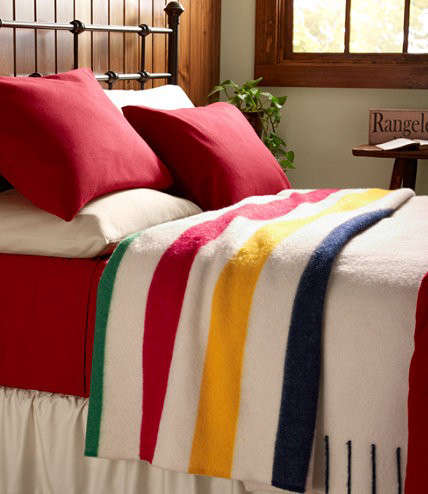
Some home goods are just home goods. A spoon is a spoon. A lamp is a lamp. And then there is the Hudson’s Bay Point Blanket, which somehow manages to be a blanket, a design icon, a collectible, a piece of fur-trade history, and the star of more rustic cabin fantasies than a stack of split firewood. It is warm, bold, and immediately recognizable: creamy wool, those famous stripes, and the little marks called “points” that have puzzled shoppers, collectors, and history buffs for generations.
If you have ever seen one draped over a chair and thought, “That blanket looks more important than I am,” you are not alone. The Hudson’s Bay Point Blanket has earned its reputation the old-fashioned way: by surviving changing fashions, changing markets, and changing meanings. It began as a practical object in the North American fur trade, but over time it became something much larger. Today, it sits at the crossroads of design, material culture, collecting, and historical memory.
This guide explores the history of the Hudson’s Bay Point Blanket, what the points actually mean, why the striped wool blanket became so famous, how it moved from trading post to department store to collector’s shelf, and why it still sparks admiration and debate today. In other words, we are about to spend a lot of time discussing a blanket. Honestly, there are worse ways to spend an afternoon.
What Is a Hudson’s Bay Point Blanket?
A Hudson’s Bay Point Blanket is a heavyweight wool blanket historically associated with the Hudson’s Bay Company, one of the best-known trading companies in North American history. Traditional examples are most closely linked with a pale or cream background and bold horizontal stripes in green, red, yellow, and dark blue or black near each end. The design is simple enough to feel timeless, but distinctive enough that one glance usually gives it away.
At its core, this is a wool trade blanket. That practical identity matters. Before it became a decorating statement or a coveted collectible, it was valued for the things any good blanket should do: provide warmth, hold up to hard use, and serve many purposes in rough climates. Historical sources describe these blankets as highly desirable in the fur trade because they were durable, warm, and useful in winter conditions. In some regions, the light body color even made them especially appealing in snowy environments. It turns out good design and basic survival sometimes get along very well.
Why Is It Called a “Point” Blanket?
The word point refers to the short marks woven or stitched near the edge of the blanket. These marks allowed traders and users to identify size without unfolding the entire piece. In plain English, the points were the old-school version of reading the label on bedding at a store today, just with more wool and fewer plastic tags trying to scratch your neck.
What the Points Mean
The most widely accepted explanation is that the points indicate size, not quality in any modern luxury sense. A larger blanket carried more points than a smaller one. The term itself is often linked to the French word empointer, a textile term connected to marked stitches or points on cloth. That helps explain why the system predates many of the myths that later grew around it.
And yes, there is a myth. Actually, there are several myths. One of the most common claims is that the points showed the blanket’s price in beaver pelts. That explanation keeps popping up because it sounds wonderfully dramatic and very fur-trade-ish. But the better-supported interpretation is simpler: points were practical size markers. Some historic writing connected blanket points to value within trading systems, which helps explain why the confusion never quite died. Still, if you want the clean answer for modern readers, here it is: the points are best understood as size markers on a trade blanket.
The History of the Hudson’s Bay Point Blanket
The point blanket history begins in the late eighteenth century, when the Hudson’s Bay Company had blankets made for trade in North America. Historical references place the classic point blanket in regular company use around 1779 to 1780, and museum sources describe these blankets as imported from England and distributed through the company’s trading network. That network spread across vast areas tied to the fur trade, including what is now Canada and parts of the United States.
By then, blankets were already important trade goods. Indigenous communities across North America had rich textile, hide, and clothing traditions long before European trade blankets arrived, and the arrival of wool trade blankets added new materials and new possibilities to those existing worlds. The Hudson’s Bay version became especially famous because it was practical, recognizable, and easy to move through an enormous trade system.
In the Pacific Northwest and Great Lakes regions, the blanket became more than a bed covering. It was an article of exchange, a source of warmth, and material for clothing. Historical records from American museums and educational collections show that Hudson’s Bay blankets moved through Native and settler communities alike, and that they were used, adapted, and repurposed in ways the original London merchants probably never imagined.
That is part of what makes the Hudson’s Bay Point Blanket so fascinating. It is not just a company product with a nice stripe pattern. It is an object that sat inside a huge web of commerce, adaptation, need, and power. The company profited from those trade relationships. The blanket traveled because people wanted it, needed it, and made it useful in their own lives. A pretty design alone does not achieve that kind of staying power.
The Famous Stripes: Why This Blanket Is So Recognizable
The visual identity of the striped wool blanket is a big part of its enduring appeal. Even people who cannot explain the points can usually recognize the stripe arrangement. The traditional palette feels bold without being chaotic. It is graphic but not fussy. Historic but not dusty. Cabin-ready without requiring you to actually chop wood.
The appeal also comes from contrast. A light ground with strong bands of color gives the blanket an immediate visual rhythm. It works as a utilitarian object, but it also works as design. That balance explains why the Hudson’s Bay Point Blanket looks equally at home in a museum case, a lodge living room, or folded across the end of a bed in a very expensive home that pretends to be casual.
Collectors and decorators love that combination of symbolism and simplicity. The design carries history, but it also functions as a visual shorthand for winter, wilderness, heritage, and handcrafted style. It is one of those rare objects that can look rugged and polished at the same time.
From Blanket to Coat: The Point Blanket Coat Tradition
One of the most interesting chapters in the blanket’s story is the way it became clothing. Historical sources from Wisconsin describe point blankets being cut and sewn into coats in the Great Lakes region, including the famous point blanket coat or mackinaw-style coat. In one well-known account from the War of 1812 era, British Captain Charles Roberts had point blankets made into shorter coats for soldiers when standard greatcoats were not available.
That detail matters because it shows the blanket’s real-world usefulness. Dense wool offered warmth and some resistance to wind and wet conditions, which made it valuable far beyond bedding. The blanket could be belted, wrapped, draped, or tailored into outerwear. Later, the Hudson’s Bay Company itself turned the look into a commercial fashion item, marketing blanket coats to urban consumers in the early twentieth century.
In other words, the blanket made the leap from necessity to style long before modern heritage brands figured out how to charge extra for “authentic ruggedness.” The transformation makes sense: when an object already carries strong visual identity, practical performance, and a good story, fashion eventually notices.
Why Collectors Care So Much
Collectors love the Hudson’s Bay Point Blanket for the same reasons people collect good watches, old leather jackets, or cast-iron cookware: craftsmanship, durability, recognizable design, and historical depth. A genuine point blanket can feel like a piece of material history you can actually live with. It is not trapped behind glass unless you want it to be.
Condition matters, of course. So do size, age, labels, stripe arrangement, and provenance. Later examples can be easier to identify because they often come with more familiar labeling and more standardized construction details. Earlier or harder-used blankets may require a more careful eye. Not every striped blanket is a Hudson’s Bay Point Blanket, and not every vintage wool blanket with bold lines deserves an instant dramatic gasp on an auction site.
If you are shopping for one, the smartest approach is part design appreciation and part detective work.
- Look for clear point markings near the edge.
- Study the label, if there is one, and compare it with trusted museum or collector references.
- Check wool quality, construction, and signs of repair.
- Ask about provenance instead of relying on seller poetry.
- Remember that rarity and condition usually matter more than wishful thinking.
That last one is important. “Found in an old trunk” is charming. “Documented family ownership with dates” is better.
How the Blanket Works in Modern Interiors
The modern appeal of the Hudson’s Bay Point Blanket is not hard to understand. It brings texture, weight, pattern, and story into a room without feeling overly precious. It can warm up minimal interiors, sharpen rustic ones, and add personality to spaces that might otherwise look like they were assembled by someone who fears color.
On a bed, it adds structure and heritage charm. On a sofa, it reads as intentional rather than accidental. On a chair, it announces that someone in the house has opinions about textiles. That is not a bad thing. In design terms, the blanket works because it combines utility with symbolism. It is not decorative fluff pretending to have substance. It has actual substance. Usually several pounds of it.
That weight is part of the experience. A real wool point blanket does not feel flimsy or purely ornamental. It has presence. You do not so much toss it across furniture as place it with respect.
A Beautiful Object With a Complicated Legacy
Any honest article about the Hudson’s Bay Point Blanket should say this clearly: the blanket is historically important, visually striking, and deeply tied to the commercial systems of the fur trade. It is also linked to the broader story of colonial expansion in North America. That does not erase its material beauty, but it should shape how we talk about it.
For many people, the blanket represents craftsmanship, endurance, and a recognizable design tradition. For others, it also reflects trade relationships in which European companies amassed wealth while Indigenous communities navigated dramatic political, economic, and cultural change. Both truths can sit in the same room, even if they make the room a little quieter.
That is why the best writing on the blanket avoids lazy nostalgia. The smarter approach is appreciation with context. Admire the object, study the textile, enjoy the design, but do not pretend the story is only cozy. History rarely is.
What Owning or Living With One Feels Like: Real-World Experiences With a Hudson’s Bay Point Blanket
The experience of living with a Hudson’s Bay Point Blanket is part practical comfort and part emotional ritual. People are often surprised by how substantial it feels the first time they pick one up. If your modern blanket experience has mostly involved soft, featherweight throws with names like “cloud plush,” a traditional wool point blanket can feel like it arrived from a sterner century. It is heavier, denser, and more structured. Instead of collapsing into a puddle of fabric, it holds shape. It drapes with intention.
That physical presence changes the way people use it. You do not absentmindedly fling it around. You fold it. You smooth it. You notice where the stripes land. It becomes part of the room even when nobody is under it. That alone is a different experience from owning an ordinary blanket. A Hudson’s Bay Point Blanket is one of those rare household pieces that looks decorative even when it is simply waiting to be useful.
There is also the sensory side. Wool has a certain dry warmth that feels different from synthetic fabrics. It traps heat without feeling slick, and it often feels most satisfying in genuinely cold weather rather than in over-air-conditioned rooms pretending to be winter. Owners often describe that “camp, cabin, lodge” feeling that comes from wrapping up in it on a cold morning with coffee nearby and zero interest in leaving the chair. It is cozy, yes, but in a disciplined, frontier-adjacent way. This is not a blanket that whispers. It announces.
Another common experience is that the blanket slowly changes your eye for interiors. Once you live with a strong heritage textile, flimsy décor starts to look a little embarrassed. A point blanket can make a room feel grounded. It adds age, texture, and confidence. Even people who do not know its full history tend to react to it. Guests notice it. They ask about it. Someone eventually says, “That looks expensive,” and someone else says, “That looks old,” and both people feel pleased with themselves.
For collectors, the experience includes the thrill of the hunt. Finding the right blanket, studying the points, checking the label, and comparing details can be half the fun. There is satisfaction in learning to distinguish between a handsome vintage wool blanket and a true Hudson’s Bay example. It is the sort of object that rewards close looking. The more you learn, the more you notice, and the more you realize that textiles can hold as much personality as furniture, art, or jewelry.
Then there is the family-heirloom factor. Even when a blanket is not formally inherited, it often feels inheritable. It is the kind of thing people imagine passing down, not because it is fragile, but because it endures. A good point blanket can carry use marks, folds, repairs, and memories without losing dignity. In that sense, the experience is not just about warmth. It is about living with an object that feels built to outlast trends, online shopping moods, and maybe even the sofa beneath it.
Final Thoughts
The Hudson’s Bay Point Blanket has lasted because it combines nearly everything people want from an enduring object: utility, beauty, recognizability, and story. It mattered in the fur trade because it was useful. It lasted in fashion and interiors because it looked distinctive. It remains collectible because it carries history in a form people can touch, use, and understand.
That said, the smartest way to appreciate it is not to flatten it into a single meaning. It is not just a cozy striped blanket, and it is not just a symbol of commerce or colonial history either. It is all of those things at once: material, historical, practical, and emotional. Few household objects manage that. Most blankets just hope to survive laundry day.
If you are drawn to the Hudson’s Bay Point Blanket, you are probably responding to more than its looks. You are responding to weight, craft, history, and the rare pleasure of an object that still feels fully itself after centuries of use and reinterpretation. That is not bad for a blanket. In fact, that is a pretty legendary résumé.