Weddings bring together love, family, old friends, good food, and at least one relative who believes the seating chart is a personal attack. Most couples handle the pressure with grace. Occasionally, however, a bride becomes so focused on creating a flawless celebration that other people start looking less like loved ones and more like unpaid members of a production crew.
The following bridezilla stories, adapted and fully paraphrased from publicly shared wedding experiences, involve outrageous financial demands, appearance rules, medical insensitivity, and micromanagement worthy of a moon landing. They are funny in places, painful in others, and surprisingly useful as lessons in wedding etiquette.
When the Wedding Became More Important Than Human Beings
1. She Tried to Control a Bridesmaid’s Pregnancy Plans
After surviving a dangerous pregnancy loss, one woman agreed to discuss becoming a bridesmaid. The bride reportedly told her she could not try for another baby until after the wedding. Her reason was not scheduling or childcare: another medical emergency might redirect attention away from the engagement. The friendship ended before anyone ordered a dress.
2. She Blamed Her Father for Having a Heart Attack
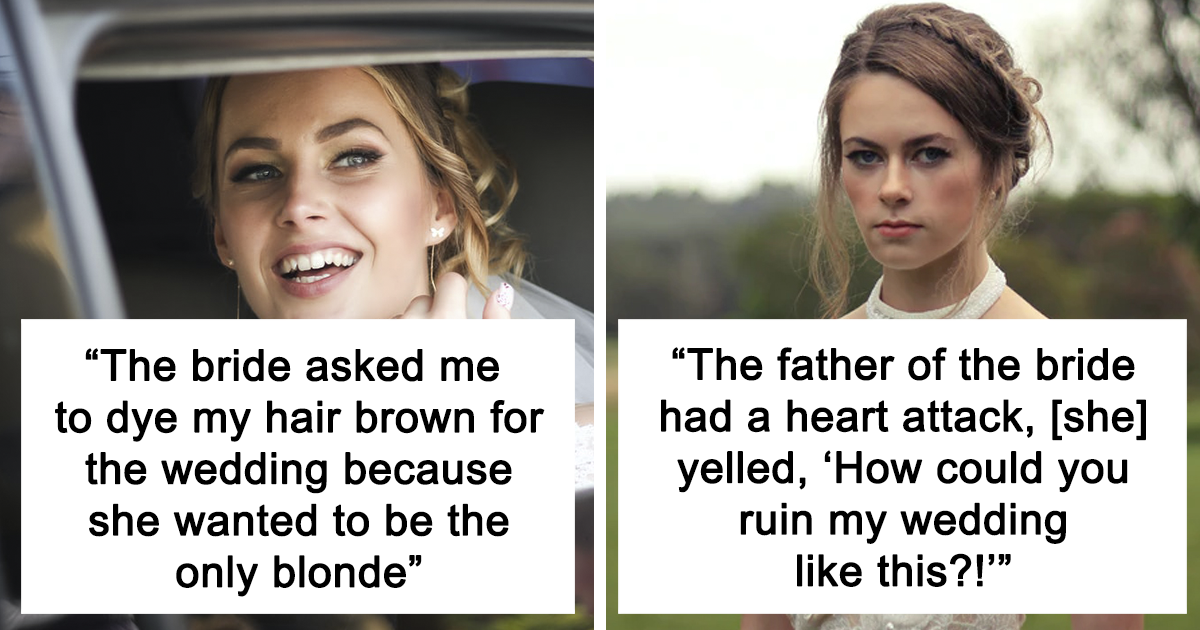
During one reception, the bride’s father suffered a heart attack and was carried out by paramedics. Instead of focusing on his condition, the bride allegedly sobbed that he had ruined her wedding. Guests were left wondering whether they had accidentally entered a dark comedy rather than a family celebration.
3. A Dying Parent Was Apparently Not a Good Enough Excuse
A guest declined a last-minute destination wedding because she needed to arrange hospice care for her terminally ill father. She could not afford both trips. The bride responded with anger and guilt instead of compassion, permanently damaging the friendship. A wedding invitation is an honor, but it is not a court summons.
4. A Bridesmaid in Chemotherapy Was Not Allowed to Sit
One bridal party included a woman undergoing chemotherapy for breast cancer. After she completed the walk down the aisle, the bride reportedly insisted that she remain standing with everyone else. No photograph, symmetrical lineup, or ceremony aesthetic is more important than someone’s medical safety.
5. Bereavement Was Treated Like a Scheduling Conflict
Another bridesmaid lost her father six weeks before the ceremony. The bride could not understand why grief and funeral responsibilities took priority over wedding details. The bridesmaid still attended, but the friendship did not survive. Ironically, she met her future husband at that very wedding, giving the story an unexpectedly happy footnote.
6. A Hospital Visit Cost Someone Her Place
A member of the wedding party missed a bridesmaid-dress shopping trip because she became ill and needed hospital care. Rather than checking on her recovery or arranging another fitting, the bride removed her from the wedding party. Apparently, the boutique appointment possessed greater diplomatic importance than an actual medical emergency.
Appearance Rules That Crossed Every Reasonable Line
7. The Bride Excluded a Friend Because of Her Weight
One woman learned that her close friend had excluded her from both the bridal party and the wedding because the bride’s mother thought her body size would complicate dress shopping and disrupt the photographs. The decision did not improve the pictures; it simply exposed how conditional the friendship had become.
8. Losing Weight Was Also Forbidden
In a bizarre reversal, another bridesmaid was dismissed after losing weight between the dress fitting and the wedding. The bride allegedly wanted to remain the thinnest woman at the altar. When friends are treated as comparison charts instead of people, the real problem has nothing to do with tailoring.
9. A Blonde Bridesmaid Was Ordered to Become Brunette
A blonde bride discovered that one bridesmaid shared her hair color. Her solution was to ask the bridesmaid to dye her hair brown so that only the bride would be blonde in the photographs. Wedding colors may include champagne, ivory, and sage. “Human brunette” should not be one of them.
10. Neon Hair Suddenly Became a Crisis
One maid of honor had worn brightly colored hair for years. Just weeks before the ceremony, the bride requested a natural shade and offered a fraction of what professional color correction would cost. A close friend’s established appearance is not a disposable centerpiece that can be replaced when it clashes with the linens.
11. Glasses Were Said to Ruin the Aesthetic
Two bridesmaids were allegedly told to walk down an uneven outdoor aisle without their eyeglasses. The bride worried that eyewear would spoil the photographs, while the bridesmaids worried about locating the aisle. Fortunately, another family member intervened before the wedding theme became “formal attire with avoidable injuries.”
12. The Salon Checklist Arrived With a Bill
For a wedding planned on short notice, bridesmaids were required to buy specific dresses and shoes, pay for professional hair appointments, get salon manicures and pedicures, and conceal their tan lines. When one woman said she could not afford everything, she was offered a loannot fewer requirements. She declined the role.
13. Painful Shoes Were More Important Than Comfort
One bridesmaid had to wear poorly fitting high heels despite rarely wearing heels at all. She then stood through a ceremony lasting more than an hour. By the end, removing the shoes felt like a spiritual experience. Coordinated footwear is charming; mandatory foot torture is not.
14. Ten-Degree Weather Could Not Touch the Dresses
During a February wedding, a bride insisted on outdoor photographs without coats in roughly 10-degree weather because the dresses needed to remain visible. Even the photographer objected. Years later, the bride reportedly continued blaming the bridesmaids for the imperfect session, although frostbite would probably have been less photogenic.
15. One Dress Was Torn Off for Being “Too White”
A bride reportedly became furious that a bridesmaid’s dress looked too white and tore it open in front of other people. The surprising detail? The bride had selected the dress herself. Most of the wedding party walked away after witnessing the incident, proving that fabric choices do not excuse physical aggression.
Wedding Costs, Gift Demands, and Financial Pressure
The financial burden behind these stories is not imaginary. A 2024 LendingTree survey found that 31% of Americans who had recently attended a wedding took on debt to do so. Among indebted guests, 87% felt pressure to overspend. NerdWallet later reported that guests traveling overnight for summer weddings expected to spend nearly $2,000 on lodging and transportation on average.
16. She Suggested Financing the Bachelorette Party With Debt
A bridesmaid who could not afford a $1,500 destination bachelorette trip was removed from the wedding party. The bride reportedly suggested opening a credit card to cover it. Friendship should not arrive with compound interest, an annual fee, and a minimum monthly payment.
17. Free Professional Flowers Did Not Count as a Gift
A florist donated products and labor worth approximately $1,000 to a friend’s wedding. Afterward, the bride and her mother complained that she had not purchased an additional present. Donated professional services are already an extraordinarily generous gift, even when they do not arrive in a box with a ribbon.
18. The Wedding Party Was Not Given Dinner
After spending the day performing ceremonial duties, members of one wedding party learned that they would not receive a reception meal because the bride wanted to save money. She reportedly suggested that participating in the wedding was reward enough. Unfortunately, prestige is difficult to eat after eight hours in formalwear.
19. An $800 Contribution Still Was Not Enough
One bridesmaid spent about $800 on clothing, alterations, beauty services, and lodging. The day after the ceremony, the bride sent a sarcastic message criticizing her for not providing a wedding gift immediately. A present is voluntary generosity, not an overdue invoice delivered with passive-aggressive punctuation.
20. She Asked How to Return a Guest’s Gift
Rather than simply exchanging an unwanted present privately, one bride contacted the giver and asked how to return it for store credit. Registries help guests choose useful items, but they do not turn every gift into a guaranteed cash-equivalent transaction.
21. The College Student Faced a Luxury Spending Marathon
A financially struggling student was expected to buy a $400 bridesmaid dress, spend more than $1,200 on a destination bachelorette weekend, attend an expensive shower, and still provide a wedding present. Bridesmaid dresses commonly cost between $100 and $300 before alterations, so expectations should be discussed before anyone accepts the role.
Micromanagement That Deserved Its Own Project Manager
22. The Bride Rewrote the Maid of Honor’s Toast
One bride demanded to review her maid of honor’s speech, then replaced it with a rewritten version. The maid of honor ultimately skipped the wedding. It is reasonable to request that speakers avoid humiliating stories; scripting their affection word for word is something else entirely.
23. Compliments Were Scheduled by the Minute
A bridesmaid received a detailed wedding-day itinerary containing instructions for exactly when she should praise the bride’s appearance. The bride later became angry when the compliments did not occur on schedule. Spontaneous affection tends to lose some sparkle when it appears between “9:45 makeup touch-up” and “10:00 mandatory admiration.”
24. A Birthday Was Banned From the Bachelorette Weekend
A bachelorette trip happened to overlap with one participant’s birthday, but the bride prohibited anyone from mentioning it. Friends quietly arranged a small cake and balloons. When the bride discovered them, she became visibly angry. Celebrating another person for ten minutes does not cause bridal attention to evaporate.
25. The Groomsmen Became an Unpaid Cleanup Crew
After the ceremony, groomsmen at one wedding were ordered to work through the reception, handle cleanup, and solve operational problems. When they attempted to take a break, the bride and her mother scolded them. Wedding-party support can include small tasks, but replacing paid venue staff was never part of the boutonniere.
26. Handmade Decorations Were Criticized
A bride procrastinated, then asked her bridesmaids to create numerous decorations shortly before the wedding. After they donated their time, she complained that the results did not meet her standards and took over the shower planning because she considered them incompetent. Free labor rarely comes with a luxury-event warranty.
27. One Bridesmaid Worked 15 Hours a Week
A full-time student with a job reportedly spent around 15 hours each week hand-making wedding decorations for a close friend. Helping with a craft night can be fun. Quietly acquiring a second unpaid occupation involving glue guns, glitter, and looming deadlines is a different arrangement.
28. The Purple Tablecloth “Ruined” Everything
One bride became inconsolable when the reception tablecloths arrived in the wrong shade of purple. Guests waited while friends spent nearly an hour calming her and repairing her makeup. Meanwhile, the partner, family, music, meal, and actual marriage were all present and functioning normally.
29. Sixteen Bridesmaids Needed Sixteen Unique Blues
A bride assembled 16 bridesmaids and wanted every woman in a different dress style and a different shade of blue. She then became upset when the store could not supply enough variations. At some point, a wedding palette stops being a palette and becomes an industrial paint catalog.
30. The Planner Was Blamed for Preventing an Extra Fee
A wedding planner reportedly chased down a departing couple to warn them that their catering bill remained unpaid and would soon incur an extra charge. The bride later demanded a refund because the planner had “made a scene.” Saving clients money is usually considered good service, even when reality interrupts the grand exit.
The Guest-Side Experience: What These Stories Teach Us
The Trouble Usually Begins With Small Tests
Extreme wedding behavior rarely begins with a dramatic reception meltdown. It often starts with a modest-sounding request: buy this particular shoe, attend one additional event, change a feature of your appearance, or contribute “just a little more.” Each request may appear manageable by itself. The problem emerges when saying no is treated as betrayal.
Someone who has already purchased a dress may feel trapped by the money and emotional energy invested. That makes it easier for new expenses to keep appearing. Clear information at the beginning protects everyone. Before a friend accepts a wedding-party role, the couple should disclose known costs, travel requirements, mandatory appointments, and expected events.
Guests Remember How They Were Treated
Years later, most guests will not remember whether the napkins perfectly matched the flowers. They will remember being welcomed, fed, thanked, and allowed to enjoy the day. They will also remember being shamed about their bodies, pressured into debt, or treated like emergency staff wearing satin.
A thoughtful host understands that attendance already requires time and money. Guests may need transportation, lodging, childcare, clothing, and time away from work. Wedding-party members often face even larger expenses. Declining an invitation or optional trip should therefore be accepted without punishment, interrogation, or a friendship-ending loyalty test.
Reasonable Boundaries Are Not Bridezilla Behavior
Not every firm wedding decision is unreasonable. Couples may limit plus-ones, host a child-free ceremony, create a dress code, or decline unsolicited changes to the guest list. Venues have capacity limits, caterers require final numbers, and budgets are real. Guests also have responsibilities: RSVP promptly, arrive on time, follow clearly communicated attire guidance, and never bring uninvited people.
The difference lies in clarity, consistency, and respect. Encouraging guests to wear green is a theme. Demanding that everyone purchase one exact emerald velvet outfit is a financial burden. Asking bridesmaids to choose dresses within a palette is coordination. Ordering a friend to change her body, hair, glasses, or medical needs is control.
How Wedding Guests Can Respond to Excessive Demands
When a request feels unreasonable, a calm and specific response usually works best: “I can spend up to $200 on the dress,” “I cannot attend the destination trip,” or “I need to sit during the ceremony for medical reasons.” A boundary does not require a courtroom-length defense.
If the bride responds with guilt, threats, humiliation, or financial pressure, stepping down may be healthier than continuing. Do it as early as possible, return anything that belongs to the couple, and communicate directly rather than through the group chat rumor mill. Leaving a wedding party can be uncomfortable, but debt, injury, and resentment make terrible favors.
How Couples Can Avoid Becoming the Story Everyone Retells
Build the wedding around the available budget, not around money expected from friends. Separate essentials from visual preferences, give people meaningful choices, and assign genuine event work to paid professionals whenever possible. Most importantly, remember why everyone gathered: to celebrate a relationship.
A beautiful wedding can survive an imperfect tablecloth, a bridesmaid wearing glasses, and a guest who cannot attend the bachelorette weekend. A friendship may not survive cruelty disguised as attention to detail. The most memorable hosts are not the ones who control every inch of the room; they are the ones who make people feel lucky to be in it.
Conclusion
These bridezilla stories are entertaining because the demands sound almost fictional, but the underlying conflicts are familiar: money, insecurity, perfectionism, and forgotten boundaries. Wedding planning is stressful, yet stress does not grant permission to control another person’s body, finances, health, or family responsibilities.
The best wedding etiquette is remarkably simple. Communicate early, respect a polite no, prioritize safety, and treat loved ones as guests rather than accessories. Flowers wilt and cakes disappear, but people remember kindnessand they definitely remember being ordered to remove their glasses near an uneven aisle.