Finding the domain of a function sounds like one of those math tasks that should come with dramatic background music. But once you know what to look for, it becomes much less mysterious. The domain of a function is simply the set of all input values that are allowed. In plain English, it answers this question: “What numbers can I plug into this function without breaking math?”
Some functions are very welcoming. A line such as f(x) = 2x + 5 accepts every real number like an enthusiastic host at a party. Other functions are pickier. Fractions reject values that make the denominator zero. Square roots refuse negative radicands when working with real numbers. Logarithms only allow positive arguments. Graphs may stop, jump, or leave holes. Context can also limit the domain because you cannot sell negative concert tickets, measure negative time in many real-world problems, or have 2.7 people in a classroom unless something very strange is happening.
This guide explains 7 ways to find the domain of a function, with clear rules, examples, and practical tips. Whether you are studying algebra, precalculus, or calculus, these methods will help you identify domain restrictions quickly and confidently.
What Is the Domain of a Function?
The domain of a function is the set of all possible input values, usually the x-values, for which the function is defined. The output values are called the range. Think of the domain as the “allowed guest list” for x. If a number is on the list, the function works. If it is not, the function either becomes undefined or does not make sense in the situation.
For example, the function f(x) = x² has a domain of all real numbers because you can square any real number. But the function g(x) = 1 / x does not allow x = 0 because division by zero is undefined. So its domain is all real numbers except zero.
1. Start by Asking: Are There Any Restrictions?
The fastest way to find the domain is to scan the function for common math “danger zones.” Most algebra functions are defined for all real numbers unless something creates a restriction. The big three restrictions are:
- Division by zero
- Even roots of negative numbers
- Logarithms of zero or negative numbers
If none of these appear, the domain is often all real numbers, written as (-∞, ∞).
Example
Find the domain of f(x) = 4x³ – 2x + 9.
This is a polynomial. There are no denominators, square roots, or logarithms. Polynomials are defined for every real number, so the domain is:
(-∞, ∞)
That was painless. Math occasionally gives us snacks.
2. Check Denominators in Rational Functions
A rational function is a function written as one polynomial divided by another polynomial. The most important rule is simple: the denominator cannot equal zero.
To find the domain of a rational function, set the denominator equal to zero, solve, and exclude those x-values from the domain.
Example
Find the domain of:
f(x) = 3 / (x – 4)
The denominator is x – 4. Set it equal to zero:
x – 4 = 0
x = 4
So x cannot be 4. The domain is:
(-∞, 4) ∪ (4, ∞)
This means every real number is allowed except 4.
Another Example
Find the domain of:
h(x) = (x + 2) / (x² – 9)
Factor the denominator:
x² – 9 = (x – 3)(x + 3)
Set each factor equal to zero:
x – 3 = 0 gives x = 3
x + 3 = 0 gives x = -3
The domain is:
(-∞, -3) ∪ (-3, 3) ∪ (3, ∞)
Even if a factor cancels later, the original denominator still matters when identifying restrictions. A removable hole is still a hole, not a secret doorway.
3. Look Inside Even Roots
Square roots, fourth roots, sixth roots, and other even roots have a special rule when working with real numbers: the expression inside the root must be greater than or equal to zero.
The expression inside a radical is called the radicand. For an even root, set the radicand greater than or equal to zero and solve.
Example
Find the domain of:
f(x) = √(x – 5)
The radicand is x – 5. It must be nonnegative:
x – 5 ≥ 0
x ≥ 5
The domain is:
[5, ∞)
The bracket means 5 is included because √0 is defined.
Another Example
Find the domain of:
g(x) = √(12 – 3x)
Set the radicand greater than or equal to zero:
12 – 3x ≥ 0
-3x ≥ -12
When dividing by a negative number, flip the inequality:
x ≤ 4
The domain is:
(-∞, 4]
Odd roots, such as cube roots, are different. A cube root can handle negative numbers, zero, and positive numbers. For example, ∛x has domain (-∞, ∞).
4. Make Logarithm Arguments Positive
Logarithmic functions have one major domain rule: the argument of the logarithm must be greater than zero. Not greater than or equal to zero. Strictly greater than zero. Logs are a little dramatic that way.
For a function like f(x) = log(x), the domain is:
(0, ∞)
For transformed logarithmic functions, set the entire argument greater than zero.
Example
Find the domain of:
f(x) = log(x + 7)
The argument is x + 7. Set it greater than zero:
x + 7 > 0
x > -7
The domain is:
(-7, ∞)
Another Example
Find the domain of:
g(x) = ln(2x – 10)
Set the argument greater than zero:
2x – 10 > 0
2x > 10
x > 5
The domain is:
(5, ∞)
Notice the parenthesis, not a bracket. The value 5 is not allowed because it makes the logarithm argument zero.
5. Combine Restrictions Carefully
Some functions contain more than one possible restriction. In that case, find every restriction and combine them. The final domain must satisfy all conditions at the same time.
Example
Find the domain of:
f(x) = √(x + 2) / (x – 6)
This function has a square root and a denominator.
First, handle the square root:
x + 2 ≥ 0
x ≥ -2
Second, handle the denominator:
x – 6 ≠ 0
x ≠ 6
So x must be at least -2, but it cannot be 6. The domain is:
[-2, 6) ∪ (6, ∞)
This is where many students make tiny mistakes. They remember the square root rule but forget the denominator, or they exclude a number that should actually be included. Take it one restriction at a time.
6. Find the Domain from a Graph
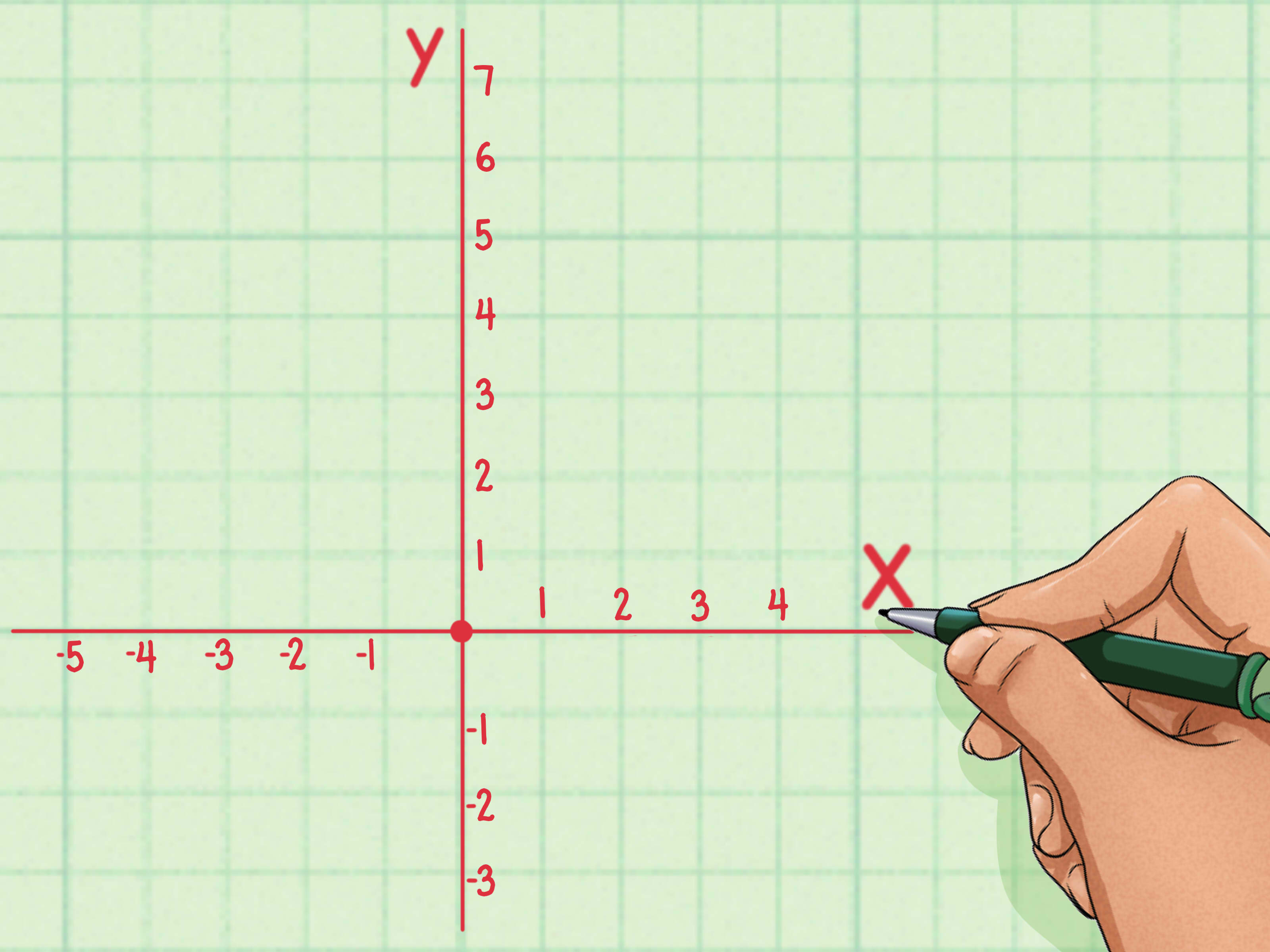
Sometimes the function is shown as a graph instead of an equation. To find the domain from a graph, look at all x-values covered by the graph from left to right. Ignore the y-values for now. The domain is about horizontal coverage.
Ask yourself:
- Where does the graph begin?
- Where does the graph end?
- Are there holes or gaps?
- Are endpoints open or closed?
- Does the graph continue forever in either direction?
Open and Closed Circles
A closed circle means the endpoint is included. Use a bracket. An open circle means the endpoint is not included. Use a parenthesis.
Example
Suppose a graph starts at x = -3 with a closed dot and ends at x = 5 with an open dot. The domain is:
[-3, 5)
If the graph has a hole at x = 2, then 2 must be excluded:
[-3, 2) ∪ (2, 5)
Graphs are especially useful because they show visual restrictions that may not be obvious from a simplified equation.
7. Use Context in Real-World Problems
Not all domain restrictions come from algebra. Some come from the real-world meaning of the problem. This is called a practical domain or contextual domain.
For example, suppose a function models the cost of movie tickets:
C(t) = 12t
Algebraically, t could be any real number. But in real life, t represents the number of tickets. You cannot buy -3 tickets, and you usually cannot buy 2.5 tickets. So the domain might be whole numbers:
{0, 1, 2, 3, 4, …}
Context matters. A function modeling height over time may only use time values after the experiment begins. A function modeling population may only allow nonnegative values. A function describing the number of students in a class should use whole numbers, not decimals.
Quick Domain Rules by Function Type
| Function Type | Domain Rule | Example |
|---|---|---|
| Polynomial | All real numbers | f(x) = x² + 3x – 1 |
| Rational | Denominator cannot equal zero | f(x) = 1 / (x – 2) |
| Even Radical | Radicand must be ≥ 0 | f(x) = √(x + 4) |
| Odd Radical | Usually all real numbers unless combined with another restriction | f(x) = ∛x |
| Logarithmic | Argument must be > 0 | f(x) = log(x – 1) |
| Graph | Use all x-values shown on the graph | Check endpoints, arrows, holes, and gaps |
| Real-World Model | Use values that make sense in context | Tickets, time, people, distance |
How to Write Domain Answers Correctly
There are several common ways to write a domain:
Interval Notation
Interval notation is compact and common in algebra and precalculus. Examples include:
(-∞, ∞)
[2, ∞)
(-∞, -1) ∪ (-1, 4)
Use parentheses when endpoints are not included. Use brackets when endpoints are included. Infinity always uses parentheses because infinity is not a number you can actually reach.
Set-Builder Notation
Set-builder notation describes the rule:
{x | x ≠ 0}
This means “the set of all x such that x is not equal to zero.”
Inequality Notation
Inequality notation is often easiest for simple domains:
x ≥ 5
x > -2
x ≠ 3
Common Mistakes When Finding the Domain
Forgetting to Check the Denominator
If a function has a fraction, check the denominator before doing anything fancy. Division by zero is never allowed.
Using the Wrong Inequality for Square Roots
For square roots, use ≥ 0, not > 0. The square root of zero is allowed.
Including Zero in a Logarithm Argument
For logarithms, use > 0, not ≥ 0. Logs do not accept zero.
Ignoring the Original Function
Simplifying can hide restrictions. If the original function had a denominator that became zero at a certain x-value, that value may still be excluded even if the expression cancels later.
Confusing Domain and Range
The domain is about input values, usually x. The range is about output values, usually y. When reading a graph, domain goes left to right; range goes bottom to top.
Practice Problems
Problem 1
Find the domain of f(x) = x² – 8x + 1.
This is a polynomial, so the domain is:
(-∞, ∞)
Problem 2
Find the domain of f(x) = 5 / (x + 9).
The denominator cannot equal zero:
x + 9 ≠ 0
x ≠ -9
The domain is:
(-∞, -9) ∪ (-9, ∞)
Problem 3
Find the domain of f(x) = √(2x – 6).
Set the radicand greater than or equal to zero:
2x – 6 ≥ 0
x ≥ 3
The domain is:
[3, ∞)
Problem 4
Find the domain of f(x) = ln(x² – 4).
The logarithm argument must be greater than zero:
x² – 4 > 0
Factor:
(x – 2)(x + 2) > 0
This expression is positive when x < -2 or x > 2. The domain is:
(-∞, -2) ∪ (2, ∞)
Experiences and Study Tips for Mastering the Domain of a Function
One of the most helpful experiences students can have with domain problems is learning to slow down before solving. Many mistakes happen because a student sees a function and immediately starts simplifying, factoring, or plugging in numbers. Those steps can be useful, but the first move should always be a quick restriction scan. Look for denominators, even roots, logarithms, and context clues. This habit turns domain problems from a guessing game into a checklist.
A practical way to build confidence is to keep a small “domain rules” chart in your notebook. Write one example for each function type: polynomial, rational, radical, logarithmic, graph-based, and real-world. After a few days of practice, you will start recognizing patterns automatically. For instance, the moment you see √(x – 3), your brain should say, “Set x – 3 greater than or equal to zero.” When you see 1 / (x + 5), your brain should say, “Exclude x = -5.” That recognition saves time on quizzes and tests.
Another useful experience is comparing similar-looking functions. For example, compare √(x – 4), 1 / (x – 4), and log(x – 4). They all contain x – 4, but their domains are different. The square root gives [4, ∞). The rational function gives all real numbers except 4. The logarithmic function gives (4, ∞). Same expression, different rules. This comparison helps students avoid the common mistake of using one rule for every function.
Graph practice is also powerful. When students only work with equations, they may think domain is always about algebraic restrictions. But graphs show that domain can also depend on endpoints, holes, jumps, and arrows. A closed dot, an open circle, or a gap can change the answer. Try tracing a graph from left to right with your finger and saying the x-values out loud. It may feel a little silly, but it works. Math does not mind a little drama if it helps you learn.
For word problems, always ask what the input represents. If x is time, can it be negative? If x is the number of people, can it be a decimal? If x is the side length of a rectangle, can it be zero? Real-world domains often require common sense as much as algebra. The equation may allow every real number, but the situation may not.
Finally, check your answer by testing boundary values. If your domain says x ≥ 2, plug in 2 and see whether the function works. If your domain excludes 5, test 5 and confirm that something becomes undefined. This simple habit catches errors before they become final answers. Finding the domain of a function is not about memorizing a thousand separate tricks. It is about asking one smart question again and again: “Which inputs are allowed?” Once that question becomes automatic, domain problems become much friendlier.
Conclusion
Learning how to find the domain of a function is one of the most important skills in algebra and higher math. The domain tells you which input values are allowed, and it protects you from undefined operations like division by zero, square roots of negative numbers, and logarithms of nonpositive values. The best approach is to identify the function type, check for restrictions, solve any inequalities or excluded values, and write the answer clearly using interval notation, set-builder notation, or inequalities.
The seven methods in this guide give you a complete toolkit: start with restrictions, check denominators, inspect even roots, handle logarithms, combine multiple conditions, read graphs carefully, and apply real-world context. Once you practice these steps, finding the domain becomes less like solving a mystery and more like following a reliable recipe. And unlike some recipes, this one does not require preheating the oven.