Most product instructions have one modest ambition: prevent us from shrinking a sweater, setting lunch on fire, or assembling a bookshelf that leans like it has lost the will to live. Every so often, however, a label achieves something greater. It becomes comedy.
Some funny product instructions are deliberately witty. A clothing company hides a joke beneath the washing symbols. A furniture manual recommends snacks, patience, and a calm friend. Other labels are funny by accident, thanks to awkward translations, overly cautious lawyers, questionable design decisions, or warnings so obvious that they appear to have been written for visitors from another planet.
Of course, even a ridiculous warning can address a real hazard. Federal rules require many products to display accurate care information, allergen disclosures, safety precautions, or hazard statements. The humor usually comes from the wording, context, or startling realization that somebody apparently needed to be told not to iron a shirt while wearing it.
Here are 65 of the funniest product instructions and tags reported, photographed, shared, or repeatedly spotted in the wild. Some wording has been lightly paraphrased for clarity, but the glorious spirit of product-label comedy remains fully intact.
Warnings That Seem to Be Testing Humanity
1. The Hair Dryer That Respects Bedtime
A hair dryer warned owners not to use it while sleeping. Sensible advice, although anyone successfully styling their hair while unconscious deserves a patent.
2. The Iron With an Important Fashion Tip
One iron instructed users not to press clothes while wearing them. Apparently, removing the shirt is now an advanced laundry technique.
3. The Foldable Stroller
A stroller label advised adults to remove the child before folding. Parenting is exhausting, but the baby should never become part of the storage mechanism.
4. The Surprisingly Mobile Scooter
A children’s scooter carried the warning, “This product moves when used.” Marketing could have listed that as a feature and saved everyone some ink.
5. The External Curling Iron
A curling iron was labeled for external use only. This raises a question nobody wants answered: what alternative use was the manufacturer imagining?
6. The Blender Blade Reminder
A blender manual warned people not to remove food from the blades while the machine was operating. Smoothies are good; finger smoothies are not.
7. The Potentially Edible Hammer
A shipment of hammers reportedly warned that the contents might be harmful if swallowed. Dentists everywhere nodded slowly and canceled lunch.
8. The Microwave Phone-Drying Method
A phone warning advised owners not to dry the device in a microwave. The fastest route from “slightly wet” to “actively on fire” has been officially closed.
9. The Honest Superhero Costume
A children’s superhero costume reportedly clarified that wearing it would not enable flight. The cape provides confidence, not aviation certification.
10. The Chainsaw Orientation Lesson
One chainsaw warning told users not to hold the wrong end. The correct end is generally the one that is not rearranging the forest at high speed.
11. The Toaster’s Bathtub Policy
A toaster warning discouraged bathtub use. Breakfast in bed remains acceptable; breakfast in electrically charged bathwater has received poor reviews.
12. The Airplane Manual for Beginners
An aircraft warning reportedly advised people not to operate the plane without flying lessons. Watching three action movies does not count as training.
13. The Dishwasher-Sensitive Remote
A television remote was labeled “Not dishwasher safe.” It prefers gentle dusting, fresh batteries, and being lost between sofa cushions.
Clothing Tags With More Personality Than the Clothes
14. The Dog Shampoo and the Fish
A dog-shampoo bottle warned that its contents should not be fed to fish. The aquarium has officially been removed from the grooming schedule.
15. Underwear Instructions for Absolute Beginners
One underwear tag explained that the garment should be placed on the lower half of the body. Fashion confusion has now been defeated.
16. The “Ask Your Mother” Laundry Plan
A shirt replaced complicated care directions with advice to give it to someone who understands laundry. Helpful, cheeky, and deeply optimistic.
17. The Hoodie Made From Impossible Materials
A playful hoodie tag listed mythical ingredients such as unicorn fibers. Sadly, the care symbols did not explain how to remove enchanted glitter.
18. The Animal-Testing Joke
One clothing label announced that the shirts had been tested on animals but did not fit them. Ethical disclosure has rarely included such disappointing tailoring.
19. The Socks That Are Not Snacks
A pair of socks included a “Do not eat” message. To be fair, brightly colored novelty socks can resemble extremely fibrous candy.
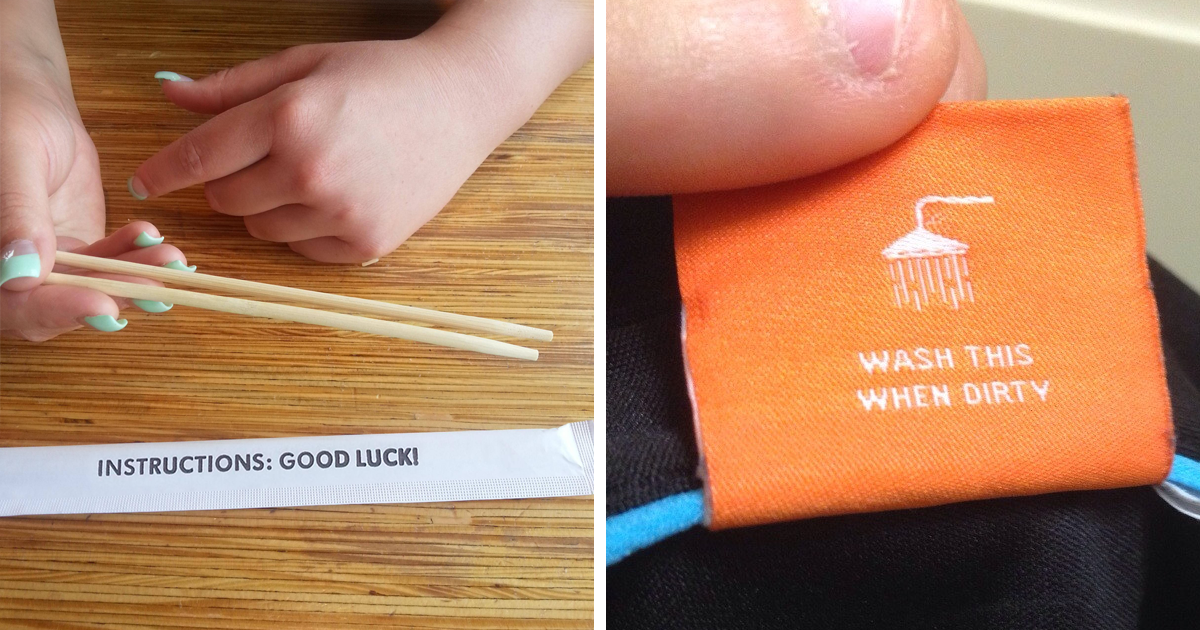
20. The Revolutionary Washing Schedule
A garment tag suggested washing the item when dirty. This breakthrough system replaces calendars, spreadsheets, and sniff-based decision-making.
21. The Panda Protection Clause
A quirky label included life advice about treating pandas kindly. It contributed nothing to fabric care but substantially improved the reader’s afternoon.
22. The Gremlin-Inspired Tag
One item warned owners not to feed it after midnight. Washing instructions are temporary; references to classic movie monsters are forever.
23. The Brutally Honest Size Label
A tag encouraged shoppers to try a smaller size because “it will be funny.” Few fitting rooms are emotionally prepared for this level of honesty.
24. The Shirt With Life Instructions
A hoodie tag offered reminders about kindness, adventure, and enjoying life before casually mentioning how to wash the garment. Priorities established.
25. The Anti-Status Symbol
One label reminded buyers that owning the product would not automatically make them cooler. That duty still belongs to posture, confidence, and sunglasses.
26. The Upper-Body Placement Guide
A shirt helpfully specified that it belonged on the upper body. Somewhere, a person attempting to wear it as pants finally found closure.
Food Packages That Serve Instructions With a Side of Nonsense
27. Soap Used Like Soap
A bar of soap reportedly offered the direction “Use like regular soap.” Anyone waiting for a plot twist was left clean but disappointed.
28. The Frozen Dinner’s Serving Suggestion
A frozen meal recommended defrosting before serving. The alternative was apparently presenting guests with a beautifully garnished brick.
29. The Soup’s Complete Philosophy
A soup container reduced cooking to a few honest steps: open, heat, eat, enjoy. Finally, a manual that understands the customer’s energy level.
30. Coffee May Be Hot
Hot coffee cups often announce that their contents may be hot. This remains obvious until someone takes a confident sip and immediately sees the universe.
31. Peanuts That May Contain Peanuts
Packages of nuts have displayed allergen statements mentioning nuts. Such wording can have legitimate regulatory reasons, but it still reads like a dramatic confession.
32. The Fruit Snack Wrapper
A fruit snack instructed consumers to remove the plastic before eating. The wrapper contributes shine, structure, and absolutely no nutritional value.
33. The Cereal Toy Disclaimer
A cereal-box prize was labeled as nonedible. It looked delicious only to children, dogs, and adults who had skipped breakfast.
34. The Chocolate Compact Disc
A chocolate disc resembling a CD warned owners not to insert it into electronic equipment. Computers prefer cookies, but not that kind.
35. The Upside-Down Dessert
A dessert box printed “Do not turn upside down” on its bottom. Discovering the warning required completing the exact action it prohibited.
36. The Heated Pudding Revelation
A pudding package warned that the product would be hot after heating. Somewhere, the laws of thermodynamics quietly requested credit.
37. The Contest Details Inside the Bag
A snack promotion advertised that no purchase was necessary, then placed the full instructions inside the sealed package. Freedom had a retail price.
38. The Box-Free Pizza Method
A frozen pizza instructed customers to remove it from the cardboard box before baking. This prevented dinner from becoming a smoky recycling experiment.
39. The Lasagna Packaging Puzzle
Some frozen meals require removing one film, keeping another film, cutting a slit, and preserving a tray. Dinner becomes a minor engineering exam.
40. Toothpaste Is Not a Beverage
Toothpaste tubes warn users not to swallow the product. Mint flavor may be inviting, but the tube is not an after-dinner cordial.
Assembly Manuals Written by Comediansor Aliens
41. Instant Noodles Need Water
A noodle cup explained that hot water must be added before eating. Technically optional, assuming the desired texture is “seasoned roof shingle.”
42. Chopsticks With Ambitious Instructions
One set of chopsticks included diagrams so confusing that eating with two pencils began to look like the simpler option.
43. Body Wash for the Body
A bottle’s directions essentially said to apply body wash to the body. Its lawyers had successfully eliminated all uncertainty surrounding the product name.
44. The Self-Aware Towel Dispenser
A hand-towel dispenser included detailed pulling instructions, possibly because the machine had already defeated several determined restroom visitors.
45. Furniture Assembly With Beer
One furniture manual recommended grabbing a beer before beginning. It understood that emotional preparation is as important as locating screw B7.
46. The Mysterious Extra Screw
Some manuals reassure customers that leftover hardware is normal. Others leave them wondering whether the entire cabinet is being supported by positive thinking.
47. Call a Smarter Friend
A humorous assembly guide suggested finding a capable friend. This is the furniture industry’s polite term for “someone who reads all the steps first.”
48. Read the Instructions About the Instructions
A booklet advised readers to study the information booklet before using it. Bureaucracy had folded inward and achieved perfect symmetry.
49. Do Not Bite the Battery
Electronics manuals sometimes warn users not to bite batteries or devices. Troubleshooting with teeth remains unsupported by most manufacturers.
50. The Air Mattress Translation Adventure
A badly translated air-mattress manual transformed ordinary bedding terms into language suggesting an entirely different kind of establishment. Rest became impossible.
51. “Unpack and Rejoice”
Translated holiday-light instructions once began with an enthusiastic order to unpack and rejoice. No modern setup wizard has matched that energy.
52. The Iron’s “Hot Fume” Button
One translated iron manual described steam using wonderfully alarming language. Wrinkle removal suddenly sounded like an industrial emergency.
53. Gently Hug the Water Out
A toy-care instruction advised users to gently hug out excess water. It may have meant squeeze, but emotional support also seemed appropriate.
Packaging and Translation Fails That Created Accidental Art
54. “Slip Carefully”
A mistranslated caution sign reportedly instructed people to slip carefully. If falling is unavoidable, at least perform it with professional technique.
55. “Washing: Not Use Machine”
An awkward garment instruction discouraged machine washing with the confidence of a robot delivering bad news from the future.
56. The Indoor Umbrella Restriction
An umbrella warning advised against certain indoor uses. This was disappointing news for anyone planning dramatic weather inside the living room.
57. The Ladder’s Top-Step Warning
Ladders tell people not to stand on the highest step. The warning is serious, though the forbidden step often resembles the perfect place to stand.
58. Falling May Cause Injury
Another ladder message explained that falling could result in injury. Gravity appreciated the accurate product description.
59. The Highway-Restricted Wheelbarrow
A wheelbarrow was reportedly labeled as unsuitable for highway use. Its acceleration, headlights, and cup-holder package remain deeply disappointing.
60. The Inflatable Frame That Cannot Save You
An inflatable picture frame warned that it was not a personal flotation device. Family photographs provide memories, not maritime rescue.
61. The Toilet Brush Dental Disclaimer
A toilet brush reportedly clarified that it should not be used for personal hygiene. Some warnings protect consumers; others protect us from imagination.
62. The Dangerous Fishing Lure
A sharp, multi-hook fishing lure warned that swallowing it could be harmful. Fish were unavailable for comment but strongly agreed.
63. The Indigestible Mattress
Large household products have carried warnings against swallowing. Nobody intended to eat a mattress, but now the evening has acquired a challenge.
64. The Pressurized Fire Extinguisher
A fire extinguisher warns that its contents are under pressure. That makes two of us whenever the smoke alarm begins chirping.
65. Make Sure the Device Is Turned On
The classic troubleshooting instruction asks users to confirm that the product has power. Annoyingly, this solves the problem more often than pride permits.
Why Funny Product Instructions Work So Well
The best funny product tags are tiny surprises. We expect a care label to be dull, technical, and written in a dialect understood only by washing machines. When it suddenly tells us to call our mother, respect pandas, grab a beverage, or enjoy life, the contrast makes the joke stronger. It is comedy hidden in the least glamorous location imaginable.
Brands also understand that packaging may be the final conversation they have with a customer. An advertisement convinces someone to consider the product, but a label remains in the kitchen, closet, bathroom, or garage. A witty line can make an ordinary shirt or shampoo bottle feel as though it was created by recognizable human beings rather than a committee of printers.
However, humor works only when the essential instruction remains clear. A joke on a T-shirt label is harmless if the customer can still determine how to wash it. A vague punchline on medicine, chemicals, infant products, power tools, or allergen labeling could create genuine danger. Good product copy knows when to wink and when to speak with absolute precision.
Everyday Experiences With Strange Instructions and Tags
Nearly everyone has experienced the moment when a product label becomes more memorable than the product. It often begins in the laundry room. A new shirt emerges from the shopping bag, its owner searches for the fabric information, and a tiny message appears beneath six mysterious symbols. Instead of straightforward washing directions, the label offers relationship advice, a sarcastic comment, or an instruction to hand the garment to a more responsible adult. The shirt may eventually fade, but the joke is photographed and shared.
Furniture assembly creates a different kind of label experience. At first, the manual seems manageable. There are two side panels, a bag of hardware, and an illustrated person smiling with unreasonable confidence. Twenty minutes later, the floor is covered with screws, one board is backward, and the smiling character has become a personal enemy. This is why instructions recommending a friend, food, music, or a calming drink feel so accurate. The company is acknowledging that assembly is not merely mechanical; it is an emotional journey involving denial, bargaining, and an Allen wrench.
Food packaging produces its own unforgettable encounters. Consumers routinely find warnings that appear absurd because the product’s identity already reveals the information. Nuts contain nuts. Hot meals become hot. Plastic wrappers should be removed before eating. Yet these statements may address allergy rules, predictable misuse, or legal responsibilities invisible to the shopper. The experience is funny because consumers see only the obvious sentence, while the manufacturer sees regulations, risk assessments, customer complaints, and several nervous attorneys.
Translation errors are perhaps the most delightful discoveries. A familiar task such as washing a toy or operating an iron can become surreal when words are translated literally without context. “Squeeze out the water” turns into “hug the water.” Steam becomes “hot fume.” A basic mattress becomes an entirely different object because one word was selected incorrectly. Readers may understand the intended meaning, but the accidental poetry is impossible to forget.
These experiences also teach a practical lesson: people read more carefully when writing feels human. A plain wall of technical language is easy to ignore. A surprising line earns attention and may encourage the reader to examine the real instructions beside it. The most effective humorous labels therefore perform two jobs. They communicate the necessary information, and they reward the customer for looking.
For businesses, the challenge is restraint. A single smart joke can establish a warm brand personality. Ten jokes can bury the information. Humor should never obscure dosage, allergens, electrical hazards, age limits, cleaning restrictions, or emergency procedures. The safest approach is simple: make the optional copy entertaining and make the essential copy unmistakable.
For consumers, the lesson is even easier. Read the label before discarding it. You may learn how to protect the product, avoid a genuine hazard, or prevent a laundry disaster. At minimum, you might discover that your new hoodie believes in unicorns and has stronger opinions about life than most people at the office.
Conclusion
Funny product instructions live at the intersection of safety, branding, translation, law, and ordinary human confusion. Some make us laugh because they are painfully obvious. Others reveal a company with a playful voice, while the best accidental failures transform basic directions into miniature works of surrealism.
The next time a manual tells you not to swallow a hammer, operate an airplane without lessons, or place a remote control in the dishwasher, resist the urge to ignore everything. Follow the real safety guidance, appreciate the absurdity, and remember that somewhere behind the label was a person trying very hard to anticipate every possible customer decision.
Note: Humorous commentary does not replace product-safety guidance. Always follow the manufacturer’s current instructions, warnings, age restrictions, allergen information, and recall notices.