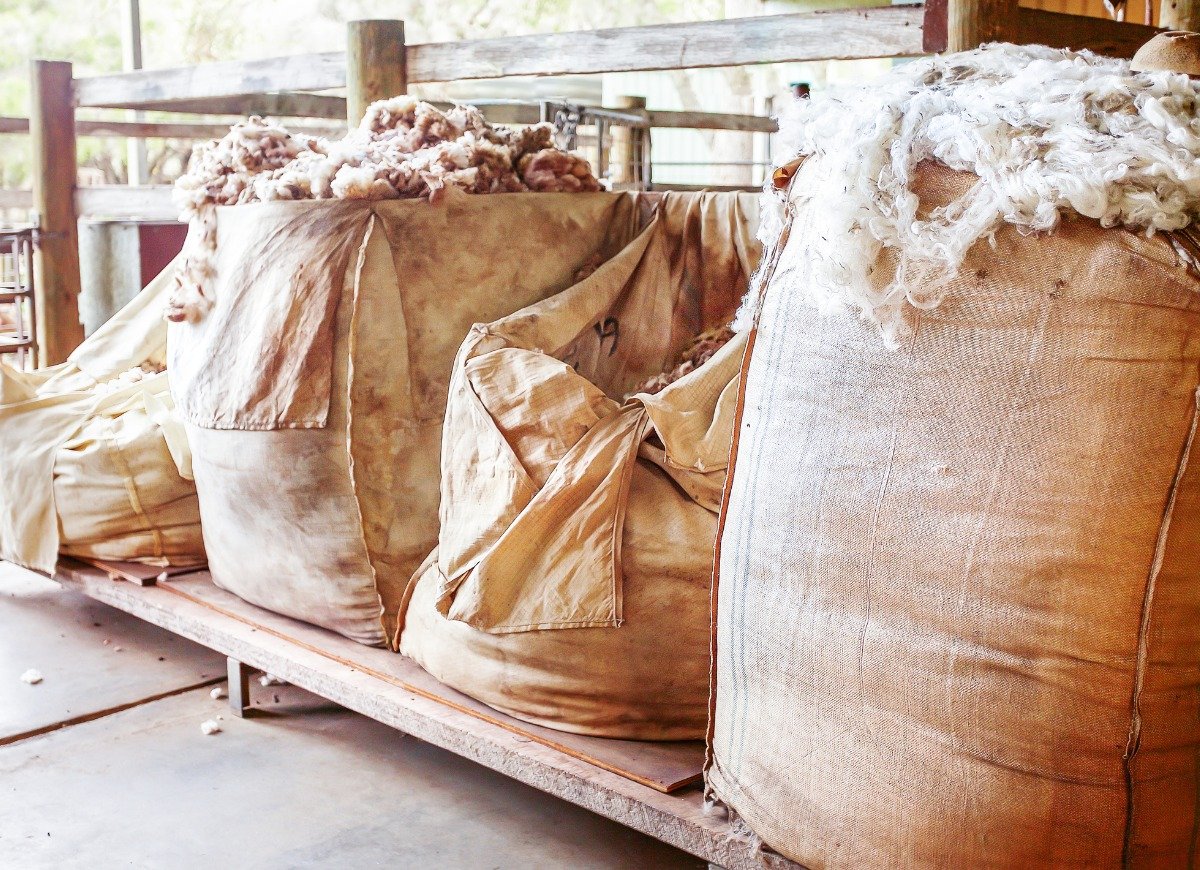
Sheep’s wool has been keeping its original owners comfortable through wind, rain, and chilly hillsides for thousands of years. It should not be surprising, then, that this naturally springy fiber can also help regulate the temperature inside a house.
Sheep’s wool insulation is available as batts, rolls, and loose-fill material for walls, ceilings, floors, attics, and even camper vans. It delivers competitive thermal resistance, absorbs sound, handles water vapor unusually well, and can be more pleasant to install than some conventional fibrous products. It also comes with a few important caveats: Wool is not an air barrier, raw fleece is not automatically code-compliant insulation, and the price may make budget-conscious homeowners clutch their calculators.
Before filling every stud bay with something that looks like an oversized sweater, consider these six essential facts about sheep’s wool insulation.
Research support:
1. Sheep’s Wool Provides Solid Thermal Performance
The main job of insulation is to slow heat flow. In winter, that means helping indoor heat remain indoors. During summer, it helps reduce the amount of outdoor heat entering conditioned rooms. This performance is expressed as R-value: The higher the R-value, the greater the material’s resistance to conductive heat transfer.
Depending on the manufacturer, density, thickness, and installation method, sheep’s wool insulation commonly provides approximately R-3.5 to R-4.3 per inch. Some government reference materials list sheep’s wool batts near R-3.5 per inch, while newer commercial products may advertise higher tested values. That puts wool in roughly the same general neighborhood as many fiberglass, cellulose, cotton, and mineral-wool products, although it normally cannot match the R-value per inch of high-performance closed-cell foam.
Thickness Still Matters
A good R-value per inch does not eliminate the need for sufficient insulation depth. A 3.5-inch wall cavity filled with wool may deliver roughly R-13 to R-15, depending on the product. A deeper 5.5-inch cavity can accommodate products around R-20 or higher. Attics often require substantially greater total R-values, especially in colder climate zones.
Always use the labeled R-value for the exact product rather than multiplying a generic online estimate. Thermal testing, density, fiber orientation, and installed thickness can all affect the final result. Look for recognized testing information, such as ASTM C518 thermal-performance data.
Installation Quality Can Make or Break Performance
Wool’s crimped fibers create millions of tiny air pockets, but those pockets work best when the material remains evenly lofted. Crushing a thick batt into a shallow cavity does not magically squeeze extra insulation power into the wall. Instead, excessive compression can reduce its effective performance.
Gaps are equally troublesome. Insulation should fit neatly around wiring, pipes, electrical boxes, and framing without leaving open channels. A high-quality wool batt with several gaps can perform worse than an ordinary batt installed carefully. Insulation is not impressed by its own marketing brochure; it still obeys physics.
Research support:
2. Wool Manages Humidity, but It Is Not Waterproof
One of wool’s most interesting characteristics is its ability to take up and release water vapor. Wool is hygroscopic, meaning its fibers can absorb moisture from humid air and later release it as surrounding conditions become drier. This moisture-buffering behavior can help moderate short-term swings in humidity inside a properly designed wall or roof assembly.
The key phrase is water vapor. Sheep’s wool can manage humidity, but it is not a substitute for a sound roof, properly flashed windows, functioning gutters, exterior drainage, or a correctly placed water-resistive barrier. A plumbing leak does not become harmless simply because the insulation came from a sheep.
Bulk Water Is Still a Building Emergency
If wool insulation becomes saturated by a roof leak or flood, the moisture can wet surrounding wood, drywall, and sheathing. Persistent dampness can encourage mold growth on adjacent organic materials, corrode fasteners, damage finishes, and reduce thermal performance. Wet insulation should be investigated promptly, and the source of the water must be repaired before the wall or ceiling is closed again.
Air Sealing and Vapor Control Remain Necessary
Wool insulation is air-permeable. It slows conductive heat transfer, but it does not stop drafts moving through cracks, penetrations, rim joists, attic bypasses, or poorly sealed sheathing. The building envelope still needs a continuous air-control layer.
Vapor-retarder requirements depend on climate, assembly design, local code, and the materials located on both sides of the insulation. In some cold climates, an interior vapor retarder may be appropriate. In warm, humid regions, placing an impermeable layer in the wrong location can trap moisture. The correct approach is to design the entire wall or roof assemblynot to assume that a breathable insulation product will solve every moisture problem by itself.
Research support:
3. It Can Improve Acoustic Comfort and Installation Comfort
Sheep’s wool is useful for more than temperature control. Its irregular, porous fiber structure can absorb sound energy, making it a practical choice for bedroom walls, home offices, media rooms, floor cavities, mechanical rooms, and shared interior partitions.
Thermal insulation and soundproofing are not identical goals. Wool placed between studs can reduce voices and everyday household noise, but a truly high-performance sound-control assembly also depends on drywall mass, airtightness, framing design, resilient channels, door construction, and control of sound paths around the wall. Wool can help quiet the room; it cannot prevent a hollow-core door from gossiping with the hallway.
It Is Generally Pleasant to Handle
Many installers find wool batts softer and less irritating than traditional fiberglass. The fibers are flexible, can be pulled apart or trimmed to fit irregular spaces, and usually do not create the same prickly sensation associated with glass fibers.
That does not mean personal protective equipment should be tossed aside. Cutting, handling, and installing any fibrous insulation can release dust. Gloves, eye protection, suitable work clothing, and respiratory protection are sensible, particularly in cramped attics or poorly ventilated areas. Product-specific additives may also influence handling recommendations, so read the safety data sheet instead of assuming that “natural” means “rub it on your face.”
Check the Binder and Treatment Ingredients
Some wool insulation products use only wool plus a small amount of pest- or fire-control treatment. Others may contain polyester fibers, binders, or additional ingredients that help the material maintain its shape. Homeowners prioritizing low-emitting materials should review product documentation, ingredient disclosures, certifications, and safety data rather than relying solely on green packaging.
Research support:
4. Wool Resists Flames Naturally, but Manufactured Products Still Need Testing
Wool is naturally difficult to ignite compared with many other fibers. Its chemical structure, moisture content, and nitrogen content encourage it to char and self-extinguish rather than rapidly carry a flame. It also does not melt into hot droplets like some synthetic materials.
However, “naturally flame-resistant” is not the same as “fireproof.” Every insulation product used in a building must satisfy applicable code requirements for its intended application. Homeowners should look for documented flame-spread and smoke-development testing, commonly performed under standards such as ASTM E84.
Raw Fleece Is Not a Substitute for Listed Insulation
Buying inexpensive wool directly from a farm and stuffing it into a wall may sound like peak homestead efficiency, but untreated fleece can contain dirt, oils, odors, seeds, insects, and inconsistent fiber densities. It may settle unpredictably and may lack any recognized thermal, fire, or pest-resistance testing.
Commercial sheep’s wool insulation is typically washed, processed, formed to a controlled density, and treated when necessary. Those steps turn a farm fiber into a more consistent building product.
Pest Protection Deserves Attention
Wool contains keratin, which can attract clothes-moth larvae and certain other insects. Manufacturers may apply borate compounds or alternative treatments to discourage pests and improve fire performance. Research has shown that treatment type and concentration can significantly affect resistance to moth damage.
Ask the manufacturer which pest treatment is used, whether it is permanently bonded to the fiber, and whether the finished product has been independently tested. Good construction also matters: Seal exterior gaps, control moisture, screen openings, and keep rodents from gaining access to insulated cavities. Mice are famously disrespectful of product warranties.
Research support:
5. The Sustainability Story Is Promising, but It Is Not Perfect
Wool is renewable because sheep grow a new fleece. It is also biodegradable under suitable conditions and can make productive use of coarse, short, stained, or otherwise low-value fibers that may not be desirable for clothing. Turning that material into insulation can create value from an agricultural byproduct while reducing dependence on petroleum-based foam.
Natural fibers also store biogenic carbon during their useful life. When installed in a durable building and kept dry, wool can remain useful for decades. At the end of service, clean wool has more favorable biological disposal potential than many synthetic insulation products.
Natural Does Not Automatically Mean Zero-Impact
Sheep require land, feed, water, veterinary care, fencing, transportation, and shearing. Wool must then be washed, dried, processed, treated, packaged, and shipped. Long-distance transportation can be especially relevant for bulky insulation imported from another country.
Environmental performance also depends on livestock management. Grazing may support well-managed grasslands in some systems, while poorly managed grazing can contribute to erosion, habitat damage, or excess emissions. The most responsible purchase considers the entire supply chain rather than awarding unlimited sustainability points because the package contains a cartoon sheep.
Request Transparent Documentation
For a serious green-building project, ask for an environmental product declaration, ingredient disclosure, recycled or byproduct content information, sourcing details, manufacturing location, and animal-welfare policy. Compare those documents with the same information from cellulose, fiberglass, mineral wool, wood fiber, and foam alternatives.
The best environmental choice often depends on the project. Locally manufactured cellulose may have an advantage in one region, while durable wool from a transparent supply chain may make more sense in another.
Research support:
6. Wool Is Easy to Install, but Cost and Availability Can Be Obstacles
Sheep’s wool insulation is sold in several forms. Batts and rolls fit open framing cavities, while loose-fill wool can be blown into attics, floors, and netted wall cavities. Batts are particularly attractive to do-it-yourself remodelers because they are soft, flexible, and relatively easy to shape around irregular framing.
Batts Require Careful Fitting
Measure stud and joist spacing before ordering. The batt should fill the entire cavity without bunching, folding, or leaving edges exposed. Split the material around electrical cables rather than pressing the entire batt behind them. Cut around outlet boxes and plumbing penetrations so the wool remains in contact with all six sides of the cavity.
In overhead applications, follow the manufacturer’s instructions for support. Some products rely on friction fit, while others need netting, strapping, staples, or another retention system. Loose-fill installations may require specialized blowing equipment and an installer familiar with the product’s target density.
Wool Is Not an Air-Sealing Product
Before installing insulation, seal accessible gaps around wiring, plumbing, top plates, duct penetrations, chimneys, attic hatches, and framing joints with approved materials. Maintain required clearances around heat-producing equipment and recessed fixtures. Insulation should be part of a complete enclosure system, not a fuzzy curtain placed over a leaky ceiling.
Expect to Pay a Premium
Wool insulation typically costs more than standard fiberglass and cellulose, and professional installation prices vary widely by region, project size, access, thickness, and product availability. Recent U.S. cost estimates place many professional wool-insulation projects in the low thousands of dollars, with large or complicated jobs costing more.
Shipping can be a significant part of the bill because insulation is bulky. Before purchasing, calculate the required square footage, cavity depth, waste allowance, freight charges, accessories, and labor. Confirm whether the material is stocked locally or shipped from a distant warehouse.
Verify Code Acceptance Before Ordering
Ask the manufacturer for technical data, fire-test reports, thermal-test results, installation instructions, and any available evaluation reports. Then confirm acceptance with the local building department, especially for permitted additions, new construction, unconventional wall systems, or projects in areas with strict wildfire requirements.
Research support:
How to Decide Whether Sheep’s Wool Insulation Is Right for Your Home
Sheep’s wool may be an excellent choice when indoor material health, acoustic comfort, moisture buffering, renewable content, and DIY-friendly handling are high priorities. It is especially appealing for open-wall renovations, bedrooms, studios, timber-frame buildings, cabins, tiny houses, and vans where installers want a flexible product that can conform to uneven cavities.
It may be less practical when the budget is tight, the material must be shipped across the country, local installers have no experience with it, or the project requires the highest possible R-value in an extremely shallow cavity. Below-grade walls and other locations exposed to bulk water also require careful assembly design and may be better served by different materials.
Questions to Ask Before Buying
- What is the labeled R-value at the intended installed thickness?
- Which ASTM tests were used to verify thermal and fire performance?
- Does the product contain borates, permethrin, polyester, binders, or other additives?
- How is the wool protected from moths and other pests?
- Does the installation require netting or special blowing equipment?
- What air barrier and vapor-control layers are recommended for the local climate?
- Is technical support available for contractors and building officials?
- What are the delivered material cost and estimated labor cost?
Practical Experiences and Lessons From Wool-Insulation Projects
Real-world projects tend to reveal details that are easy to miss while comparing R-values on a computer screen. Homeowners and installers often praise wool’s handling and comfort, but successful projects still depend on preparation, accurate estimating, and careful enclosure work.
Experience 1: The Attic Retrofit That Needed Air Sealing First
Consider an older house with uneven winter temperatures and an attic containing a thin, patchy layer of aging insulation. Adding loose-fill wool may appear to be the entire solution. Once the existing material is moved aside, however, the attic floor may reveal open plumbing chases, gaps around electrical penetrations, an unsealed pull-down stair, and wall cavities that open directly into the attic.
Covering those leaks with new insulation would make them harder to find without stopping the airflow. Warm indoor air could continue escaping into the attic, carrying moisture that may condense on cold roof sheathing. The more successful sequence is to identify and seal bypasses, repair any roof or ventilation problems, create safe clearances around heat sources, and then install wool to the required depth.
The practical lesson is simple: Wool adds thermal resistance, but air sealing often produces the first noticeable improvement in drafts and comfort. A fluffy attic is not necessarily a tight attic.
Experience 2: The DIY Wall Installation That Used More Material Than Expected
In an open-wall renovation, wool batts can be satisfying to install. They are easy to pull apart, tuck behind pipes, and fit around irregular framing. The work may feel less like wrestling a porcupine than a typical fiberglass installation.
The surprise often arrives during estimating. Nominal wall area does not account perfectly for odd cavities, headers, corners, blocking, damaged pieces, or last-minute changes. If every offcut is discarded instead of reused, the project can run short near the finish line. Ordering a reasonable waste allowance and keeping clean scraps for small spaces can prevent an expensive rush shipment.
Another lesson involves discipline. Because wool is soft, it is tempting to stuff oversized pieces into narrow gaps. Overpacking can create bulges that interfere with drywall and may reduce loft. The best installation fills the cavity evenly without force-feeding it like a suitcase five minutes before the airport taxi arrives.
Experience 3: The Quiet Home Office That Still Needed a Better Door
Wool installed in an interior partition can noticeably reduce ordinary voices, television noise, and mechanical sounds. Yet homeowners sometimes expect insulation alone to create recording-studio silence. After the wall is completed, sound may continue leaking through a hollow-core door, electrical boxes positioned back-to-back, duct openings, or gaps around the wall perimeter.
The experience demonstrates that acoustic control is a system. Wool helps absorb energy inside the cavity, while airtight sealant, additional drywall mass, isolated framing, solid doors, and careful detailing control the remaining paths. Addressing the weakest component usually produces a better result than adding another random layer of insulation.
Experience 4: The Van Conversion Where Moisture Planning Mattered
Sheep’s wool is popular in vans and tiny mobile spaces because it conforms to ribs, curves, and awkward metal cavities. It can also buffer temporary humidity created by sleeping, cooking, and breathing in a compact enclosure.
However, a metal vehicle shell can become cold enough for interior moisture to condense. Wool should not be treated as permission to ignore ventilation, drainage paths, thermal bridges, window condensation, or hidden leaks. A roof vent, controlled fresh-air exchange, proper sealing, and opportunities for assemblies to dry remain essential.
The takeaway is that wool can make a small space more comfortable and quieter, but moisture must still have somewhere to go. Even the most talented sheep cannot redesign a poorly ventilated van.
Research support:
Frequently Asked Questions About Sheep’s Wool Insulation
Does sheep’s wool insulation smell?
Properly washed and manufactured wool insulation should not produce a strong barnyard odor. A mild natural scent may be noticeable when the package is first opened, but persistent or unpleasant odors may indicate contamination, improper processing, or moisture exposure.
Can sheep’s wool insulation grow mold?
Wool fibers can manage significant water vapor and are less inviting to mold than many plant-based materials, but no wall assembly should remain chronically wet. Dust, wood framing, paper facings, and drywall can support mold growth when moisture persists. Leaks and condensation still require immediate correction.
Do mice eat wool insulation?
Rodents do not generally seek wool as food, but they may tunnel through or nest in almost any soft insulation. Pest-resistant construction depends on sealing entry points, protecting vents, controlling food sources, and maintaining the building exterior.
How long does sheep’s wool insulation last?
When properly processed, installed, protected from pests, and kept free of bulk water, wool can remain functional for decades. Longevity depends more on the surrounding building assembly and installation quality than on a universal expiration date.
Can sheep’s wool be installed over existing insulation?
It may be possible in some attics, provided the existing insulation is dry, clean, and free of mold, pests, vermiculite, or other hazardous materials. Air leaks and electrical or structural concerns should be addressed before adding another layer. Suspected asbestos-containing insulation should be evaluated by a qualified professional.
Conclusion
Sheep’s wool insulation is more than a novelty for eco-friendly cabins. It offers respectable R-value, strong acoustic properties, moisture-buffering capacity, renewable content, and installer-friendly handling. For homeowners who value natural materials and are willing to pay a premium, it can be a genuinely practical option.
Still, the product works best as one component of a complete building system. Air sealing, water management, vapor control, pest protection, tested fire performance, correct thickness, and local code acceptance all matter. Choose a documented commercial product, follow its installation instructions, and compare the delivered cost with other suitable insulation materials.
In other words, sheep’s wool can help create a quieter, more comfortable homebut the sheep should not be expected to do the architect’s job.
Note: Product formulations, prices, R-values, installation requirements, and building codes vary. Confirm current technical documentation and local requirements before purchasing or installing insulation.