Tamales are one of those foods that feel like a warm hug wrapped in a corn husk. They are comforting, festive, portable, endlessly customizable, and just dramatic enough to make you feel like you are doing something important in the kitchen. Whether they are filled with red chile pork, shredded chicken, beans and cheese, roasted vegetables, mole, or something sweet, tamales all have one thing in common: they need moisture and gentle heat to taste their best.
If you have ever wondered how to cook tamales without turning the masa into a dry brick or a sticky puddle, you are in the right place. The classic method is steaming, but it is not the only way to get soft, flavorful tamales on the table. You can use a traditional steamer, an Instant Pot, the oven, the microwave, or even an air fryer depending on whether your tamales are fresh, frozen, or already cooked.
This guide explains five practical ways to cook tamales, when to use each method, how long they usually take, and how to avoid the most common tamale disasters. Because nobody wants to unwrap dinner and discover corn-flavored disappointment.
Before You Cook: Know What Kind of Tamales You Have
Before choosing a cooking method, check whether your tamales are raw, fully cooked, refrigerated, or frozen. This matters more than the size of your pot, your patience level, or how loudly your stomach is making its opinions known.
Fresh or Raw Tamales
Raw homemade tamales contain masa dough that has not fully set yet. These need true steaming or a pressure-steaming method so the masa cooks through evenly. The goal is tender dough that pulls away from the husk without sticking. For raw tamales, the stovetop steamer and Instant Pot are usually the best choices.
Cooked, Refrigerated, or Frozen Tamales
Many store-bought, restaurant, or leftover tamales are already cooked. In that case, you are reheating rather than cooking from scratch. The challenge is to warm the filling completely while keeping the masa moist. Steaming is still the gold standard, but the microwave, oven, and air fryer can also work well when used correctly.
Keep the Husk On
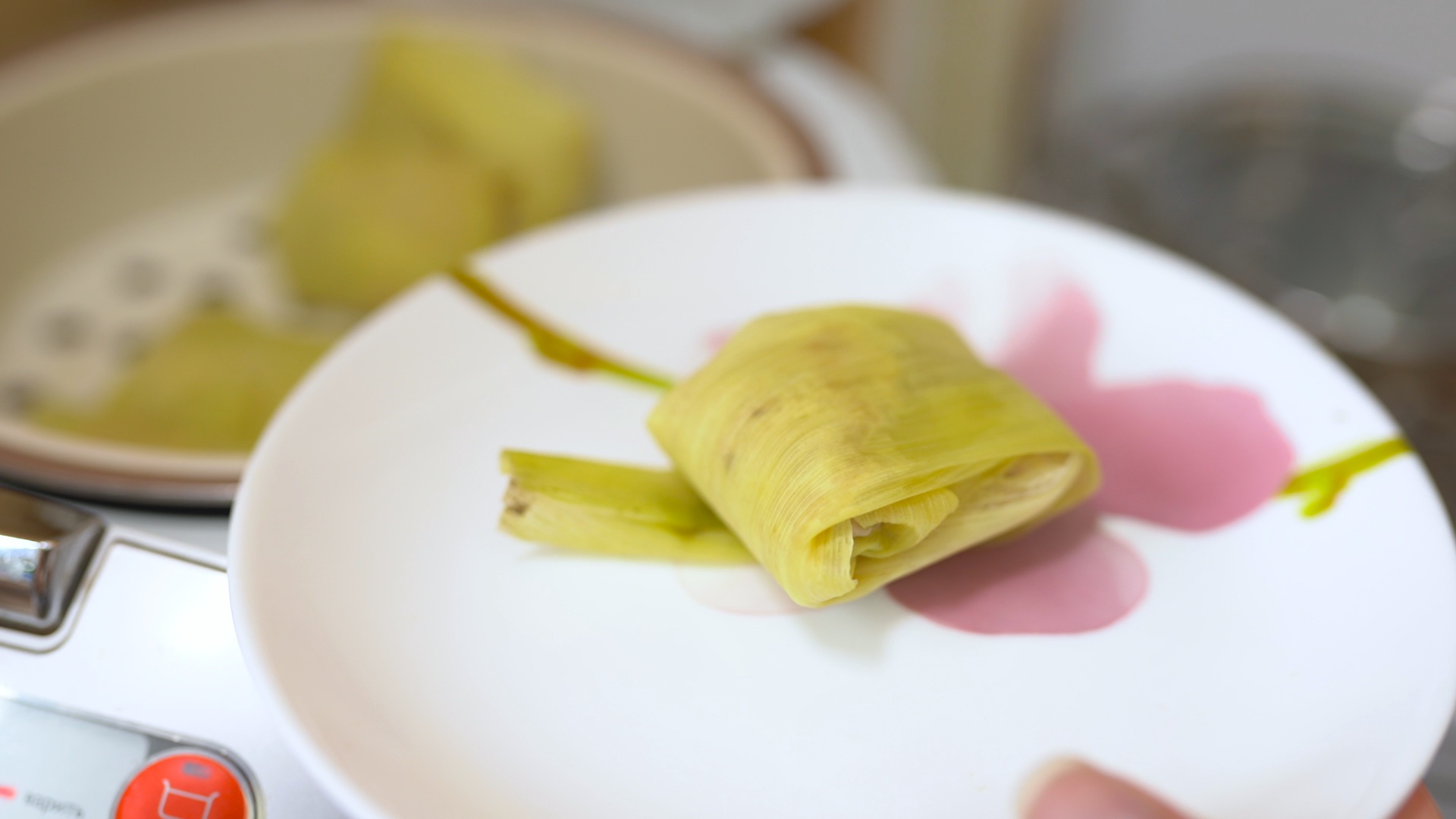
For most cooking and reheating methods, leave the corn husk or banana leaf wrapper on. The wrapper protects the masa, traps steam, and helps the tamale hold its shape. You remove the husk before eating, unless you enjoy chewing something with the texture of a polite envelope. Spoiler: you do not eat the husk.
Method 1: Cook Tamales in a Traditional Steamer
The traditional steamer method is the best way to cook tamales from scratch and the most reliable way to reheat cooked tamales. It gives the masa the gentle, humid heat it needs to become soft, fluffy, and fully set.
Best For
- Fresh homemade tamales
- Large batches
- Frozen cooked tamales
- Anyone who wants the most authentic texture
How to Do It
- Add water to the bottom of a tamalera, stockpot, or large pot fitted with a steamer basket. The water should sit below the basket, not touch the tamales.
- Stand the tamales upright with the folded end down and the open end up. This helps prevent filling from leaking out.
- Cover the tamales with extra soaked corn husks or a clean kitchen towel, then place the lid on tightly.
- Bring the water to a boil, then reduce to a steady simmer.
- Steam fresh tamales for about 45 minutes to 1 1/2 hours, depending on size, masa thickness, and batch volume.
- Check the water level occasionally and add hot water as needed so the pot does not boil dry.
How to Tell When Tamales Are Done
Open one tamale carefully and let it cool for a minute. If the masa pulls away from the husk cleanly, the tamales are done. If the dough sticks, looks wet, or collapses like it just heard bad news, steam the batch longer and test again.
For cooked refrigerated tamales, steaming may take only 10 to 20 minutes. Frozen cooked tamales usually need more time, often 20 to 30 minutes or longer depending on size. The key is to heat them until the center is hot and the masa feels soft, not gummy.
Pro Tip
Place a clean coin or small heat-safe object in the bottom of the steamer water. If you hear it rattling loudly, the water is getting low. This old-school trick is not fancy, but neither is burning a pot while trying to make dinner.
Method 2: Cook Tamales in an Instant Pot or Pressure Cooker
The Instant Pot is a lifesaver when you want tamales but do not want to hover over the stove like a nervous tamale security guard. Pressure cooking uses trapped steam to cook tamales faster while keeping the masa moist.
Best For
- Fresh tamales in smaller batches
- Busy weeknights
- Frozen cooked tamales
- People who like speed but still want a steamed texture
How to Do It
- Add 1 to 1 1/2 cups of water to the bottom of the Instant Pot.
- Place the trivet or steamer basket inside.
- Arrange tamales upright, folded side down, leaving enough room for steam to circulate.
- Close the lid and set the valve to sealing.
- Cook fresh tamales on high pressure for about 25 minutes, followed by a 10-minute natural release.
- For cooked frozen tamales, start with 15 to 20 minutes on high pressure, then check and add more time if needed.
Why It Works
Pressure cooking creates a sealed steam environment. That means the tamales cook efficiently without drying out. It is especially useful if you are making a smaller batch and do not want to set up a giant steamer pot.
What to Watch Out For
Do not overpack the pot. Steam needs room to move around the tamales. If you cram them in like passengers on a holiday flight, the center tamales may cook unevenly. Also, be sure the water does not touch the tamales directly. You want steam, not a masa swimming lesson.
Method 3: Cook Tamales in the Oven
The oven is not the most traditional way to cook tamales, but it can work nicely when you create a covered, steamy environment. Think of it as steam-baking. The oven method is especially helpful when reheating many cooked tamales at once and you do not have a large steamer.
Best For
- Reheating a big batch
- Frozen cooked tamales
- Parties, potlucks, and family dinners
- People who own baking dishes but not a tamalera
How to Do It
- Preheat the oven to 350°F.
- Place tamales in a baking dish, still wrapped in their husks.
- Add about 1 cup of hot water to the dish, keeping the tamales elevated if possible so they are not sitting directly in too much water.
- Cover the dish tightly with foil to trap steam.
- Bake refrigerated cooked tamales for about 20 to 30 minutes.
- Bake frozen cooked tamales for about 45 to 60 minutes, checking the center for heat.
Can You Cook Raw Tamales in the Oven?
You can, but it is not the easiest method. Raw tamales need consistent steam, and ovens vary widely in how well they hold moisture. If you must cook raw tamales in the oven, keep the dish tightly covered, add enough hot water to create steam, and expect a longer cooking time. Check often. For best results, raw tamales still belong in a steamer or pressure cooker.
Pro Tip
Do not unwrap the tamales before baking. The husk protects the masa from direct oven heat. Without it, the outside can dry out before the center warms through. A naked tamale in the oven is a brave tamale, but not a wise one.
Method 4: Cook Tamales in the Microwave
The microwave is the fastest way to heat cooked tamales, especially when you only want one or two. It is not ideal for raw tamales because it does not cook masa as evenly as steam does. But for fully cooked tamales, it is quick, convenient, and perfectly respectable when you use moisture.
Best For
- One or two cooked tamales
- Quick lunches
- Office meals
- Emergency tamale cravings
How to Do It
- Keep the husk on if possible.
- Wrap each tamale in a damp paper towel.
- Place it on a microwave-safe plate.
- Microwave on high for 30 seconds to 1 minute for a refrigerated tamale.
- For frozen cooked tamales, microwave in 1-minute intervals, turning occasionally, until hot throughout.
- Let the tamale rest for 1 minute before opening so the heat can distribute evenly.
How to Avoid Dry Tamales in the Microwave
The damp paper towel is not optional. It creates a mini steam chamber that helps soften the masa. You can also place a small microwave-safe cup of water next to the plate for extra humidity. This will not turn your microwave into a tamalera, but it does help prevent the dreaded dry edge problem.
Food Safety Reminder
If you are reheating leftovers, the center should reach 165°F. This is especially important for meat-filled tamales, large tamales, and frozen tamales that may heat unevenly. A food thermometer may not feel romantic, but neither does food poisoning.
Method 5: Cook Tamales in the Air Fryer
The air fryer is not a traditional tamale-cooking tool, and it is not the best choice for raw tamales. However, it can be surprisingly useful for reheating cooked tamales when you want a slightly firmer outside and a hot center. The trick is to protect the masa from drying out.
Best For
- Fully cooked tamales
- Reheating thawed tamales
- People who like a lightly crisped edge
- Small batches
How to Do It
- Preheat the air fryer to 300°F to 325°F.
- Keep the husk on, or wrap the tamale loosely in foil if the husk is missing.
- Place tamales in a single layer with space between them.
- Heat thawed cooked tamales for about 8 to 12 minutes, turning halfway through.
- For frozen cooked tamales, use a lower temperature and add more time, checking often to prevent the husk from scorching.
When to Skip the Air Fryer
Skip this method for delicate, very soft, or raw tamales. Air fryers move hot air aggressively, which can dry out masa if you are not careful. If your goal is soft, fluffy tamales, steaming is still your best friend. If your goal is speed with a little texture, the air fryer can earn a spot on the counter.
Quick Comparison: Which Tamale Cooking Method Is Best?
| Method | Best Use | Texture | Approximate Time |
|---|---|---|---|
| Traditional Steamer | Fresh or cooked tamales | Soft, moist, classic | 45 to 90 minutes for fresh; 10 to 30 minutes for reheating |
| Instant Pot | Fresh tamales, small batches | Moist and tender | About 25 minutes plus release time |
| Oven | Reheating large batches | Moist if tightly covered | 20 to 60 minutes |
| Microwave | One or two cooked tamales | Soft if wrapped damp | 1 to 5 minutes |
| Air Fryer | Cooked tamales with firmer edges | Slightly crisp outside, warm inside | 8 to 15 minutes |
Common Mistakes When Cooking Tamales
Letting the Pot Boil Dry
This is the fastest way to turn tamale night into smoke-alarm karaoke. Always check the water level when steaming. Add hot water, not cold, so you do not interrupt the cooking process.
Letting Water Touch the Tamales
Tamales should steam above water, not sit in it. If the water touches the masa, the tamales can become soggy and heavy. Keep the liquid below the steamer basket or trivet.
Opening the Pot Too Often
Every time you lift the lid, steam escapes. A quick check is fine, but constant peeking slows everything down. Trust the process. Tamales are shy; let them work in peace.
Skipping the Resting Time
Fresh tamales continue to firm up as they cool slightly. Let them rest for 5 to 10 minutes after cooking before unwrapping. This helps the masa set and makes the husk easier to remove.
Expecting Every Tamale to Cook at the Same Speed
Tamales vary by size, filling, masa thickness, wrapper, and whether they started fresh, refrigerated, or frozen. Use timing as a guide, not a law carved into a tortilla press.
Flavor Ideas for Better Tamales
Once you know how to cook tamales, you can start having fun with fillings and toppings. Classic red chile pork is always a winner, especially when the meat is tender and the sauce is deep, earthy, and slightly smoky. Chicken with salsa verde gives a bright, tangy flavor that pairs beautifully with creamy masa. Bean and cheese tamales are budget-friendly, vegetarian, and deeply satisfying.
For toppings, keep things simple. Salsa roja, salsa verde, crema, crumbled queso fresco, chopped cilantro, pickled onions, or a squeeze of lime can make a good tamale taste like it just got promoted. Avoid drowning the tamale in sauce unless the masa is dry and needs rescue. A well-cooked tamale should taste good even before you dress it up.
Storage and Reheating Tips
Cooked tamales store well, which is one reason people often make them in large batches. Let them cool, then refrigerate them in an airtight container for up to a few days. For longer storage, freeze them individually or in small groups. Keeping the husks on helps protect the texture.
To reheat frozen tamales, steaming is usually best. You do not need to thaw them first, but thawing can shorten the cooking time and promote even heating. If reheating in the microwave, use short intervals and rotate the tamales. If reheating in the oven, cover tightly so moisture stays trapped. If using the air fryer, watch carefully so the husks do not burn.
Real Kitchen Experiences: What Cooking Tamales Teaches You
Cooking tamales is not just a recipe; it is an event. Even when you are only cooking a few store-bought tamales for lunch, there is something satisfying about the ritual. You hear the water begin to simmer, smell the corn husks warming up, and suddenly the kitchen feels a little more alive. Tamales have a way of making a regular Tuesday feel like somebody should be setting out salsa bowls and calling cousins.
The first lesson tamales teach is patience. A lot of foods reward speed, but tamales reward attention. If you rush the steaming process, the masa may stick to the husk or stay dense in the middle. If you keep lifting the lid, you lose steam and add more time. If you unwrap them too soon, they can fall apart even though they were nearly perfect. Tamales are polite but firm teachers: slow down, keep the heat steady, and let the masa finish what it started.
The second lesson is that moisture is everything. A dry tamale is not automatically a bad tamale; it may just be a tamale that was reheated without kindness. The difference between a tough microwave tamale and a soft one can be as simple as a damp paper towel. The difference between an oven success and an oven tragedy is usually foil sealed tightly over the baking dish. Once you understand that tamales love steam, every cooking method makes more sense.
Another useful experience is learning how different fillings behave. Pork tamales are forgiving because the filling is rich and juicy. Chicken tamales can dry out faster, especially if the chicken was lean or the salsa was not generous enough. Cheese tamales need gentle heat because the filling can melt and shift. Sweet tamales, especially those with fruit or raisins, can be softer and more delicate. After cooking a few batches, you begin to know what each type needs before you even open the husk.
Batch size also matters. Cooking four tamales is easy. Cooking four dozen is a small engineering project. Large batches need airflow, enough water, and room for steam to circulate. Tamales packed too tightly may cook unevenly, while tamales arranged loosely may fall over. Many experienced cooks use extra husks, foil balls, or a small heat-safe bowl to keep everything upright. It looks improvised, but it works. Tamale cooking is part tradition, part science, and part “use whatever keeps them standing.”
The best tamale experience, though, is sharing them. Tamales are built for gathering. They come in their own wrappers, stay warm nicely, and invite conversation. Someone always has an opinion about the salsa. Someone always wants the cheese one. Someone always asks whether the husk is edible, and everyone else gets one free laugh. Whether you steam them in a tamalera, pressure cook them in an Instant Pot, or reheat them in the microwave during a busy workday, tamales bring comfort without needing to show off.
Once you learn these five ways to cook tamales, you stop treating them like a mystery and start treating them like the dependable treasure they are. Keep them moist, heat them gently, check for doneness, and give them a short rest. That is the whole secret. Well, that and making enough for leftovers, because one tamale is rarely enough and two tamales are just the beginning of negotiations.
Conclusion
The best way to cook tamales depends on what you are starting with. Fresh homemade tamales deserve steady steam, either in a traditional steamer or an Instant Pot. Cooked tamales can be reheated beautifully in a steamer, oven, microwave, or air fryer as long as you protect the masa from drying out. No matter which method you choose, remember the three golden rules: keep the husk on while heating, use moisture, and check that the center is hot before serving.
Tamales may look humble, but they are little bundles of culinary genius. Treat them well, and they will reward you with tender masa, flavorful filling, and the kind of meal that makes people hover around the kitchen asking, “Are they ready yet?”