Natalie Portman has one of the strangest, most fascinating filmographies in modern Hollywood. She can win an Oscar for Black Swan, headline brainy science fiction like Annihilation, glide through prestige drama like Jackie, and then casually appear in a billion-dollar galaxy where people argue about trade routes with the intensity of a Supreme Court hearing. That range is exactly why studying the Natalie Portman films with the worst critical-to-commercial success ratio is so interesting.
For this list, “worst ratio” does not simply mean “worst movie.” That would be too easy, and frankly, the internet already owns enough pitchforks. Instead, this ranking looks at movies where the commercial performance was much stronger than the critical reception. In other words: critics shrugged, rolled their eyes, or typed furiously into laptops, while audiences still showed up with popcorn money.
The result is a fun little box-office paradox. Some of these films were massive franchise events. Some were profitable crowd-pleasers. A few became long-running debate machines. But all five prove that a movie does not need glowing reviews to become a commercial success. Sometimes all it needs is a lightsaber, a hammer, a famous co-star, or Natalie Portman looking like she knows exactly what genre she accidentally walked into.
How This Ranking Works
This list compares critical reception with theatrical box-office strength. Review performance is considered through major critic aggregators such as Rotten Tomatoes and Metacritic, while commercial performance is measured mainly through worldwide box office and, where useful, budget context. The films are not ranked by artistic quality alone. They are ranked by mismatch: the bigger the gap between critical enthusiasm and commercial power, the higher the movie appears.
That means a financially successful movie with merely “okay” reviews can rank higher than a smaller movie with truly terrible reviews. A $700 million film with mixed critical reaction creates a much bigger critical-to-commercial imbalance than a $20 million flop nobody remembers except one very dedicated Reddit thread and possibly the director’s accountant.
Quick Comparison Table
| Rank | Film | Year | Natalie Portman Role | Commercial Result | Critical-to-Commercial Issue |
|---|---|---|---|---|---|
| 1 | Star Wars: Episode I – The Phantom Menace | 1999 | Queen Amidala / Padme | Over $1 billion worldwide after re-releases | Mixed reviews, gigantic box office |
| 2 | Thor: Love and Thunder | 2022 | Jane Foster / Mighty Thor | About $760.9 million worldwide | Huge Marvel money, softer critical response |
| 3 | Star Wars: Episode II – Attack of the Clones | 2002 | Padme Amidala | About $656.7 million worldwide | Big franchise success, widely debated writing |
| 4 | Thor: The Dark World | 2013 | Jane Foster | About $644.6 million worldwide | Major MCU box office, lukewarm reputation |
| 5 | No Strings Attached | 2011 | Emma Kurtzman | Roughly six times its production budget worldwide | Middling reviews, strong romantic-comedy return |
1. Star Wars: Episode I – The Phantom Menace
The ultimate critic-versus-cash machine
If there were a Mount Rushmore of movies that made critics grumble while audiences lined up anyway, The Phantom Menace would be carved into it with a very serious Queen Amidala expression. Released in 1999, the film was not just another sequel. It was the return of Star Wars after a long gap, and the hype level was so high it practically needed its own oxygen supply.
Natalie Portman played Queen Amidala, a young royal leader caught in political conflict, galactic danger, and some of the most elaborate wardrobe choices ever approved by a costume department with full confidence and zero fear. For many viewers, this was their first major introduction to Portman as a global blockbuster presence. She had already earned attention in smaller, sharper films, but The Phantom Menace launched her into pop-culture immortality.
Critically, however, the movie landed in mixed territory. Reviewers praised some visual effects, action beats, and John Williams’ music, but many criticized the stiff dialogue, uneven tone, and heavy political setup. The film’s reputation has softened for some fans over time, especially among viewers who grew up with the prequels, but the initial critical response was far from rapturous.
Commercially, it was a monster. The film earned more than $900 million in its original worldwide run and later crossed the $1 billion mark with re-releases. That is the kind of box office performance most studios would frame and hang above the conference room coffee machine.
That is why it takes the top spot. The gap between “critics are divided” and “the movie makes enough money to buy a small moon” is enormous. The Phantom Menace may not be Natalie Portman’s most critically beloved film, but as a critical-to-commercial mismatch, it is practically the chosen one.
2. Thor: Love and Thunder
Marvel thunder, mixed lightning
Thor: Love and Thunder brought Natalie Portman back to the Marvel Cinematic Universe in a much bigger way than before. This time, Jane Foster was not just the brilliant scientist watching gods smash things nearby. She became the Mighty Thor, wielding Mjolnir and getting her own superhero arc. On paper, this sounded like an easy win: beloved actor, famous character, major franchise, Taika Waititi returning after the success of Thor: Ragnarok. What could possibly go wrong?
Well, not everything went wrong. The movie was a major box-office performer, earning about $760.9 million worldwide. It opened strongly and had the power of the Marvel brand behind it. Portman’s return was also one of the film’s major selling points, especially for fans curious to see Jane Foster transformed from supporting scientist into cosmic warrior.
Critically, though, the response was more complicated. Many reviewers enjoyed the bright visuals, emotional moments, and performances, but others felt the movie leaned too hard on jokes, tonal whiplash, and hyperactive pacing. Compared with the warmer reception for Ragnarok, Love and Thunder felt like a sequel trying to juggle grief, goats, gods, romance, villainy, and rock-album energy all at once. Sometimes it worked. Sometimes it felt like the movie had eaten too much candy before its third act.
The result is a clear critical-to-commercial mismatch. A movie can earn three-quarters of a billion dollars and still leave audiences debating whether it was genuinely fun, frustratingly uneven, or both before breakfast. For Portman, the film was commercially huge and gave her one of her most physically heroic roles. But in terms of critical response, it did not reach the level suggested by its massive box-office footprint.
3. Star Wars: Episode II – Attack of the Clones
A blockbuster romance with dialogue that launched a thousand memes
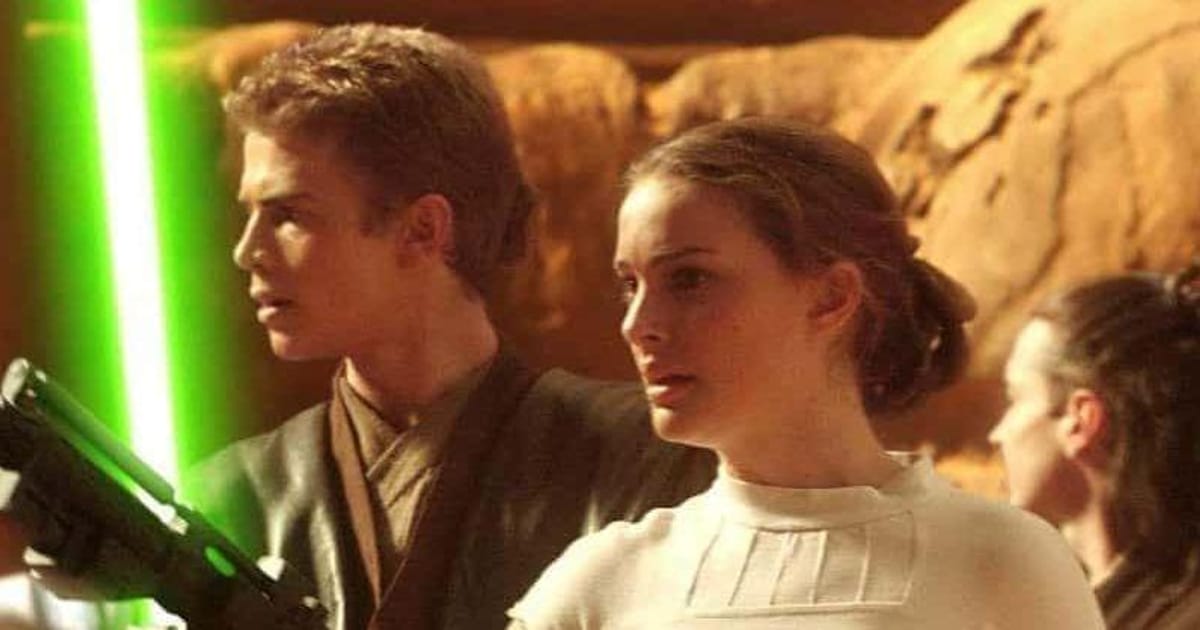
Attack of the Clones is a fascinating case because it is both commercially successful and endlessly discussed for reasons that are not always flattering. Released in 2002, the film continued the prequel trilogy and placed Natalie Portman’s Padme Amidala at the center of a forbidden romance with Anakin Skywalker. It also expanded the political intrigue, introduced the clone army, and pushed the galaxy closer to war.
The movie earned roughly $656.7 million worldwide, a huge result by almost any normal box-office standard. Of course, Star Wars standards are not normal. This is a franchise where even the “underperformers” still make the kind of money that causes studio executives to speak in soft, reverent tones.
Critically, Attack of the Clones received mixed-to-moderately-positive reactions, but its reputation has long been weighed down by criticism of the romantic dialogue, digital stiffness, and uneven performances. Portman and Hayden Christensen had the difficult job of selling a love story that needed to be operatic, tragic, political, and emotionally convincing. Unfortunately, some of the dialogue made that job about as easy as winning a staring contest with Yoda.
Still, the film has plenty of defenders. Its action sequences, world-building, visual ambition, and role in setting up the Clone Wars have gained appreciation over time. Younger fans who grew up with the prequels often view the film with more affection than critics did at release.
But this ranking is about ratio, not nostalgia. When a movie earns more than half a billion dollars worldwide while remaining one of the most debated entries in a legendary franchise, it belongs here. Attack of the Clones is not a commercial failure. It is the opposite: a commercial powerhouse with critical baggage packed in multiple suitcases.
4. Thor: The Dark World
The MCU entry everyone remembers because they forgot it
Thor: The Dark World is the kind of Marvel movie that proves brand momentum can carry a film a very long way. Released in 2013, it brought Natalie Portman back as Jane Foster and continued Thor’s story after The Avengers. The film had cosmic stakes, dark elves, portals, family drama, and enough fantasy terminology to make a glossary quietly file for overtime.
Commercially, it did very well. The film earned about $644.6 million worldwide, a strong increase over the first Thor movie and another clear sign that the MCU was becoming one of Hollywood’s most reliable box-office machines. At this stage, Marvel had trained audiences to show up not just for individual heroes, but for the larger connected universe.
Critically, however, The Dark World has often been treated as one of the weaker MCU entries. Reviewers found things to like, including Chris Hemsworth’s charm, Tom Hiddleston’s Loki, and some action sequences. But many also criticized the villain, generic plotting, and lack of emotional spark. Jane Foster’s role, despite Portman’s talent, often felt more like a plot function than a fully energized character arc.
This is exactly what makes the ratio so lopsided. If a mid-budget fantasy movie with these reviews had made modest money, it might have quietly disappeared into streaming menus. But because it was Marvel, it became a major international hit. The commercial result was strong; the critical legacy was noticeably less mighty.
For Natalie Portman’s career, The Dark World is important because it sits between her prestige work and her blockbuster identity. It is not the film people cite when praising her best performances. But it remains one of her biggest box-office titles, which is precisely why it earns a place among her worst critical-to-commercial success ratios.
5. No Strings Attached
A romantic comedy critics side-eyed while audiences bought tickets
No Strings Attached is the smallest film on this list by worldwide gross, but its ratio still deserves attention because of its budget-to-return performance. Released in 2011, the romantic comedy starred Natalie Portman and Ashton Kutcher as friends who attempt a casual arrangement without emotional complications. Because this is a Hollywood romantic comedy, emotional complications arrive approximately five seconds after everyone insists they will not.
The film was not a critical darling. Reviews were mixed, with many critics pointing out its predictable structure and familiar romantic-comedy beats. Some praised Portman’s comic timing and the supporting cast, but the general response suggested that the movie had charm without much freshness. It was the cinematic equivalent of ordering a dish you have had before: tasty enough, but nobody is asking the chef for the secret.
Commercially, however, No Strings Attached performed very well. With a production budget around $25 million, it earned roughly six times that amount worldwide. For a romantic comedy released without superhero armor, lightsabers, or an intergalactic senate, that is a strong result.
This makes the film a perfect number five pick. It did not have the enormous global machinery of Star Wars or Marvel behind it, but it still turned a middling critical response into a healthy box-office win. It also arrived during a period when Portman was receiving major awards attention for Black Swan, giving audiences a very different side of her screen presence.
In career terms, No Strings Attached is not the movie people bring up first when discussing Portman’s artistic peak. But commercially, it worked. And in this ranking, that mismatch matters more than prestige.
Why These Films Still Matter in Natalie Portman’s Career
One of the most interesting things about Natalie Portman’s career is that she has never been only one kind of movie star. Some actors build their careers around one lane and drive there forever, carefully obeying the speed limit. Portman has changed lanes repeatedly. She has been a child prodigy performer, a blockbuster queen, an indie-film risk taker, an Oscar-winning dramatic lead, a romantic-comedy star, a sci-fi protagonist, and a superhero.
That range naturally creates uneven ratios. Prestige films often win stronger reviews but earn less money. Franchise films often make mountains of cash but receive more mixed critical treatment. Romantic comedies can be critically dismissed while quietly becoming profitable. In other words, a varied career is almost guaranteed to produce strange data.
These five films also show that commercial success is not the same thing as cultural approval. The Phantom Menace became a historic blockbuster even while many critics were disappointed. Thor: The Dark World made big money but remains a common candidate when fans rank weaker MCU chapters. No Strings Attached succeeded with audiences despite reviews that treated it as pleasant but disposable.
For Portman, that is not necessarily a negative. In fact, it is part of what makes her career durable. She can survive mixed reviews because she has proven herself across multiple categories. A weakly reviewed blockbuster does not define her, because right next to it sits Black Swan. A divisive franchise role does not trap her, because she can pivot to Jackie, May December, or Annihilation. Her filmography has enough variety to absorb critical turbulence.
Experience Section: Watching the Ratio Play Out as a Movie Fan
Looking at these movies from a viewer’s perspective is almost more revealing than looking at the numbers. Everyone has had the experience of watching a film that critics treated like a wounded houseplant, only to realize the theater is packed and the audience is having a perfectly good time. That is the strange magic of the critical-to-commercial gap. Critics judge craft, originality, tone, structure, performance, and meaning. Audiences often judge a different question: “Did I enjoy spending two hours here?” Those are related questions, but they are not identical twins. At best, they are cousins who text occasionally.
Take The Phantom Menace. For many people, especially younger viewers at the time, it was not experienced as a spreadsheet of flaws. It was experienced as a major event. There were lightsabers, podracing, elaborate costumes, strange planets, and the feeling that Star Wars had returned from myth into the multiplex. A critic might focus on dialogue or pacing, while a kid in the third row is thinking, “That double-bladed lightsaber is the coolest thing civilization has produced.” Both reactions can be honest.
The same thing happens with Marvel movies. Thor: Love and Thunder may be uneven, but if someone bought a ticket to see Jane Foster become the Mighty Thor, they probably found moments worth cheering for. Portman’s return gave the movie emotional weight for fans who had followed Jane since the first Thor. Even when the jokes overpowered the drama, the idea of Jane stepping into heroic power had built-in appeal. Critics may ask whether the tone is consistent. Fans may ask whether the hammer came flying back. Again, both reactions matter.
No Strings Attached offers another kind of lesson. Romantic comedies often get punished critically for predictability, but predictability is sometimes part of the genre’s comfort. People do not always watch a rom-com because they want the ending to shock them so hard they drop their nachos. They watch because they want chemistry, awkward banter, a few laughs, and the emotional satisfaction of characters finally admitting what everyone else knew an hour ago. That does not make the movie great, but it can make it commercially effective.
The broader experience is this: box office measures desire, not necessarily quality. Critical scores measure evaluation, not necessarily joy. When those two systems disagree, the result can look silly on paper but completely understandable in real life. A movie can be flawed and still fun. A movie can be profitable and still artistically thin. A movie can be critically attacked and still become part of someone’s childhood. That is why Natalie Portman’s career is such a useful case study. Her biggest commercial titles are not always her best-reviewed ones, and her best performances are not always attached to the largest box-office numbers.
In the end, the “worst” critical-to-commercial success ratio does not mean these films should be thrown into a cinematic trash compactor. It means they reveal how Hollywood actually works. Stars matter. Franchises matter. Timing matters. Marketing matters. Nostalgia matters. And sometimes, yes, a movie can make hundreds of millions of dollars even while critics stand nearby holding a tiny umbrella of skepticism.
Conclusion
The five Natalie Portman films with the worst critical-to-commercial success ratio show that film success is never a one-lane road. Star Wars: Episode I – The Phantom Menace and Attack of the Clones turned mixed critical response into massive global box office. Thor: Love and Thunder and Thor: The Dark World proved the power of the Marvel brand even when reviews were not fully electric. No Strings Attached showed that a familiar romantic comedy can still become a sturdy commercial win.
For Natalie Portman, these movies are not career stains so much as career evidence. They prove she has worked in films that reached enormous audiences, even when critics were not entirely convinced. That is part of being a major movie star: sometimes the art-house crowd applauds, sometimes the franchise crowd cheers, and sometimes the box office wins the argument by showing up with a calculator.