Note: This article discusses the themes, humor, and storytelling style behind Mark Brinker’s comics. It does not reproduce the original comic artwork or copyrighted dialogue.
Life has a charming little habit of waiting until everything seems fine before dropping a piano labeled “plot twist” directly onto your plans. That is exactly the kind of emotional ambush Mark Brinker turns into comedy. His comic strip Me Getting Killed, shared online under the handle @megettingkilled, takes ordinary situations and bends them into absurd, grim, and weirdly delightful endings. The joke is not simply that something bad happens. The joke is that the bad thing arrives with timing so precise it feels like life itself has been workshopping punchlines.
Brinker’s work fits comfortably into the modern webcomic world: fast to read, visually simple, and built for the scroll. But what makes these comics memorable is their commitment to the worst possible outcome. A hospital visit, a family car ride, a pizza party, or even a moment of personal triumph can become a tiny disaster movie. Somehow, the result is not depressing. It is funny in the same way stubbing your toe is not funny until five minutes later, when you realize the chair won.
Below, we look at 15 Mark Brinker comics that show how life can surprise you in the worst way, and why this style of dark humor works so well for readers who enjoy their laughs with a tiny thundercloud overhead.
Who Is Mark Brinker?
Mark Brinker is a multimedia artist, writer, poet, and comic creator based in the San Francisco Bay Area. He is known for the comic strip Me Getting Killed, a series that turns fatalism into a running gag. The basic promise is right there in the title: Mark, or a Mark-like character, keeps finding new and increasingly ridiculous ways to meet disaster. It is a simple concept, but simplicity is part of the magic. Like the best dark humor comics, the setup is clean, the punchline is sharp, and the aftermath is left for the reader’s imagination to trip over.
The series uses a stripped-down visual approach that keeps attention on timing and twist. There is no need for cinematic shading or superhero anatomy when the real star of the show is the sudden reversal. Brinker’s comics often begin in familiar places: a hospital, an office, a car, a home, or a social gathering. Then, just when the reader thinks they know where the scene is going, the story swerves into chaos. It is everyday life, but with the safety rails removed and a banana peel waiting at the end of the hallway.
Why These Comics Work So Well
They Turn Anxiety Into a Punchline
Dark humor often works because it gives readers a safe way to laugh at fears they already carry around. We worry about bills, accidents, health problems, awkward social moments, technology, and random bad luck. Brinker’s comics exaggerate those worries until they become ridiculous. The surprise is terrible, yes, but it is also contained inside a comic strip. That distance lets readers laugh without having to file an insurance claim.
They Understand the Power of the Last Panel
In webcomics, the final panel is everything. It is the trapdoor, the cymbal crash, the moment when the story reveals what it was really doing. Brinker’s comics rely on that final beat. The opening panels build a normal expectation, then the ending quietly ruins it. The joke lands because the reader has just enough time to feel comfortable before the comic pulls the rug out, folds the rug, sells the rug, and sends you a bill for rug removal.
They Make Ordinary Life Feel Suspicious
One of the funniest things about Me Getting Killed is how ordinary the setups can be. There is nothing automatically dangerous about pizza, seatbelts, farewell cards, or self-driving cars. Yet in Brinker’s world, every object seems to be auditioning for the role of “unexpected doom.” That is the central joke: life is not always dramatic, but it is always capable of becoming dramatic at the least convenient moment.
15 Mark Brinker Comics That Show Life at Its Most Unfairly Funny
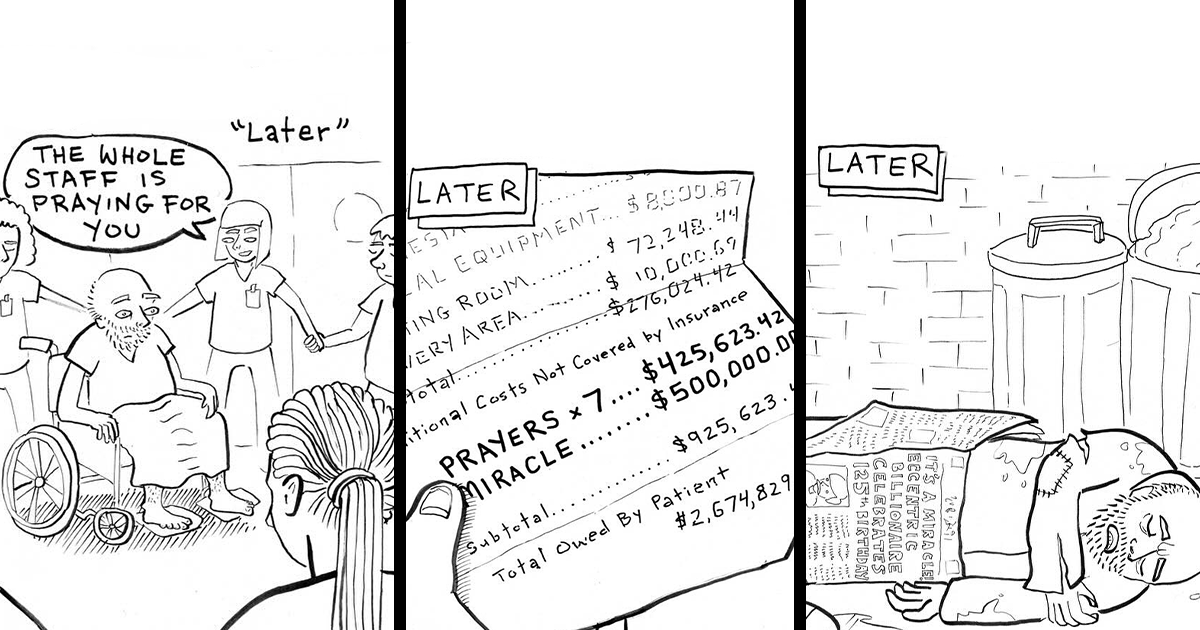
1. The Hospital Miracle With a Very American Punchline
One featured comic plays with the idea of surviving a medical crisis only to face another kind of threat: the cost. The humor lands because the danger does not end when the operation succeeds. Instead, the “surprise” shifts from physical survival to financial panic. It is a dark joke, but one many readers immediately understand. Sometimes the monster is not under the bed. Sometimes it arrives in an envelope marked “amount due.”
2. The Worm That Wins Too Hard
Another comic centers on a worm and an ironic transformation, turning a small creature’s apparent success into something much stranger. The funny part is not just the weirdness of the image; it is the idea that even victory can come with consequences. Brinker often treats triumph as a trapdoor. You climb the mountain, raise your arms, and then discover the mountain has teeth.
3. The Shipwreck Scenario That Feels Almost Reasonable
A shipwreck comic in the collection shows how quickly survival logic can become absurd. Disaster stories usually ask characters to become brave, noble, or resourceful. Brinker asks a different question: what if everyone involved responds in the worst, funniest, or most socially uncomfortable way possible? The result is the kind of comic that makes readers laugh and then wonder whether laughing means they need a moral tune-up.
4. The Pizza Party Twist
Pizza is supposed to be the universal symbol of casual happiness. It says, “Relax, we are among friends, and nobody has made a salad.” In Brinker’s hands, even a pizza party can turn into a grim punchline. That contrast is exactly why the joke works. The friendliest food in the room becomes part of a scene where life goes sideways. It is comfort food with a trapdoor crust.
5. The Choking Incident With a Legal Detour
One of the darker examples involves a choking incident and a surprising prison outcome. The setup suggests one kind of emergency, but the ending redirects the problem into another system entirely. That escalation is a classic Brinker move. A bad moment does not simply end; it mutates. The comedy comes from the sudden realization that the character has escaped one disaster only to enter a new, bureaucratically flavored nightmare.
6. The Farewell Card That Says Too Much
Office life is already full of small emotional hazards: awkward meetings, forced cheerfulness, and farewell cards passed around by someone who says, “Just write something nice.” Brinker turns that everyday workplace ritual into a betrayal machine. The comic’s humor comes from social discomfort rather than physical danger. Sometimes the worst surprise is not death, fire, or disaster. Sometimes it is discovering what your coworkers really think.
7. The Self-Driving Car Ride Gone Wrong
Technology promises convenience, safety, and a future where humans can relax. Comedy, wisely, does not trust any of that. A self-driving car comic gives Brinker room to poke at our dependence on machines. The fear is familiar: what happens when the thing designed to protect us follows logic in a way no human expected? It is not anti-technology so much as pro-suspicion, which feels reasonable when your toaster has software updates.
8. The Firefighters and the Lost Jars
In another comic, firefighters appear in a scene involving a burning house and a character worried about jars. That detail is what makes the joke sing. In a true emergency, people sometimes fixate on the smallest, strangest losses. Brinker exaggerates that impulse until it becomes absurd. The house may be collapsing, but someone is still emotionally committed to inventory management. Priorities, like smoke, can get very confusing.
9. The Family Car Scene About Seatbelt Safety
Family car rides are perfect comic territory because they combine safety lectures, mild irritation, and the possibility of everyone being trapped together for too long. A seatbelt-themed comic turns a responsible message into something unexpectedly chaotic. Brinker’s humor often lives in that gap between what adults say should happen and what the universe actually does. Life hears “safety first” and replies, “Cute.”
10. The Everyday Moment That Refuses to Stay Normal
Some of Brinker’s strongest comics are difficult to summarize because their power lies in the timing of the reveal. A plain moment becomes a strange one, and the reader’s brain has to catch up. These comics show how little setup is required when the punchline is sharp. A few panels, a simple scene, and one wrong turn are enough to create an entire miniature disaster.
11. The Brain Worm Medical Nightmare
A comic involving a disturbing medical procedure and a brain worm leans into body-horror comedy. It is gross, strange, and funny because it converts a health fear into cartoon logic. The image may be unsettling, but the exaggeration makes it readable as humor. Brinker knows that the line between “oh no” and “okay, that got me” is thin, slippery, and probably covered in medical paperwork.
12. The Bird Family and Harsh Reality
A bird family comic brings nature into the same cruelly funny universe. Animal comics often soften life by making creatures cute and relatable. Brinker does the opposite. He uses birds to reveal that the natural world is not always a motivational poster. Life can be tender, ridiculous, and brutally unfair all at once. The comedy comes from seeing a familiar family dynamic dropped into a harsher reality.
13. The Surreal Party Scene
Parties are social puzzles with snacks. Brinker’s surreal party comic pushes that idea further, turning a gathering into something stranger and more existential. The punchline feels like a dream that forgot to be comforting. It is the kind of comic where the reader laughs first, then mentally checks whether they have ever attended a party that felt exactly like this. The answer, unfortunately, may be yes.
14. The Doctors Trying Something Unusual
Medical scenes are recurring gold mines for dark comedy because they combine vulnerability, authority, and fear. A comic featuring doctors attempting unusual methods plays with the patient’s worst suspicion: maybe the professionals are improvising more than we would like. The joke is not really about medicine; it is about trust. We want experts to have answers. Brinker imagines what happens when the answer is “let’s try the weird option.”
15. The Military Training Surprise
A military training comic rounds out the collection with discipline, danger, and a punchline that undercuts the seriousness of the setting. Training is supposed to prepare people for chaos, but Brinker’s worldview suggests chaos does not respect preparation. You can plan, rehearse, and stand in formation. Life may still show up wearing clown shoes and carrying a clipboard.
The Bigger Meaning Behind the Worst-Case Punchlines
At first glance, these comics look like simple dark jokes. Someone faces disaster. Something goes wrong. The ending is bleak, absurd, or both. But the reason they linger is that they capture a real emotional pattern. Life often surprises us not with grand cinematic tragedy, but with a series of tiny betrayals. The bill is higher than expected. The machine does not work. The “quick errand” becomes a three-hour side quest. The nice moment gets interrupted by the weirdest possible inconvenience.
Brinker’s comics compress that feeling into a few panels. They do not lecture about resilience, fate, or modern anxiety. They simply show a person walking into a normal situation and being blindsided by the universe. That is why the humor feels oddly relatable even when the scenario is extreme. Nobody expects to be defeated by a brain worm or a cursed pizza party, but everyone knows what it feels like when the day suddenly changes genres.
The best dark humor does not ask readers to enjoy suffering. It asks them to recognize absurdity. In Me Getting Killed, disaster is so frequent and so creatively staged that it becomes less frightening. The repeated joke turns doom into a pattern, and patterns are easier to laugh at. By making the worst thing happen over and over, Brinker transforms helplessness into comic rhythm.
Why Readers Love Dark Humor Comics Online
Dark humor comics thrive online because they are quick, shareable, and emotionally efficient. A reader can understand the setup in seconds and feel the punchline instantly. In a crowded feed, that matters. Brinker’s work does not require a long introduction or a deep knowledge of comic lore. The premise is clear: life is dangerous, ridiculous, and very committed to the bit.
There is also a social element. Sharing a comic about the universe ruining someone’s day is a low-pressure way of saying, “This is how my week feels.” It lets people bond over inconvenience without writing a dramatic status update. Instead of saying, “I am overwhelmed by modern existence,” a person can send a comic where a normal situation becomes a catastrophe. The message is the same, but funnier and less likely to alarm relatives.
Experiences That Make These Comics Feel Painfully Familiar
The reason a title like 15 Comics By Mark Brinker Showing How Life Can Surprise You In The Worst Way works so well is that nearly everyone has a personal version of it. Maybe yours did not involve a shipwreck, a self-driving car, or a worm with suspicious career momentum. But you have probably experienced a moment when life waited for your confidence to peak before knocking the tray out of your hands.
Consider the classic “simple task” disaster. You decide to fix one tiny thing at home. Tighten a screw. Replace a bulb. Move a chair. Twenty minutes later, you are holding a mysterious metal piece, the light fixture is making a noise lights should not make, and you are searching online for “is a burning smell always bad.” That is pure Brinker energy. The universe did not need to escalate the situation. It chose to.
Or think about errands. You leave the house for one item: toothpaste. You are focused, efficient, heroic in a very boring way. Then the store is rearranged, the checkout machine freezes, your phone battery hits 1%, and it starts raining with the dramatic timing of a stage production. By the time you get home, you have purchased everything except toothpaste. This is not tragedy. This is inconvenience wearing a tiny villain cape.
Workplaces provide another endless supply of worst-way surprises. You send an email and immediately notice the typo. You join a video meeting and realize your microphone has been broadcasting your snack choices. You agree to “a quick call,” which somehow grows roots, branches, and a sequel scheduled for Thursday. Brinker’s farewell card comic feels funny because office life is already full of polite little traps. Everyone smiles. Everyone signs the card. Somewhere, someone writes something that could have been handled by not writing it.
Technology may be the richest source of modern comic disaster. Devices promise to save time, then demand passwords you created during a previous personality. Navigation apps send you through scenic confusion. Printers, those haunted plastic suitcases, refuse to print unless you first acknowledge their emotional needs. A self-driving car joke works because we already know the feeling of handing control to a machine and hoping it does not interpret “fastest route” as “spiritual test.”
Even good news can arrive with a hidden trap. You get a discount, then discover shipping costs more than the product. You receive a compliment, then spend the rest of the day wondering what it meant. You finish a project early, and someone rewards you with another project. Success, in real life, often behaves like the worm comic: uplifting for exactly one second before becoming extremely suspicious.
What Brinker captures is not just bad luck. It is the comic structure of surprise itself. Life sets up expectations. We believe the hospital visit ends with healing, the party ends with cake, the car ride ends at the destination, and the office card ends with “best wishes.” Then reality adds a footnote in bold. The disappointment is annoying when it happens to us, but hilarious when compressed into a comic strip. Humor gives the chaos a frame. It turns the mess into a story small enough to survive.
That is why these comics feel strangely comforting. They do not promise that life will stop being unfair. They suggest that unfairness can be observed, exaggerated, and laughed at. Sometimes the best response to a terrible surprise is not wisdom or grace. Sometimes it is staring at the final panel and saying, “Yep. That seems about right.”
Conclusion
Mark Brinker’s Me Getting Killed comics show that life’s worst surprises can become comedy when the timing is sharp enough. Through hospitals, office rituals, family cars, strange medical scenes, parties, technology, and everyday bad luck, Brinker turns disaster into a punchline without making the humor feel heavy. His comics work because they understand a universal truth: life is unpredictable, but at least it occasionally has excellent comic timing.
For readers who enjoy dark humor comics, webcomics, absurd storytelling, and funny life surprises, Brinker’s work offers a perfect mix of dread and delight. The jokes are grim, but the reading experience is light. In a world where plans collapse, gadgets betray us, and even pizza cannot be fully trusted, laughing at the worst-case scenario might be one of the sanest things we can do.