Note: HTML body only, English content, ready for copying and publishing.
Some kitchens chase trends like they owe them money. Traditional kitchens do the opposite. They stay calm, look polished, and age with the kind of grace usually reserved for movie stars and cast-iron skillets. A well-designed traditional kitchen does not scream for attention. It earns it slowly, with classic lines, hardworking materials, and details that still look beautiful long after the trendy neon faucet has retired in embarrassment.
If you love a space that feels welcoming, layered, and built to last, traditional kitchen ideas are worth borrowing. The beauty of this style is that it is not frozen in one decade. It blends old-house charm, timeless kitchen design principles, and practical choices that make everyday cooking easier. Think Shaker cabinets, natural stone countertops, warm wood tones, elegant brass hardware, and a layout that actually works when three people are trying to make dinner at once.
Below, you will find 32 traditional kitchen ideas that have serious staying power, plus a deeper look at why they work and what it is actually like to live with this kind of kitchen over time.
Why Traditional Kitchens Never Really Go Out of Style
A traditional kitchen is rooted in balance. It favors symmetry, good proportions, durable finishes, and architectural details that feel connected to the home instead of pasted on for social media approval. That is why these kitchens tend to feel grounded. They are not trying to be futuristic. They are trying to be excellent.
The smartest traditional kitchens also make room for modern life. You can hide appliances, improve storage, update lighting, and add better workflow without losing the classic spirit of the room. In other words, you get beauty without sacrificing function, which is a pretty sweet deal for a room that works harder than almost any other in the house.
32 Traditional Kitchen Ideas That Stand the Test of Time
1. Start with Shaker-style cabinets
Shaker cabinets are the clean white shirt of the kitchen world. They are simple, adaptable, and elegant without trying too hard. Their recessed-panel design works beautifully in classic kitchens and still plays nicely with updated hardware and lighting.
2. Use a quiet, classic color palette
Warm whites, creamy off-whites, soft taupes, deep navy, and muted greens give a traditional kitchen a settled look. These colors feel timeless because they let the materials and millwork do the talking instead of turning every cabinet door into a dramatic monologue.
3. Bring in natural wood tones
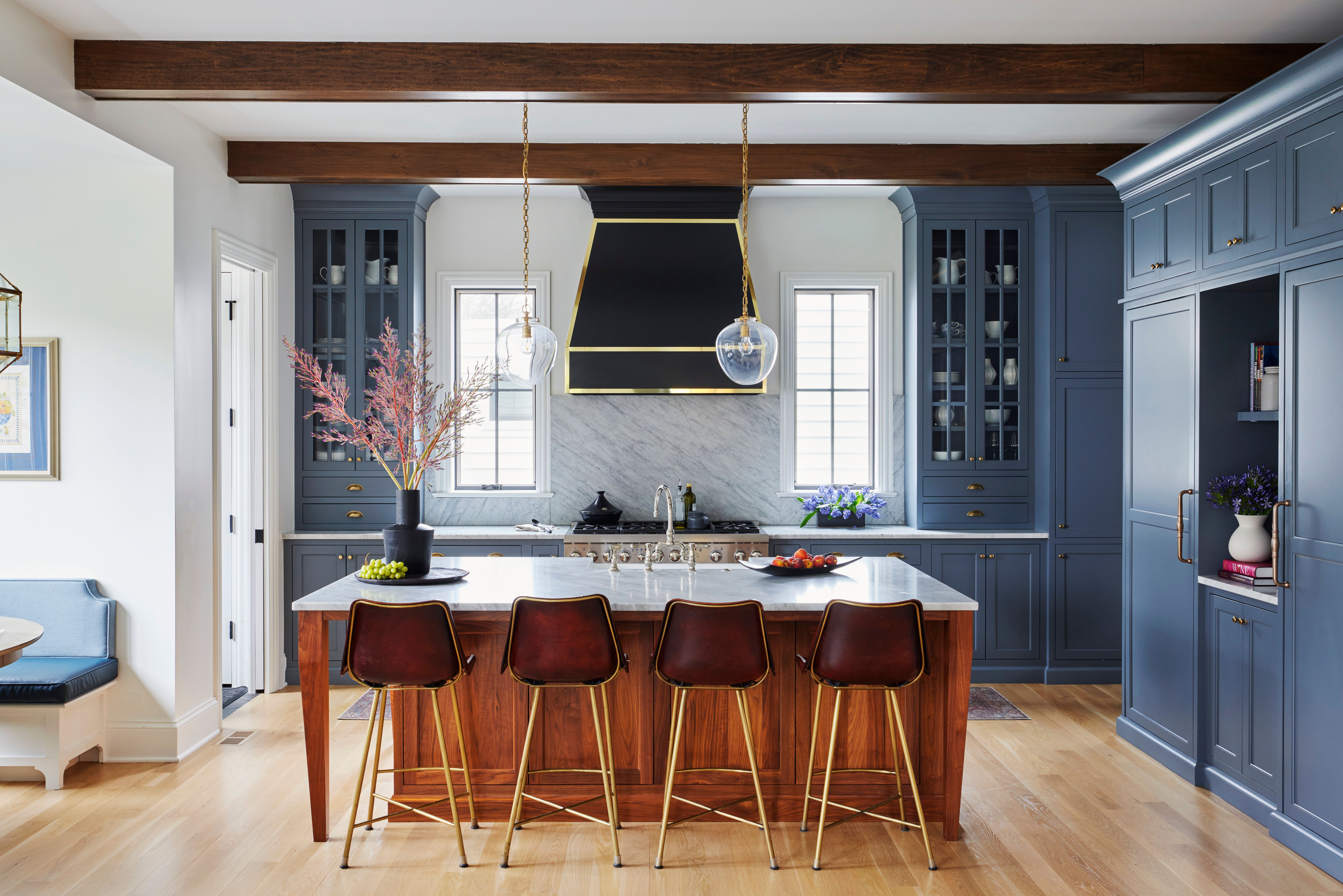
Natural wood instantly adds warmth, depth, and a sense of permanence. Whether it shows up on floors, an island, ceiling beams, or cabinetry, wood keeps a traditional kitchen from feeling cold or overly polished.
4. Choose marble or marble-look surfaces wisely
Marble has long been associated with classic kitchen design for good reason. It adds softness, movement, and quiet luxury. If real marble feels too high-maintenance for your lifestyle, choose a quality alternative that captures the same timeless look.
5. Add a furniture-style island
A traditional kitchen island should not always look like a giant storage cube parked in the middle of the room. An island with turned legs, decorative panels, open shelves, or a contrasting wood top feels more collected and more custom.
6. Try glass-front upper cabinets
Glass-front cabinetry breaks up a wall of solid doors and adds a classic, airy feel. It is also a great excuse to display everyday dishes you actually love instead of hiding them like family secrets.
7. Use crown molding on cabinetry
Crown molding helps cabinets feel architectural and intentional. It gives the room a finished look, draws the eye upward, and strengthens that traditional sense of craftsmanship that makes the whole space feel more established.
8. Install a paneled range hood
A paneled hood wrapped in trim helps the cooking area blend into the overall design. It softens the industrial feel of appliances and turns the range wall into a true focal point.
9. Embrace subway tile
Subway tile remains a staple because it is clean, versatile, and historically at home in traditional kitchens. Run it to the ceiling for a more polished look, or keep it classic with simple stacked or offset lines.
10. Consider ceiling-height backsplashes
Extending tile or stone higher up the wall adds elegance and gives the room a more tailored appearance. It also makes a traditional kitchen feel more intentional, like someone actually planned it instead of stopping when the budget got nervous.
11. Layer in brass hardware
Brass hardware works like jewelry in a traditional kitchen. It adds warmth and glow, especially against painted cabinets, wood finishes, or marble. Unlacquered brass is especially appealing if you like materials that develop character over time.
12. Mix in polished nickel for a softer shine
If yellow metals are not your favorite, polished nickel is a classic alternative. It reflects light beautifully and gives a traditional kitchen a refined, collected feel without reading too flashy or cold.
13. Keep the layout practical
Traditional style is not just about looks. A timeless kitchen layout supports prep, cooking, serving, and cleanup without chaos. Galley, L-shaped, and U-shaped kitchens can all work well when the zones are thoughtfully arranged.
14. Make room for real storage
Nothing dates a kitchen faster than clutter covering every inch of the counters. Deep drawers, tray storage, pantry cabinets, and built-in organizers keep a traditional kitchen functional and calm, which is its whole personality.
15. Hide appliances when possible
Integrated or paneled appliances help the kitchen feel less timestamped. They let cabinetry and millwork lead the design, which is useful if you want the room to stay relevant long after this year’s “must-have” appliance finish becomes next year’s regret.
16. Use classic pendant lighting
Globe pendants, lantern fixtures, and tailored shades all suit traditional kitchens. Good lighting should feel decorative, but it also needs to do its job, especially over islands, sinks, and prep zones.
17. Add under-cabinet task lighting
Traditional design may be inspired by the past, but nobody needs to chop onions like it is 1894. Under-cabinet lighting improves visibility and makes the kitchen more comfortable without changing the classic look.
18. Choose wood flooring for warmth
Wood floors bring softness and continuity to a traditional kitchen. They connect the space to the rest of the home and help the room feel lived-in rather than overly sterile.
19. Use checkerboard or patterned floors carefully
Checkerboard floors, brick patterns, and heritage-inspired tile layouts can look fantastic in traditional kitchens. The key is restraint. Choose patterns with classic colors and materials so the floor feels charming, not costume-like.
20. Add beadboard or paneled details
Beadboard backsplashes, island paneling, or trim details bring texture and cottage character. These details work especially well in farmhouse-leaning traditional kitchens that want to feel cozy rather than formal.
21. Use a farmhouse or apron-front sink
An apron-front sink delivers function and character in one hardworking package. It feels right at home in traditional kitchens, especially when paired with bridge faucets or classic wall-mounted hardware.
22. Include open shelving in moderation
One or two open shelves can make a traditional kitchen feel relaxed and personal. The trick is moderation. Too much open storage turns “thoughtfully styled” into “I ran out of cabinets and now my mixing bowls are judging me.”
23. Decorate with blue-and-white pieces
Blue-and-white ceramics, platters, or jars add timeless charm and historical flavor. They are especially effective in traditional kitchens because they contribute color without overpowering the overall palette.
24. Display antique or vintage accents
A traditional kitchen feels richer when it includes pieces with a little age and soul. A vintage scale, old cutting board, antique stool, or inherited table keeps the room from looking too brand-new and too perfect.
25. Use a freestanding table instead of a bulky island
In some kitchens, a real table creates a more authentic traditional feel than a massive island. It encourages gathering, works for prep and dining, and brings that old-house sense of flexibility that fitted kitchens sometimes lose.
26. Add a classic runner rug
A runner softens the room, adds pattern, and makes the kitchen feel more connected to the rest of the home. Vintage-inspired rugs are especially effective in galley kitchens and long layouts.
27. Create symmetry around the range
Symmetry is one of the quiet superpowers of traditional design. Matching sconces, balanced cabinetry, centered hood treatments, and evenly spaced shelves make the room feel orderly and pleasing without shouting about it.
28. Use detailed millwork sparingly
Corbels, fluted trim, and decorative posts can enhance a traditional kitchen, but only when used with discipline. A few strong details look elegant. Too many can make the room feel like it is wearing every accessory it owns.
29. Try painted cabinets with a stained wood island
Mixing finishes keeps a traditional kitchen from looking flat. Painted perimeter cabinets paired with a wood island add visual depth and reinforce that collected, furniture-like atmosphere.
30. Add framed art
Traditional kitchens do not have to be all cookware and canisters. Framed art, especially still lifes, landscapes, or botanical prints, brings personality and softness to hard-working walls.
31. Let architecture lead the design
If your home has original beams, brick, arched openings, old floors, or historic trim, let those elements guide your kitchen choices. A timeless traditional kitchen looks best when it feels connected to the home’s character.
32. Personalize with restraint
The most beautiful traditional kitchens feel lived-in, not staged. Add meaningful pieces, but give them breathing room. A kitchen should feel welcoming and layered, not like a museum gift shop exploded near the toaster.
How to Make Traditional Kitchen Ideas Feel Fresh, Not Fussy
One of the biggest mistakes homeowners make is assuming traditional means overly ornate. It does not. The best traditional kitchens use classic kitchen ideas as a foundation, then edit carefully. Clean cabinet lines, quality finishes, and a few meaningful details will usually outlast rooms overloaded with decorative tricks.
A good formula is simple: start with timeless materials, choose a functional layout, and then layer in warmth through wood, metal, textiles, and lighting. If you want personality, add it through art, stools, a painted island, or a vintage runner rather than through expensive permanent features that may feel dated in a few years.
This is also where restraint becomes your friend. A traditional kitchen does not need every possible feature. It needs the right features, chosen well. That is what gives the room confidence.
What Living with a Traditional Kitchen Actually Feels Like
There is something deeply reassuring about walking into a traditional kitchen first thing in the morning. The room tends to greet you quietly. Nothing feels harsh or over-designed. The cabinet lines are familiar, the finishes feel warm, and even the light bouncing off polished hardware or a stone countertop seems softer somehow. It is the kind of kitchen that makes coffee taste slightly more competent.
In daily life, that timelessness matters more than people expect. A traditional kitchen usually ages well because it is not built around a single trend cycle. You do not wake up one day and realize your entire room is trapped in the year of aggressively matte black everything. Instead, the space keeps working. The paint color still feels right. The wood tones still look warm. The tile still makes sense. That stability is surprisingly luxurious.
Traditional kitchens also tend to support real routines. If the layout is done well, there is a natural flow between prepping, cooking, serving, and cleaning. Family members know where things belong. Guests drift toward the island or table without blocking the person at the stove. Holiday cooking feels busy, but not chaotic. Even on ordinary weeknights, the room feels like it is helping rather than fighting you.
Another underrated benefit is emotional comfort. A traditional kitchen often feels more personal over time because it welcomes layers. You can add a favorite lamp, inherited china, a worn wooden board, or a framed recipe and the room absorbs those pieces beautifully. It does not demand perfection. In fact, it tends to look better once it has a little life in it.
That does not mean a traditional kitchen has to feel old-fashioned. The best ones pair classic style with modern convenience. Drawers glide properly. Lighting is practical. Storage is smarter. Appliances do the heavy lifting quietly behind cabinet panels or tasteful finishes. You get the charm of a classic room without giving up the advantages of modern living, which is really the dream, unless your dream is hand-washing dishes in candlelight and pretending it is quaint.
There is also a confidence to a traditional kitchen that trendy spaces often lack. It does not need to prove how current it is. It just needs to be beautiful, functional, and welcoming year after year. That kind of design maturity is hard to fake. When a kitchen feels connected to the architecture of the house and the rhythms of the people using it, it becomes more than a nice room. It becomes part of the home’s identity.
For homeowners, that long-term ease can be just as valuable as visual appeal. You can refresh bar stools, swap out a runner, repaint walls, or change cabinet hardware without undoing the entire room. The bones stay strong. And that is really what “standing the test of time” means. It is not about freezing a kitchen in the past. It is about building a room with enough grace, practicality, and character to keep earning its place in the present.
Final Thoughts
The best traditional kitchen ideas are not flashy. They are thoughtful. They rely on craftsmanship, comfort, and materials that feel good today and still make sense years from now. Whether you lean formal, farmhouse, cottage, or classic American, the most lasting choices are usually the ones that balance beauty with use.
So if you are planning a remodel or refreshing a tired cook space, borrow from tradition without becoming trapped by it. Keep the bones timeless, add personality with care, and build a kitchen that looks just as right during a holiday gathering as it does when you are standing there at 10 p.m. eating toast over the sink.