If your shower feels like a surprise challenge round on a game showeither “Arctic Splash” or “Why Is My Skin Suddenly Medium-Rare?”your hot water heater probably needs an adjustment. The good news is that adjusting a water heater is usually straightforward. The better news is that you do not need to become an honorary plumber just to make your morning shower less dramatic.
Still, this is one of those home maintenance jobs where “quick tweak” and “oops” can live uncomfortably close together. Some water heaters have a simple gas dial. Others hide thermostats behind access panels. Newer hybrid or smart models may use digital controls instead of old-school dials. And in some homes, the smartest adjustment is not raising the tank temperature at all, but controlling the hot water delivered at the tap.
In this guide, we’ll walk through three ways to adjust a hot water heater, explain when each one makes sense, and help you find that happy middle ground between comfort, safety, and energy efficiency. Because yes, there is a sweet spotand no, it is not “set it to lava and hope for the best.”
Before You Adjust Anything, Start With Safety
Before touching the controls, know your goal. For most households, 120°F is the standard starting point. It is hot enough for everyday washing and bathing, while helping reduce energy use and lowering scald risk. If your household includes small children, older adults, or anyone with limited sensation or mobility, staying at or below that range is especially important.
That said, not every home is identical. Some people may need a different storage temperature because of appliance needs, recovery concerns, or plumbing-system factors. If you ever decide to store water hotter than 120°F, do it deliberatelynot casuallyand think about anti-scald protection such as thermostatic mixing valves.
A few ground rules first
- Read your owner’s manual if you have it. Manufacturer instructions always win.
- Turn off power before adjusting an electric water heater.
- Use small temperature changes, not giant leaps.
- Wait, then test the water at a nearby faucet before deciding whether the change worked.
- Do not disassemble components you do not understand. A water heater is not the place for heroic improvisation.
Way 1: Adjust the Temperature on a Gas Water Heater
If you have a gas storage water heater, this is usually the easiest method. Many models have a thermostat or temperature dial on the gas control valve near the bottom of the tank. Some dials show actual temperatures. Others use labels such as Warm, Hot, or even letters like A, B, and C, which sounds mysterious but is really just the heater’s way of being annoyingly vague.
How to do it
- Find the temperature control dial on the gas valve.
- Check the current setting before changing anything.
- Turn the dial slightly toward a warmer or cooler setting.
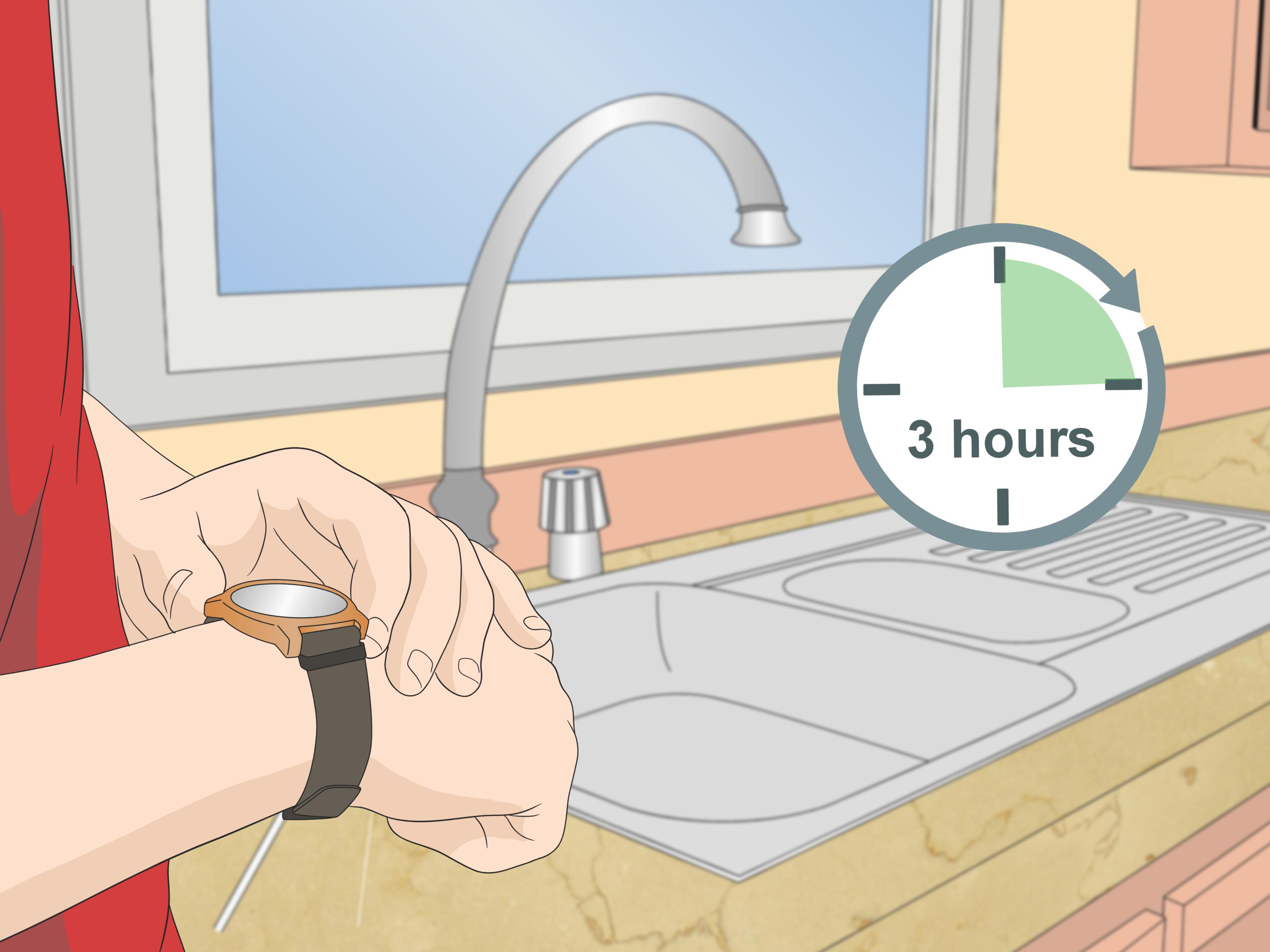
- Wait for the heater to recover.
- Run hot water at the nearest faucet for a few minutes, then test the temperature.
Make small adjustments. If you jump from a moderate setting to the water-heater equivalent of a volcano, you may get more than “better hot water.” You may get burned fingers, unhappy family members, and an urgent need to apologize.
When this method works best
This is the right move when your water heater is gas-fired and you simply need a modest change in water temperature. For example, if the shower runs a bit too cool in winter, raising the setting slightly may fix the problem. If the sink water feels dangerously hot, turning it down is the obvious move.
Example
Say your current setting is roughly equivalent to 120°F, but the water feels lukewarm during back-to-back showers. Instead of cranking it to “surface of the sun,” move it up one small notch, wait, and test again. A modest increase is often enough.
Way 2: Adjust an Electric Water Heater Thermostat
Electric water heaters are a little less casual about adjustments. Many standard tank-style electric models have one or two thermostats hidden behind access panels. On dual-element units, there is often an upper thermostat and a lower thermostat, and both should generally be set to the same temperature. If you only adjust one, you can end up with uneven performance and a lot of confusion.
How to do it
- Turn off power to the water heater at the breaker.
- Remove the access panel or panels.
- Pull back insulation carefully to expose the thermostat.
- Use a screwdriver to adjust the thermostat dial in small increments.
- If your model has upper and lower thermostats, set both to the same temperature.
- Replace the insulation and access panels.
- Turn the breaker back on.
- Wait for the water heater to recover, then test hot water at a faucet.
This is where patience matters. An electric water heater does not respond instantly. It is more of a “please circle back after I quietly do my job” appliance.
Why homeowners get tripped up here
The biggest mistake is forgetting the power shutoff. The second biggest is adjusting only one thermostat on a dual-element unit. The third is making the change, testing too soon, then deciding nothing happened. In other words: safety first, then consistency, then patience.
Example
Maybe your upstairs shower starts hot but fades too quickly. On an electric tank, that could mean your settings are too low or mismatched. Setting both thermostats evenly and testing again may solve the problem without any major repairs.
Way 3: Adjust the Delivered Hot Water With Smart Controls or Mixing Valves
Here’s the method many homeowners overlook: sometimes the best way to adjust a hot water heater is not simply turning the tank temperature up or down. In some homes, you get better results by controlling how hot water is delivered rather than only how it is stored.
This “third way” shows up in two common forms:
Option A: Use the digital controls on a hybrid or smart water heater
Newer electric heat pump water heaters and smart-enabled models often have a front-facing control panel, electronic temperature settings, and operating modes such as Energy Saver, High Demand, or Vacation. On these units, the manufacturer may specifically warn you not to remove panels to change temperature. The correct adjustment happens through the interface, not a screwdriver.
This is especially useful when your hot water needs change seasonally. Hosting guests? A higher-demand mode may help. Going away for a week? Vacation mode can reduce energy use without making your heater work like a loyal employee with no days off.
Option B: Install or adjust a thermostatic mixing valve
A thermostatic mixing valve blends hot and cold water so the water coming out at the fixture is safer and more consistent. This can be helpful if your tank needs to store hotter water for performance or hygiene reasons, but you do not want scalding temperatures at sinks and showers.
In plain English: the tank can stay hotter, while the tap stays saner.
This approach can make sense in homes where:
- You need a little more usable hot water capacity.
- Your dishwasher or laundry setup benefits from hotter stored water.
- You are balancing temperature control with anti-scald protection.
- You have a household member who is more vulnerable to burns.
If you are going this route, it is smart to involve a qualified plumber. Mixing valves are incredibly useful, but they are not a “watch one video, become legend” type of upgrade for most homeowners.
How to Know You Picked the Right Water Heater Setting
A good hot water heater setting should do three things:
- Provide enough hot water for normal daily use.
- Reduce unnecessary energy waste.
- Minimize scald risk.
If your showers are comfortable, your dishwasher performs normally, and your hot water is not startlingly hot, you are probably in the right zone. For many homes, that zone is still around 120°F.
Quick test checklist
- Run the hot water at the closest faucet for a few minutes.
- Measure it with a reliable thermometer.
- Check how the shower feels during normal use.
- Notice whether hot water runs out too quickly during busy times.
- Make another small adjustment only if necessary.
If the water still feels wrong after a careful adjustment, the issue may not be the setting at all. Sediment buildup, a failing heating element, a broken thermostat, a bad dip tube, or an undersized water heater can all create “temperature problems” that are really equipment problems wearing a fake mustache.
Common Mistakes to Avoid
1. Setting it too high
Yes, hotter water can feel luxurious for about three seconds. After that, it becomes a safety hazard. Water that is too hot raises scald risk fast, especially for children and older adults.
2. Ignoring the manual
Some heaters are designed for simple dial adjustments. Others require very specific procedures. And some newer models want you to use digital controls instead of opening anything.
3. Testing too soon
Give the heater time to recover. Otherwise, you may think the adjustment failed when the tank simply has not caught up yet.
4. Adjusting only one electric thermostat
On dual-element electric units, mismatched settings can create inconsistent results and plenty of frustration.
5. Treating low hot water as a temperature-only problem
If the hot water disappears too quickly, the answer may be maintenance or repairnot a hotter setting. Turning up the temperature can sometimes mask the real issue instead of fixing it.
Real-World Experiences: What Homeowners Learn the Hard Way
Ask enough homeowners about adjusting a hot water heater, and you will hear the same pattern over and over: almost everyone assumes it will be simpler than it is, and almost everyone learns at least one useful lesson the slightly annoying way.
One of the most common experiences is the “I turned it up, but nothing changed” moment. This happens a lot with electric water heaters. A homeowner makes a careful adjustment, goes to the sink ten minutes later, and declares the whole effort a scam. Then an hour later, the water is suddenly much hotter, and now everyone in the house is washing dishes like they are defusing a bomb. The lesson? Water heaters are not instant-gratification machines. They need recovery time.
Another frequent experience is discovering that the problem was never the temperature setting in the first place. People often assume “not enough hot water” means the thermostat is too low. But in real homes, the culprit could be sediment in the tank, an aging heating element, or a family schedule that turns one shower into four back-to-back marathons. In those cases, increasing the setting may help a little, but it is more like putting a bandage on a leaky pipe. You might feel productive, but the root issue is still there, plotting.
Families with kids often report the opposite problem: the water heater came with a higher setting than expected, and no one noticed until bath time felt suspiciously extreme. That experience tends to turn homeowners into lifelong believers in checking the actual tap temperature instead of trusting labels on the unit. “Hot” is not a temperature. It is a warning disguised as a setting.
People with gas water heaters usually describe the adjustment as pleasantly simple. Turn the dial a little, wait, test, repeat. But even there, the real-world lesson is restraint. Many homeowners think one big turn will solve everything, when a small change is usually smarter. A modest adjustment is easier to control, easier to test, and far less likely to produce regret.
Owners of newer hybrid or smart water heaters often go through a different learning curve. They expect an old-fashioned thermostat hidden behind a panel, then realize the heater has menus, operating modes, and maybe even app connectivity. At first, this feels absurdly high-tech for something whose main job is “make water hot.” But once they get used to it, many appreciate the extra controlespecially when energy savings and hot water demand change throughout the year.
And then there is the classic “we turned it hotter so we would get more hot water” story. That sometimes works, but it also introduces safety concerns. Homeowners who go down that road often end up learning about mixing valves, anti-scald fixtures, and the difference between storage temperature and delivered temperature. It is one of those surprisingly grown-up homeownership moments: yesterday you were buying coffee; today you are discussing point-of-use temperature control like you run a tiny plumbing think tank.
The biggest shared experience, though, is this: once homeowners understand how their water heater actually works, they stop guessing. They make smaller changes, test more carefully, and get better results. That alone can save time, energy, and a whole lot of muttering in the utility room.
Final Thoughts
If you want to adjust a hot water heater safely, the right method depends on the type of unit you have. A gas heater usually calls for a simple dial change. An electric heater requires shutting off power and adjusting the thermostat or thermostats carefully. And in some homes, the smartest long-term solution is adjusting how hot water is delivered through digital controls or a mixing valve instead of just cranking the tank temperature.
For most households, starting around 120°F is a sensible move. From there, make small adjustments, give the heater time to recover, and test the water at the tap. That approach is less exciting than random guesswork, but it is also less likely to turn your shower into an unwanted character-building exercise.