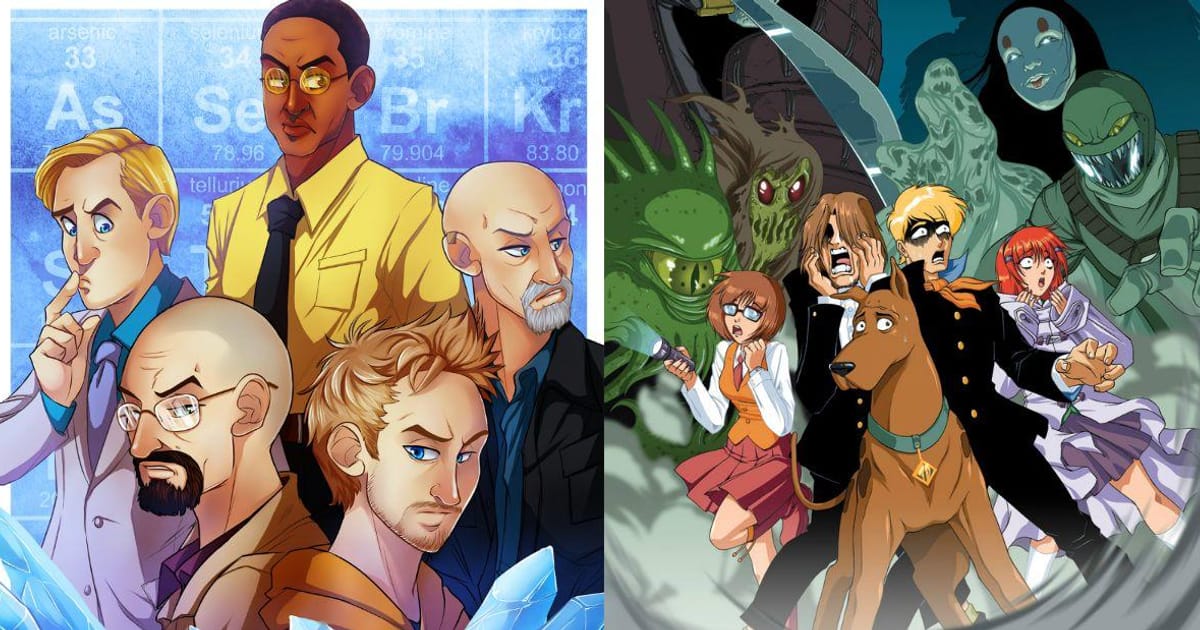
If you’ve ever watched your favorite American TV show and thought, “Wow, this would absolutely slap as an anime,” you’re not alone. Fans, artists, studios, and now even AI tools have been busy imagining anime versions of everything from Friends and The Office to Breaking Bad and <em(Stranger Things. Some adaptations are official collaborations with Japanese studios, while others live as gorgeous fan art or AI-generated experiments waiting to fill your photo gallery.
This guide rounds up 21 anime-style takes on beloved American series. Some have real anime adaptations with full story arcs and Japanese voice casts. Others exist as striking illustrations, concept art, or AI “what if” pieces that give your favorite characters big eyes, dramatic lighting, and too-cool-for-network-TV outfits.
Think of this article as the text companion to your photo gallery: a place where you can showcase 21 “anime versions” of American TV shows, one stunning image at a time, while giving readers context, trivia, and ideas for what to watch (or draw) next.
Why Anime Versions of American TV Shows Hit So Hard
East–West storytelling in one frame
Anime versions of American TV shows mix two storytelling languages: the character-driven, often episodic structure of U.S. series with the heightened emotion and visual shorthand of anime. When a Western drama becomes an anime, everything feels turned up: facial expressions, action scenes, even quiet emotional beats. You still recognize the characters, but their world looks like something out of a high-budget opening sequence.
A visual glow-up for familiar worlds
Anime art styles excel at “vibes”: neon cityscapes, painterly skies, hyper-stylized shadows, and those famous speed lines that make even walking to the fridge look epic. That’s why anime versions of American shows are so addictive in photo form. A simple scenefriends on a couch, coworkers in the break room, a detective standing under a streetlampsuddenly looks like key art from a brand-new series.
From fan art to full adaptations
Some anime versions started as fan experiments and later inspired official projects, while others are commissioned collaborations from the start. Anime-style adaptations of Marvel properties like X-Men, Wolverine, Blade, and even Western cartoons like The Powerpuff Girls and Lilo & Stitch show how American IP can be completely reimagined through a Japanese animation lens, sometimes with new storylines and darker tones along the way.
21 Anime Versions of Your Favorite American TV Shows
Below are 21 shows that either already have anime adaptations, have thriving fan art scenes, or just scream “please turn me into anime” whenever they’re on screen. Each entry pairs well with at least one striking photo in your gallery.
1. Friends – Cozy Slice-of-Life Anime
Imagine the iconic orange couch in Central Perk, but drawn like a Studio Ghibli coffeehouse. Fans have created anime-style versions of Rachel, Monica, Chandler, Joey, Phoebe, and Ross with softer color palettes, expressive eyes, and whimsical backgrounds. Some artists lean into a ‘90s shoujo anime vibethink pastel outfits, sparkly eyes, and a lot of emotional reaction shots over coffee.
Photo idea: An illustration of the six friends in anime form lounging at a cozy café, with exaggerated facial expressions as someone drops a punchline.
2. The Office – Deadpan Workplace Comedy Meets Anime
Anime versions of The Office lean into reaction faces: Dwight with intense shonen eyes, Jim with a permanently raised anime eyebrow, Michael Scott doing melodramatic poses every time he says something inappropriate. Some fan artists draw the Scranton branch like a classic school-club anime, with the office acting as the “club room” where chaos breaks out daily.
Photo idea: A still or illustration of the office cast lined up in anime style, each in their signature poseDwight with his beet-farmer seriousness, Jim mid-smirk, Pam holding sketchbook and coffee.
3. Stranger Things – Supernatural Thriller as ‘80s Anime
Stranger Things already feels like a love letter to ‘80s media, so turning it into an anime is almost too perfect. Fans draw Eleven with glowing eyes and psychic aura lines, the kids’ bikes lit by neon sunsets, and the Upside Down rendered in eerie, painterly backgrounds. Anime-style art of Eddie Munson shredding guitar in dramatic lighting practically looks like a music-video opening sequence.
Photo idea: An anime-style poster of the Hawkins kids facing a looming monster, with bold red-and-blue lighting, lightning in the sky, and detailed city silhouettes in the background.
4. Breaking Bad – Crime Drama Turned Dark, Gritty Anime
Anime versions of Breaking Bad go heavy on shadows and neon. Walter White becomes the brooding anti-hero with narrow glasses gleaming ominously, while Jesse looks like the rebellious supporting character in a crime anime. Artists and AI-generated collections often reframe famous sceneslike the RV in the desert or the infamous fast-food restaurantas stylized panels with bold line art and almost manga-like composition.
Photo idea: An anime-style split-screen of Walter and Jesse back-to-back, desert sky behind them, with a subtle blue color accent hinting at their product.
5. Game of Thrones – Epic Fantasy as Anime Saga
Although not American in origin, Game of Thrones aired as an American TV phenomenon and inspired numerous anime-style fan artworks. In anime form, the show’s sprawling cast becomes a series of detailed character designs: intricate armor, flowing capes, and those unmistakable house sigils turned into stylized logos. Artists often highlight dramatic standoffssword raised, cape billowing, snow swirlingfor poster-worthy illustrations.
Photo idea: An ensemble cast poster showing an anime-style Daenerys, Jon Snow, and other key characters arranged in layers, with a dragon silhouette behind them.
6. The Simpsons – From Springfield to “Simpsonzu”
The Simpsons has been reimagined in anime style so often that “Simpsonzu” has practically become its own sub-genre. Artists redesign the family with sharper angles, manga-style eyes, and dynamic line work, turning Springfield’s bright flat colors into moody, textured backgrounds. Even official parody segments have leaned into anime aesthetics, blending Western satire with Japanese visual tropes.
Photo idea: A Halloween-themed anime redesign of the Simpson family, each character in a dramatic pose with stylized shadows and glowing highlights.
7. Supernatural – The Show That Actually Got Its Own Anime
Unlike many fan-only creations, Supernatural: The Animation is a full anime adaptation of the American series. It retells key arcs from Sam and Dean Winchester’s demon-hunting adventures, but with anime-original episodes and visuals. The Impala gets lovingly animated, monster designs become more elaborate, and fight scenes gain extra flair with motion lines and dramatic angles.
Photo idea: A side-by-side gallery image: live-action Sam and Dean on one side, their anime versions on the other, highlighting design changes.
8. X-Men – Marvel Mutants Go Full Anime
Marvel’s X-Men received a dedicated anime adaptation that amps up the drama, action, and stylized powers. Characters like Cyclops, Storm, and Wolverine are redesigned with sharper features and more intricate costumes, while telekinetic and elemental powers are rendered with glowing energy effects.
Photo idea: A collage-style anime poster of the core team mid-attack, each power effect streaking across the frame.
9. Batman – Anthology Stories in Anime Form
Batman: Gotham Knight is a series of anime-style shorts set between two live-action films. Different studios tackled different episodes, so the Dark Knight appears in varying styles: from hyper-realistic shading to more stylized, angular designs. It’s a great case study in how one American character can be reinterpreted several times in anime format.
Photo idea: A grid of stills showing Batman in multiple anime art styles, all silhouetted against Gotham’s skyline.
10. Wolverine – Lone Warrior Anime Archetype
The Wolverine anime leans into Logan as the lone ronin archetype. His design features sharper facial features, exaggerated claws, and more dramatic hair, while the story drops him into stylized settings with yakuza villains, sword fights, and moody nighttime cityscapes.
Photo idea: An anime-style portrait of Wolverine lit from behind, claws extended, city lights blurred in the background.
11. Blade – Vampire Hunter in Stylized Action
In anime form, Blade becomes the perfect protagonist for kinetic fight scenes. The adaptation emphasizes flowing coats, glinting swords, and slow-motion blood-splatter silhouettes. The series shows how a Western superhero concept can feel like a late-night action anime without losing its core identity.
Photo idea: A key art-style shot of Blade mid-jump, sword drawn, with stylized motion effects framing the scene.
12. The Powerpuff Girls – Reborn as Powerpuff Girls Z
The adorable American cartoon got a full magical-girl reimagining in Powerpuff Girls Z. Instead of kindergarten-age superheroes, the anime features older girls with transformation sequences, wands, and more elaborate costumes. It keeps the core trio dynamic but frames their adventures like a classic Saturday-morning anime.
Photo idea: A side-by-side or “before and after” image showing the original Powerpuff Girls and their transformed anime selves.
13. Lilo & Stitch – Tropical Chaos as Anime
Disney’s mischievous alien also got an anime spin-off that expands the cast and adds new experiments to hunt down. The anime version gives characters slightly different proportions, more expressive eyes, and a broader supporting cast, while still keeping the Hawaiian setting central.
Photo idea: A bright, beachy anime-style shot of Stitch and new experiment characters, with a pastel sunset behind them.
14. Little House on the Prairie – Historical Drama Reimagined
Period dramas might not seem like obvious anime material, but adaptations inspired by works like Little House on the Prairie show how historical settings can turn into gentle slice-of-life anime. Illustrations often highlight wide landscapes, wooden farmhouses, and warm family scenes rendered with soft lighting.
Photo idea: A tranquil anime farm scene with the family in pioneer outfits, fields and sky taking up most of the frame.
15. Highlander – “There Can Be Only One” as Anime Tagline
Anime-style takes on Highlander lean into the fantasy and sword-fighting elements: long coats whipping in the wind, dramatic lightning, and close-ups of eyes just before a duel. The combination of immortals and moody urban backdrops fits perfectly with anime’s love of stylish anti-heroes.
Photo idea: A poster of the main immortal standing on a rooftop, katana drawn, storm clouds glowing behind him.
16. The Walking Dead – Survival Horror Anime
When fans draw The Walking Dead in anime style, they usually emphasize tight character close-ups and highly stylized zombies. The anime treatment can dial up the horror with sharper silhouettes and red-accented color palettes, but it also gives room for intimate emotional moments between survivors.
Photo idea: A composition with the core group in the foreground, walkers in stylized shadow behind them, and a blood-red sunset sky overhead.
17. Brooklyn Nine-Nine – Police Comedy as Ensemble Anime
Turn the 99th precinct into an anime, and you get a quirky ensemble cast series full of visual gags. Jake becomes the impulsive shonen detective, Amy the overachieving honor-student archetype, Holt the deadpan mentor figure, and Gina the chaotic trickster side character. Fan art often frames cold opens as full anime reaction screenshots.
Photo idea: A colorful lineup illustration of the squad in anime poses, each with a small symbol or prop representing their personality.
18. How I Met Your Mother – Romance Comedy with Anime Flashbacks
The show’s many flashbacks and fantasy cutaways are already halfway to anime. In anime form, we’d see exaggerated versions of legendary nights out, over-the-top romantic failures, and hyper-stylized versions of the “blue French horn” or the yellow umbrella. Art pieces often use soft lighting and city skylines to underline the bittersweet romance.
Photo idea: An anime-style shot of the main cast in a booth at MacLaren’s, with blurred city lights outside and warm lens-flare lighting.
19. Parks and Recreation – Wholesome Government Anime
Anime versions of Parks and Rec take the upbeat optimism of Leslie Knope and translate it into determined sparkly eyes and heroic poses… about building a park. The supporting cast becomes a set of comedic archetypes: grumpy mentor, chaotic intern, deadpan libertarian, lovable himbo musician.
Photo idea: A splash image of the department standing in front of a newly opened park, confetti and stylized cherry blossoms falling around them.
20. Euphoria – Stylized Teen Drama
Euphoria already experiments with surreal visuals and lighting, which makes it prime for anime reinterpretation. Fan art often leans into neon palettes, glittering tear tracks, and strong silhouettes. Characters are drawn with fashion-forward outfits and intense close-ups that highlight their inner turmoil.
Photo idea: An anime-style portrait gallery of the main cast, each framed by different colored light beams that match their emotional arc.
21. Riverdale – Gothic Mystery Anime
From high-school drama to wild mystery arcs, Riverdale feels like it has been secretly auditioning to become an anime the whole time. In fan interpretations, Betty, Veronica, Archie, and Jughead get sharper features, darker shadows, and outfits that lean into noir or gothic fashion. The town itself becomes a character, with misty rivers, neon diner signs, and moody forests.
Photo idea: An anime poster of the four leads walking down a foggy street, the neon glow from Pop’s Chock’lit Shoppe reflected in puddles.
How to Curate Your Own “Anime Versions of TV Shows” Photo Gallery
If you’re building a gallery or article around anime versions of American TV shows, here are a few ways to make it feel intentional and immersive:
- Pick a consistent art vibe per section. Group photos by themesuperheroes, sitcoms, fantasy, horrorso readers feel a sense of progression as they scroll.
- Use descriptive alt text. For accessibility and SEO, describe the anime version: “Anime-style illustration of a group of sitcom friends in a cozy café, pastel colors and expressive faces.”
- Mix official adaptations with fan interpretations. Highlight shows that already have official anime versions alongside fan-made or AI-generated reimaginations to show the full spectrum of possibilities.
- Include small captions with context. Under each photo, add a line or two explaining what’s special about the adaptationdarker tone, magical-girl twist, or shonen-style action.
- Respect creators’ rights. When you’re using fan art or AI-assisted images based on another artist’s style, always follow licensing rules, credit artists properly, and use official promotional stills when appropriate.
Real Fan Experiences With Anime Versions of American TV Shows
Beyond cool photos, anime versions of American TV shows come with a whole culture of reactions, debates, and “I would absolutely watch this” comments. You can see that energy in fan forums, social media threads, and comment sections whenever a new anime-style piece drops.
Take Stranger Things, for example. When artists post anime-style posters of the kids facing off against a monstrous silhouette, fans jump in to talk about how the show already feels like a seasonal anime: each season as a “cour,” a big bad for each arc, and a group of teens struggling with both supernatural threats and normal growing pains. Many people say they’d binge an animated spin-off in a heartbeat, especially if it leaned into retro opening themes and colorful title cards.
For Breaking Bad, reactions to anime-style art are a little different. Fans often focus on how the medium could intensify the moral drama. You’ll see comments imagining what the show’s famous montages would look like as stylized animated sequences or how the desert could become a near-symbolic backdropdrawn with surreal color palettes that mirror Walter’s inner transformation. People also joke that Jesse would finally get the over-the-top reaction faces he deserves.
Anime art of classic animated shows like The Simpsons or superhero franchises sparks another kind of nostalgia. Fans who grew up with the originals get hit with a double wave: childhood memories plus the familiar comfort of anime visuals they discovered later in life. When someone posts an anime redesign of the Simpson family, it’s common to see comments like “This feels wrong but also exactly right,” or “I want a full series in this style, just for the Halloween specials.”
Official anime adaptations create yet another layer of experience. People who discover Supernatural through the anime sometimes go back to watch the original live-action series, while long-time fans use the anime as a way to revisit favorite arcs with fresh eyes. The same is true for viewers who find the anime versions of Marvel properties; the familiar characters and plots make the transition to a new medium feel comfortable but exciting.
On the creative side, artists talk about how turning American TV shows into anime-style illustrations helps them grow. Redesigning a cast forces them to think about silhouettes, color palettes, and the “essence” of each character. Is this character best represented by sharp angles and dark colors, or round shapes and softer pastels? How much can you simplify a costume before it stops feeling like the same person? These challenges become exercises in design, composition, and storytelling without words.
Fans also share stories of how anime versions help them connect with friends. It’s common to see people say they finally convinced a non-anime-watching friend to give Japanese animation a try because of a crossover: “You love Supernatural? There’s an anime. Want to watch an episode?” The reverse happens tooanime fans use Western shows that feel anime-adjacent as a bridge to get friends into their favorite series.
Then there’s the simple joy of imagining new seasons that never existed. An anime version of a canceled show could hypothetically continue the story. People write headcanons for imagined “Season 5 (Anime Only)” arcs, create fake key visuals, and even mock up episode titles. Whether those episodes ever become reality doesn’t really matter; the creative play itself is what keeps the fandom alive.
All of this adds up to a powerful experience: anime versions of American TV shows aren’t just cool picturesthey’re conversation starters, nostalgia triggers, creative prompts, and fandom bridges. When you build a photo gallery around them, you’re not just showing off pretty art; you’re inviting people into that shared space of “What if?” where genres, mediums, and cultures happily collide.
Final Thoughts: Same Shows, New Feels
The reason these anime versions work so well is simple: they let us fall in love with familiar stories all over again. Whether it’s an official adaptation with a full soundtrack and cast, or a single piece of fan art that makes you reimagine an entire show, each anime version opens a door to a fresh emotional angle.
So as you assemble your “21 Anime Versions of Your Favorite American TV Shows” photo collection, remember that each image can do more than decorate the page. It can spark a rewatch, inspire a new fanfic, or nudge someone into discovering animeor a live-action seriesthey never would have tried otherwise. Same characters, same stories, brand-new feels.