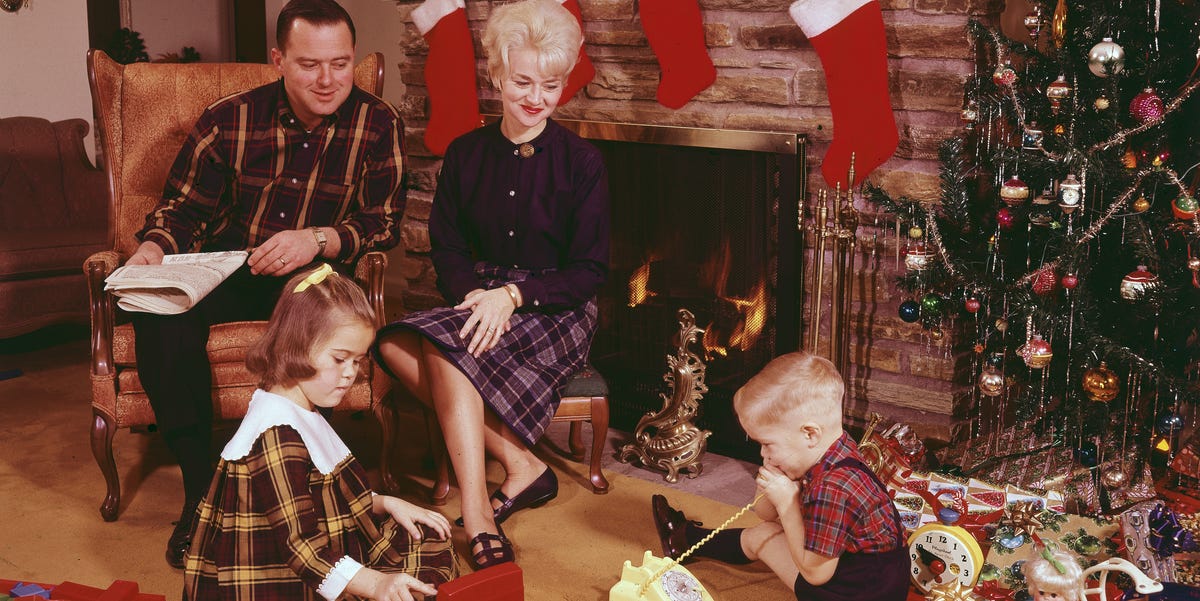
Christmas has always been a holiday with excellent lighting. Twinkling bulbs, candlelit windows, shiny ornaments, snow that behaves like a professional reflectorhonestly, the season was practically invented for photography. Long before everyone had a phone full of blurry tree selfies and one suspiciously dramatic photo of the dog wearing antlers, Christmas pictures helped shape how Americans imagined the holidays.
Classic Christmas photos over the years do more than show decorations. They capture changing fashion, family rituals, public celebrations, wartime hope, celebrity culture, department-store magic, and the national obsession with putting very large trees in very public places. From the earliest White House Christmas trees to Rockefeller Center’s glowing spruce, from Santa’s evolving image to Apollo 8’s unforgettable Christmas Eve view of Earth, these photographs show how the holiday became both deeply personal and spectacularly public.
This nostalgic journey looks at 15 classic Christmas photo moments that helped define the season. Some are grand and historic. Some are intimate and wonderfully ordinary. All of them prove one thing: Christmas photography is not just about the tree. It is about what people gather around.
Why Classic Christmas Photos Still Matter
A good Christmas photo freezes more than a smile. It preserves the mood of an era. Look at a photo from 1900 and you may notice heavy clothing, handmade toys, gaslight, and children standing very still because cameras were not exactly “tap and shoot.” Look at a mid-century Christmas portrait and suddenly there are shiny aluminum trees, cocktail dresses, television sets, and wrapping paper loud enough to be heard from the next room.
Holiday photos also reveal how traditions travel. Christmas trees came to American homes through European influence, Santa Claus changed through illustration and advertising, department stores turned holiday shopping into theater, and public tree lightings became annual civic rituals. The camera recorded all of it, sometimes formally and sometimes accidentally. A photo of children staring into a toy-shop window can say as much about Christmas as a presidential tree lighting.
15 Classic Christmas Photos Over the Years
1. The Early White House Christmas Tree, 1890s
One of the earliest known images of a White House Christmas tree dates to the Cleveland administration era in the late 19th century. The scene feels modest compared with today’s room-filling official decorations, but that is exactly its charm. The tree appears as a family object rather than a media event. It belongs to children, gifts, candlelit rooms, and the quiet domestic side of presidential life.
This kind of photo matters because it shows Christmas before the White House holiday season became a national design showcase. There were no elaborate annual themes, no televised tours, and no social media debates over ribbon choices. It was simply a decorated tree in a historic home, which, frankly, is still the basic assignment.
2. Santa and Charity Gift-Giving Around 1900
Turn-of-the-century Christmas photos often show Santa Claus as a figure of public generosity. Images of charity workers, Salvation Army volunteers, and costumed Santas distributing gifts helped connect Christmas with organized giving. These photographs are especially powerful because they show the holiday outside the private home, on sidewalks, in halls, and among people who depended on community help.
The Santa in these early photos sometimes looks less polished than the modern mall version. Beards were woollier, coats varied, and the overall effect could be charmingly “local theater production with a heart of gold.” But the message was already clear: Christmas was becoming a season when public kindness was meant to be seen, shared, and remembered.
3. Children Admiring Toys in Shop Windows, Early 1900s
Few classic Christmas photos are more timeless than children pressed close to a toy-store window. Early 20th-century photographs from American cities show young shoppers gazing at dolls, trains, teddy bears, and mechanical toys arranged like treasure behind glass. These pictures are the ancestors of every modern “holiday gift guide” and every child who has ever said, “I’m just looking,” while mentally adopting half the store.
Shop-window photos also mark the rise of Christmas as a retail spectacle. Department stores and toy shops learned that holiday displays could turn sidewalks into theaters. The children in these images are not just looking at merchandise; they are looking at possibility. The camera catches the exact second when imagination starts doing cartwheels.
4. New York Christmas Tree Markets, 1910s
Photographs of early Christmas tree markets in New York City are wonderfully atmospheric. Rows of cut evergreens stand along streets and piers, waiting to become the centerpiece of apartment parlors and brownstone sitting rooms. These images capture a practical side of Christmas: before the tree glows in the living room, someone has to drag it home.
The tree-market photo became a classic because it combines city grit with holiday romance. There are wagons, bundled shoppers, muddy streets, and branches everywhere. It is not the polished Christmas of greeting cards. It is the real, slightly inconvenient Christmasthe kind that smells like pine and involves at least one person saying, “Are we sure this fits through the door?”
5. The First National Christmas Tree Lighting, 1923
In 1923, President Calvin Coolidge lit the first National Christmas Tree on the Ellipse near the White House. Photographs of this tradition helped turn a decorated tree into a symbol of national celebration. The tree was public, electric, and patriotic, glowing in red, white, and green bulbs while crowds gathered in Washington, D.C.
This moment belongs on any list of classic Christmas photos because it shows the holiday becoming a shared civic ritual. It was not only about one family’s tree anymore. It was about a nation gathering around light during the darkest part of the year. That idea has remained durable, even as the bulbs, broadcast technology, and presidential overcoats have changed.
6. Macy’s Christmas Parade Begins a New Photo Tradition, 1924
The event now known as the Macy’s Thanksgiving Day Parade began in 1924 and was originally tied closely to the Christmas shopping season. Early photos show floats, performers, animals, crowds, and Santa Claus arriving like the unofficial mayor of December. These images helped define the visual starting line of the American holiday season.
Parade photos are classic because they are gloriously crowded. They capture children on shoulders, performers waving, city blocks packed with spectators, and Santa making an entrance big enough to suggest he has excellent public relations. By the time the parade became a television tradition, the camera had already done decades of work turning it into a national memory.
7. Herbert Hoover and the National Christmas Tree, 1929
Photographs of President Herbert Hoover lighting the National Christmas Tree on Christmas Eve 1929 carry extra historical weight. The country was entering the Great Depression, and public holiday images took on a deeper emotional role. A glowing tree outside the White House became a symbol of continuity at a moment when many families were facing uncertainty.
Classic Christmas photography often works this way. The image may look simplea president, a tree, a crowd, lightsbut the year around it changes everything. In 1929, a Christmas photo was not just seasonal decoration. It was a reminder that rituals can steady people when the future feels shaky.
8. Rockefeller Center’s First Christmas Tree, 1931
The Rockefeller Center Christmas Tree tradition began in 1931 when construction workers placed a modest tree at the site during the Great Depression. The first official lighting ceremony followed in 1933. Early photos of the tree are striking because they combine holiday warmth with the hard edges of construction, labor, and urban ambition.
Over time, Rockefeller Center tree photos became some of the most recognizable Christmas images in America. The tree grew taller, the lights multiplied, and the ice rink added cinematic sparkle. But the origin story remains beautifully humble: workers, a tree, and a little brightness in a difficult year. Not every classic begins with a marketing department. Some begin with people trying to make a cold worksite feel human.
9. The Coca-Cola Santa Images of the 1930s
Although Coca-Cola did not invent Santa Claus, its 1930s advertising helped popularize a warm, rosy, friendly version of him through illustrations by Haddon Sundblom. These images became part of the broader visual language of Christmas. Even though they were commercial art rather than candid photographs, they influenced how photographed Santas dressed, posed, smiled, and occupied the American imagination.
The classic red-suited Santa became camera-ready: round cheeks, generous beard, twinkling eyes, and the general vibe of someone who knows where all the cookies are hidden. By mid-century, holiday photos of store Santas, parade Santas, and family Santas often echoed this cheerful image. Advertising had slipped into the family album wearing boots.
10. Eleanor Roosevelt and Holiday Toy Displays, 1930s
Photos of First Lady Eleanor Roosevelt during holiday toy drives and Christmas displays show another side of the season: public service. During the Depression years, images of toys, children, charities, and White House involvement reflected a national effort to preserve joy in hard times.
These photos are classic not because they are flashy, but because they are purposeful. They remind readers that Christmas images often carry social meaning. A toy display is not merely cute. In the right historical context, it becomes a statement that children deserve wonder even when adults are worried about rent, work, and tomorrow’s breakfast.
11. Wartime Christmas Photos of the 1940s
Christmas photos from the 1940s often include soldiers, sweethearts, train stations, letters, ration-era decorations, and families trying to keep traditions alive during World War II. A kiss under the mistletoe or a service member holding a wrapped gift could carry the emotional force of an entire movie.
Wartime holiday photography is powerful because absence is always in the frame. Even when everyone is smiling, someone may be overseas, someone may be waiting, and someone may be pretending not to worry for the sake of the children. These classic Christmas photos show resilience without needing a slogan. They simply show people celebrating anyway.
12. Postwar Family Christmas Around the Tree, Late 1940s
After World War II, family Christmas photos took on a renewed sense of comfort. Images from the late 1940s often show parents and children gathered around decorated trees, with wrapped gifts, polished shoes, neat dresses, and the unmistakable feeling that everyone was told to stand still for “just one more picture.”
These photos helped shape the ideal of the cozy American Christmas living room. The tree was centered, the gifts were arranged, and the family posed as if nobody had been arguing five minutes earlier about tangled lights. That is part of the magic. Christmas photos rarely show the full chaos; they show the version a family wants to remember.
13. Nat King Cole and Natalie Cole, 1950s
Mid-century Christmas photos of entertainers and their families added glamour to holiday imagery. Nat King Cole, whose voice became permanently linked with Christmas music, was photographed in warm family scenes with his daughter Natalie Cole. Such images connected celebrity culture with domestic tenderness.
These photos endure because they feel both famous and familiar. The celebrity is recognizable, but the mood is something many families understand: a parent, a child, music, gifts, and the glow of the season. It is Christmas with better lighting and probably a much smoother soundtrack than most living rooms can manage.
14. Jacqueline Kennedy’s Themed White House Christmas, 1961
In 1961, First Lady Jacqueline Kennedy introduced a themed White House Christmas tree inspired by “The Nutcracker.” This helped launch the modern tradition of coordinated White House holiday themes. Photos from the Kennedy-era Christmases are elegant, carefully composed, and still influential in how official holiday decor is presented.
These images matter because they show Christmas decoration becoming a form of storytelling. A tree could now have a concept, a palette, a cultural reference, and a press-ready identity. In other words, the White House tree became the ancestor of today’s Pinterest boardonly with more security clearance.
15. Apollo 8’s Earthrise on Christmas Eve, 1968
Not every classic Christmas photo includes a tree. On Christmas Eve 1968, the Apollo 8 astronauts captured the now-iconic image of Earth rising above the Moon’s horizon. The photograph became one of the most meaningful images of the 20th century, showing the planet as small, luminous, and fragile against the darkness of space.
Its connection to Christmas Eve gave the image a special emotional charge. While families on Earth gathered around radios and televisions, astronauts were circling the Moon and sending back a view that made borders seem suddenly very small. As Christmas photos go, it is light on garland. But as a holiday image of awe, humility, and shared humanity, it is almost impossible to beat.
What These Christmas Photos Reveal About American Holiday Culture
Taken together, these classic Christmas photos over the years show an American holiday that is constantly changing while somehow staying recognizable. The clothing changes. The camera technology changes. The trees get bigger, the lights get safer, the parades get more choreographed, and Santa gets better branding. Yet the emotional center remains familiar: people gather, decorate, give, remember, and perform small acts of hope.
The most interesting pattern is the movement from private to public and back again. A family tree in the White House becomes a national symbol. A department-store parade becomes a televised ritual. A city tree becomes a tourist pilgrimage. A charity Santa becomes part of civic life. Then, after all that public spectacle, the season returns to the living room, where someone is still trying to take one decent family picture before the baby removes a sock.
How to Read a Classic Christmas Photo
To appreciate vintage Christmas photography, look beyond the obvious decorations. Notice the setting first. Is it a home, a street, a store, a church, a stage, or a government building? The location reveals what kind of Christmas story the photo is telling.
Next, look at the people. Are they posed or candid? Are children the focus? Is Santa central or in the background? Are adults working, shopping, serving, performing, or relaxing? Christmas photos often reveal social roles more clearly than ordinary snapshots because the holiday puts everyone into costume, whether that costume is a velvet dress, a military uniform, or an apron dusted with flour.
Finally, look at the light. Christmas photography is obsessed with illumination: candles, bulbs, stars, windows, fireplaces, streetlamps, and glowing trees. The light is rarely just practical. It is symbolic. It says warmth, safety, memory, and cheer. It also says, “Please do not trip over the extension cord.”
Experience Notes: What Classic Christmas Photos Teach Us Today
One of the best experiences related to classic Christmas photos is looking through an old family album and realizing that the “perfect holiday” never really existed. The older pictures may look peaceful, but study them closely and you will usually find evidence of real life sneaking in. A crooked ornament. A child making a suspicious face. A sofa covered in wrapping paper. An uncle blinking at exactly the wrong time. These details are not flaws; they are the reason the photo still feels alive.
Modern holiday photography often pressures people to create magazine-level scenes. Matching pajamas must match. Cookies must be photogenic. The tree must look balanced from every angle, as if a committee approved it. But classic Christmas photos tell a kinder story. Many of the most memorable images are not technically perfect. They are meaningful because they capture a moment people cared enough to preserve.
Anyone who has ever tried to photograph Christmas morning knows the challenge. The lighting is strange, the room is crowded, and half the subjects are moving too fast because they have just discovered batteries. Yet those imperfect photos often become the most loved ones. A child holding a toy upside down, grandparents laughing in the corner, a pet sitting inside a box instead of beside itthese are the images that become family folklore.
Classic public Christmas photos offer a similar lesson. The Rockefeller Center tree is impressive because it is huge and bright, but it is beloved because people attach memories to it. Someone saw it on a first trip to New York. Someone watched the lighting ceremony every year with their parents. Someone stood in the cold, complained dramatically, then admitted it was beautiful. The photograph becomes a container for the experience.
The same is true of Santa photos. A child crying on Santa’s lap may not be the image parents planned, but it often becomes the one everyone remembers. It captures honesty. Not every child is ready to trust a bearded stranger in a red suit, even if he claims to have excellent reindeer references. Years later, that photo becomes funny, tender, and deeply human.
For today’s families, the best approach is to photograph Christmas with both intention and mercy. Take the posed picture, yes. Get everyone near the tree and ask them to smile. But also take the in-between shots: hands tying ribbon, flour on the counter, someone napping after dinner, kids building a toy on the floor, the last ornament being placed, the first person sneaking dessert. These are the photos that will age into classics.
The biggest lesson from Christmas photos over the years is simple: the image does not have to be perfect to become precious. It only has to be true enough that, years later, someone looks at it and says, “I remember that.” That is the real magic of Christmas photography. It turns ordinary holiday chaos into evidence that people were together, that they tried, that they laughed, and that for at least one bright moment, the season felt worth saving.
Conclusion
Classic Christmas photos over the years are more than nostalgic decorations for the internet. They are visual history. They show how Americans celebrated through prosperity, depression, war, social change, technological leaps, and ordinary family life. They remind us that Christmas has always been a mix of public spectacle and private emotion: a giant tree in New York, a child at a shop window, a president pressing a button, a singer with his daughter, astronauts seeing Earth from the Moon, and families everywhere trying to capture the glow before someone unplugs the lights.
That is why these images last. They do not merely show what Christmas looked like. They show what people hoped it could feel like: generous, bright, communal, comforting, and just a little magical.