Old houses are wonderful. They have character, craftsmanship, mystery, and at least one closet that appears to have been designed for a broom with self-esteem issues. What they do not always have is energy efficiency. If your home was built decades ago, it may leak air, waste heat, struggle with humidity, and force your heating and cooling system to work like it is training for a marathon nobody asked it to run.
The good news is that making an old home more energy efficient does not always require tearing it down to the studs or replacing every charming feature with something shiny and soulless. In many cases, the smartest upgrades are targeted, practical, and surprisingly affordable. The key is to focus on the building envelope first, then improve the systems inside it. In plain English: stop the leaks before you buy expensive new equipment.
Here are 12 smart ways to improve energy efficiency in an older home while keeping its soul intact and your utility bills from behaving like jump-scare villains.
1. Start With a Home Energy Audit
Before you buy insulation, windows, or a new HVAC system, find out where your house is actually wasting energy. A professional home energy audit can reveal hidden air leaks, under-insulated areas, duct issues, moisture concerns, and equipment problems. It gives you a roadmap instead of a random shopping spree.
This step matters even more in an old home because older construction can be full of surprises: empty wall cavities, disconnected ducts, drafty attic hatches, unsealed plumbing penetrations, and basement rim joists that leak air like gossip in a small town. An audit helps you prioritize the biggest fixes first, which is where the real savings live.
2. Seal Air Leaks Before You Insulate Anything
If insulation is the winter coat, air sealing is the zipper. Without it, the coat still works, but not nearly as well. In older homes, conditioned air often escapes through gaps around window trim, door frames, plumbing penetrations, wiring holes, attic hatches, recessed lights, and baseboards.
Caulk, weatherstripping, foam sealant, and door sweeps can make an immediate difference. This is one of the cheapest energy-saving upgrades you can make, and it often pays off quickly. Better yet, it improves comfort right away. You will notice fewer cold drafts in winter, fewer hot spots in summer, and less of that “why is this hallway haunted by January?” feeling.
Just be careful not to seal an old house blindly. Moisture and ventilation matter. If you tighten the house significantly, make sure bathroom fans, kitchen ventilation, and overall airflow are addressed too.
3. Beef Up the Attic Insulation
In many old homes, the attic is where energy bills go to party. Heat rises, and if your attic is under-insulated, your expensive conditioned air slips out through the top of the house. Adding insulation to the attic floor or roofline is often one of the highest-impact upgrades you can make.
Blown-in cellulose or fiberglass can work well in older homes because it fills irregular spaces more effectively than batting alone. The exact insulation level you need depends on your climate, but the principle is the same everywhere: a properly sealed and insulated attic helps your home stay warmer in winter and cooler in summer.
One important old-house rule: seal leaks first, then insulate. Otherwise, you may bury the problem instead of fixing it. And if you have knob-and-tube wiring, moisture issues, or signs of roof leaks, deal with those before adding insulation. Your attic should be efficient, not exciting.
4. Do Not Ignore the Basement, Crawl Space, or Rim Joists
Many homeowners obsess over windows while cold air is marching in through the basement like it owns the place. In older homes, uninsulated basements, crawl spaces, and especially rim joists can be major sources of heat loss and drafts.
Insulating basement walls, sealing crawl space vents where appropriate, and air sealing rim joists can dramatically improve comfort on the first floor. Floors feel less icy, pipes are better protected, and the furnace does not have to work as hard. If your home has a crawl space, moisture control is just as important as insulation. A damp crawl space can sabotage energy efficiency and indoor air quality at the same time.
5. Improve Old Windows the Smart Way
Old windows get blamed for everything, including probably the weather itself. But full replacement is not always the first or best answer. In many older homes, especially historic ones, you can make existing windows more efficient by repairing them, sealing gaps, adding weatherstripping, installing storm windows, or using interior insulating panels.
If your windows are still structurally sound, these upgrades can preserve the home’s character and cost far less than replacement. For homes where replacement does make sense, choose energy-efficient windows appropriate for your climate. Features like low-emissivity coatings, better glazing, and improved frames can reduce heat transfer and improve comfort.
Window treatments help too. Cellular shades, thermal curtains, and well-fitted coverings can reduce heat loss in winter and block solar gain in summer. It is hard to argue with a fix that lowers energy use and makes the room look more put together.
6. Weatherstrip and Upgrade Exterior Doors
Old doors are charming until they whistle. Check the perimeter of every exterior door for visible gaps, worn weatherstripping, and missing sweeps. Even small leaks add up when you multiply them by every windy day of the year.
Replacing brittle weatherstripping, adjusting thresholds, and adding sweeps are simple upgrades with fast results. If a door is badly warped or damaged, replacing it with a more efficient model may be worth it. Just remember that a well-sealed existing door often outperforms a fancy new one that is poorly installed. Energy efficiency loves details more than drama.
7. Seal and Insulate Ductwork
If your home has forced-air heating or cooling, leaky ducts can waste a shocking amount of energy. In older homes, ducts may run through unconditioned attics, crawl spaces, or basements, where leaks and poor insulation rob the system of efficiency before air ever reaches the room you are trying to heat or cool.
Sealing ducts at joints and connections, insulating accessible duct runs, and correcting airflow imbalances can improve both efficiency and comfort. This can also reduce dust and temperature swings. If some rooms feel like Florida while others feel like Minnesota, the duct system may be begging for attention.
8. Upgrade the Heating and Cooling System
Once the house is better sealed and insulated, then it makes sense to evaluate the HVAC system. Many old homes still rely on aging furnaces, boilers, window units, or central systems that are well past their prime. Newer high-efficiency furnaces, boilers, central air systems, and heat pumps can use far less energy than older equipment.
Heat pumps deserve a serious look, especially if you are already planning to replace both heating and cooling equipment. They can provide efficient year-round comfort and are becoming a popular retrofit option in older homes. But sizing matters. Oversized equipment cycles poorly, wastes energy, and can leave your house less comfortable than expected. This is why the “audit first, equipment second” approach works so well.
Also, do not underestimate maintenance. A clean filter, tuned system, and properly functioning airflow can improve performance without a full replacement.
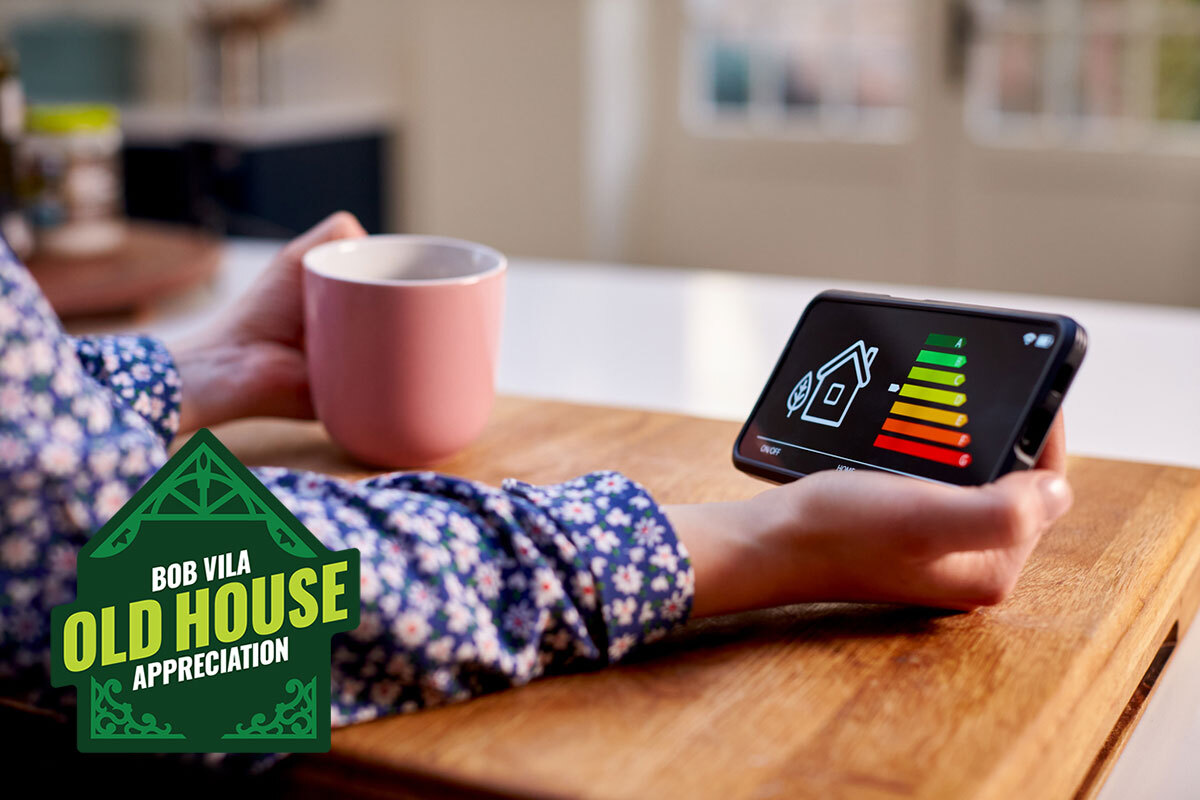
9. Install a Smart or Programmable Thermostat
This is one of the least glamorous upgrades and one of the easiest wins. A smart or programmable thermostat helps you reduce heating and cooling when you are asleep or away, then return the house to a comfortable temperature when you need it. That means less wasted energy and less money leaking out through your utility bill.
For an older home, this works best after basic sealing and insulation improvements. Otherwise, the thermostat is trying to manage a house that behaves like a colander. Still, once the envelope is improved, better controls can squeeze more value out of your heating and cooling system without a major construction project.
10. Cut Water-Heating Costs
Heating water is one of the biggest energy uses in most homes, and older homes often make it worse with outdated tanks, uninsulated hot-water pipes, and fixtures that use more hot water than necessary. A few improvements can make a big difference.
Start with the basics: set the water heater to a reasonable temperature, insulate hot-water pipes, fix drips, and install low-flow showerheads and faucet aerators. If your water heater is old, consider replacing it with a more efficient model. Heat pump water heaters are especially attractive for many households because they can deliver major energy savings compared with standard electric water heaters.
If you have a large old house with several bathrooms, reducing hot-water waste can feel like discovering a secret tunnel under your utility bill.
11. Replace Inefficient Lighting and Aging Appliances
If you still have incandescent bulbs hanging around, it is time to thank them for their service and retire them gracefully. LED lighting uses far less energy, lasts much longer, and generates less heat. In an older home, that last point matters more than people think, especially in warmer months.
Appliances are the next place to look. An old refrigerator in the kitchen or a second relic in the garage can quietly burn through electricity year-round. When replacement time comes, choose efficient models that match your needs instead of buying the biggest machine on the sales floor because it looked confident under showroom lighting.
Focus especially on refrigerators, dishwashers, clothes washers, dryers, dehumidifiers, and room air conditioners. Replacing very old models can reduce energy use and improve performance at the same time.
12. Use Seasonal Strategies That Cost Less Than a Renovation
Not every improvement requires a contractor, permit, or a weekend spent arguing with a ladder. Sometimes the smartest moves are operational. Use ceiling fans to improve comfort so you can rely less on air conditioning. Close shades during hot afternoons. Open curtains to capture winter sun, then close them at night. Keep vents clear. Run bath fans to manage moisture, but do not leave them on forever like a dramatic soundtrack.
In older homes, these small adjustments matter because the building envelope is rarely perfect, even after upgrades. Seasonal habits, paired with targeted improvements, can noticeably reduce energy waste and make the house feel better day to day.
The Best Upgrade Order for an Old Home
If all of this sounds like a lot, that is because old houses are lovable overachievers. But you do not need to do everything at once. A sensible order usually looks like this: get an audit, air seal, insulate, improve windows and doors, address ducts, then upgrade HVAC and water-heating equipment. Lighting, appliances, controls, and seasonal habits fit in wherever your budget allows.
That order matters because it prevents expensive mistakes. For example, replacing a furnace before sealing the attic can mean paying for a larger system than you actually need. In other words, fix the house before you supersize the machinery trying to save it.
Conclusion
Making an old home more energy efficient is not about stripping away its charm. It is about helping a beautiful older structure perform better in the modern world. With the right mix of air sealing, insulation, smart equipment upgrades, and practical daily habits, you can keep the original character while cutting energy waste, improving comfort, and lowering monthly costs.
The secret is to think like a detective, not a demolition crew. Find the leaks, solve the problem in the right order, and let your old home keep its personality without draining your wallet for the privilege.
Real-Life Experiences From Living With an Older Home
Anyone who has lived in an older home knows the experience is part romance, part comedy, and part utility bill therapy. The first winter in an old house often begins with admiration. You stand in the living room, admire the trim, the original floors, the solid wood doors, and the wavy old glass in the windows. Then a cold draft brushes your ankle and you realize the house has been quietly exchanging indoor air with the entire neighborhood.
One of the most common experiences homeowners report is that old houses do not waste energy in obvious ways. They waste it in sneaky ways. A room feels chilly, so you assume the furnace is failing. But the real culprit turns out to be an unsealed attic hatch. The second floor is too hot in summer, so you blame the weather. Then you discover the attic insulation is thinner than a diner pancake. The house is not trying to be difficult. It is simply operating on rules written several decades ago.
Another familiar lesson is that the biggest comfort improvements are often not the flashiest. Replacing weatherstripping around a back door can feel almost ridiculous until you notice the kitchen is suddenly more comfortable every morning. Sealing the rim joists in the basement may not give you bragging rights at a dinner party, but it can stop that cold-floor effect that makes you question your life choices in socks. Adding cellular shades to drafty windows might not sound glamorous either, yet many homeowners say those simple changes deliver a bigger daily difference than expected.
There is also the emotional side of the process. Owners of older homes often worry that improving efficiency means ruining original details. In reality, many of the best solutions are respectful ones. Storm windows, careful air sealing, insulation added in the right places, and smart mechanical upgrades can preserve the house instead of changing its personality. That is often the sweet spot: better performance, same charm, fewer complaints from your thermostat.
Perhaps the most valuable experience is learning that energy efficiency is not one giant makeover. It is a series of smart corrections. One weekend you seal gaps around trim. Another month you add attic insulation. Later you replace an aging water heater. Eventually the house feels different. Quieter. Less drafty. More even from room to room. And every utility bill becomes a little less offensive. That is when it hits you: the old house still looks like itself, but now it behaves like it has finally had coffee.