Roller coasters look like chaos with seat belts: steel spaghetti, wooden thunder, screaming humans, and one teenager in the back row yelling, “Again!” But behind every stomach-flipping drop is a serious blend of physics, psychology, safety engineering, architecture, storytelling, and budgeting. Roller coaster designers are not just drawing loops because loops look cool on a brochure. They are choreographing speed, forces, sightlines, restraint systems, weather effects, maintenance access, rider comfort, and the exact moment your brain says, “This was a mistake,” followed immediately by, “That was amazing.”
The best roller coaster designers understand a strange truth: the ride is not only about going fast. It is about making speed feel faster, height feel taller, danger feel close but controlled, and airtime feel like gravity briefly forgot your address. Whether they are designing a compact launch coaster for a tight urban park, a classic wooden coaster that rattles like a polite earthquake, or a record-breaking steel monster that dominates the skyline, designers are constantly hiding clever decisions in plain sight.
Here are 12 secrets of roller coaster designersthe real design tricks, engineering choices, and rider-experience strategies that make great coasters feel unforgettable.
1. The First Drop Is a Promise, Not Just a Hill
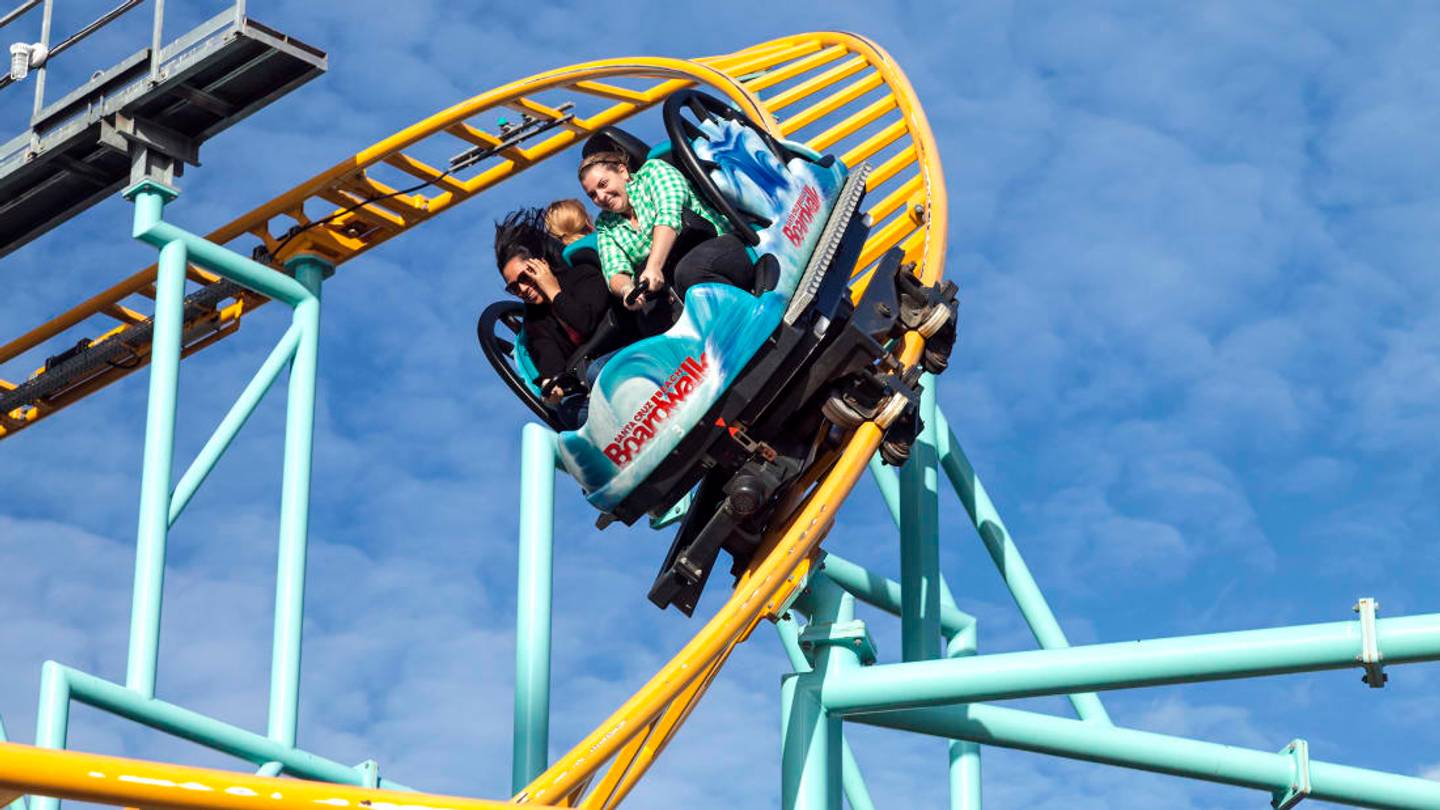
The first major drop is often the coaster’s handshake. A weak handshake says, “Welcome to a mild inconvenience.” A great first drop says, “Please secure your dignity in the loose-article bin.” Designers use the opening hill or launch to establish the ride’s personality. A tall lift hill creates suspense because riders have time to look around, hear the chain lift, question their life choices, and make eye contact with a pigeon that seems calmer than they are.
But the drop is not simply about height. Its angle, curvature, and transition into the next element determine how the body experiences acceleration. A steep drop can create strong speed and excitement, while a carefully shaped pullout at the bottom prevents forces from becoming too abrupt. The secret is smooth escalation. Designers want the rider to feel intensity, not punishment.
That is why many modern coasters use curved or twisting drops. They add disorientation, make the descent feel longer, and help guide the train into the next maneuver. The first drop is a promise: this ride has rhythm, confidence, and absolutely no interest in being boring.
2. G-Forces Are the Real Paintbrush
Roller coaster designers do not really design “drops” and “turns.” They design forces. Positive G-forces press riders into the seat, negative G-forces create airtime, and lateral forces push riders side to side. A coaster’s layout is basically a force recipe, and too much of any ingredient can ruin the meal.
A tight valley can create heavy positive Gs. A hill taken at the right speed can create that delicious floating sensation known as airtime. A fast, under-banked turn can feel aggressive, while a properly banked curve can feel smooth and graceful. Designers study how these forces affect the body over fractions of a second, because a thrilling moment and an uncomfortable one can be separated by a tiny adjustment in radius or speed.
The goal is not to remove intensity. Nobody waits two hours for a coaster called “The Gentle Administrative Process.” The goal is to shape intensity so it feels exciting, repeatable, and safe. Great designers know when to press riders down, when to lift them out of the seat, and when to let them breathe before the next surprise.
3. Banking Turns Is About Comfort, Not Just Style
Those dramatic banked turns are not there only because they look cool from the parking lot. Banking is one of the biggest tools designers use to manage lateral forces. When a train enters a turn, inertia wants to push riders outward. If the track is flat, riders feel shoved sideways. If the track is banked correctly, more of that force is redirected through the seat, making the turn feel smoother.
Think of it like leaning into a curve on a bicycle. Your body naturally wants the force to line up in a more comfortable direction. Roller coaster designers do the same thing with tons of steel, concrete, wood, and very expensive math.
Banking also creates visual drama. A train diving into a heavily banked curve looks faster than it may actually be. That visual angle tells your brain, “We are doing something athletic,” even while the track is carefully guiding the train through a calculated path. The rider feels wildness; the designer sees geometry doing its job.
4. Airtime Is Engineered Mischief
Airtime is the moment riders float up from the seat, usually over a hill or sudden crest. It is one of the most beloved sensations in coaster design because it feels rebellious. Gravity is supposed to be in charge. Airtime says, “Not for the next half second.”
Designers create airtime by balancing speed, hill shape, train weight, restraint style, and rider position. A small hill taken quickly can produce sharper ejector airtime, where riders feel popped upward. A larger, smoother hill may create floater airtime, where riders feel suspended like a balloon with a park admission ticket.
Restraints matter too. A lap-bar coaster can make airtime feel more open and freeing, while over-the-shoulder restraints may change the sensation. Designers must also consider different body sizes and seating positions. The front row may experience a hill differently than the back row because the train is long and each car reaches the crest at a slightly different moment.
That is the secret: airtime feels like spontaneity, but it is carefully planned mischief.
5. The Track Is Designed Around the Rider’s Heartline
One of the most important ideas in modern coaster design is heartlining. Instead of rotating the train around the track’s centerline, designers try to rotate elements around the approximate height of the rider’s heart. This helps reduce uncomfortable side-to-side whipping during rolls and inversions.
Imagine holding a pencil and spinning it around its center. Now imagine your head is stuck far above that center. The farther your body is from the rotation point, the more dramatic the motion feels. Heartlining brings the rotation closer to the rider’s body, making rolls feel smoother and more controlled.
This is why many modern inversions feel surprisingly graceful compared with older looping coasters. The ride may look more extreme, but the force transitions are often more refined. The designer’s secret is that comfort can actually make a coaster feel more daring, because riders are free to enjoy the element instead of bracing like they are helping the track stay assembled.
6. Loops Are Not Perfect Circles for a Reason
Early coaster loops sometimes looked more circular, but modern vertical loops are usually clothoid-shaped or teardrop-shaped. That shape is not artistic flair. It is physics with manners.
A perfectly circular loop can create harsh forces at the bottom because the train enters at high speed and must change direction quickly. A teardrop loop uses a wider radius near the bottom and a tighter radius near the top, helping manage forces more comfortably. The train can enter and exit smoothly while still delivering the upside-down drama riders came for.
Designers love inversions because they provide visual spectacle and emotional payoff. But a good inversion is not just about turning riders upside down. It is about deciding how long they are inverted, how fast they enter, what they see while upside down, and how the element flows into the next movement. A loop is less like a circle and more like a sentence: it needs punctuation, rhythm, and a satisfying ending.
7. Brakes Are Everywhere, Even When You Do Not Notice Them
Many riders think brakes only appear at the end of the ride. Designers know better. Braking systems can control speed, improve timing, separate trains, and make operations safer. Trim brakes may gently reduce speed in certain sections. Block brakes can stop a train and divide the coaster into zones so multiple trains can operate without getting too close.
This is one of the least glamorous but most important secrets of roller coaster design. A coaster is not one train flying freely through space. It is an orchestrated system with sensors, control logic, mechanical components, and fail-safe planning. Each train must move only when the next section is clear.
Modern coasters often use magnetic braking, friction braking, or combinations of systems depending on the ride type. Magnetic brakes are especially interesting because they can slow a train smoothly without the same kind of physical contact as traditional friction brakes. Riders may only feel a gentle tug, but behind that moment is a safety and control system doing quiet superhero work.
8. Launches Are Designed Like Punchlines
A launch coaster skips the slow lift-hill suspense and goes straight to the caffeine. Designers use launch systemssuch as linear synchronous motors, linear induction motors, hydraulic systems, pneumatic systems, or tire drivesto accelerate trains quickly. But the launch is not only about raw speed. It is about timing.
A good launch feels like a punchline because it has setup and surprise. Maybe riders creep forward, pause in darkness, hear a sound effect, then explode into daylight. Maybe the train rolls backward before launching forward again. Maybe the launch happens mid-course, after riders think they already understand the ride.
Designers use launches to solve practical problems too. A launch can fit a thrilling coaster into a smaller footprint because it does not require a huge lift hill. It can also create multiple bursts of energy throughout the layout. The secret is that acceleration is emotional. A well-timed launch can make a 70-foot coaster feel like it just challenged the moon to a street race.
9. The Best Coasters Use the Land Like a Co-Star
Great roller coaster designers do not always fight the landscape. They recruit it. Hills, ravines, trees, water, paths, buildings, and existing park structures can all become part of the experience. A terrain coaster may dive along a hillside, skim near the ground, or disappear into wooded sections. The land makes speed feel more intense because nearby objects create visual reference points.
A 60 mph train high in open air feels fast. A 60 mph train racing inches above the ground, through a tunnel, past rocks, or beside trees feels like it has broken several local ordinances. Designers use proximity to create the illusion of greater speed.
This is also why headchopperssafe near-miss elements where supports or scenery appear close overheadare so effective. Riders know, logically, that the clearance has been carefully measured. Their nervous system, however, did not attend the engineering meeting. It simply screams. That is design magic.
10. Wooden Coasters Are Supposed to Feel Alive
Wooden roller coasters are not just older versions of steel coasters. They have their own personality. Wood flexes, breathes, and responds differently from steel. A great wooden coaster feels alive, like the structure is participating in the ride instead of merely holding it up.
Designers of modern wooden coasters use advanced engineering, precise track profiling, improved trains, and maintenance-focused design to create rides that feel wild without feeling chaotic. The trick is preserving the classic wooden characterthe sound, the movement, the sense of speedwhile smoothing out the roughness that makes riders wonder whether their spine came with a warranty.
Hybrid coasters and updated track systems have also changed the game. Designers can combine wooden support structures with steel track technology, creating elements that older wooden coasters could not comfortably deliver. The result is a new generation of rides that blend nostalgia with modern aggression.
11. The Queue Is Part of the Ride
Roller coaster design starts before the train leaves the station. The queue, station, music, lighting, signage, and pre-launch atmosphere all shape the rider’s expectations. A bare concrete cattle pen says, “Please wait efficiently.” A themed queue says, “Your adventure has already begun, and yes, there may be fog machines.”
Designers and park planners understand that anticipation changes how riders perceive the ride. A coaster with a dramatic story, mysterious station, or intimidating view of the first drop can feel more intense before it even moves. The brain begins building tension, and the body reacts accordingly.
Even the loading station matters. A fast-moving station improves capacity and reduces frustration. A dramatic station builds mood. Some coasters hide the full layout so riders do not know what is coming. Others show off the biggest elements to attract crowds from across the park. The secret is simple: roller coaster design is theater with wheels.
12. Designers Must Balance Thrill, Safety, Cost, Capacity, and Maintenance
The public often talks about height, speed, and inversions. Designers must think about everything else too. Can the ride handle enough guests per hour? Can mechanics access key components? How will weather affect operation? How much land is available? What local regulations apply? How loud will the ride be? How will the coaster age after thousands of cycles?
Capacity is especially important. A spectacular coaster with painfully slow loading can frustrate guests and limit a park’s return on investment. Designers consider train length, restraint checks, station layout, dispatch timing, block zones, and maintenance schedules from the beginning.
Cost is another invisible track element. Every support, foundation, motor, sensor, brake, train, and themed structure affects the budget. The designer’s job is not to make the most extreme ride possible. It is to create the best ride possible within real-world constraints. That balance is where great coaster design becomes an art form.
Experience Section: What Riding Great Coasters Teaches You About Their Design
The more roller coasters you ride, the more you start noticing the designer’s fingerprints. At first, most riders only remember the biggest moments: the drop, the loop, the launch, the photo where their face looks like a startled passport picture. But after a while, the smaller details become just as fascinating.
You notice how the lift hill builds suspense. A slow climb gives your imagination time to become unhelpful. You hear the anti-rollback clicks and feel the train inch upward, and suddenly the parking lot below looks very, very far away. That moment is not wasted time. It is emotional engineering. The designer is letting tension rise before gravity takes the wheel.
You notice how different seats change the experience. The front row gives a clean view and a feeling of discovery, especially on twisting layouts where the track seems to vanish beneath you. The back row often delivers stronger whip over drops because the rest of the train pulls it along. Middle seats may feel smoother and more balanced. One coaster can feel like three different rides depending on where you sit.
You also begin to appreciate pacing. Some rides throw every element at you immediately and run out of personality halfway through. Better coasters understand rhythm. They build, release, surprise, pause, and attack again. A small hill after a huge inversion can be memorable if it arrives at the right moment. A tunnel can make moderate speed feel outrageous. A banked curve near the ground can be more exciting than a taller element in empty air.
Riding wooden coasters teaches another lesson: perfection is not always the point. A little rumble can add character. The sound of the train rushing over the track, the structure flashing past, the sense that the ride has historyall of that creates emotional texture. A steel coaster may feel sleek and precise; a wooden coaster may feel like it is telling a campfire story at 55 mph.
Launch coasters offer a different kind of experience. There is often no long climb, no gentle warning, no time to negotiate with your nerves. The train pauses, the system charges, and then the world becomes horizontal lightning. A well-designed launch is unforgettable because it compresses fear and excitement into one explosive second.
The biggest lesson is that great roller coaster design is generous. It gives riders more than statistics. Height and speed are easy to advertise, but memory comes from sensation: floating over a hill, diving through a structure, laughing after a near-miss, or stepping off the platform with shaky legs and immediate plans to ride again. Designers are not just building machines. They are building stories that your body understands before your brain has time to object.
Conclusion
Roller coaster designers are part engineer, part storyteller, part psychologist, and part professional troublemaker. Their work turns math into butterflies, steel into suspense, and controlled motion into joyful panic. The 12 secrets above reveal that the best rides are not accidents of height or speed. They are carefully shaped experiences where forces, timing, landscape, restraints, brakes, theming, and operations all work together.
The next time you board a coaster, look closer. The banked curve is not random. The airtime hill is not luck. The tunnel, launch, brake run, and final bunny hop are all part of a plan. Somewhere, a designer spent months or years making sure your scream arrived exactly on schedule.