Solo travel is a special kind of freedom. You choose the restaurant, the museum, the nap schedule, and whether dinner is a balanced meal or a heroic plate of fries eaten in a robe. But when you are checking into a hotel alone, safety deserves a front-row seat right next to your passport, phone charger, and emergency chocolate.
Flight attendants know this better than almost anyone. Their jobs can place them in unfamiliar cities, unfamiliar hotels, and unfamiliar hallways at odd hours. Over time, many crew members develop simple, repeatable hotel safety routines that do not require paranoia, spy-movie sunglasses, or a suitcase full of gadgets. The smartest hotel safety hacks for solo travelers are usually boring in the best possible way: protect your room number, check the room before you unpack, know your exits, secure the door, and avoid broadcasting that you are alone.
This guide gathers practical, real-world advice inspired by flight attendant habits, travel safety experts, government travel guidance, and experienced solo travelers. Think of it as your “sleep better tonight” checklist. Not dramatic. Not complicated. Just smart.
Why Hotel Safety Matters More When You Travel Solo
When you travel with a friend, you have a second set of eyes, a second phone, and someone to say, “That hallway feels weird; let’s go back.” When you travel alone, you are the whole safety committee. That does not mean you should be scared. It means you should be prepared.
Solo travelers can reduce risk by building small habits into the check-in process. The goal is not to turn every hotel into a crime scene investigation. The goal is to avoid common mistakes: accidentally revealing your room number, accepting a poorly located room, ignoring broken locks, posting your exact location online, or falling asleep without knowing where the emergency exit is.
Here are 12 hotel safety hacks that are simple enough to use on every trip and smart enough to make a real difference.
1. Keep Your Room Number Private
Your room number is not a fun fact. It is private information. At check-in, a trained front desk employee should write your room number down or point to it discreetly, not announce it across the lobby like a game show prize.
If the room number is spoken loudly and other guests can hear it, politely ask for a different room. You do not need to make a scene. A calm “Would it be possible to move me to another room since that number was announced?” is enough. Most hotels understand the concern.
The same rule applies at hotel restaurants, bars, spas, and concierge desks. If you are charging something to your room, write the number down instead of saying it aloud. Also, do not carry the key-card sleeve around if it has your room number printed on it. Keep the key separate and leave the sleeve in the room or dispose of it securely.
2. Do a Quick Room Sweep Before You Settle In
Flight attendants often check a room immediately after entering, before unpacking, showering, or collapsing face-first onto the bed. The routine takes less than a minute. Keep the door open or propped while you scan the room, then check obvious hiding spots: behind curtains, inside the bathroom, under the bed, inside closets, and behind large furniture.
This is not about expecting danger behind every lampshade. It is about confirming that the room is truly empty and that nothing feels off. If you see signs of occupancy, broken locks, suspicious items, or anything that makes your instincts tap you on the shoulder, leave the room and return to the front desk.
A simple trick: roll a water bottle under the bed. If it comes out the other side, you have checked the space without crawling around like a detective raccoon.
3. Request a Smart Floor, Not Just a Nice View
Room location matters. Many safety experts recommend avoiding ground-floor rooms because they can be easier to access from outside. Very high floors may offer great views, but they can be less ideal in an emergency if evacuation is needed.
A practical middle ground is to request a room between the third and sixth floors when available. These rooms are typically high enough to reduce easy outside access but not so high that emergency response becomes more complicated. Availability depends on the hotel, of course, but it never hurts to ask.
Also consider location within the floor. A room too close to elevators, stairwells, or public areas may have more foot traffic. A room at the very end of a deserted hallway may feel isolated. Aim for a balanced location: accessible, but not exposed.
4. Check the Door, Deadbolt, Latch, and Peephole
Before you unpack, test the door. Does it close fully on its own? Does the deadbolt work? Does the latch catch properly? Is the peephole clear and intact? Are there adjoining doors, and if so, are they locked from your side?
If anything is broken, ask for maintenance or request another room. Do not accept a room with a faulty lock because you are tired. Tired people make brave speeches to themselves like, “It is probably fine.” Freshly rested people later wonder why tired people are so dramatic and wrong.
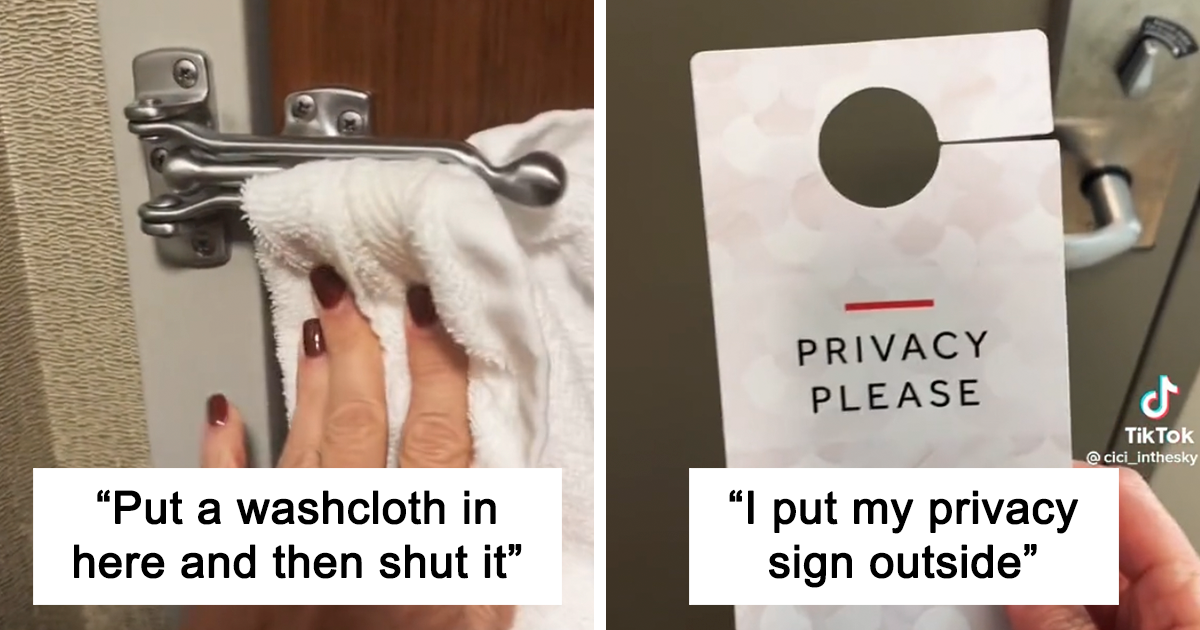
Once inside for the night, use every built-in lock available: deadbolt, latch, chain, or security bar. Even in a reputable hotel, mistakes can happen. Another guest might be assigned the wrong room, or staff may knock unexpectedly. Extra layers reduce awkward surprises and increase peace of mind.
5. Add a Portable Door Stop or Door Alarm
Many solo travelers pack a small rubber door stop or a portable door alarm. These are lightweight, inexpensive, and easy to use. A door stop can help prevent an inward-opening door from moving, while an alarm-style wedge can make noise if pressure is applied.
This is not a replacement for hotel locks, but it is a useful backup layer. The key is to test it after placing it. Hotel floors vary: tile, carpet, wood, and uneven thresholds can affect how well a wedge works. If it slides around uselessly, it is not security; it is just a small rubber decoration.
For rooms with connecting doors, consider securing both the main door and the adjoining door. If you cannot secure the adjoining door properly, ask the front desk for a different room.
6. Learn the Emergency Exit Route Before You Need It
Every hotel room usually has an emergency map posted on or near the door. Most guests ignore it because they are busy looking for the Wi-Fi password. Be the rare traveler who studies it for 30 seconds.
Find the closest stairwell and identify a backup exit. Count the number of doors between your room and the nearest exit. In smoke, darkness, or a power outage, visibility can be poor, and counting doors by touch can help you move in the right direction.
Never assume the elevator will be available during an emergency. Stairs are usually the safer evacuation route during fires or power issues. If mobility is a concern, contact the hotel before booking and ask specific questions about accessible evacuation procedures.
7. Keep Your Phone Charged and Within Reach
Your phone is your map, flashlight, translator, ride-hailing tool, emergency contact list, and “please help, I am lost in a hotel that has three identical beige corridors” device. At night, keep it charged and within reach of the bed.
Save the hotel’s front desk number, local emergency number, and the address of the hotel. If you are traveling internationally, keep the address in the local language too. This can help taxi drivers, rideshare drivers, or emergency responders find the correct location.
A small power bank is also useful. Solo travelers should not rely on a nearly dead phone at midnight in a new city. That is not an adventure; that is a preventable plot twist.
8. Do Not Open the Door Without Verifying Who Is There
If someone knocks and claims to be housekeeping, maintenance, room service, or security, do not open the door automatically. Call the front desk using the room phone or the official hotel number and ask whether someone was sent to your room.
This is especially important if you did not request anything. Real hotel staff will understand. A legitimate employee should have no problem waiting while you verify. If the situation feels wrong, stay inside, keep the door locked, and ask the front desk to handle it.
When ordering food delivery, meet the driver in the lobby instead of sending them to your room. It keeps your room number private and reduces unnecessary hallway traffic.
9. Make the Room Look Occupied, Even When You Step Out
When you leave, avoid making it obvious that the room is empty. You can leave a light on, keep the TV at low volume, and use the “Do Not Disturb” sign strategically. Instead of hanging a housekeeping card that announces you are away, call housekeeping directly when you need service.
Do not leave valuables scattered across the room. Use the safe when appropriate, but remember that hotel safes are not magic vaults guarded by dragons. Store essentials thoughtfully and avoid traveling with expensive items you do not truly need.
A popular flight attendant-style reminder is to put one shoe in the safe with your passport or valuables. Why? Because you are unlikely to leave the hotel wearing only one shoe unless your vacation has taken a very strange turn. The missing shoe reminds you to check the safe before checkout.
10. Be Careful With Social Media Location Sharing
Posting your hotel lobby, room view, key card sleeve, hallway, or exact location in real time can reveal more than you intend. Even a harmless selfie can include hotel branding, street signs, room details, or location tags.
The safer habit is to post after you leave, not while you are still there. This is especially important for solo travelers, flight crews, influencers, students, and anyone with a public profile. Your vacation can still get its glamorous photo dump. It can simply wait until you are safely somewhere else.
Also avoid telling strangers where you are staying. You can be friendly without handing out your lodging details like business cards.
11. Use Hotel Wi-Fi Wisely
Hotel Wi-Fi is convenient, but convenience should not turn into careless clicking. Use secure websites, look for “https,” keep your device updated, use strong passwords, and turn on two-factor authentication where possible.
Be careful with fake networks that mimic hotel Wi-Fi names. Ask the front desk for the exact network name before connecting. Avoid logging into sensitive accounts if something feels suspicious. For banking or private work, a mobile hotspot may be a better choice.
Also turn off auto-connect for Wi-Fi and Bluetooth when you do not need them. Your phone does not need to befriend every random network in the building. It is a smartphone, not a golden retriever.
12. Pack for Safety, Not Fear
A small safety kit can make solo hotel stays smoother. Consider packing a flashlight, portable charger, door stop, small first-aid basics, copies of important documents, and a portable carbon monoxide detector if you travel often or stay in older properties, cabins, rentals, or places where detector rules may vary.
Carbon monoxide is especially important because it cannot be seen or smelled. A portable detector is a simple precaution that can add peace of mind, especially while sleeping. You can also ask the hotel before booking whether rooms have smoke alarms and carbon monoxide detectors.
Good safety packing is not about expecting disaster. It is about removing friction. When the small things are handled, you can focus on the good parts of solo travel: wandering, learning, eating dessert without negotiating, and becoming the kind of person who knows exactly where the emergency exit is.
Bonus: A Flight Attendant-Inspired Hotel Check-In Routine
Here is a simple routine you can repeat every time you check into a hotel alone:
- Ask the front desk to write your room number instead of saying it aloud.
- Keep your key separate from any sleeve that shows the room number.
- Take the elevator while staying aware of who gets off on your floor.
- Enter the room, keep the door open briefly, and scan the space.
- Check the bathroom, closet, curtains, under-bed area, locks, and windows.
- Find the emergency exit route and count the doors to the stairwell.
- Lock the door fully and add your portable door stop if you use one.
- Charge your phone and place it near the bed.
- Store valuables and put a shoe or checkout reminder near anything you must not forget.
- Relax. You did the smart traveler thing.
Common Hotel Safety Mistakes Solo Travelers Should Avoid
Arriving Too Late Without a Plan
Late arrivals can be unavoidable, especially after flight delays. But when possible, plan to arrive during daylight or early evening. If you must arrive late, arrange transportation ahead of time and confirm the hotel’s check-in process before you land.
Ignoring Your Instincts
If the room, hallway, parking area, or neighborhood feels wrong, do not talk yourself out of that feeling just to avoid inconvenience. Ask for a different room, request an escort from staff, or change hotels if necessary. Your comfort is part of your safety plan.
Oversharing With Friendly Strangers
You do not need to explain that you are alone, where you are staying, how long you will be there, or what your schedule is. A polite “I am meeting friends later” is enough. Safety does not require rudeness; it requires boundaries.
Assuming Expensive Hotels Are Automatically Safer
Luxury does not cancel common sense. Beautiful hotels can still have distracted staff, broken latches, public elevators, or crowded lobbies. Use the same safety routine whether you are staying at a five-star resort or a budget airport hotel with carpet that has seen things.
Real-World Experiences: What Solo Hotel Safety Feels Like in Practice
The first time you follow a hotel safety routine, it may feel slightly awkward. You walk into the room, hold the door open with your suitcase, peek behind the curtain, check the bathroom, test the lock, and think, “Am I being dramatic?” Then you do it a few more times and realize it takes less than two minutes. After that, it becomes as normal as checking whether the mini fridge exists.
One of the biggest lessons solo travelers learn is that safety routines reduce anxiety. Without a routine, your brain may keep asking questions after you turn off the lights. Did the door lock properly? Was that connecting door secure? Where is the stairwell? Did the front desk say my room number out loud? With a routine, those questions are answered before bedtime.
Another useful experience is learning how to communicate with hotel staff confidently. Many travelers hesitate to ask for a new room because they do not want to seem difficult. But hotels handle room changes all the time. If your lock does not work, your room number was announced, the room is next to a noisy exit, or something simply feels off, you are allowed to ask. You are not being high-maintenance. You are being responsible.
Solo travelers also learn that the lobby is your friend. Meeting rideshare drivers, delivery people, new acquaintances, or tour guides in the lobby keeps your room private. It also places interactions in a public space with staff nearby. This tiny habit can prevent many uncomfortable situations.
There is also the social media lesson. Many people love sharing travel updates in real time, especially when the hotel has a rooftop pool, dramatic skyline view, or breakfast buffet that deserves its own fan club. But waiting to post until after checkout is one of the easiest safety upgrades you can make. You still get the memories. You still get the photos. You just do not give strangers a live map.
Finally, experienced solo travelers understand that safety is not the opposite of fun. It is what makes fun easier. When you know your phone is charged, your door is secured, your exit route is clear, and someone trustworthy has your itinerary, you can enjoy the trip with more confidence. You can wander through museums, try local food, take the scenic walk in daylight, and return to your room knowing you have already handled the basics.
The best hotel safety hacks are not flashy. They are small, repeatable actions that become second nature. Protect your room number. Check the room. Lock the door. Know the exits. Keep your phone charged. Trust your gut. Do that, and solo travel starts to feel less intimidating and more like what it should be: freedom with a good plan.
Conclusion
Solo travel is not about being fearless. It is about being capable. A flight attendant-inspired hotel safety routine gives you practical control in unfamiliar places without draining the joy from the journey. These 12 hotel safety hacks for solo travelers are easy to remember, easy to repeat, and powerful enough to make each stay feel calmer and more secure.
Before you unpack, check the room. Before you sleep, secure the door. Before you post, think about privacy. Before you ignore a strange feeling, listen to it. The goal is not to worry more. The goal is to prepare once, relax faster, and enjoy the delicious independence of traveling on your own terms.