Movies are designed to make danger look thrilling, heartbreak look beautiful, and chaos arrive precisely on cue. Behind the camera, however, chaos does not always read the script. Some of the most beloved films in cinema history were shaped by fatal accidents, serious injuries, hazardous working conditions, and production disasters that no visual-effects team could simply erase.
The stories below are not tales of supernatural “movie curses.” They are documented events involving real people whose labor helped create famous scenes and unforgettable characters. There is room for gentle humor about Hollywood’s talent for turning a simple shoot into a logistical circus, but the victims deserve something more important than a spooky legend: accuracy, respect, and recognition.
1. The Helicopter Disaster During Twilight Zone: The Movie
A nighttime battle scene became a real catastrophe
On July 23, 1982, actor Vic Morrow and child actors Myca Dinh Le and Renee Shin-Yi Chen were filming a Vietnam War sequence for Twilight Zone: The Movie in California. Morrow was carrying the children through shallow water while explosions erupted around them and a helicopter flew overhead.
Special-effects blasts damaged the low-flying helicopter, which lost control and crashed. All three performers on the ground were killed. The children were only six and seven years old.
The tragedy led to lengthy criminal and civil proceedings and intense scrutiny of director John Landis, production management, special-effects coordination, child labor practices, and communication between departments. Landis and several other defendants were ultimately acquitted of involuntary manslaughter, but the accident permanently changed discussions about film-set safety.
The segment was completed and included in the released movie, yet the finished film can never be separated from what occurred outside the frame. It remains one of the darkest behind-the-scenes movie disasters in Hollywood history and a brutal reminder that “getting the shot” is never worth three lives.
2. Brandon Lee’s Fatal Shooting on The Crow
A prop firearm contained a deadly obstruction
The Crow became a cult favorite because of its gothic visuals, emotional intensity, and Brandon Lee’s magnetic performance as Eric Draven. Tragically, Lee did not live to see the completed film.
During production in North Carolina in March 1993, a revolver used in an earlier scene was reportedly loaded with improperly prepared dummy cartridges. A projectile became lodged inside the barrel. Later, when the gun was loaded with a blank and fired toward Lee, the force of the blank propelled the obstruction from the barrel like a real bullet.
Lee was struck in the abdomen and died after emergency surgery. He was 28 years old and widely viewed as an emerging star with a career far beyond martial-arts roles ahead of him.
The remaining scenes were completed using rewrites, a stunt double, and visual techniques. The result is a haunting performance made even more powerful by the knowledge that Lee’s death was not an unavoidable freak event. It emerged from a chain of preventable failures involving ammunition preparation, firearm inspection, and safety procedures.
Hollywood sometimes calls almost any object held by an actor a “prop,” but a functioning gun does not become harmless because it appears on a call sheet. Physics, unlike an executive producer, does not care about terminology.
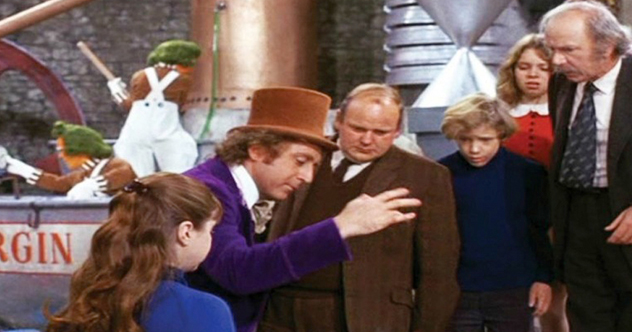
3. The Dangerous Production of The Wizard of Oz
The yellow brick road passed through burns, toxic makeup, and asbestos
Few movies appear more cheerful than The Wizard of Oz. Its production conditions, however, were about as comforting as receiving workplace advice from the Wicked Witch of the West.
Margaret Hamilton, who played the Wicked Witch, suffered serious burns when a fire effect activated before she had safely descended through a trapdoor. Her copper-based green makeup had to be removed before her burns could be treated because doctors feared that the material could enter her bloodstream.
Buddy Ebsen, the original Tin Man, became severely ill after inhaling aluminum dust used in his makeup and was replaced by Jack Haley. MGM changed the formulation, but the costume and makeup remained physically punishing.
The enormous lights required for early Technicolor photography created oppressive heat. Cast and crew members reportedly fainted on the set, while heavy costumes made conditions even worse. Bert Lahr’s Cowardly Lion outfit was made with real lion hide and became miserably hot beneath the lights.
Then there was the snow. In the poppy-field sequence, the magical flakes drifting over Dorothy and her friends were made with chrysotile asbestos, a material once marketed for artificial snow because it resisted fire. Today, asbestos is recognized as a serious carcinogenic hazard.
The film still deserves its status as a masterpiece. It also illustrates how old Hollywood frequently treated performers as replaceable parts in a very expensive machinepreferably parts that did not ask too many questions about the mystery powder being blown into their faces.
4. The Near-Collapse of Apocalypse Now
A typhoon, a heart attack, and a production that seemed to declare war on itself
Francis Ford Coppola wanted Apocalypse Now to capture the madness of the Vietnam War. The production apparently responded, “Say no more,” and began generating madness at industrial scale.
The shoot in the Philippines was expected to last several months but stretched to 238 days. Harvey Keitel was replaced by Martin Sheen after filming had begun. Military helicopters used by the production were sometimes recalled by the Philippine government for actual combat operations, making continuity slightly more difficult than remembering where an actor left his coffee.
Typhoon Olga destroyed a large portion of the sets and forced filming to stop. The production’s budget expanded, Coppola risked his personal fortune, and the director’s physical and emotional health deteriorated under the pressure.
The gravest event came when Sheen suffered a major heart attack. He was only 36 but had endured extreme stress and unhealthy conditions. Sheen survived and eventually returned, while his brother Joe Estevez assisted with stand-in work during the recovery period.
The final film became one of the most celebrated war movies ever made. Its chaotic production was later documented in Hearts of Darkness: A Filmmaker’s Apocalypse. The result is a strange artistic paradox: the instability that threatened everyone involved also contributed to the film’s feverish atmosphere. That does not make the danger admirable. It makes the achievement complicated.
5. The PCP-Laced Chowder Incident on Titanic
A late-night meal sent dozens of people to the hospital
The sinking ship was not the only disaster connected to Titanic. During filming in Nova Scotia in August 1996, members of the cast and crew ate seafood chowder during a late-night meal. Soon afterward, people began experiencing confusion, panic, nausea, hallucinations, and other alarming symptoms.
The chowder had been contaminated with phencyclidine, better known as PCP. Director James Cameron, actor Bill Paxton, producer Jon Landau, cinematographer Caleb Deschanel, and many crew members were among those affected. Dozens were taken to a hospital, where the suddenly overwhelmed staff encountered what may have been the least organized cast party in motion-picture history.
Accounts differ on the precise number of people treated, but later reports commonly place it near 80. Cameron recalled realizing something was wrong, forcing himself to vomit, and returning to find the hospital in complete disorder.
Police investigated, yet no culprit was publicly identified and no one was charged. Theories have ranged from a disgruntled worker to a catering-related dispute, but speculation should not be mistaken for evidence.
Fortunately, the victims recovered. The event remains one of Hollywood’s strangest unsolved production incidentsa real mystery occurring behind a film in which audiences already knew exactly who was responsible for the iceberg.
6. David Holmes’ Life-Changing Harry Potter Accident
The stunt double behind the Boy Who Lived broke his neck
David Holmes began working as Daniel Radcliffe’s stunt double when the Harry Potter cast members were still children. A talented gymnast, Holmes helped transform wand fights, falls, flying sequences, and magical attacks into convincing physical action.
In January 2009, while testing a stunt for Harry Potter and the Deathly Hallows, Holmes was attached to a pulley system designed to throw him backward as though Harry had been hit by an explosion. The stunt was adjusted to increase its speed. Holmes was launched into a wall, breaking his neck and leaving him paralyzed from the chest down.
Holmes has described knowing immediately that something catastrophic had happened. He remained conscious but could not feel his legs. His life became filled with medical procedures, rehabilitation, complications, and the practical realities of requiring continuous care.
His story received wider attention through the documentary David Holmes: The Boy Who Lived, executive-produced by Radcliffe. Rather than presenting Holmes solely as a victim, the documentary explores his humor, resilience, friendships, and continuing influence within the stunt community.
The accident adds an essential human name to action scenes that viewers may otherwise interpret as effortless magic. Someone has to fall when Harry falls, and visual wonder should never make that person invisible.
7. Uma Thurman’s Car Crash While Filming Kill Bill
A seemingly simple driving shot caused lasting injuries
Kill Bill contains sword fights, falls, explosions, and enough cinematic blood to make a tomato-processing plant look understated. Yet one of its most consequential accidents occurred during an apparently ordinary driving scene.
Uma Thurman later said she was uncomfortable operating a converted car on a sandy road and requested that a stunt driver perform the scene. Quentin Tarantino persuaded her to drive, assuring her that the vehicle and route were safe.
Footage eventually released to the public shows Thurman losing control and crashing into a tree. She suffered a concussion and injuries to her knees and neck. Thurman said the accident caused lasting physical problems and severely damaged her relationship with Tarantino.
Tarantino later described the crash as one of the greatest regrets of his life. He disputed some interpretations of the events but acknowledged that he had been wrong about the safety of the road and vehicle.
The lesson is bigger than one director or one actress. A performer expressing concern is not an inconvenient delay between lunch and golden hour. It is safety information. When a workplace culture encourages people to ignore their instincts for fear of seeming uncooperative, “just one easy shot” can become the most dangerous item on the schedule.
8. Art Scholl’s Death While Filming Top Gun
The aerial cameraman disappeared into the Pacific
Top Gun made military aviation look glamorous, fast, and almost impossibly cool. Its aerial footage depended on skilled pilots performing real maneuvers while operating around camera equipment and production aircraft.
Art Scholl was a celebrated aerobatic pilot, instructor, and aerial cameraman hired to capture footage for the movie. On September 16, 1985, he entered an intentional spin in his camera-equipped Pitts Special aircraft off the California coast.
Scholl was expected to recover from the maneuver, but the aircraft continued descending. His final radio transmission indicated that he had a serious problem. The plane crashed into the Pacific Ocean. Neither Scholl’s body nor the aircraft was recovered, and the exact reason he could not escape the spin was never conclusively determined.
Top Gun was dedicated to him. The dedication is brief, but Scholl’s contribution extends far beyond a line in the credits. The movie’s aerial authenticitythe sensation that the viewer is inside a machine cutting through open skywas created by pilots accepting genuine physical risk.
When audiences say the flying scenes “still look real,” that is because, in many cases, real people were actually up there doing the work. Cinema received the footage. Scholl never came home.
9. Joi Harris’ Fatal Motorcycle Crash on Deadpool 2
A groundbreaking racer entered a stunt system that failed to protect her
Joi “SJ” Harris was a pioneering motorcycle racer and the first Black woman widely recognized as a licensed professional road racer in the United States. She was hired to double for Zazie Beetz’s character Domino during the production of Deadpool 2.
On August 14, 2017, Harris was performing a motorcycle sequence in Vancouver when she lost control and struck a building. She was not wearing a helmet because Domino did not wear one in the scene. Harris died at the location.
Although she was an accomplished racer, the film was her first job as a stunt driver. Stunt professionals later emphasized that racing and movie stunt work require different training. Racers are conditioned to pursue speed and maintain a competitive line; stunt performers must hit precise marks, coordinate with cameras, repeat actions consistently, and abandon a maneuver safely when something changes.
A WorkSafeBC investigation concluded that production safety failures contributed to the crash, including inadequate risk assessment and the absence of suitable protective barriers. The regulator later imposed a substantial financial penalty on the production company.
Harris’ death also exposed a structural problem: the entertainment industry wanted a stunt performer who physically matched a Black actress but had not developed a sufficiently large, experienced pipeline of Black stuntwomen. Representation cannot stop at casting the star. It must include training, hiring, protection, and advancement throughout the production.
10. Conway Wickliffe’s Death During The Dark Knight
A camera test for a vehicle sequence ended in a fatal collision
The Dark Knight is praised for practical effects that give its action sequences unusual weight and realism. Behind those effects were technicians such as Conway Wickliffe, an experienced special-effects professional and camera operator.
In September 2007, Wickliffe was riding in a four-wheel-drive vehicle during a test run in England. He was operating a camera while the vehicle traveled parallel to a stunt car. At the end of the run, the camera vehicle failed to complete a turn and struck a tree.
Wickliffe suffered fatal injuries. He was 41 and a father of two. No actors were involved, and reports clarified that the crew was conducting a test rather than filming a completed take.
A special-effects supervisor was later tried for an alleged health and safety violation and acquitted. Whatever the legal outcome, the accident demonstrated that danger exists during rehearsals, tests, equipment moves, and setupnot only when someone yells “Action!”
The closing credits dedicate The Dark Knight to Wickliffe and Heath Ledger. Ledger’s death understandably became a major part of the film’s public history, but Wickliffe’s name deserves equal recognition. He was one of the specialists whose technical skill made Gotham feel physical, dangerous, and real.
What These Terrible Movie Events Reveal About Hollywood
These events happened in different decades, countries, genres, and production systems. Some involved weapons. Others involved vehicles, aircraft, fire, weather, food contamination, mechanical rigs, or hazardous materials. Their common feature is not a supernatural curse. It is the collision between ambitious filmmaking and imperfect risk management.
Film production is a workplace. Its employees may wear capes, witch makeup, military uniforms, or yellow tracksuits, but ordinary occupational principles still apply. Hazards must be identified. Qualified specialists must be hired. Equipment must be inspected. Concerns must be heard. People need the authority to stop work without fearing retaliation or losing future employment.
Industry safety bulletins now address firearms, aircraft, vehicles, animals, water, pyrotechnics, weather, stunt coordination, and many other risks. These recommendations are useful only when productions follow them consistently. A beautifully printed safety manual has approximately the same protective power as a decorative shield if everyone leaves it in a trailer.
Modern digital effects can remove wires, add muzzle flashes, duplicate crowds, and create entire environments. Used thoughtfully, they can also reduce physical risks. Practical effects remain valuable, but “real” should describe the emotional impact of a scenenot the probability that someone could die making it.
Experiencing Favorite Movies Differently After Learning the Truth
Knowledge does not have to destroy the magic
Learning about Hollywood tragedies can complicate the experience of returning to a favorite film. A viewer may watch The Crow and notice Brandon Lee’s vitality rather than simply following the revenge story. The aerial scenes in Top Gun may suddenly feel less like polished spectacle and more like the work of pilots operating at the edge of control. During Harry Potter, a quick magical impact may prompt a thought about David Holmes and the physical labor hidden beneath digital sparks.
That awareness can feel uncomfortable, but discomfort is not the same as disrespecting the movie. In many cases, watching with fuller knowledge encourages greater appreciation. Films are not created only by the names printed largest on the poster. They are made by stunt performers, riggers, camera operators, armorers, pilots, electricians, animal handlers, drivers, medics, assistant directors, and hundreds of crew members whose contributions usually pass by in tiny text while viewers search for the next streaming suggestion.
The most responsible viewing experience also separates documented history from sensational mythology. Famous productions often accumulate rumors about mysterious deaths, haunted sets, or supernatural punishment. These stories can distract from real failures. Calling an accident a curse is emotionally convenient because curses cannot be regulated, inspected, trained, or held accountable. Poor communication and inadequate preparation can.
Fans can honor the people behind these films by learning their names and resisting romantic descriptions of dangerous productions. An actor suffering a heart attack is not proof of artistic purity. A stunt performer accepting an uncontrolled risk is not automatically heroic. A director continuing despite obvious hazards is not necessarily demonstrating genius. Sometimes the “uncompromising visionary” is simply a manager who needs to hear the word no.
These accounts also change how we interpret movie realism. Viewers often praise a sequence by saying, “You could never do that today.” Occasionally, that is trueand it may be good news. Safer materials, improved stunt engineering, computer-generated imagery, digital compositing, remote cameras, protective equipment, and stronger workplace rules allow filmmakers to create extraordinary images without repeating earlier harm.
The best lesson is not that movies are secretly evil or that audiences should feel guilty for enjoying them. It is that entertainment carries a human cost when safety becomes secondary to schedules, budgets, appearance, or ego. Knowing the history gives us the chance to celebrate great filmmaking while rejecting the belief that suffering is a necessary ingredient of great art.
A more respectful way to revisit these films
When rewatching one of these movies, stay through the credits. Look for the dedications. Read about the stunt teams and technical departments. Consider the difference between a performer choosing a calculated risk and a worker being pressured into one. Those small habits turn passive viewing into a more informed experience.
They also preserve the individuality of the people involved. Brandon Lee was more than “the actor who died on The Crow.” Joi Harris was more than a tragic headline. Art Scholl, Conway Wickliffe, David Holmes, Vic Morrow, Myca Dinh Le, and Renee Shin-Yi Chen each had careers, families, skills, ambitions, and relationships outside the events for which they became known.
Their stories should not exist merely as creepy trivia for movie night. They should remind audiences and studios that every spectacular image is made by human beingsand human beings matter more than the image.