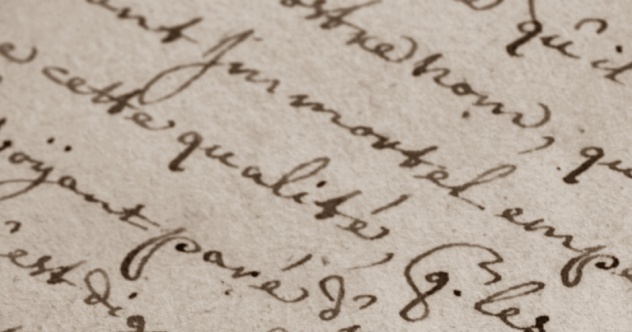
Famous people spend much of their lives speaking to crowds, commanding armies, publishing masterpieces, or attempting to convince entire countries that their latest idea is definitely not a terrible one. Yet when the end approaches, public performance often disappears. What remains is a person, a sheet of paper, and a few thoughts that suddenly matter more than everything else.
The last letters of historical figures reveal emotions that formal biographies sometimes flatten into dates and achievements. Queens worried about their children. Soldiers apologized to their wives. Writers struggled to describe illnesses that words could not repair. Even George Washington, apparently unwilling to give history a conveniently dramatic finale, spent his last written correspondence discussing farm management.
In this article, “last letter” refers to a final surviving letter, a farewell message written before a fatal event, orin Anne Frank’s casea final diary entry composed as a letter. Historians occasionally debate whether a document was literally the final thing someone wrote, so careful wording matters. History loves footnotes almost as much as it loves executions.
Why Famous Final Letters Remain So Powerful
A speech is prepared for an audience. A monument is created for posterity. A private letter, however, usually addresses one person. That limited audience gives historical farewell letters an unusual emotional intensity. Readers are not merely learning what happened; they are overhearing an intimate conversation that was never designed for millions of strangers centuries later.
These documents also complicate familiar legends. The fearless explorer admits fear. The controversial queen becomes a frightened mother. The celebrated poet sounds exhausted rather than lyrical. A last letter rarely summarizes an entire life neatly, but that is precisely why it feels authentic. Human beings do not normally reach the final page with every theme tied into an elegant bow.
1. Mary, Queen of Scots: A Queen Defending Her Identity
Written before her execution on February 8, 1587
At approximately 2 a.m. inside Fotheringhay Castle, Mary, Queen of Scots, wrote to her former brother-in-law, King Henry III of France. Only hours remained before her execution. She had been convicted of involvement in a conspiracy against England’s Queen Elizabeth I, although Mary used her final letter to present a very different interpretation of events.
Mary explained that she was to be executed at eight that morning and insisted that she was dying for her Catholic faith and her claim to the Scottish throne. She also asked Henry to support her servants, settle her financial obligations, and arrange prayers for her soul. Even at the edge of death, royal administration continued to demand paperwork. Apparently, nobodynot even a condemned queenescapes the final expense report.
The letter is fascinating because it functions as both a farewell and a deliberate statement for history. Mary refused to let her enemies write the final version of her identity. She portrayed herself not as a traitor but as a sovereign and religious martyr, transforming a prison letter into her last act of political resistance.
2. Marie Antoinette: A Mother’s Final Request
Written on October 16, 1793
Marie Antoinette’s last letter was addressed to Madame Élisabeth, the sister of her executed husband, Louis XVI. The former queen wrote it after a revolutionary tribunal sentenced her to death and only hours before she was taken to the guillotine.
The letter contains little of the extravagant queen imagined by political pamphleteers. Instead, Marie Antoinette appears as a widow, sister, and mother. She declared her innocence of the most disturbing accusations made during her trial, asked forgiveness from anyone she might have offended, and urged Élisabeth to care for her children.
Most poignantly, she asked that her son be taught not to seek revenge for the deaths of his parents. The boy had been pressured into making accusations against her, but she did not blame him. Her attention remained fixed on protecting his conscience rather than defending her reputation.
The message reportedly never reached Madame Élisabeth, who was herself executed the following year. That failed delivery makes the letter even more haunting: it was written as a private goodbye but survived as testimony to a family destroyed by revolution.
3. Sir Thomas More: Humor at the Foot of the Scaffold
Written on July 5, 1535
Sir Thomas More, the English statesman and author of Utopia, was imprisoned after refusing to recognize Henry VIII’s supremacy over the Church in England. On the day before his execution, he wrote to his daughter Margaret Roper using charcoal because ordinary writing materials were restricted.
More knew exactly what would happen the next morning. Yet his letter combined affection, religious confidence, practical instructions, and flashes of humor. He apologized for troubling Margaret and observed that the inconvenience would not last beyond the following daya grim joke delivered with astonishing composure.
He sent blessings to relatives and friends, requested prayers, and expressed hope that he and Margaret would one day be reunited in heaven. The letter did not pretend that separation was painless. Instead, it placed grief within More’s spiritual understanding of sacrifice and eternal life.
Whether one views More primarily as a martyr, politician, lawyer, or stubborn Tudor overachiever, his final message demonstrates extraordinary control. Henry VIII could command the execution, but More retained ownership of his tone.
4. Alexander Hamilton: A Farewell Hidden from Eliza
Written before the duel of July 11, 1804
Before meeting Vice President Aaron Burr on the dueling ground at Weehawken, New Jersey, Alexander Hamilton prepared two letters for his wife, Elizabeth “Eliza” Hamilton. They were to be given to her only if he did not survive.
Hamilton attempted to explain why he had accepted the duel despite his moral and religious objections. He described his intention to withhold his first shot, acknowledged the danger he was creating for his family, and asked Eliza to forgive him. The explanation remains frustrating because Hamilton clearly understood the possible consequences and still stepped into the boat for New Jersey.
His political career had been built on relentless argument, but the emotional center of the final letters was simple: love, regret, faith, and fear for his family. He closed one message by calling Eliza the “best of wives and best of women,” words that have since become inseparable from their story.
Hamilton died the day after Burr shot him. Eliza lived for another half-century, preserving her husband’s papers and promoting his legacy. In a sense, the woman receiving his final private words became the editor of his public afterlife.
5. Major Sullivan Ballou: Love and Duty Before Bull Run
Written on July 14, 1861
Major Sullivan Ballou of the 2nd Rhode Island Infantry wrote to his wife, Sarah, one week before the First Battle of Bull Run, also known as First Manassas. He sensed that his regiment would soon enter combat and wanted to leave behind words that might explain his choices if he did not return.
The letter moves between patriotic duty and overwhelming domestic love. Ballou believed the Union cause justified the risk, but he also imagined the suffering his death would bring to Sarah and their sons. Rather than choosing between country and family, he admitted the terrible weight of loving both.
Ballou was mortally wounded during the battle and died soon afterward. The letter was never mailed; it was found among his personal belongings. That detail gives it an almost unbearable intimacy. Sarah did not receive a carefully delivered farewell. She received a message recovered from the life he had left behind.
Ballou was not a president or monarch, but his letter became one of the most famous pieces of Civil War correspondence because it gives one voice to the countless families divided by the conflict.
6. Captain Robert Falcon Scott: “To My Widow”
Written in Antarctica in March 1912
Robert Falcon Scott and four companions reached the South Pole in January 1912 only to discover that Norwegian explorer Roald Amundsen had arrived first. The exhausted British party then began the long return journey. Extreme weather, injury, hunger, and dwindling fuel gradually trapped the remaining men inside a tent.
During his final days, Scott wrote letters to family members, friends, and supporters. His message to his wife, Kathleen, began with the chilling heading “To my widow.” He urged her to raise their son with an interest in natural history, expressed love and gratitude, and tried to reassure her that his death would not be physically painful.
Scott also wrote appeals asking influential acquaintances to provide for the expedition members’ families. Even while freezing and starving, he attempted to organize a support network from inside a collapsing tent. That mixture of affection, leadership, pride, and practical concern explains why his final correspondence became central to his legend.
The bodies, diaries, and letters were discovered months later. Scott had lost the race to the Pole, but the written record ensured that the expedition’s human story would survive.
7. John Keats: Living a “Posthumous Existence”
Written on November 30, 1820
John Keats traveled to Italy hoping its warmer climate would slow the tuberculosis destroying his health. From Rome, the 25-year-old poet wrote his final surviving letter to his friend Charles Brown.
The message does not resemble a polished Romantic poem. Keats complained that writing had become physically difficult and that reminders of England caused emotional pain. He could not bear to write directly to Fanny Brawne, the woman he loved, because his illness had made their shared future impossible.
Keats described himself as living a “posthumous existence,” one of the most unsettling phrases in famous final letters. He was still alive, yet he felt that his real life had already ended. Even reading correspondence from home threatened to reopen a world from which he believed himself permanently separated.
He died in Rome on February 23, 1821. The final letter survives only through Brown’s transcript, adding another layer of distance: readers encounter Keats’s last written voice through the preservation work of the friend to whom he could barely say goodbye.
8. Virginia Woolf: Gratitude Inside Despair
Written in March 1941
Before her death in March 1941, novelist Virginia Woolf left farewell letters for her husband, Leonard Woolf, and her sister, Vanessa Bell. She had experienced serious mental-health crises throughout her life and believed another devastating episode was beginning.
Her letter to Leonard is often remembered exclusively as a suicide note, but it is also a declaration of gratitude. Woolf credited him with giving her profound happiness and praised his patience and goodness. She believed that continuing her struggle would destroy his ability to live and work, although that belief was shaped by severe illness rather than an objective judgment of her value.
The line suggesting that Leonard might have saved her if anyone could is especially painful. It simultaneously expresses love and acknowledges the limits of love. Devotion can support a suffering person, but it cannot always defeat an illness by force of character.
Woolf’s last letter should therefore be read compassionately, not romanticized as the inevitable conclusion of artistic genius. Her brilliance and her illness were not the same thing, no matter how eagerly popular mythology sometimes tries to combine them.
9. Anne Frank: The Final Letter to “Kitty”
Written on August 1, 1944
Anne Frank structured many diary entries as letters addressed to an imaginary friend she called Kitty. Her final diary letter was dated August 1, 1944, three days before German authorities discovered the hiding place in Amsterdam where Anne, her family, and four other Jewish people had lived in secrecy.
The last entry does not predict the arrest. Instead, Anne examines the contradictions within her personality. She describes the lively, joking version of herself visible to others and a quieter, more serious self that she struggled to reveal. It is the work of a young writer analyzing identity with remarkable honesty.
Knowing what happened next changes the way the entry is read, but readers should resist reducing Anne to her fate. She was not writing a ceremonial goodbye. She expected to continue. She was revising earlier diary material with hopes of publishing a book after the war and imagining a career as a journalist or author.
The abrupt ending is precisely what makes this final letter so devastating. The page stops, but the mind behind it was still planning, questioning, and becoming.
10. George Washington: A Surprisingly Ordinary Final Letter
Written on December 13, 1799
George Washington’s final letter was not a grand meditation on liberty, the presidency, or the survival of the young republic. Written to Mount Vernon farm manager James Anderson on December 13, 1799, it concerned agricultural arrangements and work being organized on Washington’s farms.
The letter referred to plans for laying out clover lots and instructed overseers to study operational arrangements carefully. Washington died the following evening after developing a severe throat illness. He had no reason to believe that routine farm correspondence would become his final written message.
That ordinariness may be the most fascinating detail on this entire list. Historical narratives train us to expect dramatic last words, swelling music, and perhaps an eagle circling overhead. Real life is less cooperative. Washington’s last letter shows a retired president handling the next day’s responsibilities because he assumed there would be many more next days.
It is an unexpectedly human ending for a heavily mythologized figure. Behind the portraits, military victories, and presidential precedents was a landowner thinking about soil, clover, labor, and unfinished plans.
Experiencing the Last Letters of Historical Figures
Reading these documents is different from reading a standard biography. A biography arrives with explanations, chronology, and the reassuring voice of an author who already knows what happened. A final letter often arrives without such protection. The writer may know death is near, merely suspect danger, or have no idea that the ordinary page in front of them will become their last.
Read the Letter Before Reading the Ending
One revealing exercise is to read a historical letter before reviewing the writer’s fate. Without the famous ending hovering over every sentence, practical details suddenly become more noticeable. Washington’s agricultural instructions sound like ordinary management because that is exactly what they were. Anne Frank’s personality analysis feels open-ended because she intended to write again.
After learning what happened, read the document a second time. The meaning changes, but the words do not. This demonstrates how strongly historical knowledge shapes emotional interpretation. Readers supply dramatic foreshadowing even when the writer supplied none.
Pay Attention to the Physical Document
A transcript provides the words, but the original page offers another kind of evidence. Handwriting may become cramped as space runs out. Ink grows lighter. Sentences tilt. Corrections reveal hesitation. Fold marks show how a message was carried, while stains and damaged edges record the document’s own journey through time.
Thomas More reportedly wrote with charcoal because normal materials were unavailable. Scott wrote during brief moments of warmth in an Antarctic tent. Hamilton prepared letters that his wife was not supposed to see unless he died. These physical circumstances are not decorative trivia. They shaped what could be written and how quickly it had to be completed.
Separate Private Emotion from Public Legend
Historical figures often become symbols: Mary becomes the doomed queen, Hamilton the ambitious founder, Scott the heroic explorer, and Marie Antoinette the face of royal excess. Their letters temporarily interrupt those simplified identities. The people on the page worry about servants, debts, children, spouses, religion, reputation, and unfinished responsibilities.
That does not erase their political decisions or excuse their failures. A moving letter is not a moral pardon signed by history. It simply reminds readers that flawed, powerful, controversial people were still capable of tenderness and fear. Emotional complexity is not the same as innocence.
Question the Label “Last Letter”
Archives are incomplete. Some letters disappear, others survive only as copies, and certain famous farewells were written days or months before death. Sullivan Ballou’s message is commonly called his last letter, while Anne Frank’s entry belongs to a diary written in letter form. John Keats’s final surviving letter exists through a friend’s transcript rather than the original manuscript.
Responsible historical reading therefore requires qualifiers such as “last known,” “final surviving,” or “farewell letter.” Those phrases may sound less cinematic, but accuracy is worth sacrificing a little trailer-ready drama.
Consider Writing a Legacy Letter of Your Own
The most constructive experience inspired by these documents is not to imitate their tragedy. It is to recognize how rarely people clearly express gratitude, forgiveness, values, and hopes while they have plenty of time.
A personal legacy letter can be written at any age and updated whenever life changes. It might explain which experiences shaped you, record family stories, thank someone whose support mattered, or describe the principles you hope younger relatives will carry forward. Unlike a legal will, it distributes memories rather than propertyand nobody has to argue over who inherited the embarrassing childhood story.
The best lesson of famous final letters may therefore be surprisingly practical: do not save every meaningful sentence for the final page. Write some of them now, when the recipient can answer.
Conclusion: When History Becomes Personal
The most fascinating last letters of prominent historical figures do not offer one universal attitude toward death. Mary, Queen of Scots, defended her name. Marie Antoinette worried about her children. Thomas More relied on faith and humor. Hamilton tried to explain a disastrous decision. Scott planned for the people he would leave behind, while Keats described the eerie feeling that life had already moved beyond him.
Other documents are powerful because their writers did not know they were final. Anne Frank was still studying her identity. George Washington was still planning farm work. Their unfinished quality reminds us that history is usually created without warning. A routine letter becomes an artifact only because tomorrow fails to arrive.
These famous final letters survive not because they provide perfect endings, but because they preserve imperfect human beings in moments when titles, legends, and public images could no longer fully protect them.