Small animals have a suspicious talent for stealing the spotlight. Put a lion, an elephant, and a creature the size of a coffee mug in the same conversation, and somehow everyone wants to know more about the tiny one. Why? Because dwarf animals prove that nature does not need extra-large packaging to deliver drama, intelligence, survival skills, and a little bit of adorable chaos.
The phrase “dwarf animals” can describe naturally small species, animals with “dwarf” in their common name, or close relatives of much larger creatures that seem to have been designed by nature’s travel-size department. These animals are not simply “mini versions” of familiar wildlife. Many evolved small bodies as powerful adaptations: they hide better, move through narrow spaces, use fewer resources, or specialize in habitats where bigger animals would be as subtle as a refrigerator in a canoe.
Below are 10 fascinating dwarf animals from forests, deserts, oceans, rivers, reefs, and night skies. Some are record breakers. Some are masters of camouflage. Some are tiny predators with the confidence of a movie villain. All of them show that being small is not a limitation. In the wild, small can mean quick, clever, mysterious, and surprisingly tough.
What Makes Dwarf Animals So Interesting?
Dwarf animals often evolve through a process called miniaturization, where a species or group becomes smaller over time because a smaller body offers survival advantages. In island habitats, dense forests, deep seas, coral reefs, and resource-limited environments, being compact can be a very good strategy. A small animal may need less food, fit into safer hiding places, reproduce differently, or hunt prey that larger animals ignore.
But tiny size comes with trade-offs. Small animals can lose body heat quickly, face higher predation risk, and often depend on very specific habitats. That is why conservation matters so much. When a dwarf species depends on one coral type, one forest region, or one kind of shrubland, habitat loss can be devastating. In other words, these little creatures may look like nature’s pocket editions, but their survival stories are anything but small.
1. Pygmy Marmoset: The Tiny Monkey With Big Opinions
A rainforest acrobat smaller than many squirrels
The pygmy marmoset is often called the world’s smallest monkey, and it looks like it knows exactly how charming that title is. Native to the Amazon Basin, this miniature primate can cling to tree trunks with claw-like nails, leap between branches, and communicate with high-pitched calls that sound like forest gossip being exchanged at lightning speed.
One of the most fascinating things about pygmy marmosets is their diet. They use specialized teeth to gnaw into tree bark and feed on sap and gum. They also eat insects, which makes their daily routine a mix of tree surgery and bug buffet. For an animal small enough to fit comfortably in a human hand, the pygmy marmoset plays an important role in its ecosystem by interacting closely with trees and insects.
They are also highly social. Family groups cooperate in raising young, and infants may babble in ways that help them learn communication patterns. Imagine a baby monkey practicing conversation while clinging to a branch. That is not just cute; it is a reminder that complex behavior can come in very small bodies.
2. Dwarf Lanternshark: The Shark That Fits in Your Hand
A deep-sea mystery with built-in mood lighting
The dwarf lanternshark is one of the smallest known sharks, and unlike the dramatic great white shark, it is not starring in anyone’s beach nightmare. This rare deepwater shark has been found off northern South America at depths where sunlight barely matters and the ocean starts acting like it is hiding secrets.
Its name comes from photophores, light-producing organs that may help with camouflage or communication in the dark ocean. This is called bioluminescence, and it is one of the deep sea’s greatest party tricks. For the dwarf lanternshark, glowing is not about showing off. It is survival equipment.
Because it lives so deep and has been observed only rarely, scientists still know relatively little about it. That mystery is part of its appeal. The dwarf lanternshark reminds us that the ocean is not fully explored, and some of its most impressive predators are not bus-sized monsters but palm-sized enigmas with glowing skin.
3. Pygmy Seahorse: The Hide-and-Seek Champion of Coral Reefs
So well camouflaged it was discovered by accident
The pygmy seahorse is a master of disguise. Some species grow only about an inch long and live among gorgonian corals, matching their host’s color and texture so well that even experienced divers can stare directly at one and see absolutely nothing. It is the marine equivalent of wearing the wallpaper and hoping nobody asks questions.
One famous pygmy seahorse species was discovered when scientists examined a piece of coral in a lab and noticed tiny seahorses clinging to it. That is how good the camouflage is. Their bumpy bodies and colors can mimic coral polyps, turning them into living optical illusions.
Pygmy seahorses also share the classic seahorse family twist: males carry the developing young. In these tiny fish, the male broods eggs in a pouch before releasing miniature offspring into the reef. Tiny size, strange parenting, and world-class camouflage make the pygmy seahorse one of the most fascinating small animals in the ocean.
4. Pygmy Rabbit: North America’s Smallest Rabbit
A sagebrush specialist with underground skills
The pygmy rabbit is the smallest rabbit species in North America. Adults are usually under a foot long and weigh less than a pound, which means they are roughly the size of a very nervous loaf of bread. But do not let the soft ears fool you. These rabbits are tough little specialists built for sagebrush country.
Unlike many rabbits, pygmy rabbits dig their own burrows. These burrows provide protection from predators, shelter from harsh weather, and a safe place to raise young. Their close relationship with sagebrush is especially important. In winter, sagebrush can make up the majority of their diet, making them highly dependent on healthy shrubland habitat.
This dependence also makes them vulnerable. When sagebrush ecosystems are damaged by development, fire, invasive plants, or land conversion, pygmy rabbits lose both food and shelter. Their story is a classic example of how a tiny animal can reveal the health of an entire landscape.
5. Dwarf Mongoose: Africa’s Smallest Carnivore
Small body, huge social calendar
The dwarf mongoose is the smallest carnivore in Africa, but it does not behave like an animal interested in being overlooked. These energetic mammals live in social groups, often using termite mounds as homes, lookout towers, and neighborhood headquarters. If they had a community newsletter, it would be very busy.
Dwarf mongooses feed mainly on insects, though they may also eat small vertebrates and other tiny prey. Group living helps them watch for danger. One mongoose may stand guard while others forage, alerting the troop if a snake, raptor, or other predator appears. Cooperation is not a cute bonus; it is a survival strategy.
Their social structure is also fascinating. They groom one another, play, defend territory, and communicate constantly. In a world where small mammals can easily become lunch, dwarf mongooses survive by acting like a tiny, furry security team with excellent teamwork.
6. Cuvier’s Dwarf Caiman: The Pocket-Sized Crocodilian
Armored, secretive, and absolutely not a toy
Cuvier’s dwarf caiman is the smallest living crocodilian, but “smallest crocodilian” should not be confused with “safe to cuddle.” Adults may be much shorter than alligators or large crocodiles, but they still have strong jaws, tough armor, and a predator’s patience.
Native to parts of South America, these caimans live in streams, flooded forests, and wetland habitats. Their dark bodies and bony plates help them blend into shadowy water and protect them from larger predators. They are mostly nocturnal, hunting fish, crustaceans, amphibians, and other small animals.
What makes the dwarf caiman especially interesting is its ancient design in a compact form. It looks like a creature that escaped from prehistory, then downsized for easier storage. In reality, its smaller body helps it navigate forested waterways and hidden habitats where larger crocodilians might struggle.
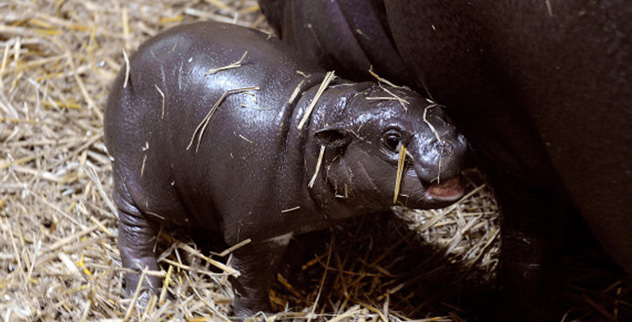
7. Pygmy Hippopotamus: The Shy Forest Cousin of the River Hippo
A rare West African mammal with serious charm
The pygmy hippopotamus is not tiny in the way a pygmy seahorse is tiny. It is still a sturdy mammal. But compared with the common hippopotamus, it is dramatically smaller, more solitary, and more forest-oriented. If the common hippo is a loud river tank, the pygmy hippo is the quiet forest edition.
Native to West Africa, pygmy hippos spend more time on land than their larger cousins and are generally elusive. They use dense forests and swampy areas for shelter, moving mostly at night. Their skin still needs moisture, so they remain tied to wet habitats, but they are far less aquatic than common hippos.
The species is endangered, threatened by habitat loss, hunting, and human pressure. Its shy nature makes it difficult to study in the wild, which adds to its mystery. A pygmy hippo may look like a plush toy with hooves, but it represents a fragile branch of hippo evolution and a conservation challenge that deserves attention.
8. Dwarf Sperm Whale: A Small Whale With a Strange Defense
The ocean’s quiet, deep-diving oddball
The dwarf sperm whale is one of the smallest whale species, reaching lengths closer to a dolphin than to the giant whales most people imagine. It lives in warm and temperate waters and is rarely seen, partly because it spends much of its time offshore and can dive deep in search of squid, octopus, fish, and crustaceans.
Like other toothed whales, dwarf sperm whales use echolocation to navigate and hunt. They send out sounds that bounce off objects, helping them “see” underwater through sound. This is especially useful in deep or murky environments where vision is limited.
Their strangest feature is a defensive behavior involving dark intestinal fluid released into the water when threatened. The cloud may help confuse predators, much like squid ink. It is not glamorous, but nature is not always concerned with elegance. Sometimes survival means making a dramatic exit and leaving a very confusing cloud behind.
9. Northern Pygmy-Owl: A Tiny Bird With Big Predator Energy
Small enough to miss, fierce enough to remember
The northern pygmy-owl is a small owl found in parts of western North America. Unlike many owls, it often hunts during the day. It perches quietly, watches carefully, and then launches surprise attacks on small birds, rodents, insects, and other prey. It may be tiny, but it has the confidence of a bird that never read the size chart.
One of its most recognizable features is the pair of dark “false eyes” on the back of its head. These markings may confuse predators or mobbing birds by making the owl appear to be watching in two directions at once. For a small predator, looking harder to ambush is a useful trick.
Songbirds sometimes mob northern pygmy-owls, gathering noisily around them to drive them away. Birdwatchers can use that commotion as a clue. If a group of small birds is loudly scolding one spot in the trees, there may be a pygmy-owl sitting there, pretending it is not the neighborhood problem.
10. Pygmy Slow Loris: Big Eyes, Slow Moves, Serious Survival Issues
A nocturnal primate that should never be a pet
The pygmy slow loris is a small nocturnal primate from Southeast Asia. Its huge eyes help it see in low light, and its careful movements make it look almost cartoonishly gentle. But this animal is not a toy, not a social media prop, and definitely not a suitable pet.
Pygmy slow lorises are arboreal, meaning they spend much of their time in trees. They eat fruit, insects, tree gum, and other foods, using strong hands and careful movements to forage at night. They can hang upside down while feeding, which is a level of dinner-table flexibility most humans should not attempt.
Sadly, the species faces serious threats from habitat loss and illegal wildlife trade. Their cute appearance has made them targets for the pet trade, but captivity outside proper conservation programs is harmful and often cruel. The pygmy slow loris is a perfect example of why “adorable” should lead to protection, not possession.
Why Dwarf Animals Matter to Ecosystems
Dwarf animals may be small, but their ecological roles can be surprisingly important. Pygmy rabbits help shape sagebrush ecosystems through grazing and burrowing. Dwarf mongooses control insect populations and serve as prey for larger animals. Pygmy seahorses reflect reef health. Dwarf sperm whales participate in deep-ocean food webs. Even animals that humans rarely see can influence the balance of their habitats.
Small species also help scientists understand evolution. Why does one animal lineage produce giants while another produces miniatures? How do organs, senses, reproduction, and behavior adapt when body size shrinks? The answers can reveal how flexible life really is. Dwarf animals are living case studies in adaptation, proving that evolution is not always a march toward bigger and stronger. Sometimes it is a clever turn toward smaller, quieter, and more specialized.
Conservation Challenges for Tiny Wildlife
Many dwarf animals face the same threats as larger wildlife: habitat loss, climate change, pollution, hunting, invasive species, and illegal trade. However, small specialists can be especially vulnerable because they often rely on narrow habitats. A pygmy seahorse may depend on certain corals. A pygmy rabbit may depend on sagebrush. A pygmy hippo needs forested wetlands. When those habitats disappear, the animals cannot simply pack tiny suitcases and move somewhere else.
Conservation for dwarf species often starts with protecting habitat. That can mean preserving reefs, restoring sagebrush, protecting tropical forests, reducing wildlife trafficking, and supporting ethical zoos and research programs that contribute to species survival. It also means resisting the urge to turn rare animals into pets or viral props. The best way to love many dwarf animals is from a respectful distance.
Personal Field Notes: Experiences That Make Dwarf Animals Unforgettable
There is something uniquely memorable about encountering tiny wildlife, even when the encounter is only through a documentary, zoo exhibit, aquarium display, field guide, or a patient naturalist pointing at what appears to be an empty branch. Large animals impress immediately. A giraffe does not need a public relations team. But dwarf animals ask you to slow down. They reward attention. They make observation feel like a treasure hunt.
Anyone who has watched a small animal closely knows the experience can be surprisingly dramatic. A pygmy-owl sitting in a conifer may look calm until nearby songbirds begin scolding it like angry neighbors at a homeowners association meeting. A dwarf mongoose troop can turn a patch of dirt and termite mounds into a miniature soap opera of grooming, guarding, chasing, and squeaking. A pygmy rabbit may vanish into sagebrush so perfectly that you start questioning whether you saw it at all.
Aquariums create a different kind of experience. Searching for a pygmy seahorse among coral is humbling. You can stare for several minutes, convinced the label is lying, and then suddenly the shape appears: a tiny curled tail, a snout, a bump that is not coral after all. That moment changes the way you look at reefs. They stop being scenery and become crowded neighborhoods full of hidden lives.
Deep-sea dwarf animals, like the dwarf lanternshark, offer another lesson. Most people will never see one alive in the wild, but learning about it expands the imagination. It is comforting and thrilling to know that far below the surface, in cold dark water, a tiny shark may be glowing faintly and going about its business without caring whether humans have updated their ocean maps.
Then there are animals like the pygmy slow loris and pygmy hippo, whose cuteness can create a complicated emotional reaction. They are charming, yes, but their charm should not be treated as an invitation to own them, touch them, or turn them into entertainment. The more fascinating an animal is, the more responsibility we have to respect its needs. A slow loris belongs in a forest canopy or a serious conservation program, not in someone’s living room. A pygmy hippo belongs in protected habitat, not as an exotic novelty.
The best experience related to dwarf animals is often the shift in perspective they create. They remind us that wildlife is not measured only by weight, height, or roar volume. A creature can be smaller than a sandwich and still have complex communication, specialized hunting skills, unusual parenting, clever camouflage, or an essential ecological role. Dwarf animals make the world feel more detailed. They teach patience, curiosity, and humility. They also make it very difficult to say, “I have seen everything,” because somewhere out there, a tiny animal is hiding in plain sight, doing something astonishing.
Conclusion: Small Animals, Huge Wonder
Dwarf animals prove that nature’s most fascinating designs do not always come in giant bodies. From the glowing dwarf lanternshark to the camouflaged pygmy seahorse, from the social dwarf mongoose to the endangered pygmy hippo, these animals show how powerful small adaptations can be. Their size may be modest, but their stories are rich with survival, evolution, and ecological importance.
For readers, these species offer more than fun facts. They invite us to look closer at the natural world. A tiny rabbit can reveal the importance of sagebrush. A tiny primate can expose the damage caused by illegal wildlife trade. A tiny reef fish can remind us that coral ecosystems are filled with hidden relationships. Small wildlife is not a footnote to the animal kingdom. It is one of its most creative chapters.
So the next time someone says bigger is better, feel free to introduce them to a shark smaller than a hand, a monkey that drinks tree gum, an owl with false eyes, or a whale with a smoke-screen defense. Nature clearly enjoys a good plot twist, and dwarf animals are some of its best.