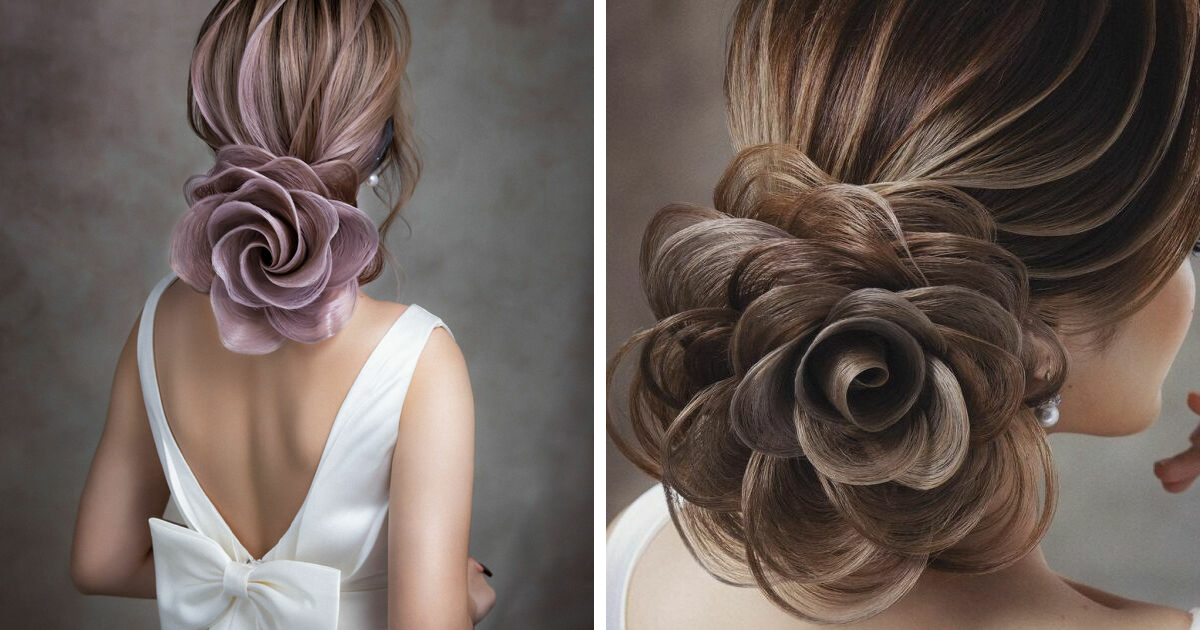
Some people need ten minutes, a hair tie, and a prayer to survive a Monday morning. Vietnamese hairstylist Nguyễn Phát Trí, on the other hand, can turn hair into blooming flowers, sculptural crowns, bridal fantasy pieces, and gravity-defying artwork that looks less like a salon appointment and more like a museum exhibit that learned how to walk.
His intricate hairstyles have earned international attention because they do something rare: they make hair feel architectural. These are not simple curls pinned into place or a few flowers tucked behind the ear. Trí’s creations often resemble lotus blossoms, roses, fans, petals, and ornamental shapes inspired by Vietnamese beauty, wedding culture, and high-fashion editorial styling. Some designs reportedly take only a few days to develop, while the most complex pieces can require two to three months of sketching, experimenting, preparing accessories, testing structure, and refining the final look.
That timeline may sound dramatic until you look closely. Each petal has to sit at the right angle. Each layer needs balance. Each accessory must support the design without overwhelming it. In other words, this is hair styling with the patience of bonsai, the precision of couture, and the emotional stakes of a bride asking, “Will this survive the photos?”
Who Is Nguyễn Phát Trí?
Nguyễn Phát Trí is a Vietnam-based hairstylist known for creating ornate, flower-inspired hairstyles that have gone viral across social media and design platforms. Before choosing beauty as a career, he studied biotechnology, a detail that makes his later work even more interesting. His hairstyles often feel almost scientific in their structure: calculated, symmetrical, layered, and carefully engineered.
After graduating, Trí moved toward makeup and hair artistry, eventually building a reputation for bridal and editorial looks that feel deeply connected to Vietnamese culture. Many of his best-known hairstyles are built around flowers, a visual language that fits naturally with weddings, traditional dress, and ceremonial beauty. The result is a portfolio that feels both modern and rooted in heritage.
His work is especially striking because it does not treat hair as a flat surface. Instead, he uses it as a sculptural material. Hair becomes petals. Hair becomes wings. Hair becomes a blooming crown. The finished styles often look like they grew naturally from the head, even though anyone who has ever tried to make a basic bun knows that hair is secretly a rebellious noodle.
Why These Intricate Hairstyles Feel So Unique
The magic of Trí’s work comes from the combination of beauty, patience, cultural storytelling, and technical control. Intricate hairstyles are not new, of course. Bridal updos, braided crowns, sculptural runway hair, and fantasy wigs have existed for decades. What makes Trí’s creations stand out is the way he blends floral softness with architectural discipline.
1. The Designs Look Like Living Flowers
Many of Trí’s hairstyles resemble real blossoms, especially roses, lotuses, and layered garden flowers. Instead of adding flowers as decoration, he shapes the hair itself into floral forms. This small distinction is huge. A flower placed into hair is an accessory. Hair transformed into a flower is art.
The petal effect often depends on carefully folded sections, smooth surfaces, rounded edges, and layered placement. When done well, the style gives the illusion of movement, as if the bloom is opening in slow motion. It is romantic, theatrical, and just a little bit unfair to those of us who consider “brushed” a formal hairstyle.
2. The Hairstyles Carry Vietnamese Cultural Emotion
Trí has spoken about wanting to create hairstyles that represent Vietnam and its people. That intention matters. Vietnamese aesthetics often value elegance, softness, grace, and symbolic beauty, especially in formal and bridal contexts. The áo dài, Vietnam’s iconic long dress, is a perfect example: graceful lines, modest structure, flowing movement, and cultural pride all in one garment.
Trí’s hairstyles echo that same spirit. They are polished but not cold, elaborate but not random. A flower-shaped updo paired with an áo dài or bridal gown can feel like a complete visual story. It says celebration, heritage, femininity, craftsmanship, and a quiet confidence that does not need to shout. It simply arrives with three-dimensional petals on its head.
3. Each Style Requires Planning, Not Just Talent
The most impressive part is not only the final image. It is the preparation behind it. According to interviews and features about his work, Trí’s process can include sketching the hairstyle, calculating the layout, testing shapes, preparing materials, and selecting accessories. Easier styles may take several days. More difficult designs can take months.
That process explains why the results look so polished. A sculptural hairstyle cannot rely on improvisation alone. It must be designed for weight, balance, symmetry, durability, camera angles, and comfort. In a normal updo, one loose pin might be annoying. In a floral hair sculpture, one loose pin might turn a rose into a cabbage. Nobody wants cabbage hair on their wedding day.
The Art and Engineering Behind Floral Hair Sculptures
At first glance, these hairstyles look delicate. But underneath the soft petal shapes is a serious understanding of structure. Hair sculpture requires the stylist to think like an artist and an engineer at the same time.
Shape and Balance
Every sculptural updo has to work with the natural shape of the head. If the design is too heavy on one side, it may look awkward or feel uncomfortable. If the volume is too high, it can overpower the face. If the petals are too flat, the floral illusion disappears. Trí’s best designs succeed because the shapes feel intentional from every angle.
Texture and Finish
A flower-inspired hairstyle needs smoothness, but it cannot look stiff or lifeless. The hair must be controlled enough to hold its form while still catching light in a flattering way. This is where finishing products, sectioning, teasing, smoothing, and pinning become essential. The final shine helps the petals read as soft and dimensional rather than dry or tangled.
Accessories and Support
Trí has emphasized that accessories are an important part of making his work stand out. In intricate hairstyles, accessories are not just decorative. They can help define the theme, support the shape, and add sparkle or contrast. Pearls, floral ornaments, metallic pieces, and bridal embellishments can all make the hairstyle feel complete.
The challenge is restraint. Too few accessories and the design may feel unfinished. Too many and the hairstyle starts looking like it lost a fight with a craft store. Trí’s stronger pieces understand that accessories should enhance the hair, not bury it.
Why Brides Love This Kind of Hairstyle
It is easy to understand why brides are drawn to these designs. A wedding hairstyle has to do more than look nice. It has to photograph beautifully, match the outfit, support the mood of the ceremony, and make the bride feel unforgettable. Trí’s floral hairstyles offer exactly that kind of drama.
For a bride wearing an áo dài, a sculptural floral updo can feel especially meaningful. It adds height and elegance while keeping the face visible. It also creates a strong silhouette in photos. From the front, the bride looks polished and regal. From the back, the hairstyle becomes a full artwork. It is basically the beauty version of a plot twist.
These hairstyles also fit the growing global appetite for personalized bridal beauty. Many modern brides do not want a copy-and-paste look from a catalog. They want something memorable, something that reflects their culture, personality, and story. A custom flower-shaped hairstyle does exactly that.
Hair as Wearable Art
Trí’s work belongs to a wider movement in beauty: hair as wearable sculpture. Runways, red carpets, fashion editorials, and avant-garde photo shoots have increasingly treated hair as an artistic medium. Sculptural updos, braided architecture, metallic hairpieces, oversized bows, and floral crowns all show how hairstyling can move beyond everyday grooming.
What makes hair so exciting as an art material is also what makes it difficult. Hair is flexible, personal, fragile, and alive in a way that fabric or metal is not. It changes with humidity. It responds differently depending on texture, density, length, and health. A sculptural hairstyle must respect all of that while still delivering a strong visual result.
In this sense, Trí’s work is not just “pretty hair.” It is a reminder that beauty professionals are often artists, designers, problem-solvers, and cultural storytellers. Their canvas happens to have a scalp attached.
The Hair Health Side: Beauty Should Not Hurt
As inspiring as intricate hairstyles can be, it is important to talk about hair health. Dermatology experts frequently warn that tight hairstyles, heavy extensions, constant pulling, and repeated tension can contribute to breakage or traction alopecia, a type of hair loss caused by prolonged stress on the hair follicles.
That does not mean dramatic updos are bad. It means they should be created with skill, care, and communication. A special-event hairstyle is different from wearing a tight, heavy style every day for weeks. The key is tension control. If a hairstyle causes pain, headaches, redness, bumps, or pulling around the hairline, that is not “beauty is pain.” That is your scalp filing a formal complaint.
For anyone inspired by Trí’s work, the safest approach is to choose an experienced stylist, avoid excessive tightness, protect fragile edges, and remove the style properly after the event. Healthy hair should be part of the design plan, not an afterthought.
What Other Stylists Can Learn From Nguyễn Phát Trí
Trí’s success offers several lessons for hairstylists, makeup artists, bridal teams, and creative professionals.
Develop a Signature
Many stylists are talented, but not all are instantly recognizable. Trí’s floral sculptures give his portfolio a clear identity. When people see one of his ornate flower-inspired updos, they can immediately understand the world he is building. A signature style helps artists stand out in a crowded digital marketplace.
Tell a Cultural Story
His work is not only about technical skill. It also carries emotional and cultural meaning. By connecting his hairstyles to Vietnam, flowers, brides, and traditional beauty, he gives viewers something deeper to respond to. In an online world full of quick trends, sincerity still wins.
Respect the Preparation
The biggest lesson may be patience. Viral art often looks instant because we only see the final photo. But Trí’s hairstyles remind us that impressive work usually comes from invisible hours: sketches, mistakes, trials, adjustments, and repeated practice. The final bloom is beautiful because the roots were serious.
Experience Section: What It Feels Like to Witness Hair Art Up Close
Seeing an intricate hairstyle like this in person is different from seeing it online. A photo captures the shape, but it cannot fully show the tiny decisions that make the design work. Up close, you notice the direction of every strand, the way the shine changes across each curve, and how the hairstyle frames the face without swallowing it. It is the kind of detail that makes people lean in and whisper, “Wait, is that really hair?”
For brides, models, or clients, wearing a sculptural hairstyle can feel transformative. The person in the chair may begin the session as themselves, wrapped in a salon cape, sipping water, and wondering whether they should have eaten more breakfast. A few hours later, they stand up looking like the main character in a ceremonial portrait. That emotional shift is part of the power of beauty work. Hair can change posture, mood, confidence, and the way someone enters a room.
From the stylist’s side, however, this kind of work demands discipline. The artist has to manage timing, tools, client comfort, and creative pressure. A floral updo is not forgiving. If the base is weak, the whole structure can loosen. If the sections are uneven, the petals lose harmony. If the accessories are too heavy, the design may tilt. Great hair art requires calm hands and a patient mind.
There is also a lesson here for anyone creating visual content. Trí’s hairstyles work well online because they have immediate impact, but they also reward close attention. That is a powerful combination. A viewer can enjoy the overall silhouette in one second, then spend several minutes studying the layers. In SEO terms, that is excellent engagement. In human terms, it is simply delightful.
Another experience connected to this topic is the joy of seeing traditional inspiration expressed in a modern way. Cultural beauty can sometimes be presented as something fixed, preserved behind glass. Trí’s work shows the opposite. Tradition can move. It can evolve. It can become a hairstyle for a bride, a viral photo, a design reference, or a new creative challenge for stylists around the world. The past does not disappear when artists reinterpret it carefully; it gains another doorway.
For everyday readers, these hairstyles may not be practical for grocery shopping, office meetings, or chasing a bus. But practicality is not always the point. Sometimes beauty exists to make us pause. Sometimes a hairstyle is allowed to be extravagant, poetic, and completely unnecessary in the best possible way. Not every flower has to become a salad. Some flowers are simply there to be admired.
That is why Nguyễn Phát Trí’s work resonates. It reminds us that hair can be more than routine maintenance. It can be craft, culture, celebration, engineering, patience, and imagination. Whether a design takes three days or three months, the final message is clear: creativity blooms when talent has time to grow.
Conclusion
Nguyễn Phát Trí’s intricate hairstyles prove that hair can be much more than a beauty detail. In his hands, it becomes sculpture, storytelling, and cultural expression. His flower-shaped updos are not quick tricks designed only for social media. They are carefully planned works that can involve sketches, structural testing, accessories, and weeks or months of refinement.
The fascination behind these 37 pics is not only that the hairstyles are beautiful. It is that they reveal the patience behind beauty. They show how Vietnamese creativity can speak through modern bridal styling. They remind us that the best artists do not simply follow trends; they grow their own garden, petal by petal, pin by pin.
Note: This publication-ready article is an original rewritten synthesis based on publicly available reporting about Nguyễn Phát Trí’s hairstyling work and expert hair-care guidance. It does not include source links or copied image captions.